Love this? Save it for later!
Share the inspiration with your friends
It was 11:37 PM on a quiet Wednesday, and the craving for something warm and crispy had me rummaging through my pantry. I didn’t have the usual store-bought bread or even the fancy focaccia mix I sometimes keep on hand, but I did find a jar of garlic confit, some fresh rosemary from a sad little pot on my windowsill, and a half-used bag of sourdough starter fermenting in the fridge. Honestly, I wasn’t sure if this would turn into a disaster or something oddly genius — but the late-night kitchen has its own rules, you know?
I tossed together what I had, slathered that fragrant garlic oil over a dough that was much looser than usual, and sprinkled flaky sea salt like I was casting some kind of magic. The oven hissed and sputtered as it heated, the rosemary needles crackled in the heat, and soon enough, the kitchen was filled with this hypnotic aroma that made me forget the hour. Maybe you’ve been there — that strange, comforting feeling when a simple bread becomes a late-night companion, a winner of its own kind.
This crispy garlic rosemary sourdough focaccia with flaky sea salt has stuck with me ever since. It’s not just bread; it’s the memory of that night, the imperfect dough, and the unexpected crunch paired with soft, tangy crumb. Let me tell you, once you make it, you’ll find yourself reaching for the rosemary and garlic at all hours, too.
Why You’ll Love This Recipe
This focaccia recipe isn’t just another bread — it’s the kind of loaf that feels like a hug after a long day, but with the crunch you didn’t know you needed. I’ve tested this recipe over a dozen times in my small kitchen, adjusting the hydration and the garlic infusion to get that perfect balance of crispy crust and tender inside. Here’s what makes it stand out:
- Quick & Easy: Comes together in about 3 hours including rising time, so it’s perfect for a weekend afternoon or a spontaneous baking spree.
- Simple Ingredients: Uses pantry staples like flour, salt, and olive oil, plus your trusty sourdough starter — no mystery additives or fancy equipment required.
- Perfect for Sharing: Ideal for casual gatherings, picnics, or even jazzing up your weekday dinner with a touch of artisan flair.
- Crowd-Pleaser: The irresistible garlic-rosemary combo always gets compliments from family and friends — even the picky eaters can’t resist.
- Unbelievably Delicious: The texture is next-level: crispy edges with a chewy, flavorful crumb that carries just the right hint of tang from the sourdough fermentation.
What really sets this focaccia apart is the way the garlic confit oil soaks into the dough, creating pockets of flavor that sing with every bite. Plus, those big flakes of sea salt add bursts of crunch and saltiness that make the flavors pop. Honestly, it’s a recipe that feels both rustic and gourmet, and I’m pretty sure it’ll become your go-to for homemade bread — especially when you want to impress without stress.
What Ingredients You Will Need
This recipe uses simple, wholesome ingredients to deliver bold flavor and satisfying texture without the fuss. Most of these you probably have in your kitchen already, and substitutions are easy if you need them.
- For the Dough:
- 500g (4 cups) bread flour — I like King Arthur for the best chew
- 350ml (1½ cups) lukewarm water — helps with the dough hydration
- 100g (½ cup) active sourdough starter — bubbly and fresh
- 10g (2 tsp) fine sea salt — for flavor balance
- 30ml (2 tbsp) extra virgin olive oil — plus more for drizzling
- For the Topping:
- 3 cloves garlic confit, mashed — you can also roast fresh garlic if you don’t have confit
- 2 tbsp fresh rosemary, finely chopped — if you only have dried, use 1 tbsp
- Flaky sea salt for sprinkling — Maldon is my favorite
- Extra olive oil for drizzling
Ingredient Tips: If you’re short on time, you can swap the sourdough starter for 1 packet (7g) of active dry yeast for a quicker rise, but you’ll miss that signature tang. For a gluten-free twist, try a blend of gluten-free all-purpose flour, but expect a different texture — still delicious, just less chewy.
Equipment Needed
- A large mixing bowl — glass or stainless steel works best for dough mixing and rising
- A kitchen scale — for precise measurements (highly recommended for baking accuracy)
- A bench scraper or spatula — handy for folding and handling sticky dough
- A baking sheet or a shallow roasting pan — lined with parchment paper for easy cleanup
- A kitchen towel or plastic wrap — to cover the dough during rising
- An oven thermometer (optional) — to make sure your oven hits that perfect 220°C (425°F)
If you don’t have a kitchen scale, measuring cups will do, but the dough might be a bit less consistent. My first few tries were with just cups and spoons, and while it worked, the scale really helped me nail the texture every time. For mixing, I’ve used both hands and a stand mixer with a dough hook — both give great results, just pick what feels right for you!
Preparation Method

- Mix the Dough: In your large mixing bowl, combine 500g (4 cups) bread flour and 10g (2 tsp) sea salt. In a separate bowl, mix 350ml (1½ cups) lukewarm water with 100g (½ cup) active sourdough starter until smooth. Pour the wet ingredients into the dry and stir with a spatula until just combined. The dough will be sticky and shaggy — that’s exactly what you want. (About 5 minutes)
- First Rise and Stretch & Fold: Cover the bowl loosely with a kitchen towel or plastic wrap. Let it rest at room temperature for 30 minutes. After resting, wet your hands and do a gentle stretch and fold: pull one side of the dough and fold it over itself. Rotate the bowl and repeat 3-4 times. Cover again and let rise for another 1 to 1.5 hours until it’s puffed and bubbly.
- Prepare the Topping: While the dough is rising, mash the garlic confit and finely chop the rosemary. Mix these with 2 tbsp olive oil in a small bowl to create your flavorful garlic-rosemary oil.
- Shape the Dough: Generously oil your baking sheet and transfer the dough onto it. Gently spread the dough into a rectangle about 12×16 inches (30×40 cm). Don’t press too hard — you want to keep the air bubbles. Use your fingertips to dimple the surface, pushing down to create those classic focaccia pockets. (About 5 minutes)
- Second Rise: Cover the dough again and let it rise for 30-45 minutes. It should puff up slightly but not double in size.
- Add Toppings and Bake: Preheat your oven to 220°C (425°F). Drizzle the garlic-rosemary oil evenly over the dough, making sure it pools in the dimples. Sprinkle flaky sea salt generously on top. Bake in the center rack for 20-25 minutes until the crust is golden and crispy. (Keep an eye on it after 20 minutes to avoid burning.)
- Cool and Serve: Remove from the oven and let your focaccia cool slightly on a wire rack. This helps the bottom stay crisp. Serve warm or at room temperature — honestly, it’s good any way you slice it.
Pro Tip: If your dough feels too sticky to handle during shaping, lightly oil your hands instead of flouring them — flour can dry out the dough and affect the texture.
Cooking Tips & Techniques
Getting that perfect crispy garlic rosemary sourdough focaccia can feel tricky, but some kitchen tricks make all the difference. Let me share what I learned the hard way:
- Hydration is Key: The dough should be quite wet and sticky. It might feel intimidating, but this moisture is what creates those beautiful air pockets and crispy crust.
- Stretch and Fold: Rather than kneading, the stretch and fold technique helps develop gluten gently and traps air. Don’t skip this step — it’s crucial for texture.
- Dimples, Not Presses: When you create dimples with your fingertips, be gentle. Pushing too hard can deflate the dough and make it dense.
- Watch Your Oven Temperature: Every oven’s different. If your focaccia browns too fast but isn’t cooked inside, lower the temperature by 10-15°C (about 25°F) and bake a bit longer.
- Garlic Confits vs. Fresh Garlic: Garlic confit oil adds mellow, rich garlic flavor without the harsh bite — but if you must use fresh garlic, roast it first to soften the flavor.
- Use Flaky Sea Salt: The contrast between the crunchy salt flakes and the soft focaccia is part of the magic. Table salt just won’t do.
Honestly, I once forgot to add salt in my first batch — it was a sad, bland bread that taught me never to skip that step again. Also, try not to rush the rising times; patience here really pays off.
Variations & Adaptations
This focaccia recipe is quite versatile and adapts well to different tastes and dietary needs:
- Herb Variations: Swap rosemary for thyme, oregano, or fresh sage for a different aromatic profile. I once used a mix of wild herbs from a friend’s garden, and it was surprisingly delightful.
- Cheese Topping: Add a sprinkle of grated Parmesan or crumbled feta before baking for a savory twist that melts into the crust.
- Gluten-Free Option: Use a gluten-free all-purpose flour blend and add 1 tsp xanthan gum if your mix doesn’t contain it. Keep in mind the texture will be softer and less chewy.
- Cooking Method: If you prefer, bake the focaccia in a cast-iron skillet to get extra crispy edges and an evenly golden bottom.
- Vegan Adaptation: This recipe is already vegan if you use a plant-based sourdough starter and olive oil — no animal products required.
Serving & Storage Suggestions
This focaccia shines best fresh out of the oven, warm with olive oil glistening on top. Serve it alongside soups, salads, or as part of a charcuterie board. It pairs beautifully with a chilled glass of white wine or a robust cup of coffee for brunch.
To store, wrap the focaccia tightly in plastic wrap or place it in an airtight container. It keeps well at room temperature for up to 2 days, though the crust softens over time. For longer storage, freeze wrapped focaccia for up to 3 months. To reheat, pop it in a 180°C (350°F) oven for 5-7 minutes to crisp it back up.
Flavors actually deepen after a day, so if you can wait, the rosemary and garlic meld beautifully overnight. Just don’t blame me if you sneak bites before then — I know I do!
Nutritional Information & Benefits
This sourdough focaccia is a wholesome bread option that delivers more than just deliciousness. Here’s an approximate nutrition breakdown per serving (1/8 of the focaccia):
| Calories | 220 |
|---|---|
| Carbohydrates | 34g |
| Protein | 6g |
| Fat | 6g |
| Fiber | 2g |
Sourdough fermentation helps break down gluten and increase nutrient availability, making this bread easier to digest than many commercial loaves. The rosemary offers antioxidants and anti-inflammatory benefits, while the garlic confit provides heart-healthy compounds. Plus, olive oil adds good fats essential for overall wellness.
If you’re watching carbs, this bread is moderately high, so enjoy in moderation. It’s naturally dairy-free and can be gluten-free with substitutions, making it accessible to many diets.
Conclusion
This crispy garlic rosemary sourdough focaccia with flaky sea salt is more than just bread — it’s a late-night experiment turned kitchen staple. It’s easy enough for a novice baker but impressive enough to share at your next gathering. I love how it balances crispy edges with a tender, flavorful crumb, and how those bursts of garlic and rosemary make every bite sing.
Feel free to make it your own: swap herbs, add cheese, or try different oils. Baking bread can be a little messy and unpredictable, but that’s part of the charm — and trust me, it’s worth every sticky fingertip.
If you give this recipe a try, I’d love to hear how it turns out or any twists you add. Share your stories and let this focaccia be your next kitchen adventure. Happy baking!
FAQs
Can I make this focaccia without a sourdough starter?
Yes! You can substitute with 1 packet (7g) of active dry yeast. Just mix it with warm water and sugar to activate before adding it to the flour. The flavor will be less tangy but still delicious.
How do I store leftover focaccia to keep it fresh?
Wrap it tightly in plastic wrap or place it in an airtight container. It stays good at room temperature for up to 2 days or can be frozen for up to 3 months.
Can I use dried rosemary instead of fresh?
Absolutely! Use about half the amount of dried rosemary, as it’s more concentrated. Sprinkle it evenly on top before baking.
What if my dough is too sticky to handle?
Lightly oil your hands instead of adding flour when shaping — this prevents drying out the dough and keeps it soft and airy.
Is it possible to make this focaccia in a cast iron skillet?
Yes! Using a cast iron skillet will give you extra crispy edges and a beautifully golden bottom. Just make sure it’s well-oiled before adding the dough.
Pin This Recipe!
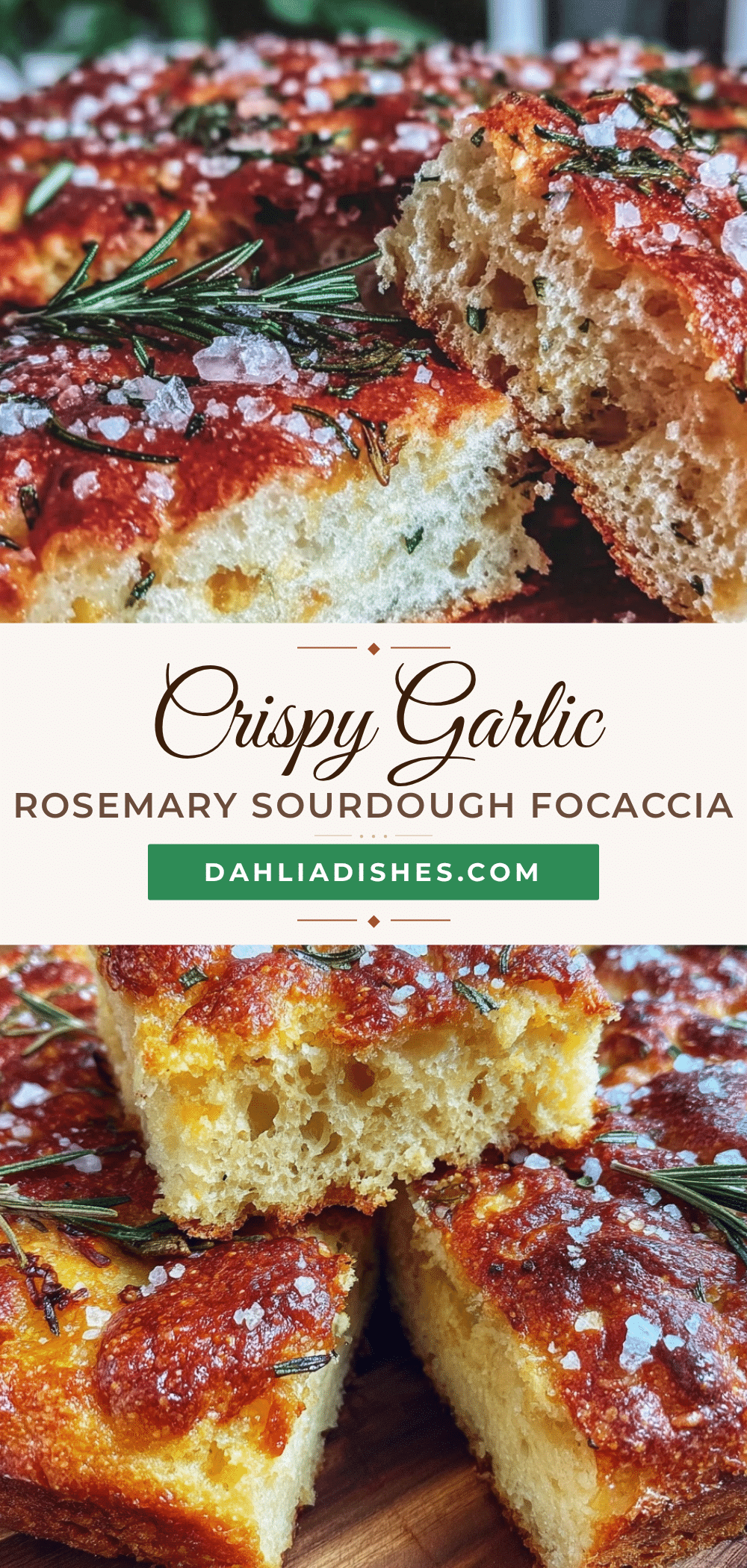
Crispy Garlic Rosemary Sourdough Focaccia

A crispy, flavorful sourdough focaccia infused with garlic confit and fresh rosemary, featuring a chewy crumb and golden crust. Perfect for easy homemade bread with pantry staples.
- Prep Time: 10 minutes
- Cook Time: 20-25 minutes
- Total Time: 3 hours
- Yield: 8 servings 1x
- Category: Bread
- Cuisine: Italian
Ingredients
- 500g (4 cups) bread flour
- 350ml (1½ cups) lukewarm water
- 100g (½ cup) active sourdough starter
- 10g (2 tsp) fine sea salt
- 30ml (2 tbsp) extra virgin olive oil, plus more for drizzling
- 3 cloves garlic confit, mashed (or roasted fresh garlic)
- 2 tbsp fresh rosemary, finely chopped (or 1 tbsp dried rosemary)
- Flaky sea salt for sprinkling (Maldon recommended)
- Extra olive oil for drizzling
Instructions
- Mix the Dough: In a large mixing bowl, combine 500g (4 cups) bread flour and 10g (2 tsp) sea salt. In a separate bowl, mix 350ml (1½ cups) lukewarm water with 100g (½ cup) active sourdough starter until smooth. Pour the wet ingredients into the dry and stir with a spatula until just combined. The dough will be sticky and shaggy. (About 5 minutes)
- First Rise and Stretch & Fold: Cover the bowl loosely with a kitchen towel or plastic wrap. Let it rest at room temperature for 30 minutes. After resting, wet your hands and do a gentle stretch and fold: pull one side of the dough and fold it over itself. Rotate the bowl and repeat 3-4 times. Cover again and let rise for another 1 to 1.5 hours until puffed and bubbly.
- Prepare the Topping: While the dough is rising, mash the garlic confit and finely chop the rosemary. Mix these with 2 tbsp olive oil in a small bowl to create garlic-rosemary oil.
- Shape the Dough: Generously oil your baking sheet and transfer the dough onto it. Gently spread the dough into a rectangle about 12×16 inches (30×40 cm). Use your fingertips to dimple the surface, pushing down to create classic focaccia pockets. (About 5 minutes)
- Second Rise: Cover the dough again and let it rise for 30-45 minutes until it puffs slightly but does not double in size.
- Add Toppings and Bake: Preheat oven to 220°C (425°F). Drizzle garlic-rosemary oil evenly over the dough, making sure it pools in the dimples. Sprinkle flaky sea salt generously on top. Bake on center rack for 20-25 minutes until crust is golden and crispy. Watch closely after 20 minutes to avoid burning.
- Cool and Serve: Remove from oven and let focaccia cool slightly on a wire rack to keep the bottom crisp. Serve warm or at room temperature.
Notes
If dough is too sticky to handle, lightly oil your hands instead of flouring to avoid drying out the dough. Use flaky sea salt for best texture and flavor. For a quicker rise, substitute sourdough starter with 1 packet (7g) active dry yeast but lose some tang. Baking in a cast iron skillet gives extra crispy edges. Rosemary can be swapped with thyme, oregano, or sage. Cheese toppings like Parmesan or feta can be added before baking.
Nutrition
- Serving Size: 1/8 of the focaccia
- Calories: 220
- Fat: 6
- Carbohydrates: 34
- Fiber: 2
- Protein: 6
Keywords: focaccia, sourdough, garlic, rosemary, homemade bread, crispy bread, artisan bread, easy bread recipe