Love this? Save it for later!
Share the inspiration with your friends
Marta, the older woman who runs the tiny corner bodega two blocks from my apartment, watched me one chilly Thursday evening as I stood staring at her display of root vegetables like they held the secrets to the universe. I was holding a bag of sad-looking baby carrots from the big supermarket, and she just shook her head slowly. Without a word, she walked over, picked up a bunch of knobby parsnips, a few rough-cut carrots still with their tops on, and a single, dirt-crusted celery root. She placed them in my basket, then pointed at the chuck roast in my hand and said, “That needs these. And a good red wine. You come back tomorrow and tell me.”
Honestly, I almost told her I didn’t have time for a long braise. It was a Tuesday, I was tired, and my plan was a thirty-minute stir-fry. But there was something about the way she said it—not pushy, just certain. So I grabbed a bottle of the cheapest red wine they had, which she also disapproved of with a sigh, and went home. I ended up making the stew that night, mostly because I was too stubborn to admit I’d bought a bunch of vegetables I didn’t know what to do with. And let me tell you, it was a mess at first. I forgot to brown the meat in batches and ended up steaming it instead. The kitchen looked like a bomb went off in a root cellar. But the flavor? That first bite made me close my eyes. It was rich and deep and tasted like a hug from someone who knows you’ve had a long week. Maybe you’ve been there—standing in a grocery aisle, wanting something comforting but convinced you don’t have the time. This recipe is for that exact moment.
Why You’ll Love This Recipe
This isn’t your grandmother’s all-day beef stew, though it tastes like it could be. I’ve tested this recipe more times than I care to count, tweaking the timing and the vegetable ratios until it became the weeknight hero I knew it could be. It’s the kind of meal that makes you look like a kitchen rockstar with a fraction of the effort.
- Quick & Easy: From start to finish, this comes together in about an hour and fifteen minutes. Most of that is hands-off simmering, giving you time to change out of work clothes or pour yourself that glass of wine you already opened.
- Simple Ingredients: No hunting down exotic spices or obscure cuts of meat. Chuck roast, red wine, and root vegetables are all you need. You probably have the garlic and thyme already.
- Perfect for Busy Weeknights: This is the dinner that saves a frantic Tuesday. It feels special enough for a Sunday supper but fast enough for a Wednesday.
- Crowd-Pleaser: I’ve served this to everyone from my picky seven-year-old nephew to my in-laws, and the pot comes back empty every single time. The meat gets so tender it falls apart with a fork.
- Unbelievably Delicious: The secret is in the technique—browning the beef well and letting the red wine reduce before adding the broth. It creates a sauce that’s glossy and rich, not watery or thin.
What makes this version different? Most quick stews skip the step of coating the beef in flour before browning. I don’t. That simple trick thickens the stew naturally and gives the meat a beautiful, caramelized crust. And instead of dumping everything in at once, I add the root vegetables later so they keep their shape and don’t turn into mush. It’s a small change that makes a big difference. This isn’t just another stew recipe—it’s the one you’ll bookmark and make again next week.
What Ingredients You Will Need
This recipe relies on a handful of sturdy, flavorful ingredients that work together to create something greater than the sum of their parts. Most of these are pantry staples or easy to find at any grocery store.
- For the Beef and Browning:
- 2 lbs (900g) beef chuck roast, cut into 1.5-inch cubes (look for well-marbled pieces—this keeps the meat tender)
- 3 tablespoons all-purpose flour (I use King Arthur; it creates a silky, lump-free sauce)
- 1 teaspoon kosher salt
- ½ teaspoon black pepper
- 2 tablespoons olive oil (use a good one for browning; avocado oil works too)
- For the Aromatics and Liquid:
- 1 large yellow onion, diced (about 1.5 cups)
- 3 cloves garlic, minced (adds that savory backbone)
- 2 tablespoons tomato paste (I prefer the kind in a tube—it’s more concentrated and lasts longer in the fridge)
- 1.5 cups (355ml) dry red wine (a Cabernet Sauvignon or Merlot works beautifully; don’t use something you wouldn’t drink)
- 2 cups (475ml) beef broth (low-sodium is best so you control the salt)
- 1 tablespoon Worcestershire sauce (adds umami depth)
- 2 sprigs fresh thyme (or ½ teaspoon dried)
- 2 bay leaves
- For the Root Vegetables:
- 3 large carrots, peeled and cut into 1-inch chunks (about 2 cups)
- 2 parsnips, peeled and cut into 1-inch chunks (about 1 cup; they add a subtle sweetness)
- 1 large russet potato, peeled and cubed (about 1.5 cups; Yukon Golds work too and hold their shape well)
- 1 cup (about 150g) frozen peas (add them at the end for a pop of color and sweetness)
Ingredient Tips: For the beef, I always buy chuck roast and cube it myself. It’s cheaper than pre-cut stew meat, and you can control the size. If you’re short on time, look for pre-cut beef stew meat, but check that the pieces are evenly sized. For the wine, a bottle in the $8-12 range is perfect. I’ve used a Trader Joe’s Cabernet with great results. If you don’t drink alcohol, you can substitute an equal amount of beef broth plus 2 tablespoons of balsamic vinegar for acidity. The vinegar won’t give you the exact same depth, but it’s a solid backup.
Equipment Needed
You don’t need a fancy kitchen for this recipe. The star of the show is your Dutch oven. I use a 5.5-quart Le Creuset, but any heavy-bottomed pot with a tight-fitting lid will work. Lodge makes an excellent enameled cast iron option that costs a fraction of the price and performs just as well. If you don’t have a Dutch oven, a large heavy-bottomed pot or a deep skillet with a lid will do the job—just be mindful of sticking.
You’ll also need a sharp chef’s knife for cubing the beef and chopping the vegetables, a wooden spoon or spatula for scraping up the browned bits (that’s where the flavor lives), and a set of measuring cups and spoons. A microplane or fine grater is nice for mincing the garlic, but a knife works perfectly. Honestly, I’ve made this stew with a $10 knife from the grocery store and it turned out just fine. The most important thing is that your pot retains heat well and has a lid.
Pro tip: If you use a non-stick pot, be gentle with the wooden spoon so you don’t scratch the surface. And if you’re using a stainless steel pot, don’t be alarmed if the brown bits stick at first—they’ll release when you add the wine.
Preparation Method
Let’s get cooking. This process moves quickly, so have your ingredients prepped and ready before you start. I promise it makes everything smoother.
- Prep the beef and vegetables. Pat the beef cubes dry with paper towels. This is crucial—wet meat won’t brown properly. In a large bowl, toss the beef with the flour, salt, and pepper until evenly coated. Set aside. Chop your onion, mince the garlic, and cut the carrots, parsnips, and potato into uniform 1-inch chunks. Uniform pieces mean even cooking.
- Brown the beef in batches. Heat your Dutch oven over medium-high heat and add 1 tablespoon of olive oil. Once the oil shimmers, add half the beef cubes in a single layer. Don’t overcrowd the pot—the meat needs space to develop a deep brown crust. Let them cook undisturbed for 3-4 minutes, then flip and brown the other side for another 2-3 minutes. Transfer the browned beef to a plate and repeat with the remaining oil and beef. If the pot looks dry, add another splash of oil. This step takes about 10 minutes total, but it’s the most important one for flavor.
- Sauté the aromatics. Reduce the heat to medium. Add the diced onion to the pot and cook, stirring occasionally, for 4-5 minutes until softened and translucent. Scrape up any browned bits from the bottom of the pot as you stir—that’s liquid gold. Add the minced garlic and cook for 30 seconds until fragrant. Then stir in the tomato paste and cook for another minute. It will darken slightly and smell incredible.
- Deglaze with wine. Pour in the red wine, using your wooden spoon to scrape up every last bit of fond (those browned bits). Let the wine come to a boil, then reduce the heat to a simmer. Cook for 5-7 minutes, stirring occasionally, until the wine has reduced by about half. The sauce will thicken slightly and the alcohol will cook off. This step concentrates the flavor and gives the stew its deep, rich color.
- Add the broth and beef. Pour in the beef broth and Worcestershire sauce. Return the browned beef and any accumulated juices to the pot. Add the fresh thyme sprigs and bay leaves. Stir everything together, then bring the stew to a gentle boil. Reduce the heat to low, cover the pot with the lid slightly ajar, and let it simmer for 30 minutes. The liquid should be bubbling gently, not furiously.
- Add the root vegetables. After 30 minutes, stir in the carrots, parsnips, and potato. Make sure they’re submerged in the liquid as much as possible. Cover the pot again and continue simmering for another 20-25 minutes, until the vegetables are fork-tender and the beef is falling apart. The potatoes should offer slight resistance when pierced but not be mushy.
- Finish with peas and adjust seasoning. Remove the thyme sprigs and bay leaves. Stir in the frozen peas and let them warm through for 2-3 minutes. Taste the stew and add more salt and pepper if needed. I usually add another ¼ teaspoon of salt at this point. If the stew seems too thick, add a splash of broth or water. If it’s too thin, let it simmer uncovered for 5 more minutes.
- Rest and serve. Remove the pot from the heat and let the stew sit for 5-10 minutes before serving. This allows the flavors to meld and the sauce to thicken slightly. Serve hot in bowls with crusty bread for dipping.
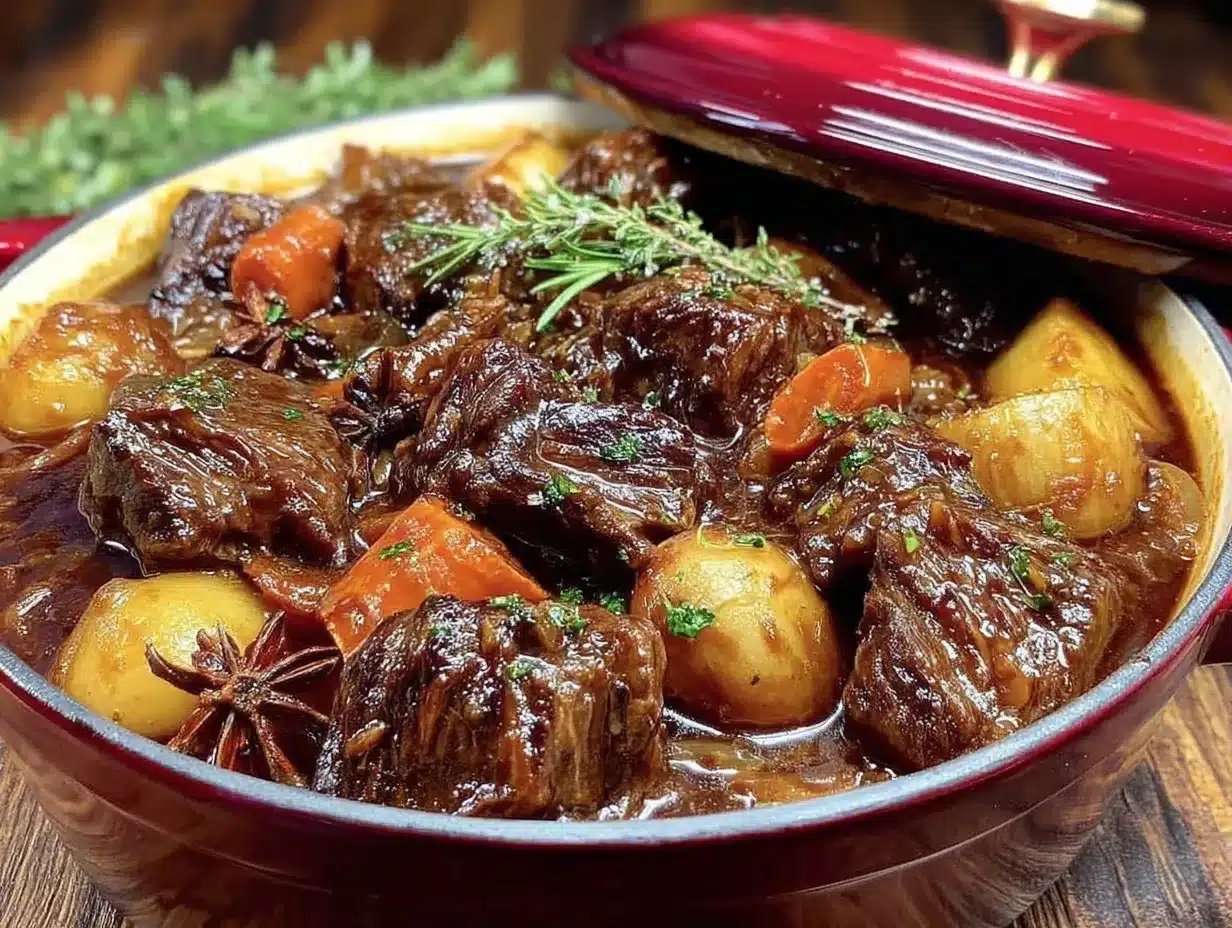
Sensory Cues: When you brown the beef, listen for a steady sizzle—if it’s hissing aggressively, the heat is too high. The onions should smell sweet, not burnt. When you add the wine, you’ll see the steam turn from white to a deeper, reddish hue as it reduces. The final stew should have a glossy, almost velvety appearance, with the meat visibly tender and the vegetables holding their shape.
Cooking Tips & Techniques
I’ve made this stew at least two dozen times, and I’ve learned a few things the hard way. Here’s what I wish someone had told me.
Pat the meat dry. I cannot stress this enough. If you skip this step, the beef will steam instead of brown, and you’ll lose that deep, caramelized flavor. Take the extra 30 seconds to blot each cube with a paper towel. Your taste buds will thank you.
Don’t rush the browning. I once tried to brown all the beef at once because I was hungry and impatient. Big mistake. The meat released too much moisture and turned gray. Brown in batches, and resist the urge to move the meat around too much. Let it sit and develop that crust. It’s the difference between a good stew and a great one.
Watch the wine reduction. The first time I made this, I added the wine and immediately dumped in the broth without letting it reduce. The stew was thin and the wine flavor was harsh and raw. Letting the wine simmer for 5-7 minutes mellows the alcohol and concentrates the fruitiness. You’ll notice the sauce turning from a bright red to a deeper, almost mahogany color. That’s your cue.
Add vegetables later. I used to throw everything in at once, and the carrots would disintegrate while the potatoes were still hard. By adding the root vegetables after the beef has simmered for 30 minutes, everything finishes at the same time. The carrots keep a little bite, and the potatoes stay creamy without falling apart.
Use a timer. This sounds obvious, but I’ve gotten distracted and let the stew simmer too long, turning the vegetables into mush. Set a timer for each stage—30 minutes for the beef, then 20-25 minutes for the vegetables. Your future self will be grateful.
Variations & Adaptations
This stew is wonderfully flexible. Here are a few ways I’ve changed it up depending on what I had on hand or who I was feeding.
Gluten-Free Version: Swap the all-purpose flour for a gluten-free flour blend or cornstarch. If using cornstarch, mix 2 tablespoons with 3 tablespoons of cold water to make a slurry, and stir it in during the last 10 minutes of cooking. I’ve used Bob’s Red Mill 1-to-1 Baking Flour with excellent results—the texture is practically identical.
Vegetarian Adaptation: Replace the beef with 2 cups of cremini mushrooms (halved) and 1 can of drained chickpeas. Use vegetable broth instead of beef broth. The mushrooms provide that umami, meaty texture, and the chickpeas add protein. Skip the browning step for the mushrooms—just sauté them with the onions until they release their liquid and start to caramelize. It’s a completely different dish, but deeply satisfying.
Seasonal Root Vegetable Swap: In the fall, I love adding a diced sweet potato or a few chunks of butternut squash along with the carrots. In winter, turnips or rutabaga add a peppery kick. Just keep the total vegetable volume the same—about 4 cups—so the stew doesn’t become too thick. I once added too many potatoes and ended up with a stew that was more like a thick mash. Still delicious, but not what I was going for.
Spicy Kick: If you like heat, add a pinch of red pepper flakes along with the garlic, or stir in a teaspoon of smoked paprika for warmth. My brother-in-law loves this version—he says it wakes up the stew without overpowering the wine.
Serving & Storage Suggestions
This stew is best served hot, straight from the pot, into wide, shallow bowls. I like to top each bowl with a small pat of butter and a sprinkle of fresh parsley for color. Crusty sourdough bread is non-negotiable in my house—it’s perfect for sopping up every last drop of that rich sauce. If you’re feeling fancy, a side of roasted Brussels sprouts or a simple green salad with a lemony vinaigrette cuts through the richness beautifully.
For drinks, the same red wine you used in the stew is a natural pairing. A glass of Cabernet Sauvignon or a bold Zinfandel complements the deep, savory notes. If you prefer beer, a dark stout or a brown ale works wonders.
Storage: This stew tastes even better the next day. Let it cool completely, then transfer it to an airtight container and refrigerate for up to 4 days. The flavors meld overnight, and the sauce thickens slightly. When reheating, warm it gently on the stovetop over medium-low heat, adding a splash of broth or water if it’s too thick. You can also microwave individual portions in 30-second bursts, stirring in between.
Freezing: This stew freezes beautifully. Portion it into freezer-safe containers or zip-top bags, leaving an inch of headroom for expansion. It will keep for up to 3 months. Thaw overnight in the refrigerator before reheating. I’ve frozen half a batch and pulled it out on a busy Monday—it felt like a gift from my past self.
Nutritional Information & Benefits
Per serving (based on 6 servings), this stew provides approximately:
- Calories: 420
- Protein: 35g
- Fat: 18g
- Carbohydrates: 28g
- Fiber: 6g
- Sugar: 8g
- Sodium: 680mg
This isn’t a light dish, but it’s packed with real, whole ingredients. The beef is an excellent source of iron and B vitamins, which support energy metabolism. The root vegetables—carrots, parsnips, and potatoes—provide a healthy dose of fiber, vitamin A, and potassium. The red wine adds antioxidants, specifically resveratrol, which has been linked to heart health in moderate amounts.
If you’re watching your sodium, use low-sodium broth and go easy on the salt during browning. You can also swap the potato for a lower-carb vegetable like celery root or turnip. For a dairy-free version, skip the butter garnish—the stew is naturally dairy-free as written. I personally love that this meal feels indulgent but is made from whole foods. It’s comfort food that doesn’t leave you feeling heavy or guilty.
Conclusion
This quick Dutch oven red wine beef stew with root vegetables has become my weeknight secret weapon. It’s the meal I turn to when I need something deeply satisfying but don’t have hours to spend in the kitchen. The rich, wine-infused broth, the tender chunks of beef, the sweet, earthy root vegetables—it all comes together in just over an hour, and it tastes like you’ve been simmering it all day long.
I love that this recipe is forgiving. You can swap vegetables, use a different cut of beef, or adjust the wine based on what you have open. It adapts to your life, not the other way around. That’s the kind of cooking I believe in—practical, delicious, and rooted in real moments. Marta was right, as usual. That Thursday night changed how I think about weeknight dinners.
I’d love to hear how yours turns out. Did you add something unexpected? Did your family ask for seconds? Drop a comment below and share your version. And if you loved it, please pin this recipe for later or share it with a friend who needs a good stew in their life. Happy cooking!
Frequently Asked Questions
Can I make this stew in a slow cooker?
Absolutely. Brown the beef and sauté the aromatics on the stovetop first, then transfer everything except the peas to a slow cooker. Cook on low for 6-8 hours or on high for 3-4 hours. Add the peas during the last 30 minutes. The texture will be slightly different—the meat will be even more tender, but the vegetables may be softer.
What if I don’t have a Dutch oven?
No problem. Use a large, heavy-bottomed pot or a deep skillet with a lid. A stockpot works too, but watch the heat—it may cook faster because of the thinner walls. If using a skillet, you might need to cover it with foil if the lid doesn’t fit tightly.
Can I use a different cut of beef?
Yes, but choose a cut that benefits from braising. Beef brisket, bottom round, or short ribs all work beautifully. Avoid lean cuts like sirloin or tenderloin—they’ll dry out and become tough during the long simmer. Chuck roast is my go-to because it has the perfect balance of marbling and tenderness.
Can I skip the wine entirely?
You can, but you’ll lose some depth. Substitute the wine with an equal amount of beef broth plus 2 tablespoons of balsamic vinegar or red wine vinegar. The vinegar adds acidity and a touch of sweetness that mimics the wine’s complexity. It won’t be exactly the same, but it will still be delicious.
How can I thicken the stew if it’s too thin?
If the stew looks watery after simmering, mix 1 tablespoon of cornstarch with 2 tablespoons of cold water to make a slurry. Stir it into the stew and let it simmer uncovered for 5 minutes. The sauce will thicken nicely. Alternatively, you can mash a few of the potato cubes against the side of the pot—their starch will naturally thicken the broth.
PrintQuick Dutch Oven Red Wine Beef Stew with Root Vegetables
A rich and deeply flavorful beef stew made in just over an hour, featuring tender chuck roast, red wine, and root vegetables. Perfect for busy weeknights when you need comforting, hearty food without spending all day in the kitchen.
- Prep Time: 15 minutes
- Cook Time: 1 hour
- Total Time: 1 hour 15 minutes
- Yield: 6 servings 1x
- Category: Main Course
- Cuisine: American
Ingredients
- 2 lbs (900g) beef chuck roast, cut into 1.5-inch cubes
- 3 tablespoons all-purpose flour
- 1 teaspoon kosher salt
- ½ teaspoon black pepper
- 2 tablespoons olive oil
- 1 large yellow onion, diced (about 1.5 cups)
- 3 cloves garlic, minced
- 2 tablespoons tomato paste
- 1.5 cups (355ml) dry red wine (Cabernet Sauvignon or Merlot)
- 2 cups (475ml) low-sodium beef broth
- 1 tablespoon Worcestershire sauce
- 2 sprigs fresh thyme (or ½ teaspoon dried)
- 2 bay leaves
- 3 large carrots, peeled and cut into 1-inch chunks (about 2 cups)
- 2 parsnips, peeled and cut into 1-inch chunks (about 1 cup)
- 1 large russet potato, peeled and cubed (about 1.5 cups)
- 1 cup (about 150g) frozen peas
Instructions
- Prep the beef and vegetables. Pat the beef cubes dry with paper towels. In a large bowl, toss the beef with the flour, salt, and pepper until evenly coated. Set aside. Chop your onion, mince the garlic, and cut the carrots, parsnips, and potato into uniform 1-inch chunks.
- Brown the beef in batches. Heat your Dutch oven over medium-high heat and add 1 tablespoon of olive oil. Once the oil shimmers, add half the beef cubes in a single layer. Let them cook undisturbed for 3-4 minutes, then flip and brown the other side for another 2-3 minutes. Transfer the browned beef to a plate and repeat with the remaining oil and beef.
- Sauté the aromatics. Reduce the heat to medium. Add the diced onion to the pot and cook, stirring occasionally, for 4-5 minutes until softened and translucent. Scrape up any browned bits from the bottom of the pot as you stir. Add the minced garlic and cook for 30 seconds until fragrant. Then stir in the tomato paste and cook for another minute.
- Deglaze with wine. Pour in the red wine, using your wooden spoon to scrape up every last bit of fond. Let the wine come to a boil, then reduce the heat to a simmer. Cook for 5-7 minutes, stirring occasionally, until the wine has reduced by about half.
- Add the broth and beef. Pour in the beef broth and Worcestershire sauce. Return the browned beef and any accumulated juices to the pot. Add the fresh thyme sprigs and bay leaves. Stir everything together, then bring the stew to a gentle boil. Reduce the heat to low, cover the pot with the lid slightly ajar, and let it simmer for 30 minutes.
- Add the root vegetables. After 30 minutes, stir in the carrots, parsnips, and potato. Make sure they’re submerged in the liquid as much as possible. Cover the pot again and continue simmering for another 20-25 minutes, until the vegetables are fork-tender and the beef is falling apart.
- Finish with peas and adjust seasoning. Remove the thyme sprigs and bay leaves. Stir in the frozen peas and let them warm through for 2-3 minutes. Taste the stew and add more salt and pepper if needed. If the stew seems too thick, add a splash of broth or water. If it’s too thin, let it simmer uncovered for 5 more minutes.
- Rest and serve. Remove the pot from the heat and let the stew sit for 5-10 minutes before serving. Serve hot in bowls with crusty bread for dipping.
Notes
Pat the beef dry before browning to ensure a good sear. Brown the meat in batches to avoid steaming. Let the wine reduce for 5-7 minutes to concentrate flavor. Add root vegetables later so they don’t become mushy. The stew tastes even better the next day. For a gluten-free version, use a gluten-free flour blend or cornstarch slurry. For a vegetarian version, replace beef with mushrooms and chickpeas, and use vegetable broth.
Nutrition
- Serving Size: 1 bowl (about 1.5 cu
- Calories: 420
- Sugar: 8
- Sodium: 680
- Fat: 18
- Saturated Fat: 6
- Carbohydrates: 28
- Fiber: 6
- Protein: 35
Keywords: beef stew, red wine stew, Dutch oven, root vegetables, weeknight dinner, comfort food, braised beef