Love this? Save it for later!
Share the inspiration with your friends
I wasn’t supposed to be in the kitchen that afternoon. I’d stopped by to borrow a ladder, and the smell hit me before I even got past the front door—something sweet and savory, with that unmistakable warmth of roasting squash that fills every corner of a house. My neighbor, who I’d only met twice before, just shrugged when I asked what she was making. “Oh, just some squash,” she said, like it was nothing. Like she wasn’t creating something that would haunt my grocery list for the next year.
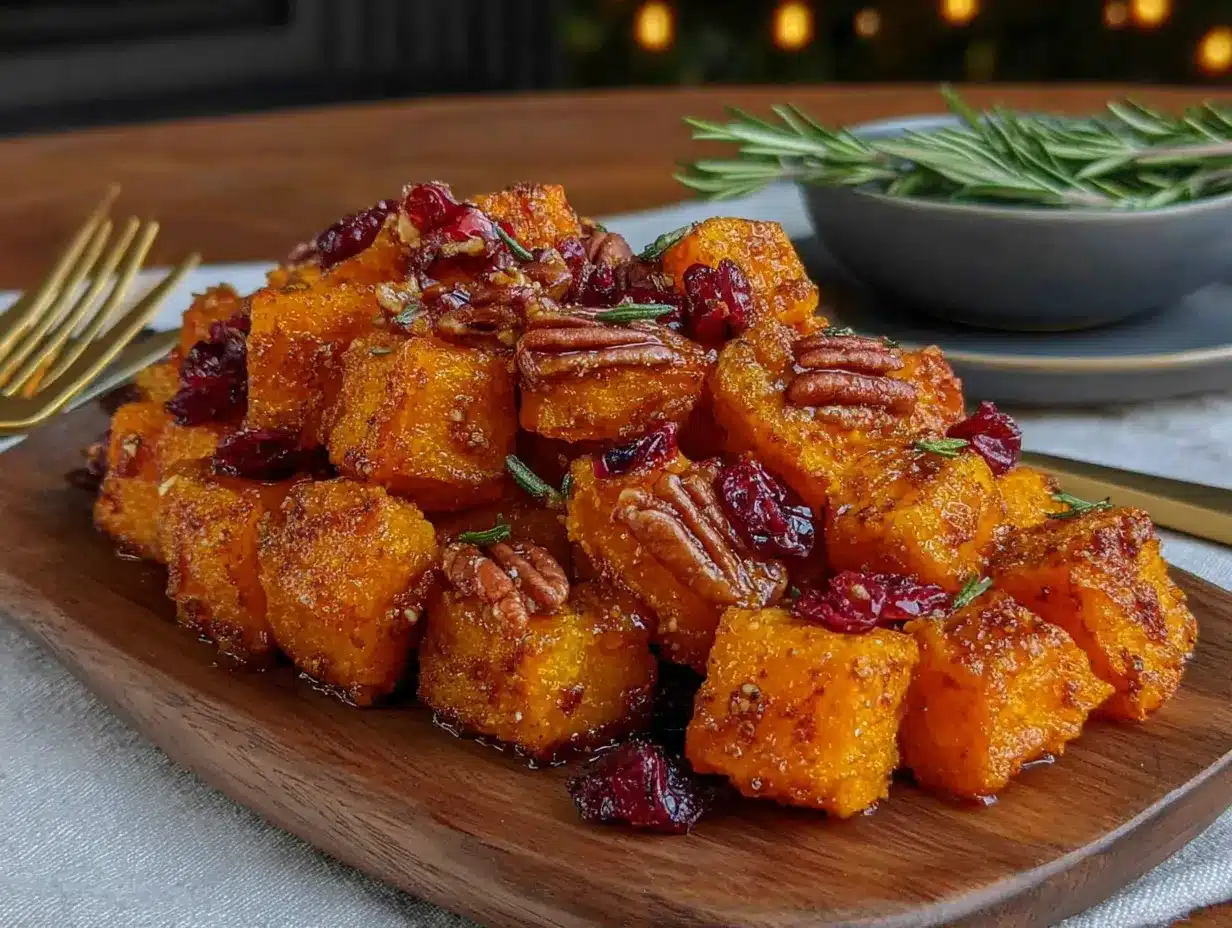
She handed me a forkful right off the baking sheet, and honestly, I almost dropped the ladder. The edges were caramelized and almost crunchy, the pecans were toasted just right, and the cranberries had burst into these little pockets of tartness that cut through the sweetness. I stood there in her kitchen, eating squash off a sheet pan like it was the most important thing I’d do that day. Maybe you’ve been there—that moment when something so simple stops you in your tracks and you just know you’ll be making it for years.
I asked for the recipe, of course. She scribbled it on a scrap of envelope, and I tucked it into my wallet where it stayed for weeks. Every time I opened my wallet, I’d see that stained piece of paper and think about that afternoon. When I finally made it myself, I tweaked it just a little—added a pinch more cinnamon, toasted the pecans separately so they’d stay extra crunchy. But the heart of it? That’s all her. This maple roasted butternut squash with pecans and cranberries has become my go-to for everything from quiet weeknight dinners to holiday tables, and it all started with a borrowed ladder and a neighbor who didn’t know she was changing my cooking forever.
Why You’ll Love This Recipe
I’ve made this maple roasted butternut squash with pecans and cranberries more times than I can count, and every single time, it delivers. It’s one of those rare recipes that feels fancy enough for company but is simple enough for a Tuesday night when you need something comforting on the table fast.
- Quick & Easy: From prep to table in under 45 minutes, with only about 10 minutes of active work. The oven does the heavy lifting here.
- Simple Ingredients: You probably already have maple syrup, cinnamon, and olive oil in your pantry. Just grab a butternut squash, some pecans, and dried cranberries, and you’re set.
- Perfect for Any Occasion: It works for Thanksgiving dinner, meal prep lunches, holiday brunches, or just a cozy side dish on a cold night.
- Crowd-Pleaser: I’ve served this to picky kids, to vegans, to meat-and-potatoes types, and everyone goes back for seconds. The sweet and savory combo is just that good.
- Unbelievably Delicious: The caramelized edges, the toasted pecans, the burst of tart cranberries—every bite has a little something different. It’s comfort food that feels special without trying too hard.
What makes this version different from the rest? It’s the timing. Most recipes toss everything together and roast it all at once, but I’ve learned that toasting the pecans separately for just a few minutes makes a world of difference. They stay crunchy instead of getting soft and chewy. And I roast the squash cut-side down first to get that deep caramelization, then flip it and add the maple glaze. It’s a small extra step, but it’s the difference between good squash and unforgettable squash.
This isn’t just another roasted vegetable recipe. It’s the kind that makes you close your eyes after the first bite. It’s the dish people ask you to bring to every gathering. And honestly, it’s the recipe that made me fall in love with butternut squash all over again.
What Ingredients You Will Need
This recipe uses simple, wholesome ingredients to deliver bold flavor and satisfying texture without the fuss. Most of these are pantry staples or easy to find at any grocery store. Here’s what you’ll need and why each one matters.
For the Squash
- 1 large butternut squash (about 2.5-3 pounds), peeled, seeded, and cut into 1-inch cubes (look for one that feels heavy for its size with firm, unblemished skin)
- 2 tablespoons olive oil (I prefer extra virgin for flavor, but regular olive oil works fine too)
- Salt and black pepper to taste (use flaky sea salt for finishing if you have it)
For the Maple Glaze
- 3 tablespoons pure maple syrup (not pancake syrup—the real stuff makes a difference here; I like Grade A dark amber for its robust flavor)
- 2 tablespoons unsalted butter, melted (or use coconut oil for a dairy-free version)
- 1 teaspoon ground cinnamon (freshly ground if you can, but pre-ground is perfectly fine)
- 1/4 teaspoon ground nutmeg (freshly grated adds a lovely aroma, but ground works great)
- 1/4 teaspoon ground ginger (adds warmth without being overpowering)
- Pinch of cayenne pepper (optional, but I love the subtle heat it adds—completely optional if you prefer it purely sweet)
For the Topping
- 1/2 cup pecan halves (raw, not roasted—you’ll toast them yourself for maximum crunch)
- 1/3 cup dried cranberries (look for unsweetened or reduced sugar if you want to cut back on sweetness)
- Fresh thyme or rosemary sprigs for garnish (optional, but adds a lovely herbal note and looks beautiful)
Ingredient Selection Tips: When choosing your butternut squash, look for one with a long neck and smaller bulb—you’ll get more usable flesh with less waste. For the pecans, I recommend buying them raw and toasting them yourself. Pre-toasted nuts can be stale or unevenly roasted. And please, use real maple syrup. I’ve tried this with honey and agave, and while both work in a pinch, nothing beats that deep, almost woody sweetness of pure maple syrup.
Substitution Guidance: If you don’t have pecans, walnuts or even pepitas work beautifully. Fresh cranberries can replace dried—just toss them in with the squash for the last 10 minutes of roasting so they don’t burn. For a sugar-free version, use a monk fruit maple syrup substitute, though the texture will be slightly different. And if butternut squash isn’t available, try this with acorn squash or even sweet potatoes—they all caramelize beautifully with the maple glaze.
Equipment Needed
You don’t need a fancy kitchen to make this maple roasted butternut squash with pecans and cranberries. Here’s what you’ll actually use:
- Large baking sheet (half-sheet pan is ideal—about 13×18 inches—with a rim to catch any glaze drips)
- Sharp chef’s knife (a good 8-inch knife makes peeling and cubing the squash so much easier)
- Vegetable peeler (a Y-shaped peeler works best for butternut squash’s tough skin)
- Large mixing bowl for tossing the squash with oil and seasonings
- Small saucepan for melting the butter and maple syrup together
- Parchment paper or aluminum foil for easy cleanup (I prefer parchment—less sticking)
- Measuring spoons for the maple syrup, cinnamon, and other spices
- Spatula or tongs for flipping the squash halfway through roasting
If you don’t have a vegetable peeler, you can microwave the whole squash for 2-3 minutes to soften the skin slightly, then use a knife to slice it off. It’s a bit messier but works in a pinch. And honestly, I’ve made this on a quarter-sheet pan before—it just takes a little longer since the squash is more crowded. A good baking sheet is worth the investment if you roast vegetables often.
Preparation Method
Let me walk you through this step by step. I’ve made this maple roasted butternut squash with pecans and cranberries so many times that I could do it in my sleep, but I still remember the first time I tried to rush through it and ended up with unevenly cooked squash. Take it slow, especially the first time.
- Preheat your oven to 400°F (200°C). Line a large baking sheet with parchment paper for easy cleanup. While the oven heats, you can prep the squash.
- Prepare the butternut squash. Using a sharp chef’s knife, cut off both ends of the squash so it sits flat on your cutting board. Cut it crosswise where the narrow neck meets the round bulb. Peel both pieces with a vegetable peeler, making sure to remove all the tough skin. Cut the neck into 1-inch cubes. Cut the bulb in half, scoop out the seeds with a spoon, then cut the flesh into similar-sized cubes. Try to keep the pieces uniform—about 1 inch each—so they cook evenly. This takes about 10 minutes the first time, but you’ll get faster with practice.
- Toss with oil and seasonings. Place the cubed squash in a large mixing bowl. Drizzle with 2 tablespoons olive oil and sprinkle with salt and pepper. Toss well with your hands or a spatula until every piece is coated. Spread the squash in a single layer on the prepared baking sheet. Don’t overcrowd—if the pieces are touching too much, they’ll steam instead of roast. Use two sheets if needed.
- Roast the squash for 20 minutes. Place the baking sheet in the preheated oven and roast for 20 minutes. The squash should be starting to brown on the bottom edges. While it roasts, make the maple glaze.
- Make the maple glaze. In a small saucepan over low heat, combine 3 tablespoons maple syrup, 2 tablespoons melted butter (or coconut oil), 1 teaspoon cinnamon, 1/4 teaspoon nutmeg, 1/4 teaspoon ginger, and a pinch of cayenne if using. Stir until everything is well combined and warm, about 2 minutes. Remove from heat and set aside. The glaze will thicken slightly as it cools.
- Toast the pecans. In a small dry skillet over medium heat, add the pecan halves. Toast for 3-4 minutes, shaking the pan frequently, until they’re fragrant and lightly browned. Watch them carefully—they can burn in seconds. Remove from the pan immediately and set aside to cool.
- Flip and glaze the squash. After 20 minutes, remove the baking sheet from the oven. Use a spatula to flip each piece of squash over. Drizzle the maple glaze evenly over the squash, using a spoon to make sure each piece gets some. Return the sheet to the oven and roast for another 15-20 minutes, until the squash is tender when pierced with a fork and the edges are caramelized and golden brown. The glaze should be bubbling and sticky.
- Add the cranberries and pecans. In the last 5 minutes of roasting, sprinkle the dried cranberries and toasted pecans over the squash. This gives the cranberries time to plump up slightly without burning, and the pecans warm through without losing their crunch. Return to the oven for the final 5 minutes.
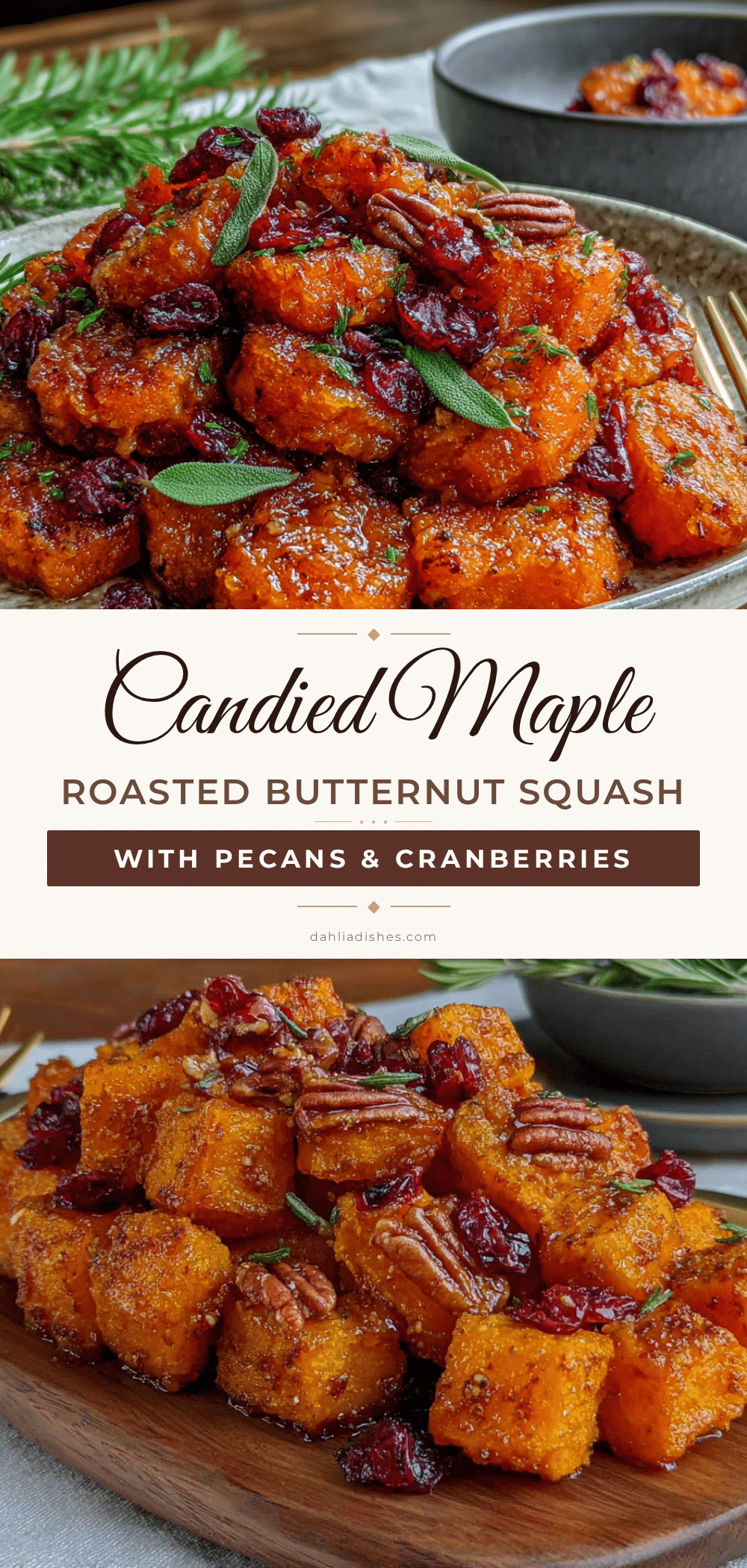
- Rest and serve. Remove the baking sheet from the oven and let the squash rest for 5 minutes. This allows the glaze to set a bit. Transfer to a serving platter, garnish with fresh thyme or rosemary if desired, and serve warm. The squash should be tender but not mushy, with caramelized edges and a glossy, sticky glaze.
Pro tip I learned the hard way: Don’t skip the flipping step. I know it’s tempting to just let it roast without touching it, but flipping ensures even caramelization. The first time I made this, I was in a hurry and skipped it. Half the squash was perfectly caramelized, and the other half was pale and soft. It still tasted good, but it wasn’t as beautiful or textured as it could have been.
Cooking Tips & Techniques
After making this maple roasted butternut squash with pecans and cranberries more times than I can count, I’ve collected a few tricks that make the process smoother and the results more consistent. Let me share what I’ve learned through trial and error.
Cut your squash uniformly. This is the single most important tip I can give you. Pieces that are all roughly the same size cook at the same rate. I’ve had batches where some pieces were twice as big as others, and the small ones were practically burnt while the big ones were still hard in the middle. Aim for 1-inch cubes, and don’t stress about being perfect—just close enough.
Don’t overcrowd the pan. If the squash pieces are touching or overlapping, they’ll steam instead of roasting. You want hot air to circulate around each piece so the edges can caramelize. If your baking sheet is too small, use two sheets and rotate them halfway through. I learned this after a particularly sad batch of soggy squash that never got those beautiful brown edges.
Toast pecans separately and watch them like a hawk. Pecans go from perfectly toasted to burnt in about 30 seconds. I always toast them in a dry pan over medium heat, shaking constantly, and I pull them off the heat the second I smell that nutty aroma. They continue to toast slightly from the residual heat, so it’s better to under-toast slightly than to overdo it.
Make the glaze while the squash roasts. This is a great multitasking opportunity. While the squash is in the oven for its first 20 minutes, you can make the glaze and toast the pecans. By the time the squash needs to be flipped, everything else is ready to go. It makes the whole process feel effortless.
Let it rest before serving. I know it’s hard to wait when your kitchen smells this amazing, but letting the squash rest for 5 minutes after roasting allows the glaze to set and the flavors to meld. Plus, serving it piping hot can burn your mouth—trust me on that one.
One mistake I still make sometimes: Forgetting to check the squash for doneness before adding the cranberries and pecans. If the squash isn’t quite tender yet, the extra 5 minutes with the toppings won’t be enough. Always test a piece with a fork before adding the final toppings, and give it more time if needed.
Variations & Adaptations
One of the things I love about this maple roasted butternut squash with pecans and cranberries is how flexible it is. I’ve tried several variations over the years, and they’ve all been delicious in their own way. Here are some of my favorites.
Savory Herb Version: Skip the cinnamon, nutmeg, and ginger, and instead toss the squash with fresh rosemary, sage, and thyme before roasting. Use the maple syrup and butter as directed, but reduce the maple syrup to 2 tablespoons for a less sweet version. The herbs add an earthy, almost woodsy flavor that pairs beautifully with roasted meats like chicken or pork.
Spicy Maple Version: If you like a little heat, increase the cayenne pepper to 1/4 teaspoon and add 1/2 teaspoon of smoked paprika to the glaze. The smoky heat balances the sweetness of the maple syrup perfectly. I made this for a friend who loves spicy food, and she ate half the batch before dinner even started.
Vegan and Dairy-Free Adaptation: Replace the butter with coconut oil or a vegan butter substitute. The coconut oil adds a subtle tropical note that actually works really well with the maple syrup. I’ve also used avocado oil in a pinch, and while it’s more neutral, it still gives a nice result.
Seasonal Fruit Swaps: In the fall, try fresh cranberries instead of dried—just add them in the last 10 minutes of roasting so they burst but don’t burn. In the summer, diced apples or pears work beautifully. And if you’re feeling adventurous, try dried cherries or chopped dried apricots for a different flavor profile.
Different Nut Options: Walnuts are my second favorite after pecans—they have a slightly bitter edge that contrasts nicely with the sweet glaze. Pepitas (pumpkin seeds) add a wonderful crunch and are great if you’re serving this to someone with nut allergies. Toasted sliced almonds also work, though they’re more delicate and can burn more easily.
My personal favorite variation: I once added a tablespoon of balsamic vinegar to the glaze, and it was incredible. The acidity cut through the sweetness and added this complex, almost tangy depth. I don’t do it every time, but when I want to impress guests, that’s my secret weapon.
Serving & Storage Suggestions
This maple roasted butternut squash with pecans and cranberries is versatile enough to fit into almost any meal. Here’s how I like to serve it and how to store leftovers so they stay delicious.
Serving Temperature: Serve this dish warm, right out of the oven, when the glaze is still glossy and the pecans are at their crunchiest. It’s also very good at room temperature, which makes it perfect for potlucks and holiday buffets. I wouldn’t recommend serving it cold straight from the fridge—the texture suffers and the glaze becomes sticky and unappealing.
Presentation Ideas: Transfer the roasted squash to a large, shallow serving platter in a single layer so everyone can see the beautiful caramelized edges. Sprinkle the toasted pecans and cranberries on top, and garnish with a few fresh thyme sprigs or a light dusting of cinnamon. For a holiday table, I like to serve it in a white ceramic dish that makes the orange and deep red colors pop.
What to Serve With It: This squash pairs beautifully with roasted chicken, turkey, or pork tenderloin. It’s also wonderful alongside hearty grains like farro or quinoa for a vegetarian meal. For Thanksgiving, it’s a fantastic alternative to sweet potato casserole—less sweet, more sophisticated, and just as comforting. I’ve also served it over a bed of arugula with goat cheese and a balsamic vinaigrette for a warm winter salad that’s absolutely stunning.
Storage Instructions: Store leftovers in an airtight container in the refrigerator for up to 4 days. The squash will soften slightly and the pecans will lose some of their crunch, but the flavor will still be excellent. To reheat, spread the squash on a baking sheet and warm in a 350°F oven for 8-10 minutes. This helps restore some of the caramelization. Microwaving works in a pinch, but the texture won’t be as good.
Freezing: This dish freezes surprisingly well. Let it cool completely, then transfer to a freezer-safe container or zip-top bag. Freeze for up to 3 months. To serve, thaw overnight in the refrigerator, then reheat in a 350°F oven for 15-20 minutes. The pecans will be softer after freezing, so you might want to add fresh toasted pecans when reheating.
Flavor Development: Honestly, this dish tastes even better the next day. The flavors have time to meld, and the squash absorbs more of the maple glaze. I sometimes make it a day ahead on purpose just for this reason. Just don’t add the pecans until right before serving if you want them to stay crunchy.
Nutritional Information & Benefits
This maple roasted butternut squash with pecans and cranberries isn’t just delicious—it’s packed with nutrients that make it a smart choice for any meal. Here’s what you’re getting in each serving.
Estimated Nutritional Values (per serving, about 1 cup):
- Calories: 220
- Total Fat: 12g
- Saturated Fat: 3g
- Carbohydrates: 28g
- Fiber: 5g
- Sugar: 14g (mostly from maple syrup and natural sugars in the squash)
- Protein: 3g
- Vitamin A: 457% of the Daily Value
- Vitamin C: 35% of the Daily Value
- Potassium: 582mg
Health Benefits of Key Ingredients: Butternut squash is loaded with vitamin A in the form of beta-carotene, which supports eye health and immune function. It’s also high in fiber, which aids digestion and helps you feel full longer. Pecans are rich in healthy monounsaturated fats and magnesium, which supports heart health and muscle function. Cranberries are packed with antioxidants that help fight inflammation and support urinary tract health. And maple syrup, while still a sugar, contains minerals like zinc and manganese that refined sugar lacks.
Dietary Considerations: This recipe is naturally gluten-free and can be made vegan by using coconut oil instead of butter. It’s also vegetarian and dairy-free if you choose the vegan option. For a lower-sugar version, reduce the maple syrup to 2 tablespoons or use a sugar-free maple syrup substitute.
Potential Allergens: This recipe contains tree nuts (pecans). If you’re serving someone with a nut allergy, substitute with pepitas or omit the nuts entirely. The recipe is also free from dairy if you use the vegan adaptation, and free from eggs, soy, and gluten as written.
My personal take: I love that this dish feels indulgent but is actually good for you. It’s one of those rare recipes where you can have seconds without guilt—the fiber and healthy fats keep you satisfied, and the natural sweetness means you don’t need a heavy dessert afterward. It’s comfort food that actually supports your health, and that’s something I can get behind.
Conclusion
This maple roasted butternut squash with pecans and cranberries has become a staple in my kitchen for good reason. It’s simple enough for a Tuesday night, special enough for Thanksgiving, and flexible enough to adapt to whatever you have on hand. Every time I make it, I think back to that afternoon at my neighbor’s house, standing in her kitchen with a fork and a borrowed ladder, discovering something I’d be making for years to come.
I hope you’ll give this recipe a try and make it your own. Maybe you’ll add more cayenne for heat, or swap the pecans for walnuts, or serve it over a bed of greens for a warm salad. The beauty of this dish is that it’s forgiving—it welcomes experimentation and rewards you with something delicious every time.
If you make this, I’d love to hear about it. Leave a comment below and tell me how it turned out, what variations you tried, or how you served it. Did you add something unexpected? Did it become a new family favorite? Share your stories and your photos—I read every comment, and nothing makes me happier than knowing one of my recipes found a home in someone else’s kitchen.
Now go roast some squash. Your kitchen is about to smell amazing.
Frequently Asked Questions
Can I use frozen butternut squash for this recipe?
I don’t recommend it. Frozen squash releases a lot of water as it thaws, which will make your dish soggy instead of caramelized. If you’re in a pinch, thaw the frozen squash completely, pat it very dry with paper towels, and increase the roasting time by about 10 minutes. But fresh squash really does give the best results here.
How do I peel a butternut squash without losing a finger?
I feel you. Butternut squash can be intimidating. My trick is to microwave the whole squash for 2-3 minutes to soften the skin slightly. Then cut off both ends so it sits flat, cut it in half where the neck meets the bulb, and use a Y-shaped vegetable peeler to remove the skin in long strips. The microwave trick makes the skin much easier to remove.
Can I make this recipe ahead of time?
Yes, and I actually recommend it for entertaining. Roast the squash and make the glaze up to a day ahead. Store them separately in the refrigerator. When you’re ready to serve, reheat the squash on a baking sheet at 350°F for 10 minutes, then drizzle with the glaze and add the pecans and cranberries. The pecans will stay crunchier if you add them after reheating.
What can I use instead of maple syrup?
Honey or agave nectar both work well, though the flavor profile will change slightly. Honey adds a floral sweetness, while agave is more neutral. If you’re looking for a sugar-free option, use a monk fruit maple syrup substitute. Just keep in mind that the caramelization won’t be quite as deep without real maple syrup.
Why did my squash turn out mushy instead of caramelized?
This usually happens for one of three reasons: your oven wasn’t hot enough, the squash was overcrowded on the pan, or you didn’t flip the pieces halfway through. Make sure your oven is fully preheated to 400°F, spread the squash in a single layer with space between pieces, and flip them after 20 minutes. If your oven runs cool, try increasing the temperature to 425°F.
Pin This Recipe!
Perfect Maple Roasted Butternut Squash with Cranberries
This maple roasted butternut squash with pecans and cranberries is a simple yet elegant side dish that’s perfect for weeknight dinners or holiday feasts. Caramelized edges, toasted pecans, and tart cranberries create a sweet and savory combination that’s absolutely unforgettable.
- Prep Time: 10 minutes
- Cook Time: 35 minutes
- Total Time: 45 minutes
- Yield: 4 servings 1x
- Category: Side Dish
- Cuisine: American
Ingredients
- 1 large butternut squash (about 2.5–3 pounds), peeled, seeded, and cut into 1-inch cubes
- 2 tablespoons olive oil
- Salt and black pepper to taste
- 3 tablespoons pure maple syrup
- 2 tablespoons unsalted butter, melted (or coconut oil for dairy-free)
- 1 teaspoon ground cinnamon
- 1/4 teaspoon ground nutmeg
- 1/4 teaspoon ground ginger
- Pinch of cayenne pepper (optional)
- 1/2 cup pecan halves (raw)
- 1/3 cup dried cranberries
- Fresh thyme or rosemary sprigs for garnish (optional)
Instructions
- Preheat your oven to 400°F (200°C). Line a large baking sheet with parchment paper.
- Prepare the butternut squash: cut off both ends, cut crosswise where the narrow neck meets the round bulb, peel both pieces, scoop out seeds, and cut into 1-inch cubes.
- Toss the cubed squash with olive oil, salt, and pepper in a large bowl. Spread in a single layer on the prepared baking sheet.
- Roast the squash for 20 minutes.
- While the squash roasts, make the maple glaze: in a small saucepan over low heat, combine maple syrup, melted butter, cinnamon, nutmeg, ginger, and cayenne (if using). Stir until warm and combined, about 2 minutes. Remove from heat.
- Toast the pecans in a dry skillet over medium heat for 3-4 minutes, shaking frequently, until fragrant and lightly browned. Remove from pan and set aside.
- After 20 minutes, remove the baking sheet from the oven. Flip each piece of squash. Drizzle the maple glaze evenly over the squash.
- Return to the oven and roast for another 15-20 minutes, until tender and caramelized.
- In the last 5 minutes of roasting, sprinkle dried cranberries and toasted pecans over the squash. Return to the oven for the final 5 minutes.
- Remove from the oven and let rest for 5 minutes. Transfer to a serving platter, garnish with fresh thyme or rosemary if desired, and serve warm.
Notes
For best results, cut squash uniformly, don’t overcrowd the pan, toast pecans separately, and let the squash rest before serving. The dish tastes even better the next day.
Nutrition
- Serving Size: 1 cup
- Calories: 220
- Sugar: 14
- Sodium: 150
- Fat: 12
- Saturated Fat: 3
- Carbohydrates: 28
- Fiber: 5
- Protein: 3
Keywords: maple roasted butternut squash, roasted butternut squash with cranberries, butternut squash with pecans, holiday side dish, easy roasted squash