Love this? Save it for later!
Share the inspiration with your friends
I wasn’t expecting cooking advice from my accountant, but there I was, sorting through a pile of receipts in his cluttered office, listening to him describe exactly how to make the most velvety, foolproof turkey gravy I’d ever heard of. It was mid-November, the kind of gray, damp afternoon that makes you crave something warm and rich. Between discussing deductions and quarterly estimates, Mr. Henderson—a man I’d only ever associated with spreadsheets and tax forms—casually mentioned that his secret to a stress-free Thanksgiving was making his gravy three days ahead. I honestly thought he was joking. Who makes gravy before the turkey is even thawed?
But he was dead serious. He pulled a worn, grease-stained index card from his desk drawer—the kind that had clearly survived a decade of holiday spills—and slid it across the desk. “This is the only way,” he said, with the quiet authority of someone who had roasted more birds than a professional chef. I left his office that day with a tax extension and a recipe that would completely change my holiday cooking game. Let me tell you, I was skeptical at first. Making gravy ahead of time felt almost rebellious, like breaking a sacred rule of Thanksgiving.
The first time I tried it, I was convinced I’d end up with a lumpy, flavorless mess on the big day. Instead, I got something magical. The gravy deepened in flavor overnight, becoming this incredibly savory, silky sauce that tasted like it had been simmering for hours. It saved me from that frantic, last-minute scramble while the turkey rested, and honestly, it made me look like a culinary genius. Now, I can’t imagine going back to the old way. This perfect make-ahead turkey gravy from scratch is the secret weapon you didn’t know you needed, and I’m so excited to share it with you. Maybe you’ve been there—sweating over the stove while guests are waiting, trying to whisk a lumpy gravy together at the last minute. This recipe is your escape.
Why You’ll Love This Recipe
Let’s be real—Thanksgiving is a marathon, not a sprint. The last thing you need on the big day is another pot to watch. This make-ahead turkey gravy is the kind of recipe that feels like a cheat code. It delivers restaurant-quality results with about half the stress, and it’s been tested in my own kitchen through multiple holiday disasters (including one memorable year when I forgot to buy butter).
- Stress-Free Holiday Prep: You can make this gravy up to three days in advance. That’s three fewer things to worry about while you’re wrestling a 20-pound turkey into the oven.
- Deeper, Richer Flavor: The secret is time. When you let the gravy rest in the fridge, the flavors meld and intensify in a way that last-minute gravy just can’t match. It’s like the difference between a quick hello and a long, satisfying conversation.
- Simple, Everyday Ingredients: No fancy stocks or exotic spices here. You’ll use turkey wings, a few vegetables, butter, and flour—things you probably already have in your kitchen.
- Perfect for a Crowd: This recipe scales beautifully. Whether you’re feeding four or fourteen, you can double or triple it without any fuss. It’s always a hit, and I’ve never had leftovers.
- Unbelievably Smooth: The technique here—slowly whisking cold butter into a hot roux—creates a gravy so silky you’ll think you’re cheating. No lumps, no graininess, just pure, velvety perfection.
What makes this recipe different from the rest? It’s the combination of a deeply roasted turkey wing stock and a classic roux technique, all done on your schedule. This isn’t just another gravy recipe; it’s a system for a better, calmer holiday. It’s comfort food reimagined—richer, smoother, and made with the kind of soul-soothing satisfaction that makes you close your eyes after the first bite. Perfect for impressing guests without stress, or turning a simple Thursday dinner into something memorable.
What Ingredients You Will Need
This recipe uses simple, wholesome ingredients to deliver bold flavor and a silky texture without the fuss. Most of these are pantry staples, and the few specialty items are easy to find at any grocery store.
- Turkey Wings (2 to 3 pounds): These are the backbone of your gravy’s flavor. Roasting them deepens their savory notes and gives the stock a beautiful amber color. I recommend getting meaty wings from a butcher counter for the best results.
- Onion (1 large, quartered): Adds a sweet, aromatic base. No need to chop finely—rough quarters are perfect for roasting.
- Carrots (2 medium, cut into chunks): Provide a subtle sweetness and help balance the savory flavors from the turkey.
- Celery Stalks (2, cut into chunks): Adds that classic mirepoix depth. It’s the unsung hero of good stock.
- Garlic Cloves (4 to 5, smashed): Roasted garlic adds a mellow, nutty richness that you can’t get from raw cloves. Just smash them with the side of your knife.
- Chicken or Turkey Broth (6 cups, low-sodium): This forms the liquid base of your gravy. I prefer a low-sodium brand so I can control the salt level myself. Swanson’s or Kitchen Basics work great.
- Unsalted Butter (1/2 cup, or 1 stick): The foundation of your roux. Using unsalted butter lets you season precisely without accidentally oversalting.
- All-Purpose Flour (1/2 cup): This thickens the gravy to that perfect, pourable consistency. For a gluten-free option, you can use a 1:1 gluten-free flour blend.
- Fresh Thyme (4 to 5 sprigs): Adds an earthy, slightly floral note that pairs beautifully with turkey. Dried thyme works in a pinch—use about 1 teaspoon.
- Bay Leaves (2): These lend a subtle herbal complexity. Remember to remove them before serving.
- Salt and Black Pepper (to taste): Simple seasonings that let the turkey flavor shine. Start with 1 teaspoon of salt and 1/2 teaspoon of pepper, then adjust.
For the best texture, look for firm, fresh turkey wings. If you can’t find them, turkey drumsticks or even chicken wings can work as a substitute. And if you’re short on time, you can use a high-quality store-bought stock, but roasting the wings really does make a difference. Trust me on this one.
Equipment Needed
You don’t need a professional kitchen to make this gravy. A few basic tools will get the job done beautifully.
- Large Roasting Pan or Baking Sheet: For roasting the turkey wings and vegetables. A rimmed baking sheet works perfectly.
- Large Stockpot or Dutch Oven (at least 6 quarts): For simmering the stock. A heavy-bottomed pot is ideal for even heat distribution.
- Fine-Mesh Strainer or Cheesecloth: Essential for straining out the solids and getting a silky-smooth stock. I use a fine-mesh strainer lined with a coffee filter for extra clarity.
- Medium Saucepan: For making the roux and final gravy. A non-stick pan can make cleanup easier.
- Whisk: The most important tool for a lump-free gravy. A flat whisk works best for reaching the corners of the pan.
- Measuring Cups and Spoons: For accuracy. I’ve learned the hard way that eyeballing flour leads to lumps.
- Large Bowl or Container: For storing the finished gravy in the fridge. A glass measuring cup with a spout makes reheating and pouring a breeze.
If you don’t have a fine-mesh strainer, you can use a colander lined with a clean kitchen towel. And honestly, a good whisk is worth the investment—it’s the difference between smooth gravy and a lumpy mess. I’ve been using the same OXO whisk for years, and it’s never let me down.
Preparation Method
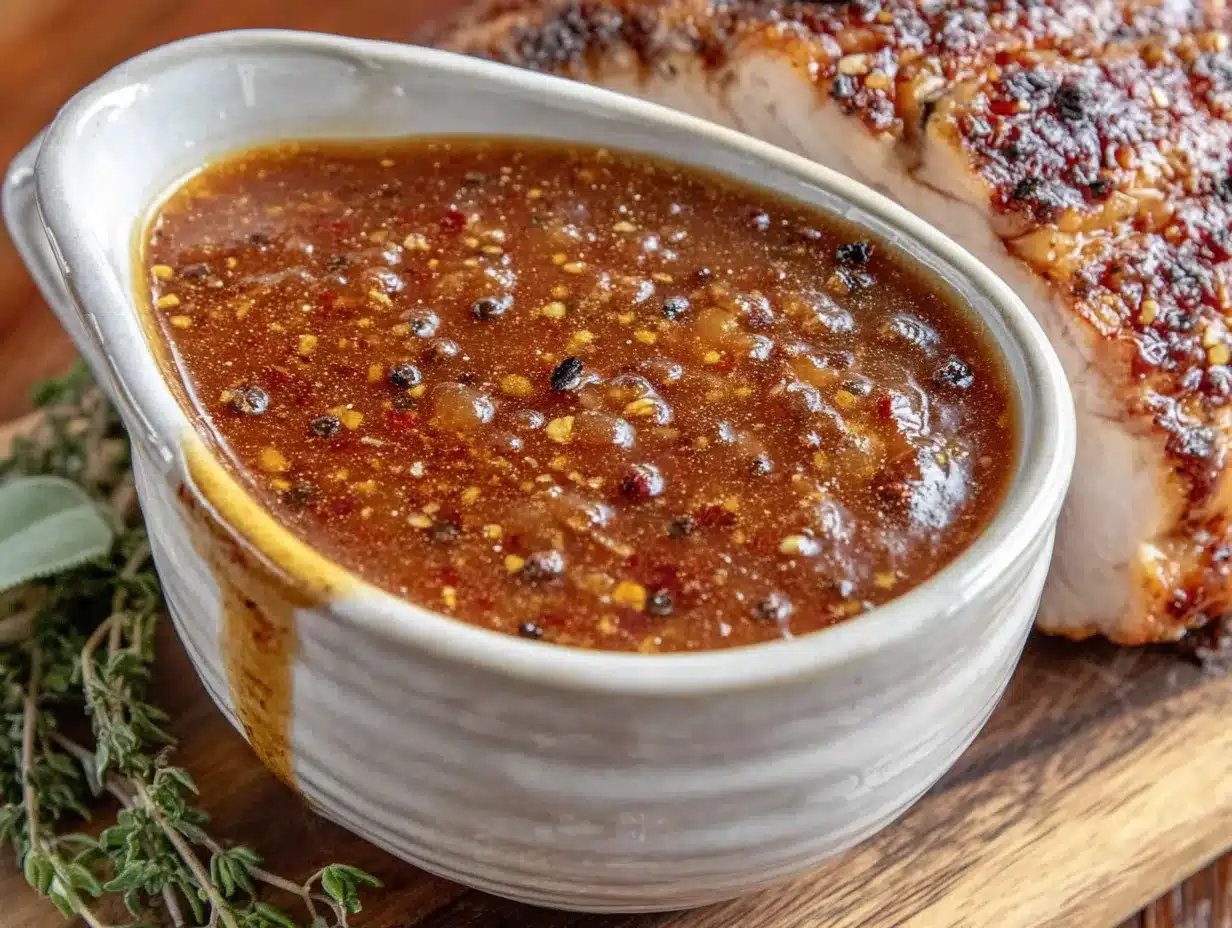
This method is broken into two parts: making the stock and finishing the gravy. You can do the stock a day or two ahead to spread out the work.
- Preheat and Prep (10 minutes): Preheat your oven to 400°F (200°C). Arrange the turkey wings, quartered onion, carrot chunks, and celery chunks in a single layer on your roasting pan. Drizzle with a tablespoon of oil and toss to coat. Season lightly with salt and pepper.
- Roast the Wings (45 minutes): Roast for 40 to 45 minutes, flipping halfway through, until the turkey wings are deep golden brown and the vegetables are caramelized. The smell at this point is incredible—rich and savory. Don’t skip this step; the browning is where the flavor lives.
- Make the Stock (1 hour 30 minutes): Transfer the roasted wings and vegetables to your large stockpot. Pour about 1/2 cup of water into the hot roasting pan and scrape up all the browned bits from the bottom—this is liquid gold. Add this deglazed liquid to the pot along with the 6 cups of broth, smashed garlic cloves, thyme sprigs, and bay leaves. Bring to a boil over high heat, then reduce to a gentle simmer. Let it bubble away for 1 hour to 1 hour 15 minutes. The stock should reduce slightly and deepen in color.
- Strain the Stock (10 minutes): Place your fine-mesh strainer over a large bowl or pot. Carefully pour the stock through the strainer, discarding the solids. You should have about 4 to 5 cups of rich, golden stock. If you want an even clearer gravy, line the strainer with cheesecloth. Let the stock cool slightly, then skim off any fat that rises to the top. You can do this with a spoon or a fat separator.
- Make the Roux (10 minutes): In your medium saucepan, melt the 1/2 cup of unsalted butter over medium heat. Once it’s fully melted and bubbling, add the 1/2 cup of all-purpose flour. Whisk constantly for 2 to 3 minutes. The mixture will turn a pale golden color and smell nutty. This is your roux, and it’s the key to a smooth, lump-free gravy.
- Whisk in the Stock (15 minutes): Slowly pour the warm turkey stock into the roux, whisking continuously to prevent lumps. Start with a thin stream, then increase to a steady pour once the mixture starts to thicken. Continue whisking until the gravy comes to a gentle boil and thickens to your desired consistency—usually about 5 to 7 minutes. It should coat the back of a spoon.
- Season and Finish (5 minutes): Remove the bay leaves and thyme sprigs. Season with salt and black pepper to taste. Start with 1/2 teaspoon of salt and go from there. For an extra silky finish, you can whisk in a tablespoon of cold butter at the very end. This adds a beautiful sheen and richness.
- Cool and Store (20 minutes): Let the gravy cool to room temperature, then transfer it to an airtight container. Refrigerate for up to 3 days. The gravy will thicken as it chills, but don’t worry—it will loosen up when you reheat it.
One warning: don’t rush the roux. If you cook it too fast over high heat, it can burn and turn bitter. Keep the heat medium and whisk like your gravy depends on it—because it does.
Cooking Tips & Techniques
Over the years, I’ve made my share of gravy mistakes. Here’s what I’ve learned so you don’t have to repeat them.
Master the Roux: The roux is the heart of this gravy. Cook it just until it smells toasty and looks like wet sand. If it gets too dark, your gravy will have a slightly burnt flavor. I once got distracted by a phone call and ended up with a roux the color of chocolate. The gravy was, let’s say, interesting—but not what you want on Thanksgiving.
Warm Stock, Cold Butter: Always add warm stock to your roux. Cold stock can cause the roux to seize up and form lumps. Similarly, if you’re finishing with a pat of butter at the end, make sure it’s cold. This little trick, called “monter au beurre,” gives the gravy a glossy, restaurant-quality finish.
Season in Layers: Don’t dump all your salt in at once. Season the roasting wings lightly, then taste the stock before you make the roux, and finally adjust the finished gravy. This layered approach builds complexity without making it salty.
Fix Lumps the Easy Way: If your gravy does get lumpy, don’t panic. Pour it through a fine-mesh strainer into a clean pot. You’ll lose a little volume, but you’ll save the gravy. A quick blitz with an immersion blender also works in a pinch.
Timing is Everything: Make the stock one day, the gravy the next. This breaks the work into manageable chunks and lets the stock flavors deepen overnight. On the big day, just reheat the gravy gently over low heat, whisking occasionally. Add a splash of broth or water if it’s too thick.
Variations & Adaptations
This recipe is a fantastic base, but it’s also incredibly flexible. Here are a few ways to make it your own.
- Herb-Infused Gravy: Add a handful of fresh sage leaves and rosemary sprigs to the stock while it simmers. Strain them out with the other solids. The result is a deeply aromatic gravy that screams “holiday.”
- Mushroom Turkey Gravy: Sauté 8 ounces of sliced cremini mushrooms in butter until golden brown before making the roux. Add them back to the finished gravy for an earthy, umami-packed twist. This is my personal favorite for a non-traditional Thanksgiving.
- Gluten-Free Gravy: Substitute the all-purpose flour with a 1:1 gluten-free flour blend or cornstarch. If using cornstarch, mix 3 tablespoons with 3 tablespoons of cold water to make a slurry, then whisk it into the hot stock. Simmer until thickened.
- Make it Dairy-Free: Use a high-quality vegan butter or olive oil in place of the butter for the roux. The flavor will be slightly different, but still delicious. Just make sure your broth is also dairy-free.
- Spicy Kick: Add a pinch of cayenne pepper or a few dashes of smoked paprika to the roux. It won’t make the gravy spicy, but it will add a subtle warmth that surprises and delights.
I once tried a version with roasted garlic instead of fresh garlic in the stock. I roasted a whole head of garlic alongside the turkey wings, then squeezed the soft cloves into the pot. The result was a mellow, sweet garlic flavor that was absolutely divine. It’s now my go-to for special occasions.
Serving & Storage Suggestions
This gravy is best served warm, ladled generously over sliced turkey, mashed potatoes, and stuffing. It’s the glue that holds the perfect Thanksgiving plate together.
Serving Temperature: Reheat the gravy gently over low heat on the stovetop, whisking occasionally. If it’s too thick, add a splash of warm turkey or chicken broth until it reaches your desired consistency. For a quick fix, you can microwave it in 30-second bursts, stirring between each.
What to Serve With It: This gravy is a natural partner for roasted turkey, but don’t stop there. It’s amazing on mashed potatoes, biscuits, poutine, or even as a sauce for roasted vegetables. I’ve been known to drizzle it over leftover turkey sandwiches for days after the holiday.
Storage Instructions: Store the gravy in an airtight container in the refrigerator for up to 3 days. The flavors will actually continue to meld and deepen, making it even better on day two. For longer storage, you can freeze it for up to 3 months. Pour it into a freezer-safe bag or container, leaving a little room for expansion. Thaw overnight in the fridge before reheating.
Reheating Tips: The gravy will thicken significantly when chilled. Don’t be alarmed. When reheating, add a tablespoon of broth or water at a time until it loosens up. Whisk vigorously to restore its smooth texture. If you’re reheating a large batch, do it slowly over low heat to prevent scorching on the bottom.
Flavor Development: This is the best part—the gravy tastes even better the next day. The roasted flavors have time to settle and meld, creating a depth that’s hard to achieve with fresh gravy. I always make mine two days before Thanksgiving for this exact reason.
Nutritional Information & Benefits
While this gravy is an indulgence, it’s made from whole, real ingredients. Here’s a rough estimate per 1/4 cup serving:
- Calories: Approximately 110
- Fat: 9g (mostly from butter)
- Carbohydrates: 6g
- Protein: 2g
- Sodium: 250mg (varies based on broth and added salt)
Health Benefits of Key Ingredients: Turkey wings provide a good source of protein and B vitamins, especially niacin, which supports energy metabolism. Onions and garlic are rich in antioxidants and have anti-inflammatory properties. Using homemade stock also means you’re controlling the sodium content, which is a win for your heart.
Dietary Considerations: This recipe is naturally low-carb and can be made gluten-free or dairy-free with the substitutions mentioned above. It’s not suitable for a vegan diet, but the mushroom variation comes close if you use a plant-based broth.
Personal Perspective: I believe in enjoying food without guilt. This gravy is a once-a-year treat for many, and it’s made with love and intention. Using real butter and homemade stock means you’re nourishing your body with quality ingredients, even in a decadent dish. Balance, not restriction, is the key.
Conclusion
This perfect make-ahead turkey gravy from scratch is more than just a recipe—it’s a game-changer for your holiday cooking. It takes the pressure off the big day, delivers incredible depth of flavor, and gives you one less thing to worry about while you’re juggling a dozen other dishes. I honestly can’t imagine going back to the frantic, last-minute gravy of my past. Mr. Henderson’s index card changed my Thanksgiving forever, and I hope this recipe does the same for you.
Don’t be afraid to make it your own. Tweak the herbs, try the mushroom version, or add a splash of white wine to the stock. The beauty of this recipe is its flexibility. I’d love to hear how it turns out for you—drop a comment below and let me know what variations you tried. Did you add sage? Did you make it gluten-free? Share your success stories (and your happy accidents) with our community.
Here’s to a stress-free, delicious holiday. You’ve got this. Now go make some gravy!
Frequently Asked Questions
Can I use turkey drumsticks instead of wings for the stock?
Absolutely. Turkey drumsticks work just as well and can be even more flavorful since they have more meat. Just make sure to roast them until they’re deeply browned for the best flavor.
How far ahead can I make this gravy?
You can make the stock up to 3 days ahead and the finished gravy up to 3 days ahead. For best results, make the stock one day, the gravy the next, and serve on day three. The flavors just get better with time.
My gravy is too thick after refrigerating. How do I fix it?
This is completely normal. When reheating, add a tablespoon of warm turkey or chicken broth at a time, whisking constantly, until it reaches your desired consistency. Start with a small amount and add more as needed.
Can I freeze this gravy?
Yes, this gravy freezes beautifully. Pour it into a freezer-safe container, leaving about an inch of headspace for expansion. It will keep for up to 3 months. Thaw overnight in the refrigerator before reheating gently on the stovetop.
What if I don’t have a fine-mesh strainer?
No problem. You can use a colander lined with a clean kitchen towel or cheesecloth. Just be careful when pouring the hot stock, and let it drain naturally without pressing on the solids to avoid cloudiness.
Pin This Recipe!
Perfect Make-Ahead Turkey Gravy: Easy Homemade Recipe

This make-ahead turkey gravy is a game-changer for your holiday cooking. Made with roasted turkey wings and a classic roux, it delivers deep, rich flavor and a silky smooth texture, all while saving you from last-minute stress.
- Prep Time: 10 minutes
- Cook Time: 1 hour 45 minutes
- Total Time: 1 hour 55 minutes
- Yield: 4 cups (approximately 16 servings of 1/4 cup each) 1x
- Category: Sauce
- Cuisine: American
Ingredients
- 2 to 3 pounds turkey wings
- 1 large onion, quartered
- 2 medium carrots, cut into chunks
- 2 celery stalks, cut into chunks
- 4 to 5 garlic cloves, smashed
- 6 cups low-sodium chicken or turkey broth
- 1/2 cup (1 stick) unsalted butter
- 1/2 cup all-purpose flour
- 4 to 5 sprigs fresh thyme
- 2 bay leaves
- Salt and black pepper to taste
Instructions
- Preheat oven to 400°F (200°C). Arrange turkey wings, quartered onion, carrot chunks, and celery chunks in a single layer on a roasting pan. Drizzle with 1 tablespoon oil, toss to coat, and season lightly with salt and pepper.
- Roast for 40 to 45 minutes, flipping halfway through, until turkey wings are deep golden brown and vegetables are caramelized.
- Transfer roasted wings and vegetables to a large stockpot. Pour 1/2 cup water into the hot roasting pan, scrape up browned bits, and add to the pot along with 6 cups broth, smashed garlic, thyme sprigs, and bay leaves. Bring to a boil, then reduce to a gentle simmer. Cook for 1 hour to 1 hour 15 minutes.
- Strain the stock through a fine-mesh strainer into a large bowl, discarding solids. You should have about 4 to 5 cups of stock. Let cool slightly, then skim off any fat.
- In a medium saucepan, melt 1/2 cup unsalted butter over medium heat. Add 1/2 cup all-purpose flour and whisk constantly for 2 to 3 minutes until the roux turns pale golden and smells nutty.
- Slowly pour the warm turkey stock into the roux, whisking continuously to prevent lumps. Continue whisking until the gravy comes to a gentle boil and thickens, about 5 to 7 minutes.
- Remove bay leaves and thyme sprigs. Season with salt and black pepper to taste. For extra richness, whisk in 1 tablespoon cold butter at the end.
- Let gravy cool to room temperature, then transfer to an airtight container. Refrigerate for up to 3 days. Reheat gently before serving.
Notes
For best results, make the stock one day and the gravy the next. The gravy thickens as it chills; reheat with a splash of broth to adjust consistency. To fix lumps, strain through a fine-mesh strainer or use an immersion blender.
Nutrition
- Serving Size: 1/4 cup
- Calories: 110
- Sugar: 1
- Sodium: 250
- Fat: 9
- Saturated Fat: 5
- Carbohydrates: 6
- Protein: 2
Keywords: turkey gravy, make-ahead gravy, Thanksgiving gravy, homemade gravy, turkey stock, roux gravy, holiday gravy