Love this? Save it for later!
Share the inspiration with your friends
The power went out halfway through my prep work. There I was, standing in a dim kitchen at six o’clock on a Tuesday, holding a gorgeous fillet of salmon that I’d just unwrapped. My plan had been this elaborate miso-glazed situation with a complicated reduction sauce—the kind of recipe that requires precision, patience, and, you know, electricity. I had the oven preheated to 425, the rice cooker humming, and about forty-five minutes of optimism left in my day.
Then everything went dark.
I stood there for a solid minute, honestly just staring at the salmon like it might offer a solution. The asparagus in my other hand was starting to feel like a problem rather than a side dish. My neighbor’s generator kicked on across the street, which felt like a personal insult. I was already running late for a phone call with my sister, and now dinner was looking like a bowl of cereal situation.
But here’s the thing about cooking when things go sideways—you get creative. Or you get desperate. Sometimes those are the same thing. I grabbed my heaviest skillet, lit the gas burner with a match (feeling very pioneer-ish for about three seconds), and decided I was going to make this work on one burner with minimal fuss. No oven, no rice cooker, no complicated steps. Just a pan, some butter, garlic, and the hope that thirty minutes of stovetop cooking could salvage the evening.
What came out of that pan was nothing like the plan—and better. The salmon had this perfect golden crust from the butter browning just right. The asparagus was tender but still snappy, soaking up all that garlicky goodness. And the whole thing came together in less time than my original recipe would have taken with full power. Maybe you’ve been there—the moment when a kitchen disaster forces you to simplify, and simple turns out to be exactly what you needed. That’s this Light and Easy Garlic Butter Salmon with Asparagus. It’s the recipe I keep coming back to, not despite the power outage, but because of it.
Why You’ll Love This Recipe
Let me tell you why this Light and Easy Garlic Butter Salmon with Asparagus has become my go-to weeknight dinner, and why I think it’ll become yours too. After testing this recipe about seven times (yes, I’m that person), I’ve nailed down exactly what makes it work so beautifully.
- Quick & Easy: This whole meal comes together in under 25 minutes from start to finish. That’s less time than it takes to decide what to order for delivery.
- Simple Ingredients: You probably have garlic and butter in your kitchen right now. Salmon and asparagus are easy to find at any grocery store. No specialty trips required.
- Perfect for Busy Weeknights: When you’re tired and hungry and just want something that feels special without the effort, this is it. It’s fancy enough for company but easy enough for a Tuesday.
- Crowd-Pleaser: I’ve served this to picky eaters, fish skeptics, and actual chefs. Everyone goes back for seconds.
- Unbelievably Delicious: The butter gets nutty and brown, the garlic infuses everything, and the salmon stays perfectly moist with that crispy edge. It’s comfort food that happens to be good for you.
What makes this version different from all the other garlic butter salmon recipes out there? It’s the technique. Instead of pan-searing the salmon first and then adding the asparagus separately, you cook them together in one pan. The asparagus soaks up the garlic butter as it cooks, and the salmon stays tender because it’s not overcrowded. The balance of flavors is spot-on—garlicky but not overwhelming, buttery but not heavy, lemony but not sour. It’s not just another recipe; it’s the one you’ll actually make on a regular basis.
This is the kind of meal that makes you close your eyes after the first bite. It’s wholesome and satisfying without making you feel like you’re eating “diet food.” You get the indulgence of butter and garlic with the freshness of salmon and asparagus. Perfect for those nights when you want to eat well without sacrificing flavor or spending an hour in the kitchen.
What Ingredients You Will Need
This recipe uses simple, wholesome ingredients to deliver bold flavor and satisfying texture without the fuss. Most of these are pantry staples or easy to find at any grocery store. Here’s what you’ll need:
For the Salmon
- 4 salmon fillets (6 oz each, skin-on or skinless) – Look for fillets that are roughly the same thickness so they cook evenly. I prefer wild-caught when it’s available, but farm-raised works great too.
- 3 tablespoons unsalted butter – Salted butter works if that’s what you have, just reduce the added salt slightly. Kerrygold or any European-style butter adds extra richness.
- 4 cloves garlic, minced – Fresh garlic is non-negotiable here. The pre-minced stuff in jars won’t give you the same flavor.
- 1 tablespoon olive oil – Helps prevent the butter from burning and adds a little extra flavor.
- 1/2 teaspoon salt – I use fine sea salt. Adjust based on your preference and the saltiness of your butter.
- 1/4 teaspoon black pepper – Freshly ground is best.
- 1/4 teaspoon paprika – Adds a subtle warmth and beautiful color. Smoked paprika works wonderfully here.
- 1 lemon – You’ll use both the juice and zest. Get a fresh, firm lemon for the best flavor.
For the Asparagus
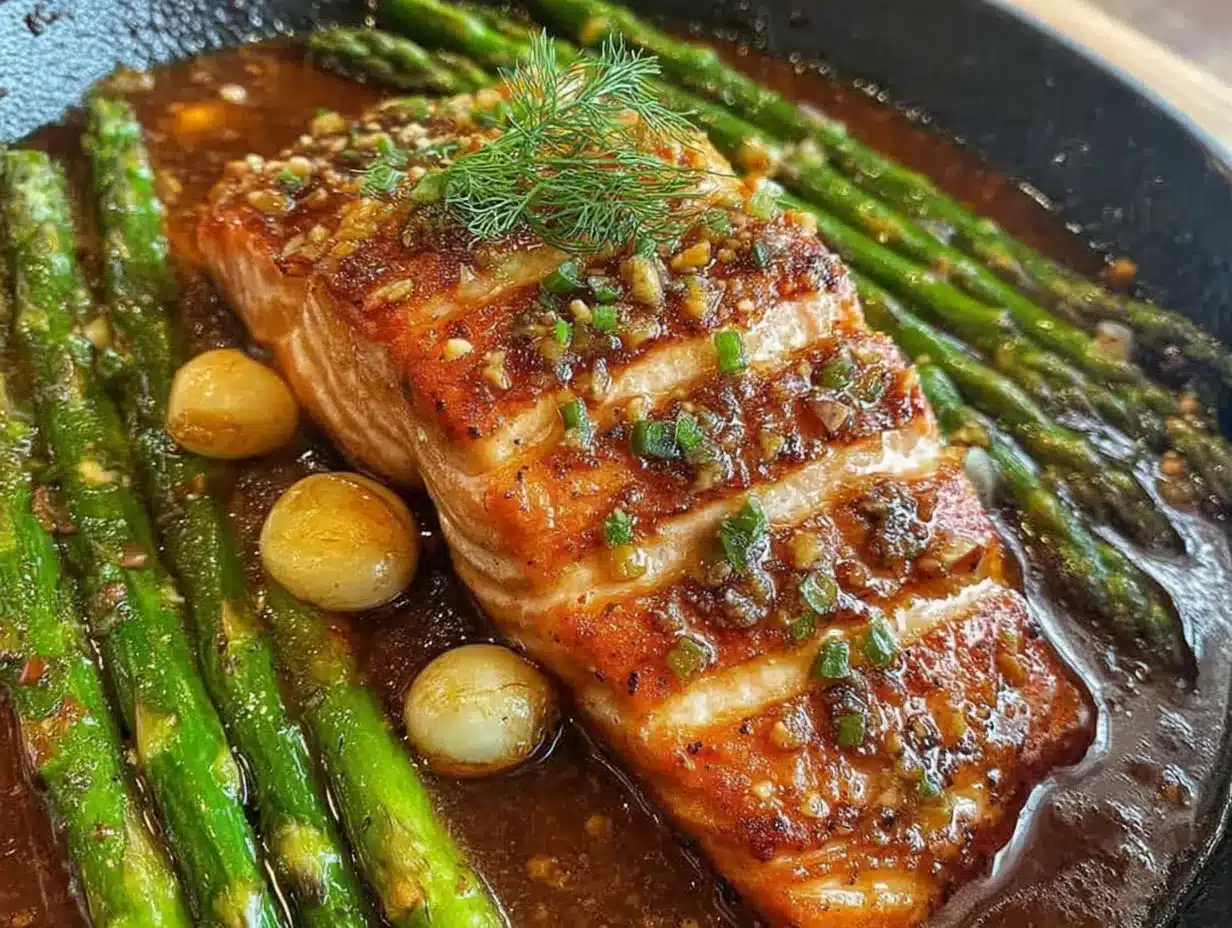
- 1 bunch asparagus (about 1 pound) – Look for spears that are bright green with tight tips. Thicker spears hold up better to pan-cooking.
- 1 tablespoon olive oil – For coating the asparagus.
- 1/4 teaspoon salt
- 1/8 teaspoon black pepper
- 2 cloves garlic, minced – Separate from the garlic for the salmon.
For Garnish
- 2 tablespoons fresh parsley, chopped – Adds freshness and color.
- Lemon wedges – For serving.
- Red pepper flakes (optional) – For a little heat.
Ingredient Tips: For the best texture, pat your salmon fillets dry with paper towels before seasoning. This helps them develop that beautiful golden crust. If your asparagus has woody ends, snap them off—they’ll naturally break where the tender part begins. I recommend using a good quality butter for this recipe since it’s the star of the show. For a dairy-free option, you can use vegan butter or ghee (which is technically dairy but has less lactose).
Equipment Needed
You don’t need much for this recipe, which is part of its beauty. Here’s what you’ll need:
- Large skillet (12-inch) – A heavy-bottomed skillet works best. Cast iron is ideal because it holds heat evenly, but a good non-stick or stainless steel pan works perfectly too. I use my 12-inch cast iron skillet for this recipe—it gives the salmon that perfect crust.
- Tongs – For flipping the salmon and moving the asparagus around. Silicone-tipped tongs won’t scratch your pan.
- Sharp knife – For mincing garlic and chopping parsley. A dull knife makes everything harder.
- Cutting board – Preferably one that’s dedicated to raw fish to avoid cross-contamination.
- Measuring spoons – For measuring butter, oil, and seasonings.
- Zester or microplane – For getting lemon zest without the bitter white pith.
- Paper towels – For patting the salmon dry.
Budget-Friendly Options: If you don’t have a cast iron skillet, a regular non-stick pan works great. Just be careful not to use metal utensils that could scratch the surface. If you don’t have a zester, a fine grater or even a vegetable peeler (for thin strips of zest) will do the job.
Preparation Method
- Prep the salmon (5 minutes): Take your salmon fillets out of the refrigerator and let them sit at room temperature for about 10 minutes. Pat them dry with paper towels—this is crucial for getting that golden crust. Season both sides with salt, pepper, and paprika. Set aside.
- Prep the asparagus (5 minutes): Rinse the asparagus and snap off the woody ends. You can do this by holding each spear near the bottom and bending until it breaks naturally. Cut any remaining tough parts off with a knife. Pat the asparagus dry and toss with olive oil, salt, and pepper. Set aside.
- Mince the garlic (3 minutes): Peel and mince 6 cloves of garlic total. Keep 4 cloves separate for the salmon and 2 cloves for the asparagus. Fresh garlic makes a huge difference here—don’t use the jarred stuff.
- Heat the pan (2 minutes): Place your large skillet over medium-high heat. Add the olive oil and let it heat up until it shimmers. You want the pan hot enough that the salmon sizzles when it hits the surface.
- Sear the salmon (6-7 minutes): Place the salmon fillets in the hot pan, skin-side down if they have skin. Don’t crowd the pan—cook in batches if needed. Let them cook undisturbed for 4 minutes. You’ll see the edges turning golden and the color creeping up the sides. Flip carefully using tongs. Cook for another 2-3 minutes for medium doneness (the center should be slightly translucent). For well-done, cook 4 minutes on the second side.
- Add the garlic butter (2 minutes): Reduce the heat to medium-low. Push the salmon to one side of the pan. Add the butter and minced garlic (the 4 cloves set aside for the salmon) to the empty space. Let the butter melt and the garlic become fragrant, about 30 seconds. Tilt the pan slightly and spoon the garlic butter over the salmon fillets. Squeeze half a lemon over everything.
- Cook the asparagus (5-7 minutes): Remove the salmon to a plate and tent with foil to keep warm. Add the remaining 1 tablespoon olive oil to the pan if it looks dry. Add the asparagus and the 2 cloves of minced garlic. Cook, stirring occasionally, until the asparagus is bright green and tender-crisp, about 5-7 minutes. The spears should be easy to pierce with a fork but still have some bite.
- Bring it together (2 minutes): Return the salmon to the pan with the asparagus. Spoon any remaining garlic butter over the top. Sprinkle with fresh parsley and lemon zest. Serve immediately with lemon wedges on the side.
Pro Tip: The salmon will continue cooking slightly after you remove it from the pan, so err on the side of slightly underdone. You’re looking for an internal temperature of 125°F for medium, 130°F for medium-well. The texture should be flaky but still moist.
Cooking Tips & Techniques
After making this Light and Easy Garlic Butter Salmon with Asparagus more times than I care to count, I’ve learned a few things the hard way. Let me save you some trouble.
Don’t overcrowd the pan. This is the number one mistake I see home cooks make. If you cram too many fillets into one pan, they steam instead of sear. You’ll end up with pale, sad salmon instead of that gorgeous golden crust. Cook in batches if you need to. It adds maybe five minutes total, and the texture difference is massive.
Pat your salmon dry. I know I said this already, but it’s worth repeating. Wet salmon won’t brown properly. Use paper towels and really press them into the flesh to absorb any moisture. Season right after so the salt has a minute to penetrate.
Watch the garlic. Garlic burns fast, especially in butter. The line between fragrant and bitter is about 15 seconds. Add the garlic after the salmon has seared, and keep the heat at medium-low. If you see the garlic turning brown before the butter has melted, pull the pan off the heat for a moment.
Use a thermometer. I resisted this for years, thinking I could tell by look and feel. I was wrong. An instant-read thermometer costs about $15 and will save you from overcooked salmon every single time. Insert it into the thickest part of the fillet, and you’re done at 125°F.
Let the salmon rest. I know you’re hungry, I know it smells amazing, but let the salmon sit for 2-3 minutes after cooking. This allows the juices to redistribute so every bite is moist, not dry.
One time I forgot to pat the salmon dry. I was in a rush, had the phone ringing, and skipped this step. The salmon turned out gray and tough, and the garlic butter sauce was watery and sad. I ate it anyway because I was starving, but I learned my lesson. Don’t be like me. Pat it dry.
Variations & Adaptations
One of the best things about this recipe is how flexible it is. Here are some variations I’ve tried and loved:
Lemon Herb Variation: Add 1 teaspoon dried dill or 2 tablespoons fresh dill along with the garlic. The dill pairs beautifully with salmon and lemon. I tried this on a whim when I had leftover dill from another recipe, and now it’s my second favorite version.
Spicy Version: Add 1/2 teaspoon red pepper flakes along with the garlic, and finish with a drizzle of sriracha or chili oil. The heat cuts through the richness of the butter perfectly. My husband loves this version—he adds extra chili flakes at the table like a maniac.
Low-Carb/Keto Adaptation: This recipe is already low-carb, but you can make it even keto-friendly by adding more butter and serving with extra asparagus or zucchini noodles. The butter-to-salmon ratio is already generous, so you’re good.
Dairy-Free Version: Substitute the butter with a good quality vegan butter or ghee. I’ve tried both, and ghee gives the closest flavor. Just be aware that ghee has a higher smoke point, so you might need to adjust the heat slightly.
Air Fryer Method: Season the salmon and cook at 400°F for 8-10 minutes. Toss the asparagus with oil and garlic, and add to the air fryer basket for the last 5 minutes. The texture is different—crispier on the outside—but it works in a pinch.
Different Vegetables: No asparagus? Try green beans, broccoli florets, or sliced zucchini. Adjust cooking time based on the vegetable. Green beans take about the same time, broccoli needs an extra minute or two, and zucchini cooks faster.
Garlic Butter Shrimp Version: Substitute the salmon with 1 pound of large shrimp, peeled and deveined. Cook for 2-3 minutes per side instead of 4-5. The garlic butter sauce is incredible with shrimp.
Serving & Storage Suggestions
This Light and Easy Garlic Butter Salmon with Asparagus is best served fresh, but there are ways to make it work for leftovers too.
Serving Temperature: Serve the salmon hot, right out of the pan. The butter should be bubbling and the asparagus still bright green. A squeeze of fresh lemon juice right before serving brightens everything up.
What to Serve With It: This dish is pretty complete on its own, but if you want to round it out, try it with:
- Steamed rice or quinoa to soak up the garlic butter
- Crusty bread for the same purpose (I’m not judging)
- A simple green salad with lemon vinaigrette
- Roasted potatoes if you’re feeling extra hungry
Storage Instructions: Store leftovers in an airtight container in the refrigerator for up to 2 days. The asparagus will soften over time, so don’t expect it to be as crisp as fresh. I don’t recommend freezing this dish—the texture of both the salmon and asparagus suffers.
Reheating: The best way to reheat is in a skillet over medium-low heat with a splash of water or lemon juice. Cover the pan to create steam, which helps prevent the salmon from drying out. Microwave works in a pinch, but go in 30-second bursts and check frequently. The salmon will continue cooking as it reheats, so don’t overdo it.
Flavor Development: Honestly, this dish is best the day it’s made. The garlic butter flavor is at its peak when fresh. Leftovers are still good, but the magic fades. That’s why I only make what I’ll eat in one sitting—or I double the recipe and invite someone over to share.
Nutritional Information & Benefits
This Light and Easy Garlic Butter Salmon with Asparagus is as good for you as it is delicious. Here’s a rough breakdown per serving (one fillet plus asparagus):
- Calories: Approximately 420-450
- Protein: 38-42g
- Fat: 28-32g (mostly healthy fats from salmon and butter)
- Carbohydrates: 8-10g
- Fiber: 3-4g
- Sugar: 3-4g (naturally occurring)
Health Benefits: Salmon is packed with omega-3 fatty acids, which support heart and brain health. It’s also an excellent source of high-quality protein and vitamin D. Asparagus is rich in fiber, folate, and vitamins A, C, and K. The garlic adds allicin, a compound known for its anti-inflammatory and immune-boosting properties. Even the butter, in moderation, provides fat-soluble vitamins and healthy saturated fats.
Dietary Considerations: This recipe is naturally gluten-free, low-carb, and keto-friendly. It’s also relatively low in calories for such a satisfying meal. If you’re watching your sodium, use unsalted butter and reduce the added salt. The lemon juice and zest add plenty of flavor without extra salt.
Personal Note: I love that this dish makes me feel good without making me feel deprived. It’s the kind of meal that supports my energy levels and keeps me full for hours. No mid-afternoon crash, no bloating—just good, clean fuel that tastes like a treat.
Conclusion
This Light and Easy Garlic Butter Salmon with Asparagus started as a kitchen accident—a power outage, a changed plan, and a leap of faith in a single skillet. But it became one of those recipes I genuinely look forward to making. It’s proof that sometimes the best dishes come from the most inconvenient moments.
What I love most about this recipe is how forgiving it is. You don’t need to be a trained chef to get it right. You just need good ingredients, a hot pan, and the willingness to trust the process. The garlic butter does the heavy lifting, the asparagus adds color and crunch, and the salmon brings that satisfying richness that makes you feel like you’re eating something truly special.
I hope you give this recipe a try, and I hope you make it your own. Add extra lemon if you like things bright. Throw in some red pepper flakes for heat. Swap the asparagus for whatever vegetable is in season. The beauty of a simple recipe is that it invites experimentation.
When you make it—and I really hope you do—come back and let me know how it turned out. Did you make any changes? Did your family love it? Did you, like me, discover it by accident? I’d love to hear your story. Drop a comment below, share a photo, or tag me on social media. Happy cooking, friends.
Frequently Asked Questions
Can I use frozen salmon for this recipe?
Yes, you can use frozen salmon, but you’ll need to thaw it completely first. The best way is to transfer it to the refrigerator the night before. If you’re in a hurry, place the sealed salmon in a bowl of cold water for about 30 minutes. Pat it very dry before cooking—frozen salmon releases more moisture as it thaws.
How do I know when the salmon is done?
The most reliable way is to use an instant-read thermometer. Insert it into the thickest part of the fillet—125°F for medium, 130°F for medium-well. Without a thermometer, look for the salmon to turn from translucent to opaque, and check that it flakes easily with a fork. The center should still be slightly translucent for medium doneness.
Can I make this recipe dairy-free?
Absolutely. Substitute the butter with a good quality vegan butter or ghee. I’ve had great results with both. Just keep an eye on the heat since vegan butter can burn more quickly than dairy butter. Coconut oil also works in a pinch, though it adds a slight coconut flavor.
What if I don’t have a large skillet?
No problem. Cook the salmon in batches to avoid overcrowding. Sear two fillets at a time, then keep them warm on a plate while you cook the remaining fillets. Add the asparagus after all the salmon is done. It adds a few extra minutes but the results are just as good.
How can I prevent the garlic from burning?
Garlic burns fast, especially in butter. The key is to add it after the salmon has seared and the heat is reduced to medium-low. Stir it constantly and remove the pan from the heat if it starts to brown too quickly. Burnt garlic tastes bitter and can ruin the dish, so watch it carefully.
Pin This Recipe!
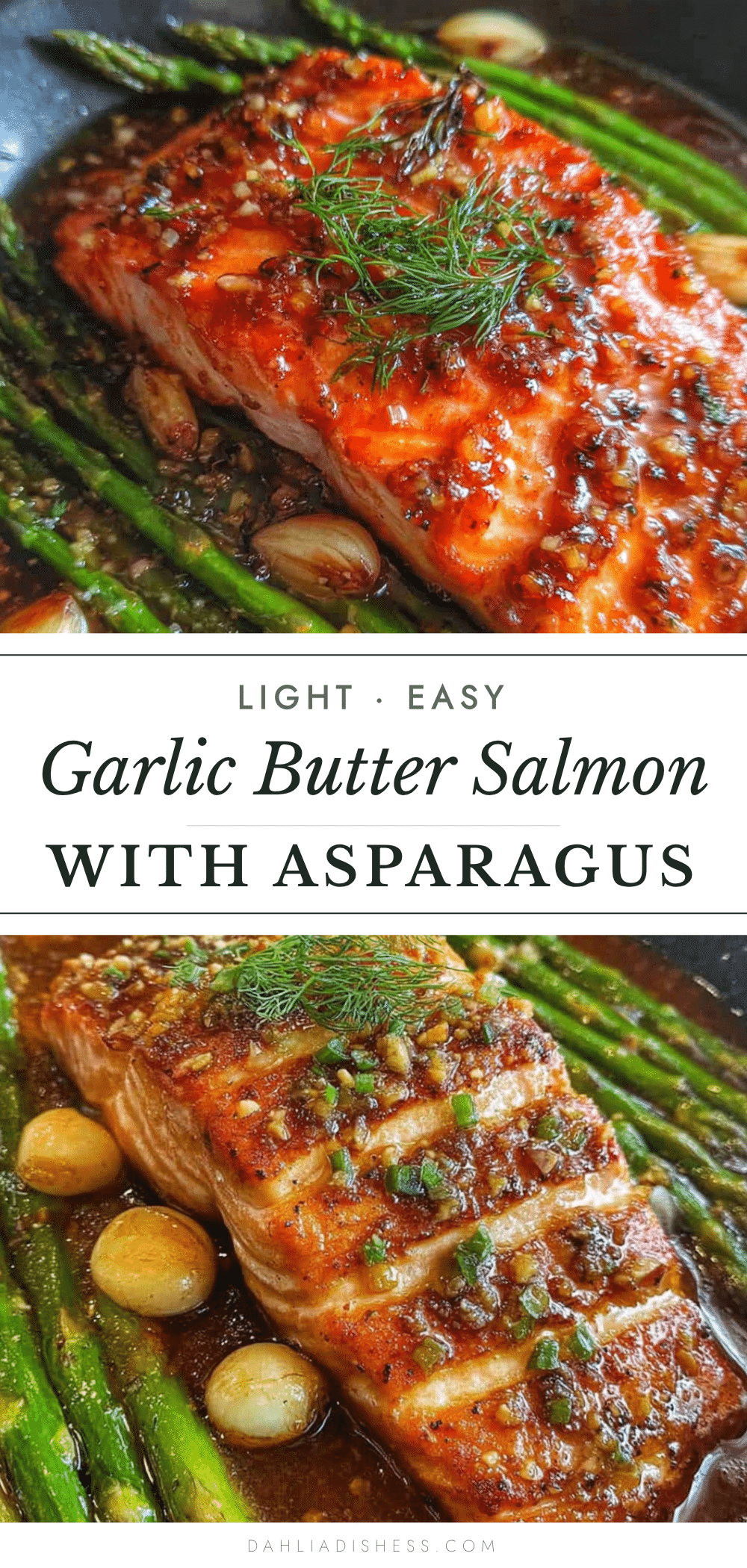
Light and Easy Garlic Butter Salmon with Asparagus
A quick and delicious one-pan salmon and asparagus dish with a rich garlic butter sauce, perfect for busy weeknights. This recipe came from a kitchen accident during a power outage and has become a go-to favorite.
- Prep Time: 15 minutes
- Cook Time: 15 minutes
- Total Time: 30 minutes
- Yield: 4 servings 1x
- Category: Main Course
- Cuisine: American
Ingredients
- 4 salmon fillets (6 oz each, skin-on or skinless)
- 3 tablespoons unsalted butter
- 4 cloves garlic, minced
- 1 tablespoon olive oil
- 1/2 teaspoon salt
- 1/4 teaspoon black pepper
- 1/4 teaspoon paprika
- 1 lemon (juice and zest)
- 1 bunch asparagus (about 1 pound)
- 1 tablespoon olive oil (for asparagus)
- 1/4 teaspoon salt (for asparagus)
- 1/8 teaspoon black pepper (for asparagus)
- 2 cloves garlic, minced (for asparagus)
- 2 tablespoons fresh parsley, chopped
- Lemon wedges (for serving)
- Red pepper flakes (optional, for garnish)
Instructions
- Prep the salmon: Take salmon fillets out of the refrigerator and let them sit at room temperature for about 10 minutes. Pat them dry with paper towels. Season both sides with salt, pepper, and paprika. Set aside.
- Prep the asparagus: Rinse the asparagus and snap off the woody ends. Pat dry and toss with olive oil, salt, and pepper. Set aside.
- Mince the garlic: Peel and mince 6 cloves of garlic total. Keep 4 cloves separate for the salmon and 2 cloves for the asparagus.
- Heat the pan: Place a large skillet over medium-high heat. Add the olive oil and let it heat until shimmering.
- Sear the salmon: Place the salmon fillets in the hot pan, skin-side down if they have skin. Cook undisturbed for 4 minutes. Flip carefully and cook for another 2-3 minutes for medium doneness (or 4 minutes for well-done).
- Add the garlic butter: Reduce heat to medium-low. Push salmon to one side. Add butter and 4 minced garlic cloves to the empty space. Let butter melt and garlic become fragrant, about 30 seconds. Spoon garlic butter over salmon. Squeeze half a lemon over everything.
- Cook the asparagus: Remove salmon to a plate and tent with foil. Add remaining 1 tablespoon olive oil to the pan if dry. Add asparagus and 2 minced garlic cloves. Cook, stirring occasionally, until bright green and tender-crisp, about 5-7 minutes.
- Bring it together: Return salmon to the pan with asparagus. Spoon any remaining garlic butter over the top. Sprinkle with fresh parsley and lemon zest. Serve immediately with lemon wedges.
Notes
Pat the salmon dry for a golden crust. Don’t overcrowd the pan; cook in batches if needed. Watch the garlic to prevent burning. Use an instant-read thermometer for perfect doneness (125°F for medium). Let salmon rest 2-3 minutes before serving.
Nutrition
- Serving Size: 1 salmon fillet plus
- Calories: 435
- Sugar: 4
- Sodium: 580
- Fat: 30
- Saturated Fat: 12
- Carbohydrates: 9
- Fiber: 4
- Protein: 40
Keywords: garlic butter salmon, salmon with asparagus, one-pan salmon, easy salmon recipe, weeknight dinner, healthy salmon, low-carb salmon, keto salmon