Love this? Save it for later!
Share the inspiration with your friends
My daughter asked why I couldn’t just throw the salmon and asparagus on the same pan and call it dinner. I started to explain why that wouldn’t work—different cooking times, the asparagus would get soggy, the fish would dry out. Then I stopped. Honestly, I had no good reason. I’d just never done it that way.
That was a Tuesday night, and I was tired. The kind of tired where you’re staring into the fridge hoping a meal will magically appear. She was twelve, impatient, and hungry. “It’s just fish and vegetables, Mom,” she said, rolling her eyes. I wanted to argue, to defend my years of cooking experience. But she had a point. So I grabbed a sheet pan, tossed everything on it, and figured I’d salvage whatever mess I made.
Let me tell you—the dinner that came out of the oven was better than any salmon I’d carefully cooked in separate pans. The asparagus was tender-crisp, the salmon was flaky and moist, and there was almost no cleanup. I mean, I stood there eating straight off the pan, too shocked to even plate it properly. My daughter just smiled and said, “Told you.” She was right. And honestly? It was a lesson I needed to learn.
That’s how this easy sheet pan salmon and asparagus became a regular in our house. It’s the meal I make when I want something that feels fancy but costs next to nothing. You know that feeling when you’re feeding a family on a budget and you still want dinner to feel special? This is it. No complicated steps, no expensive ingredients, just real food that works.
Why You’ll Love This Recipe
I’ve tested this sheet pan salmon recipe more times than I can count, and it never lets me down. It’s one of those rare meals that checks every box for a busy family—fast, affordable, and genuinely delicious.
- Quick & Easy: From prep to plate in under 25 minutes. That’s faster than ordering takeout, and way cheaper.
- Simple Ingredients: You probably have most of these in your kitchen right now. No trips to a specialty store needed.
- Perfect for Busy Weeknights: This is the dinner you make when you have zero energy left but still want something wholesome on the table.
- Crowd-Pleaser: Even my pickiest eater—the one who claims to hate fish—cleans her plate. The lemon-herb seasoning does the trick.
- Unbelievably Delicious: The salmon stays buttery and moist, while the asparagus gets those perfect caramelized edges. It’s comfort food that happens to be healthy.
What makes this recipe different from all the other salmon recipes out there? It’s the timing. I spent weeks testing different oven temperatures and pan positions until I found the sweet spot where everything cooks perfectly together. No overcooked fish, no undercooked vegetables. Just a perfectly balanced meal that comes out of the oven looking like you spent an hour on it.
This isn’t just another sheet pan dinner—it’s the one that makes you close your eyes after the first bite. It’s the meal that proves you don’t need expensive ingredients or complicated techniques to feed your family something amazing. And on a Tuesday night when you’re exhausted, that’s everything.
What Ingredients You Will Need
This recipe uses simple, wholesome ingredients to deliver bold flavor without the fuss. Everything is easy to find and budget-friendly—exactly what you need when you’re feeding a family.
For the Salmon and Asparagus
- 4 salmon fillets (about 6 ounces each, skin on or off—your choice). I prefer skin-on for extra moisture, but either works.
- 1 bunch fresh asparagus (about 1 pound), woody ends trimmed. Look for spears that are bright green and firm, not limp.
- 3 tablespoons olive oil (use a good quality one—it makes a difference in flavor).
- 2 cloves garlic, minced (or 1 teaspoon garlic powder if you’re in a hurry).
- 1 lemon, sliced into thin rounds (plus extra wedges for serving).
- 1 teaspoon salt (I use kosher salt for better distribution).
- ½ teaspoon black pepper, freshly ground if possible.
- 1 teaspoon dried dill (or 1 tablespoon fresh dill, chopped).
- 1 teaspoon dried parsley (or 1 tablespoon fresh parsley).
- ½ teaspoon paprika (smoked paprika adds a lovely depth, but regular works too).
Optional Additions
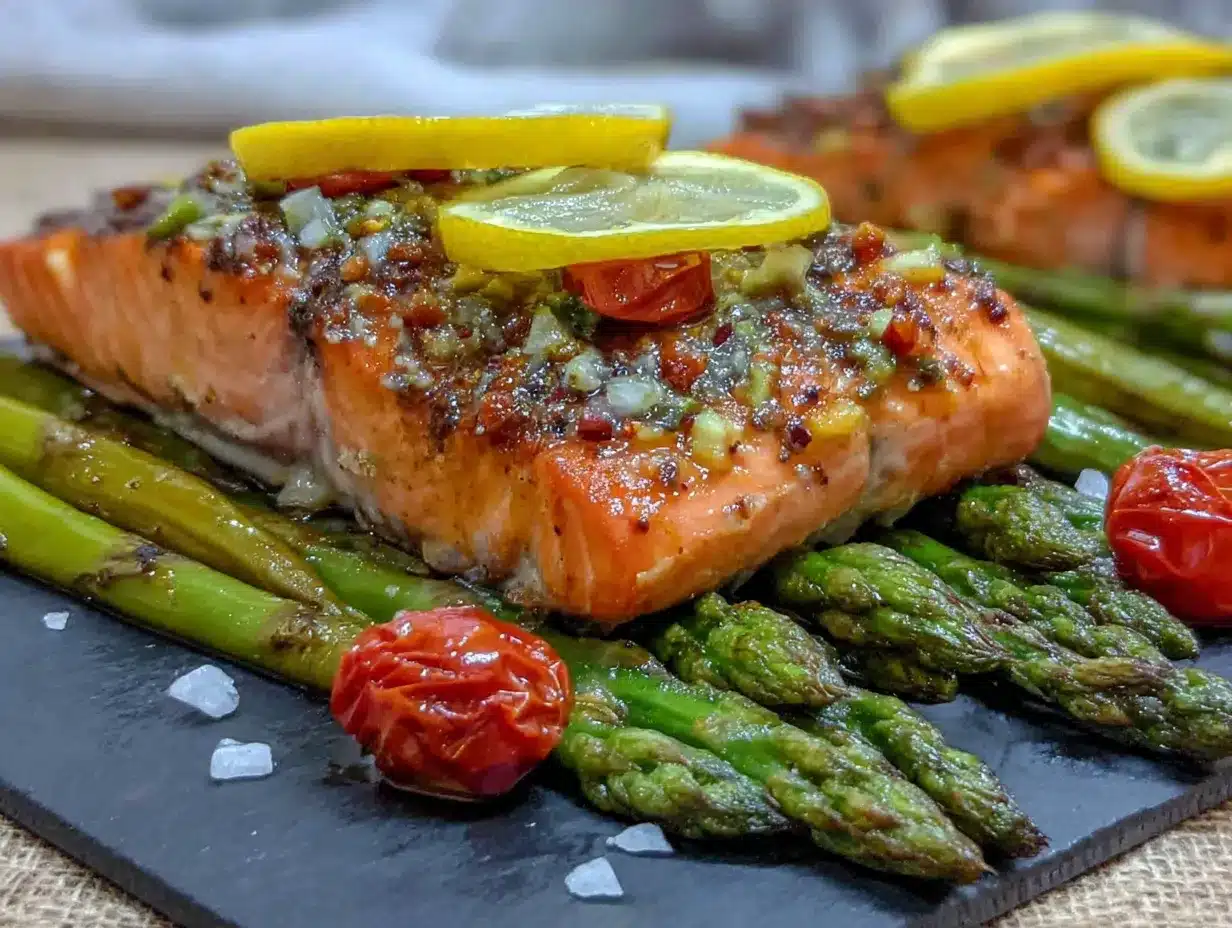
- Cherry tomatoes, halved (they roast beautifully alongside the salmon).
- Red pepper flakes, for a little heat.
- Fresh thyme sprigs, scattered over the pan for extra aroma.
I recommend grabbing your salmon from the frozen section if you’re on a tight budget. Honestly, frozen salmon is often fresher than the “fresh” stuff at the counter because it’s flash-frozen right after catching. Just thaw it overnight in the fridge, and you’re good to go.
For the asparagus, look for spears that are about the same thickness so they cook evenly. Thin spears will cook faster, thick ones take a bit longer. I personally like medium-thick spears—they hold up well without getting mushy.
If you’re out of fresh garlic, don’t sweat it. Garlic powder works fine here. Just use half the amount since it’s more concentrated. And if you don’t have dill, try thyme or oregano instead. This recipe is forgiving that way.
Equipment Needed
You don’t need much for this recipe, which is part of the beauty. Here’s what you’ll want:
- One large sheet pan (18×13 inches is ideal). A rimmed baking sheet works best to catch any juices.
- Parchment paper or aluminum foil (for easy cleanup—trust me on this one).
- A sharp knife (for trimming the asparagus ends).
- Measuring spoons (or just eyeball it—I do half the time).
- A small bowl (for mixing the seasoning if you want to be precise).
- Tongs (for flipping the asparagus halfway through).
I’ve made this on a cheap sheet pan from the dollar store, and it turned out just fine. You don’t need fancy equipment. If you don’t have parchment paper, foil works perfectly—just give it a light spray of oil so nothing sticks.
One tip I learned the hard way: don’t use a pan that’s too small. If everything is crowded together, the salmon steams instead of roasting, and you lose that lovely golden crust. Give your ingredients some breathing room.
Preparation Method
Let’s get cooking. This is straightforward, but I’ll walk you through every step so you nail it the first time.
- Preheat your oven to 400°F (200°C). This is important—don’t skip the preheat. A hot oven is what gives you that beautiful caramelization on both the salmon and asparagus.
- Line your sheet pan with parchment paper or foil. This makes cleanup a breeze. I’ve forgotten this step before, and let me tell you, scrubbing baked-on salmon juice is not how you want to spend your evening.
- Prepare the asparagus. Rinse the spears and pat them dry. Snap off the woody ends—they’ll naturally break where the tender part begins. If you’re unsure, just bend a spear near the bottom until it snaps. That’s where you cut the rest. Place the trimmed asparagus on one side of the sheet pan.
- Season the vegetables. Drizzle the asparagus with 1 tablespoon of olive oil, then sprinkle with a pinch of salt and pepper. Toss them gently with your hands or tongs to coat evenly. Spread them in a single layer.
- Prepare the salmon. Pat the fillets dry with paper towels. This step is crucial—wet salmon won’t brown properly. Place the fillets on the other side of the sheet pan, leaving a little space between each piece.
- Make the seasoning mixture. In a small bowl, combine the remaining 2 tablespoons olive oil, minced garlic, salt, pepper, dill, parsley, and paprika. Stir until it forms a paste. If it’s too thick, add a tiny splash more oil.
- Season the salmon. Brush the seasoning mixture evenly over each fillet. Don’t be shy—cover the tops and the sides. Place a lemon slice on top of each piece. The lemon adds brightness and keeps the fish moist as it cooks.
- Roast everything together. Place the sheet pan in the preheated oven. Roast for 12-15 minutes, depending on the thickness of your salmon. For fillets that are about 1 inch thick, 14 minutes is usually perfect.
- Check for doneness. The salmon should be opaque and flake easily with a fork. The asparagus should be tender-crisp—bright green with slightly browned edges. If your asparagus is thicker, it might need an extra 2 minutes.
- Optional broil for extra color. If you want the tops of the salmon lightly browned, switch your oven to broil for the last 1-2 minutes. Watch it closely—broilers can go from perfect to burnt in seconds.
- Rest and serve. Remove the pan from the oven and let it rest for 2-3 minutes. This allows the juices to redistribute. Serve immediately with extra lemon wedges on the side.
Here’s a sensory cue to look for: when the salmon is done, it will have a slight resistance when you press it with a fork, then flake apart easily. If it feels mushy, it needs more time. If it’s hard and dry, you’ve gone too far. You’re aiming for that sweet spot where it’s tender and moist.
One more thing—if you’re cooking for a larger family, you can double the recipe easily. Just use two sheet pans and rotate them halfway through cooking. Your oven can handle it.
Cooking Tips & Techniques
I’ve made this sheet pan salmon more times than I can count, and I’ve learned a few things along the way. Some of these came from mistakes, others from happy accidents.
Don’t overcrowd the pan. This is the number one mistake I see. If your salmon and asparagus are touching too much, they’ll steam instead of roast. You want that golden, caramelized exterior, not pale, soggy food. Give everything a little space.
Pat the salmon dry. I cannot stress this enough. Wet salmon doesn’t brown. It also doesn’t hold onto seasoning well. Take an extra 30 seconds to blot those fillets dry with paper towels before you add the oil and spices. Your future self will thank you.
Use a meat thermometer if you’re nervous. I know, I know—real cooks don’t use thermometers. But honestly, it takes the guesswork out. Salmon is perfectly cooked at 125°F (52°C) for medium, or 130°F (54°C) for well-done. Insert the thermometer into the thickest part of the fillet.
Timing is everything. If your asparagus spears are very thin, add them to the pan 5 minutes after the salmon starts cooking. If they’re thick, you can put them in at the same time. I’ve burned thin asparagus before by not paying attention to thickness. Learn from my mistake.
Let the salmon rest. I know you’re hungry, but those 2-3 minutes of resting make a real difference. The juices redistribute, and the fish stays moist. If you cut into it immediately, all those lovely juices run out onto the plate.
Multitask wisely. While the salmon roasts, use that time to set the table, make a quick salad, or pour drinks. The oven is doing all the work. Don’t stand there watching it—you’ll just make yourself hungry.
Variations & Adaptations
This recipe is endlessly adaptable, which is why it’s perfect for families with different tastes. Here are some variations I’ve tried and loved.
Lemon-Garlic Butter Version: Replace the olive oil with 3 tablespoons melted butter. Add an extra clove of garlic. The butter adds richness that’s absolutely decadent. My husband calls this the “restaurant version.”
Spicy Cajun Twist: Swap the dill and parsley for 1 tablespoon Cajun seasoning. Add a pinch of cayenne if you like heat. This is great for nights when you want something bold and smoky. Serve with rice to balance the spice.
Dairy-Free and Gluten-Free: This recipe is naturally both, as long as you use olive oil instead of butter. Just double-check your spice blends—some pre-made seasonings contain hidden gluten or dairy.
Vegetable Swap: Don’t have asparagus? Try broccoli florets, green beans, or zucchini slices. Just adjust the cooking time slightly. Broccoli takes about the same time, while zucchini might need 2-3 minutes less.
Herb-Crusted Salmon: Mix 2 tablespoons breadcrumbs (use gluten-free if needed) with the herbs and a tablespoon of olive oil. Press this mixture onto the salmon before roasting. It creates a lovely crispy crust that my kids love.
I once made this with frozen salmon that I hadn’t fully thawed. It still worked—just added about 5 minutes to the cooking time. So if you forget to thaw your fish, don’t panic. Just adjust and keep going.
Serving & Storage Suggestions
This sheet pan salmon and asparagus is best served hot, straight from the oven. But here’s how to make the most of it.
Serving Temperature: Serve immediately while the salmon is still warm and flaky. If you let it sit too long, the fish will continue cooking from residual heat and might dry out.
Presentation: Arrange the salmon fillets on a platter with the asparagus alongside. Garnish with fresh lemon wedges and a sprinkle of fresh dill or parsley. A few extra lemon slices on the side look lovely and let everyone add more citrus if they want.
What to Serve With It: This dish pairs beautifully with:
- Fluffy white rice or quinoa (to soak up the lemony juices)
- A simple green salad with vinaigrette
- Crusty bread for dipping in the pan juices
- Roasted baby potatoes (toss them in the oven 15 minutes before the salmon)
Storage: Leftovers keep well in an airtight container in the refrigerator for up to 3 days. The asparagus will soften a bit, but the flavor is still great.
Reheating: The best way to reheat is in a 300°F (150°C) oven for about 10 minutes. This gently warms the fish without drying it out. You can also use a microwave, but go in 30-second bursts to avoid overcooking.
Freezing: I don’t recommend freezing cooked salmon—the texture changes and becomes mushy when thawed. But you can freeze the raw, seasoned salmon fillets for up to 3 months. Just thaw overnight in the fridge before roasting.
One thing I’ve noticed—the flavors actually deepen overnight. Cold salmon and asparagus make a fantastic lunch the next day, tossed into a salad or eaten straight from the container. My daughter calls it “fancy leftovers.”
Nutritional Information & Benefits
This sheet pan salmon and asparagus isn’t just delicious—it’s genuinely good for you. Here’s a rough breakdown per serving (one fillet plus asparagus):
- Calories: Approximately 350-400
- Protein: 35-40 grams
- Fat: 18-22 grams (mostly healthy omega-3s)
- Carbohydrates: 8-10 grams
- Fiber: 3-4 grams
- Sugar: 3-4 grams (natural, from vegetables)
Health Benefits: Salmon is packed with omega-3 fatty acids, which support heart health and brain function. Asparagus is a great source of fiber, folate, and vitamins A, C, and K. Together, they make a nutrient-dense meal that keeps you full and satisfied.
Dietary Considerations: This recipe is naturally:
- Gluten-free
- Dairy-free (if using olive oil)
- Low-carb and keto-friendly
- Paleo-friendly
Potential Allergens: Fish (salmon). If you’re cooking for someone with a fish allergy, this recipe obviously isn’t suitable. For a similar sheet pan meal, try chicken thighs or firm tofu instead.
I love that this meal makes me feel good about what I’m feeding my family. It’s real, unprocessed food that comes together without stress. And on nights when I’m too tired to cook anything elaborate, knowing it’s also healthy is a huge bonus.
Conclusion
This easy sheet pan salmon and asparagus has become my go-to for busy weeknights when I want to feed my family something delicious without spending hours in the kitchen. It’s proof that you don’t need fancy ingredients or complicated techniques to make a meal that feels special.
What I love most about this recipe is how forgiving it is. You can swap vegetables, change up the seasonings, or use frozen fish—it still turns out great. It’s the kind of recipe that builds confidence in the kitchen, even if you’re just starting out. And honestly? That’s the best kind of recipe to have in your back pocket.
I’d love to hear how this turns out for you. Did your family love it? Did you try a variation? Drop a comment below and let me know. And if you’ve got picky eaters at home, tell me what worked—I’m always looking for new tricks.
Until next time, happy cooking. And remember—sometimes the best meals come from letting someone else be right.
Frequently Asked Questions
Can I use frozen salmon for this recipe?
Yes, absolutely. Just thaw it completely in the refrigerator overnight before cooking. Pat it dry thoroughly to remove excess moisture. If you’re in a hurry, you can thaw it in a bowl of cold water for about 30 minutes, but make sure it’s fully thawed before seasoning.
How do I know when the salmon is fully cooked?
The easiest way is to use a meat thermometer—125°F (52°C) for medium, 130°F (54°C) for well-done. Without a thermometer, look for the fish to be opaque and flake easily with a fork. The internal color should be light pink, not translucent.
Can I substitute the asparagus with another vegetable?
Definitely. Broccoli, green beans, zucchini, or bell peppers all work well. Just adjust the cooking time based on the vegetable’s density. Broccoli takes about the same time as asparagus, while softer vegetables like zucchini might need a few minutes less.
How do I prevent the salmon from sticking to the pan?
Use parchment paper or aluminum foil to line your sheet pan. If you don’t have either, give the pan a good spray with non-stick cooking spray or brush it with olive oil. Patting the salmon dry before seasoning also helps prevent sticking.
Can I make this recipe ahead of time for meal prep?
You can prep the ingredients ahead—trim the asparagus, mix the seasoning, and portion the salmon. Store everything separately in the fridge. When you’re ready to cook, just assemble and roast. Cooked leftovers keep well for up to 3 days in the fridge and make great lunch salads.
Pin This Recipe!
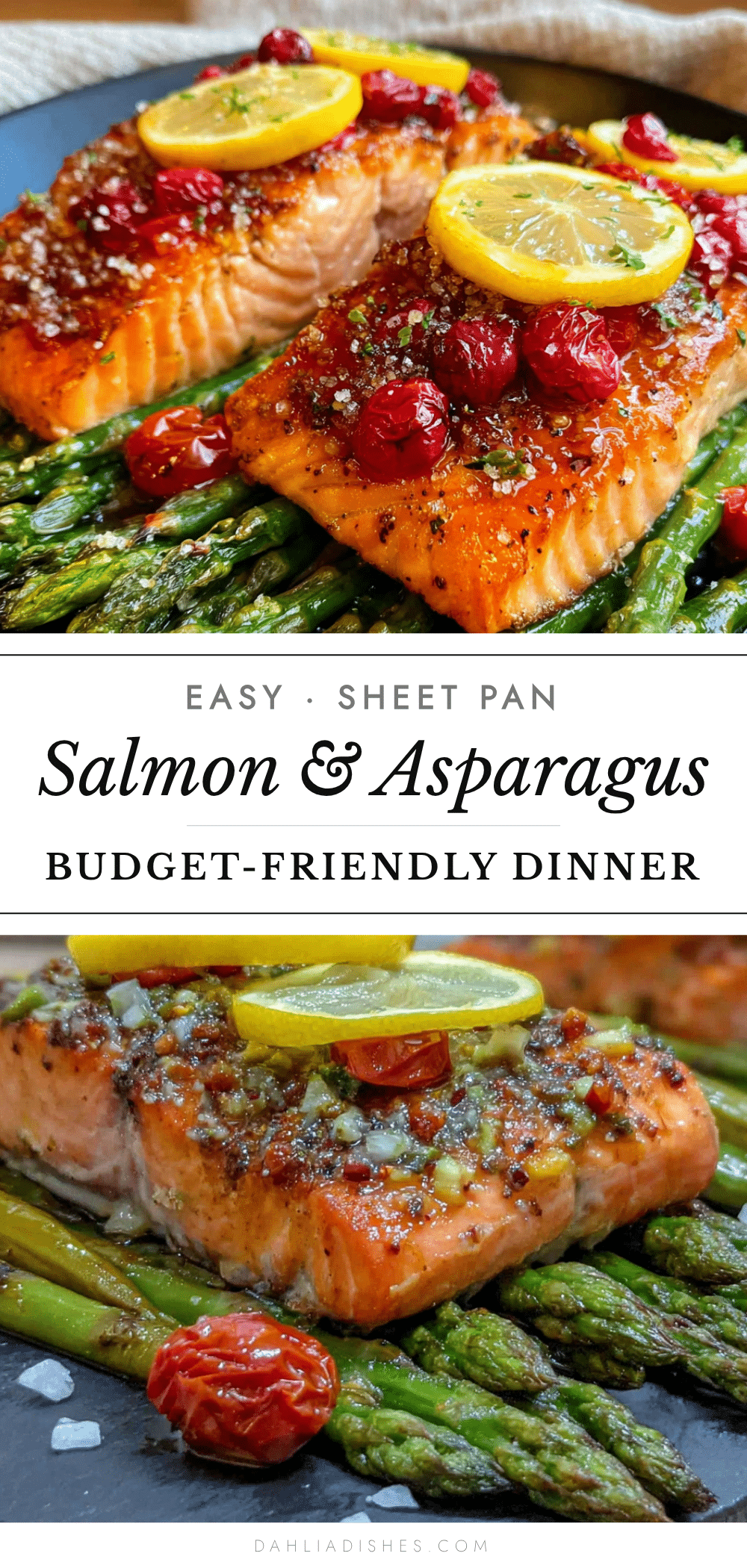
Easy Sheet Pan Salmon and Asparagus – Best Budget Dinner

A quick and easy sheet pan dinner featuring perfectly roasted salmon and tender-crisp asparagus, all cooked together on one pan for minimal cleanup and maximum flavor. Perfect for busy weeknights when you want a healthy, budget-friendly meal that feels special.
- Prep Time: 10 minutes
- Cook Time: 15 minutes
- Total Time: 25 minutes
- Yield: 4 servings 1x
- Category: Main Course
- Cuisine: American
Ingredients
- 4 salmon fillets (about 6 ounces each, skin on or off)
- 1 bunch fresh asparagus (about 1 pound), woody ends trimmed
- 3 tablespoons olive oil
- 2 cloves garlic, minced (or 1 teaspoon garlic powder)
- 1 lemon, sliced into thin rounds (plus extra wedges for serving)
- 1 teaspoon salt (kosher salt preferred)
- ½ teaspoon black pepper, freshly ground
- 1 teaspoon dried dill (or 1 tablespoon fresh dill, chopped)
- 1 teaspoon dried parsley (or 1 tablespoon fresh parsley)
- ½ teaspoon paprika (smoked paprika preferred)
- Optional: cherry tomatoes, halved
- Optional: red pepper flakes
- Optional: fresh thyme sprigs
Instructions
- Preheat your oven to 400°F (200°C).
- Line your sheet pan with parchment paper or foil.
- Rinse the asparagus and pat dry. Snap off the woody ends and place trimmed asparagus on one side of the sheet pan.
- Drizzle the asparagus with 1 tablespoon of olive oil, then sprinkle with a pinch of salt and pepper. Toss to coat evenly and spread in a single layer.
- Pat the salmon fillets dry with paper towels. Place them on the other side of the sheet pan, leaving space between each piece.
- In a small bowl, combine the remaining 2 tablespoons olive oil, minced garlic, salt, pepper, dill, parsley, and paprika. Stir to form a paste.
- Brush the seasoning mixture evenly over each salmon fillet. Place a lemon slice on top of each piece.
- Roast for 12-15 minutes, depending on thickness (14 minutes for 1-inch thick fillets).
- Check for doneness: salmon should be opaque and flake easily with a fork; asparagus should be tender-crisp with browned edges.
- Optional: Broil for the last 1-2 minutes for extra color, watching closely.
- Remove from oven and let rest for 2-3 minutes. Serve immediately with extra lemon wedges.
Notes
Pat the salmon dry for better browning. Don’t overcrowd the pan to avoid steaming. For thin asparagus, add to the pan 5 minutes after the salmon starts cooking. Let salmon rest 2-3 minutes before serving. Leftovers keep in the fridge for up to 3 days; reheat gently in a 300°F oven.
Nutrition
- Serving Size: 1 salmon fillet plus
- Calories: 375
- Sugar: 3.5
- Sodium: 650
- Fat: 20
- Saturated Fat: 3
- Carbohydrates: 9
- Fiber: 3.5
- Protein: 37
Keywords: sheet pan salmon, salmon and asparagus, easy salmon recipe, budget dinner, weeknight dinner, healthy salmon, one pan meal