Love this? Save it for later!
Share the inspiration with your friends
The Friendsgiving potluck was in six hours and I’d completely forgotten. I was standing in my kitchen, staring at a sad acorn squash I’d bought on a whim, while my group chat exploded with photos of elaborate dishes. Sarah had spent three days on her grandmother’s lasagna. Mike was bringing a brisket he’d smoked since dawn. And me? I had a squash and a vague memory of a recipe I’d seen somewhere. I almost texted them I was sick. But then I thought—maybe you’ve been there—what if I just… faked it? I grabbed my sharpest knife, some butter, and the maple syrup I use for pancakes, and I got to work. Thirty minutes later, I walked in with a platter of these golden, caramelized rings, drizzled with glossy maple butter. Everyone went quiet for a second, then the platter was empty before the brisket even made it to the table. I didn’t mean to show anyone up. Honestly, I was just trying not to show up empty-handed. But that’s the thing about this recipe—it makes you look like you planned it all along.
Why You’ll Love This Recipe
Let’s be real for a second. Weeknight cooking is hard. You’re tired, the clock is ticking, and the last thing you want is a recipe with a mile-long ingredient list. That’s exactly why this one works. It’s not just another side dish—it’s the kind of recipe that saves your dinner plans without breaking a sweat.
- Quick & Easy: From fridge to table in under 40 minutes. Most of that time is hands-off roasting, meaning you can set a timer and go change out of your work clothes.
- Simple Ingredients: You need exactly five main ingredients. I bet you have three of them right now. No specialty trips to a fancy grocery store required.
- Perfect for Weeknights: It pairs with practically anything—a rotisserie chicken, some quick pan-seared pork chops, or even a simple omelet for breakfast-for-dinner nights.
- Crowd-Pleaser: My pickiest eater, my nephew Leo, asked for seconds. Then thirds. The maple butter does something magical to even the most skeptical palates.
- Unbelievably Delicious: The edges get all crispy and caramelized while the center stays tender. That maple butter seeps into every nook and cranny. It’s comfort food that feels special but takes almost no effort.
What makes this different from every other squash recipe out there? It’s the rings. Cutting the squash into rings instead of halves or cubes changes everything. You get more surface area for caramelization, they cook faster, and they look gorgeous on a plate. Plus, that maple butter? It’s not just a drizzle—it’s a glaze that bakes right into the squash as it roasts. This isn’t just another version of roasted squash. It’s the version you’ll actually make on a Tuesday night.
What Ingredients You Will Need
This recipe keeps things beautifully simple. Every ingredient has a job, and none of them are fussy. You’re likely staring at most of these right now.
- 1 medium acorn squash (about 1.5 to 2 pounds). Look for one that feels heavy for its size with firm, unblemished skin. The ridges should be deep and even. I usually grab mine from the regular produce section—nothing fancy.
- 3 tablespoons unsalted butter, melted. I use salted butter in a pinch and just skip adding extra salt later. It works fine. Let it cool slightly after melting so it doesn’t cook the maple syrup.
- 2 tablespoons pure maple syrup. Please, for the love of good food, use real maple syrup here. Not pancake syrup. The real stuff makes a difference in flavor and how it caramelizes. I like Grade A dark amber for a richer taste.
- 1/2 teaspoon ground cinnamon. This is optional but highly recommended. It adds a warmth that makes the whole kitchen smell like fall. I’ve used pumpkin pie spice in a pinch and it was lovely.
- 1/4 teaspoon salt. I prefer kosher salt for its clean taste and easy pinch-ability. If you’re using fine table salt, go a little lighter—maybe 1/8 teaspoon.
- Freshly ground black pepper, just a pinch. It sounds weird with sweet maple, I know. But trust me, that tiny bit of heat balances everything out.
- Optional garnish: fresh thyme leaves or a sprinkle of flaky sea salt right before serving. It makes them look restaurant-quality with zero extra effort.
Ingredient Selection Tip: When picking your acorn squash, avoid any with soft spots or cracks. The stem should be intact and dry. If you can, buy them a few days ahead and store them in a cool, dark place—they’ll be even sweeter after sitting for a bit.
Substitution Guidance: No acorn squash? Butternut squash works, though you’ll need to cut it differently (halve it, scoop seeds, then slice into half-moons). For a dairy-free version, use coconut oil or a good vegan butter. I’ve tried both, and coconut oil gives it a subtle tropical note that’s actually pretty nice with the maple.
Equipment Needed
You don’t need a fancy kitchen for this one. Here’s what you’ll actually use:
- A sharp chef’s knife. This is non-negotiable. Acorn squash is tough. A dull knife is dangerous here. I use my 8-inch chef’s knife and it works perfectly. If yours is dull, run it through a sharpener first.
- A sturdy cutting board. One that won’t slide around. Put a damp paper towel underneath if yours tends to wander.
- A large baking sheet. Half-sheet size is ideal. Line it with parchment paper for the easiest cleanup ever. I forgot parchment once and spent 20 minutes scrubbing—learn from my mistake.
- A small bowl for mixing the maple butter.
- A spoon or silicone brush for coating the rings. A brush gives you more control, but a spoon works fine. I’ve used my fingers in a pinch (wash your hands first!).
- A metal spatula for flipping the rings. A thin, flexible one works best to get under those caramelized edges without breaking them.
Budget-Friendly Tip: Don’t have a silicone brush? Just use the back of a spoon to spread the maple butter mixture. It’s slightly less even, but honestly, it still tastes amazing. I do this half the time when my brush is dirty.
Preparation Method
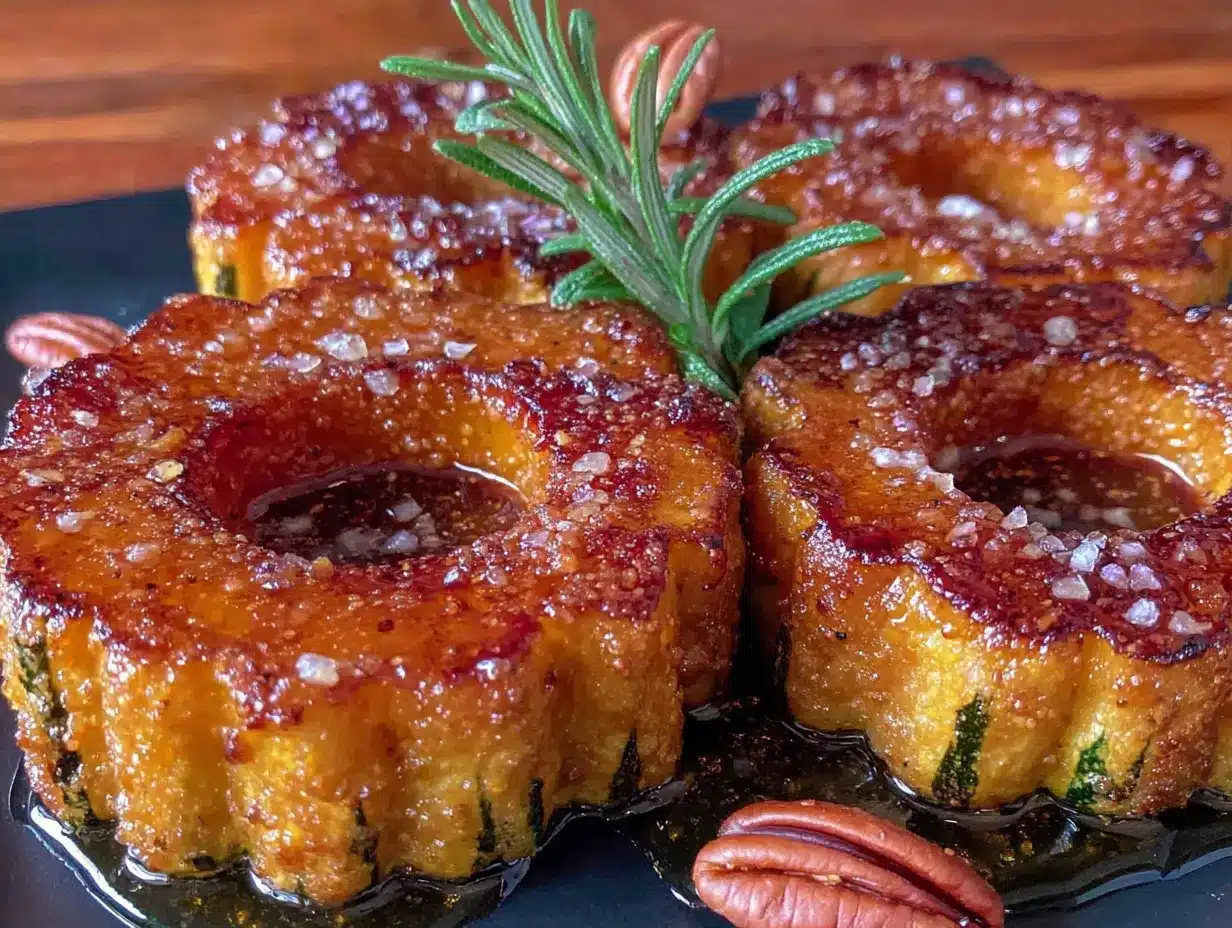
Let’s get cooking. I’ll walk you through every step like we’re in the kitchen together.
- Preheat your oven to 400°F (200°C). This is important. You want it nice and hot so the squash starts caramelizing immediately. While it’s heating, line your baking sheet with parchment paper.
- Carefully cut the acorn squash into rings. First, use your sharp knife to slice off both ends of the squash—just enough to create flat surfaces. This gives you stability. Now, stand the squash on one flat end and slice crosswise into rings about 1/2-inch thick. You should get 4 to 5 rings from a medium squash. Warning: This is the trickiest part. Go slow. Use a sawing motion. If the squash feels too hard, microwave it whole for 1 to 2 minutes to soften it slightly—it makes cutting way easier.
- Scoop out the seeds and stringy bits. Use a spoon or your fingers to pop out the seeds from each ring. Don’t worry about getting every single string—a few leftover bits will crisp up in the oven and taste fine. Save the seeds to roast later if you’re feeling ambitious.
- Make the maple butter. In your small bowl, whisk together the melted butter, maple syrup, cinnamon, salt, and a tiny pinch of black pepper. Taste it. It should be sweet, salty, and a little warm from the cinnamon. Adjust if needed—more salt if you like savory, more syrup if you have a sweet tooth.
- Coat the rings. Arrange the squash rings in a single layer on your prepared baking sheet. Don’t overcrowd them—give each ring a little breathing room. Use your brush or spoon to coat both sides of each ring with the maple butter mixture. Reserve any leftover mixture for basting later. Sensory cue: The rings should look glossy and wet, with the mixture pooling slightly in the center holes.
- Roast for 15 minutes. Place the sheet in the preheated oven. Set a timer. Walk away. Don’t peek—every time you open the oven, you let out heat and steam, which slows down caramelization.
- Flip and baste. After 15 minutes, pull the sheet out. Use your metal spatula to carefully flip each ring. They should be starting to brown on the edges. Brush or spoon the remaining maple butter mixture over the tops. Personal tip: If the rings look dry, don’t panic. Just make sure they’re evenly coated. Some spots will caramelize more than others, and that’s what gives them character.
- Roast for another 10 to 15 minutes. Put them back in and let them finish. Start checking at 10 minutes. You’re looking for deep golden-brown edges with slightly darker caramelized spots. The centers should be tender when pierced with a fork. Troubleshooting: If your rings are browning too fast but aren’t tender yet, tent them loosely with foil for the last 5 minutes.
- Rest for 2 minutes. Let the rings sit on the baking sheet for a couple of minutes before serving. This lets the maple butter set slightly and makes them easier to handle. They’ll be piping hot straight out of the oven.
- Garnish and serve. Transfer to a platter. Sprinkle with fresh thyme leaves and a pinch of flaky sea salt if you’re using them. Serve warm. Watch them disappear.
Cooking Tips & Techniques
I’ve made this recipe more times than I can count, and I’ve definitely messed it up along the way. Here’s what I’ve learned so you don’t have to learn the hard way.
The biggest mistake? Cutting the rings too thin. I did this once—cut them about 1/4-inch thick thinking they’d cook faster. They burned on the edges before the centers were tender. Stick to 1/2-inch. It’s the sweet spot for even cooking and that perfect texture.
Another common issue: Not drying the rings after washing them. If you rinse your squash rings, pat them dry with a paper towel before adding the maple butter. Extra water creates steam, and steam prevents caramelization. You want those rings to roast, not steam.
Timing tip: While the squash is roasting, prep the rest of your meal. I usually throw some chicken thighs in the oven on the rack below, or quickly sauté some greens on the stove. Everything finishes around the same time, and dinner comes together with zero stress.
My own failure: The first time I made these, I forgot to flip the rings. Half of them came out perfectly caramelized on the bottom and pale on top. It still tasted good, but it wasn’t as pretty. Set that timer for the flip—it makes a difference.
For consistent results: Make sure your rings are all roughly the same thickness. The ones on the ends of the squash are naturally smaller, so they’ll cook a tiny bit faster. If you want to be precise, check the smaller rings a few minutes early and pull them out if they’re done.
Variations & Adaptations
One of the best things about this recipe is how easy it is to change up. Here are a few ways I’ve tweaked it depending on what I have on hand or who I’m cooking for.
Savory Herb Version: Skip the cinnamon and add 1 teaspoon of fresh rosemary (finely chopped) and 1/2 teaspoon of garlic powder to the maple butter. It’s incredible alongside roast chicken or pork. My husband actually prefers this version—he says it feels more like a “real” side dish.
Spicy Maple Version: Add 1/4 teaspoon of cayenne pepper or red pepper flakes to the maple butter. The heat plays beautifully with the sweet maple and the earthy squash. I made this for a taco night once and it stole the show. Just go easy—you can always add more heat, but you can’t take it out.
Vegan Adaptation: Use melted coconut oil or a high-quality vegan butter instead of regular butter. I’ve tried both, and coconut oil gives the rings a slightly different texture—crispier on the edges, a little more delicate in the center. Maple syrup is already vegan, so you’re good there.
Air Fryer Method: If you have an air fryer, you can make these in about 12 minutes total. Preheat to 375°F (190°C), arrange rings in a single layer (you might need to work in batches), and cook for 6 minutes. Flip, brush with remaining maple butter, and cook for another 4 to 6 minutes. They come out extra crispy. I do this when I don’t want to heat up the whole oven.
Personal Variation: One Thanksgiving, I was out of maple syrup (I know, a crime). I used honey instead, and honestly, it was incredible. The honey caramelizes slightly differently—it gets darker and almost toffee-like. If you try this, reduce the oven temperature to 375°F (190°C) so the honey doesn’t burn.
Serving & Storage Suggestions
These rings are versatile enough to fit into almost any meal. Here’s how I like to serve them and what to do with leftovers (if you have any).
Serving Temperature: Serve them warm, straight from the oven. That’s when the edges are crispiest and the maple butter is at its glossiest. They’re still good at room temperature—I’ve brought them to potlucks that way—but they lose a bit of that initial crunch.
Presentation: Arrange the rings in a slight overlapping pattern on a white platter. The contrast between the deep orange squash and the dark caramelized edges is beautiful. Sprinkle with fresh thyme or a few pomegranate arils for a pop of color and brightness.
What to Serve With Them:
- Roasted chicken or turkey (classic pairing)
- Pan-seared pork chops with apple cider glaze
- A simple green salad with vinaigrette (the acidity cuts through the sweetness)
- Wild rice pilaf or quinoa for a vegetarian main
- Even a simple omelet or frittata for a quick dinner
Storage: Leftover rings keep in an airtight container in the refrigerator for up to 4 days. The texture will soften, but the flavor is still fantastic. I actually like them cold, straight from the fridge, as a snack.
Reheating: The best way to bring back some crispiness is to reheat them in the oven at 350°F (175°C) for 5 to 7 minutes. A toaster oven works great too. I don’t recommend the microwave—it makes them soggy and sad. If you’re in a hurry, an air fryer at 350°F for 2 to 3 minutes is perfect.
Flavor Development: Here’s a little secret—these rings actually taste even better the next day. The maple butter has more time to soak into the squash, and the flavors meld together. I’ve been known to make a double batch just so I have leftovers for lunch.
Nutritional Information & Benefits
Let’s talk about why this recipe is good for you too. It’s not just delicious—it’s packed with stuff your body actually needs.
Estimated Nutritional Values (per serving, about 3 rings):
| Nutrient | Amount |
|---|---|
| Calories | 185 |
| Total Fat | 9g |
| Saturated Fat | 5.5g |
| Carbohydrates | 28g |
| Fiber | 4g |
| Sugar | 12g |
| Protein | 2g |
| Vitamin A | 45% DV |
| Vitamin C | 25% DV |
| Potassium | 15% DV |
Health Benefits: Acorn squash is a powerhouse of nutrition. It’s loaded with vitamin A for eye health and immune function, plus a good dose of vitamin C. The fiber content helps keep you full and supports digestion. And that maple syrup? It’s a natural sweetener with antioxidants—way better than refined sugar.
Dietary Considerations: This recipe is naturally gluten-free and nut-free. With the vegan adaptation (using coconut oil), it’s also dairy-free and plant-based. It’s low in protein, so pair it with a protein-rich main dish for a balanced meal.
Potential Allergens: The butter contains dairy. If you’re lactose intolerant, use the vegan adaptation or a lactose-free butter. The recipe is free from the top eight allergens otherwise—no eggs, soy, wheat, peanuts, tree nuts, fish, or shellfish.
My Wellness Perspective: I love that this recipe feels indulgent but is actually really good for you. It’s the kind of side dish you can feel great about eating—and serving to your family. No guilt, just delicious, nourishing food.
Conclusion
Look, I know weeknight cooking can feel like a chore. You’re tired, the kids are hungry, and the last thing you want is another complicated recipe that leaves your kitchen looking like a disaster zone. But this one? It’s different. It’s the recipe that makes you look like you have your life together, even when you absolutely don’t.
These roasted acorn squash rings with maple butter are proof that simple can be spectacular. Five ingredients, one baking sheet, and less than 40 minutes. That’s all it takes to turn a humble squash into something that’ll have everyone asking for the recipe. I’ve made them for potlucks, weeknight dinners, and even a fancy holiday table—and they’ve never let me down.
So go ahead. Give them a try. Customize them with your favorite herbs or spices. Make them for a Tuesday dinner or a Sunday gathering. And when someone asks you how you made something so delicious with so little effort, just smile and say, “It’s easier than you think.”
I’d love to hear how yours turn out. Drop a comment below and tell me what variations you tried—or just share a photo of your beautiful rings. Happy cooking, friends!
Frequently Asked Questions
Can I use butternut squash instead of acorn squash?
Yes, absolutely. Butternut squash has a similar sweet, nutty flavor. The main difference is shape—you’ll need to cut it into half-moons rather than rings. Peel it first, then slice crosswise into 1/2-inch thick rounds, scoop out the seeds, and follow the same roasting instructions. The cooking time might be slightly shorter, so start checking at 20 minutes.
Do I have to peel the acorn squash?
Nope! The skin of acorn squash is completely edible once roasted. It softens up nicely and adds a bit of texture. Plus, peeling acorn squash is a huge pain because of all those ridges. Leaving the skin on saves time and adds fiber. Just make sure you wash the squash thoroughly before cutting.
Can I make these ahead of time?
You can, but they’re best fresh out of the oven. If you need to prep ahead, roast the rings as directed, let them cool completely, and store them in the fridge. Reheat them in a 350°F oven for 5 to 7 minutes to bring back some crispiness. The maple butter will have soaked in more, so they’ll be extra flavorful.
Why are my squash rings not caramelizing?
A few possible reasons. First, your oven might not be hot enough—make sure it’s fully preheated to 400°F. Second, the rings might be too wet. Pat them dry before adding the maple butter. Third, they might be overcrowded on the baking sheet. Give each ring some space so the heat can circulate. And finally, don’t skip the flip—both sides need direct contact with the hot pan.
Can I double this recipe?
Definitely. Just use two baking sheets and rotate them halfway through cooking (swap the top and bottom racks). You might need an extra tablespoon or two of maple butter. The cooking time stays the same as long as the rings are in a single layer. If you’re feeding a crowd, this is an easy recipe to scale up.
Pin This Recipe!
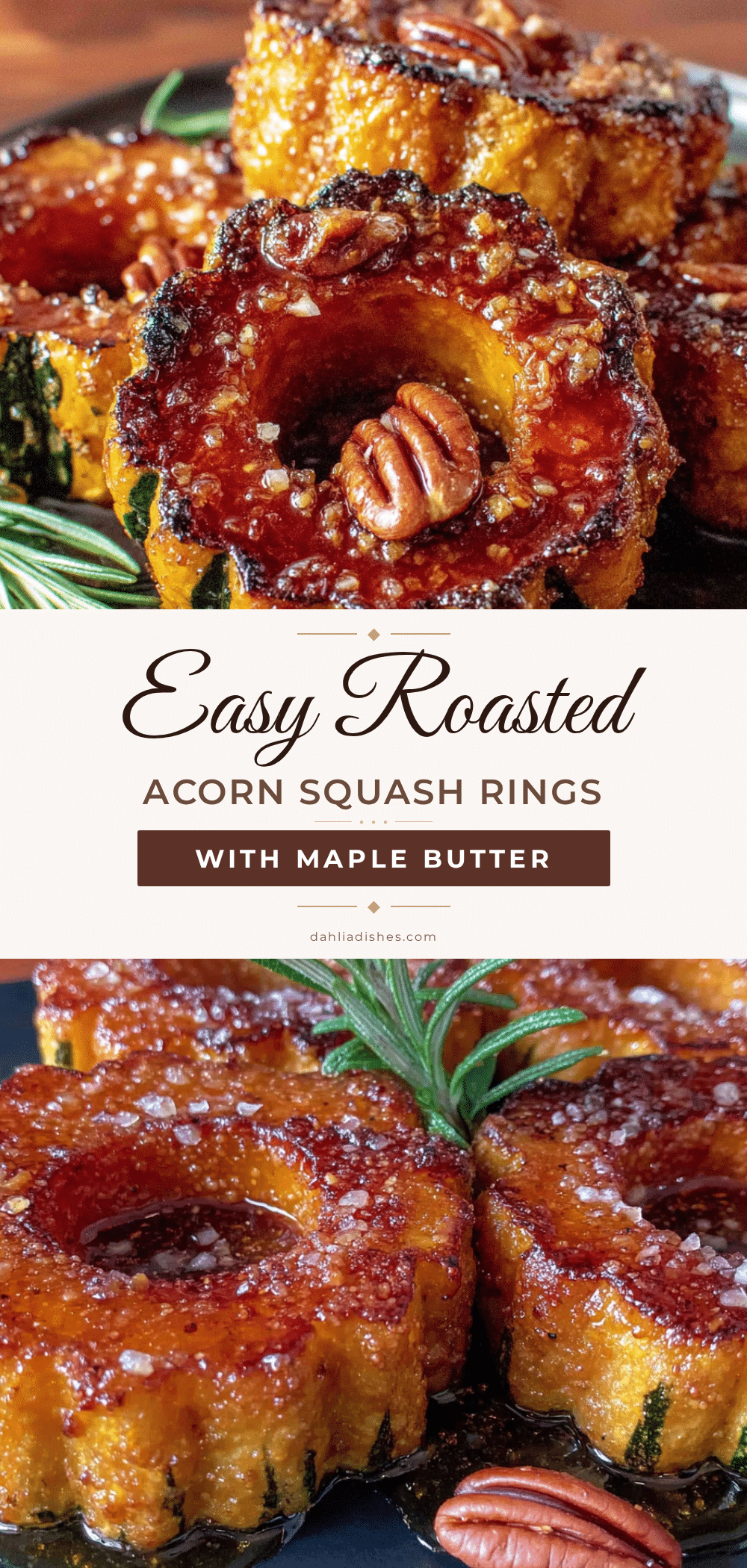
Easy Roasted Acorn Squash Rings with Maple Butter
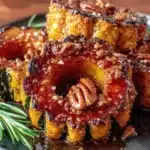
Golden, caramelized acorn squash rings drizzled with glossy maple butter. A simple, quick side dish that looks impressive but takes almost no effort.
- Prep Time: 10 minutes
- Cook Time: 25 minutes
- Total Time: 35 minutes
- Yield: 4 servings 1x
- Category: Side Dish
- Cuisine: American
Ingredients
- 1 medium acorn squash (about 1.5 to 2 pounds)
- 3 tablespoons unsalted butter, melted
- 2 tablespoons pure maple syrup
- 1/2 teaspoon ground cinnamon (optional)
- 1/4 teaspoon kosher salt
- Freshly ground black pepper, a pinch
- Optional garnish: fresh thyme leaves or flaky sea salt
Instructions
- Preheat your oven to 400°F (200°C). Line a baking sheet with parchment paper.
- Carefully cut the acorn squash into rings: slice off both ends to create flat surfaces, then slice crosswise into 1/2-inch thick rings (about 4 to 5 rings).
- Scoop out the seeds and stringy bits from each ring.
- In a small bowl, whisk together melted butter, maple syrup, cinnamon, salt, and a pinch of black pepper.
- Arrange squash rings in a single layer on the prepared baking sheet. Brush or spoon the maple butter mixture over both sides of each ring. Reserve any leftover mixture.
- Roast for 15 minutes.
- Flip the rings carefully with a metal spatula. Brush or spoon the remaining maple butter mixture over the tops.
- Roast for another 10 to 15 minutes, until deep golden-brown and tender when pierced with a fork.
- Let the rings rest on the baking sheet for 2 minutes before serving.
- Transfer to a platter, garnish with fresh thyme leaves and flaky sea salt if desired. Serve warm.
Notes
Cut rings 1/2-inch thick for even cooking. Pat rings dry after washing to promote caramelization. For a dairy-free version, use coconut oil or vegan butter. Leftovers keep in the fridge for up to 4 days; reheat in the oven at 350°F for 5-7 minutes for best texture.
Nutrition
- Serving Size: 3 rings
- Calories: 185
- Sugar: 12
- Sodium: 150
- Fat: 9
- Saturated Fat: 5.5
- Carbohydrates: 28
- Fiber: 4
- Protein: 2
Keywords: roasted acorn squash, maple butter, easy side dish, fall recipe, weeknight dinner, vegetarian, gluten-free