Love this? Save it for later!
Share the inspiration with your friends
I was elbow-deep in a sink full of brussels sprouts, scrubbing away the last of the dirt from a farmers’ market haul, when the plumber who was fixing a leak under my sink started talking about stuffing. Not just any stuffing—cornbread stuffing with sausage and sage. He was a quiet guy, usually just nodded and got on with his work, but that day he paused, wiped his hands on his coveralls, and said, “You know, my grandmother used to say the secret to a good stuffing isn’t the bread. It’s the patience to let the cornbread dry out for a full day.” I nearly dropped a sprout. Here I was, stressing over Thanksgiving sides, and the answer was coming from a man holding a pipe wrench.
Honestly, I wasn’t expecting cooking advice from a plumber, but there I was, standing in my kitchen, listening to him describe exactly how to make this classic cornbread sausage stuffing. He told me about the cast iron skillet his grandma used, the way the sage would make the whole house smell like Sunday dinner, and how the sausage had to be good quality, none of that pre-packaged stuff. I scribbled notes on a paper towel. It felt like a secret handshake from the culinary universe.
That recipe became my go-to. It’s not fussy or complicated—it’s the kind of dish that feels like a warm hug on a cold November evening. The cornbread gives it a slightly sweet, crumbly texture that soaks up all the savory juices from the sausage and the rich chicken broth. And the sage? Well, it’s the backbone of the whole thing, earthy and a little peppery. Maybe you’ve been there, standing in the grocery aisle wondering which boxed mix to grab. Let me tell you, this homemade version changes the game. It’s the stuffing that will make you close your eyes after the first bite, and the one your family will request year after year. I keep making it because it reminds me that sometimes the best advice comes from the most unexpected places.
Why You’ll Love This Recipe
This isn’t just another stuffing recipe. It’s the one I’ve tested and tweaked over five different Thanksgiving dinners, and it’s the version that finally earned a permanent spot on my holiday table. Here’s why it stands out:
- Quick & Easy: Comes together in under an hour of active prep time. You can make the cornbread a day ahead, and the rest is just chopping, browning, and baking. Perfect for a busy holiday morning when you’ve got a million other things to do.
- Simple Ingredients: No fancy grocery trips needed. You likely already have butter, onions, celery, and eggs in your kitchen. The sausage and fresh sage are easy to find at any standard grocery store.
- Perfect for Thanksgiving or Christmas: This is the ultimate side dish for holiday feasts. It pairs beautifully with roast turkey, mashed potatoes, and cranberry sauce. It’s also great for a cozy Sunday dinner with a roast chicken.
- Crowd-Pleaser: I’ve served this to picky eaters, in-laws, and friends who claim they don’t like stuffing. Every single person has asked for seconds. The combination of savory sausage and sweet cornbread is impossible to resist.
- Unbelievably Delicious: The texture is what gets me every time. The edges get golden and slightly crispy, while the inside stays moist and tender. The sage and sausage create a flavor profile that’s deeply savory with a hint of sweetness from the cornbread.
What makes this recipe different from the rest? It’s the technique of toasting the cornbread cubes before baking them with the broth. That extra step ensures the stuffing doesn’t turn into a mushy mess. It’s a little trick I learned after a disastrous attempt where my stuffing came out more like cornbread pudding. This version holds its shape, has distinct layers of texture, and tastes like it came from a professional kitchen. It’s comfort food reimagined—faster, more reliable, but with the same soul-soothing satisfaction that makes you want to curl up on the couch with a second helping.
What Ingredients You Will Need
This recipe uses simple, wholesome ingredients to deliver bold flavor and satisfying texture without the fuss. Most of these are pantry staples or easy to find at any grocery store. Here’s what you’ll need and why each one matters:
For the Cornbread
- 1 cup (120g) yellow cornmeal (I prefer Bob’s Red Mill for its consistent texture)
- 1 cup (125g) all-purpose flour
- 1 tablespoon baking powder
- 1 teaspoon salt
- 1/4 cup (50g) granulated sugar (adds a touch of sweetness to balance the savory elements)
- 1 cup (240ml) buttermilk (adds tanginess and moisture; you can use regular milk with a tablespoon of lemon juice if you don’t have buttermilk)
- 1/4 cup (60ml) vegetable oil or melted butter
- 2 large eggs, room temperature
For the Stuffing

- 1 batch prepared cornbread (about 6 cups cubed, dried out)
- 1 pound (450g) ground pork sausage (I recommend a mild or sage-flavored breakfast sausage for the best flavor; Johnsonville is a solid choice)
- 4 tablespoons (60g) unsalted butter
- 1 large yellow onion, diced (about 1.5 cups)
- 3 stalks celery, diced (about 1 cup)
- 3 cloves garlic, minced
- 2 tablespoons fresh sage, chopped (about 8-10 leaves; do not use dried—it won’t give you the same depth)
- 1 tablespoon fresh thyme leaves (or 1 teaspoon dried)
- 1 teaspoon salt
- 1/2 teaspoon black pepper
- 2 cups (480ml) low-sodium chicken broth (plus more if needed for desired moisture)
- 2 large eggs, beaten
- 1/4 cup (15g) fresh parsley, chopped (for garnish)
For the sausage, look for one that’s not too fatty. You want enough rendered fat to flavor the vegetables, but not so much that the stuffing becomes greasy. If you can find it, a sage-flavored sausage will amplify the fresh sage in the recipe beautifully. For the cornbread, I’ve tested this with store-bought cornbread mix, and it works in a pinch, but homemade gives you a better crumb and less sweetness. If you’re gluten-free, swap the all-purpose flour with a 1:1 gluten-free baking blend. For a dairy-free version, use plant-based butter and unsweetened oat milk in place of buttermilk.
Equipment Needed
You don’t need a professional kitchen to pull this off. Here’s the equipment that will make the process smooth:
- 9×13-inch baking dish: This is the standard size for the stuffing. A glass or ceramic dish works best for even heat distribution.
- Large skillet or cast iron pan: For browning the sausage and sautéing the vegetables. A cast iron skillet holds heat beautifully and gives the sausage a nice sear.
- Large mixing bowl: You’ll need one big enough to toss the cornbread cubes with the vegetables and broth. I use a stainless steel bowl—it’s lightweight and easy to clean.
- Whisk: For the cornbread batter and for beating the eggs.
- Sharp chef’s knife: For dicing the onion and celery. A dull knife will make you miserable—trust me on this.
- Baking sheet: For toasting the cornbread cubes. A rimmed baking sheet prevents crumbs from falling all over your oven.
- Wooden spoon or spatula: For stirring the stuffing mixture without scratching your pans.
If you don’t have a cast iron skillet, any heavy-bottomed pan will do. For the baking dish, you can also use a disposable aluminum pan if you’re bringing this to a potluck. Just make sure to place it on a sturdy baking sheet for support. I’ve made this recipe with a cheapo nonstick skillet and it turned out just fine. The key is to not overcrowd the pan when browning the sausage—work in batches if needed.
Preparation Method
Let’s get cooking. This recipe has a few steps, but I’ve broken it down so it feels manageable. Read through everything first, then start cooking.
Step 1: Make the Cornbread (Day Before or Early Morning)
Preheat your oven to 400°F (200°C). Grease an 8×8-inch baking pan or a 9-inch cast iron skillet. In a large bowl, whisk together the cornmeal, flour, baking powder, salt, and sugar. In a separate bowl, whisk the buttermilk, oil, and eggs until smooth. Pour the wet ingredients into the dry and stir until just combined—don’t overmix, or the cornbread will be tough. Pour the batter into the prepared pan and bake for 18-22 minutes, or until the top is golden and a toothpick inserted in the center comes out clean. Let it cool completely, then cut it into 1-inch cubes. Spread the cubes on a baking sheet and let them sit out uncovered overnight to dry out. If you’re short on time, you can dry them in a 300°F (150°C) oven for 20-25 minutes, turning once halfway through.
Step 2: Toast the Cornbread Cubes
Once your cornbread is dry, preheat the oven to 375°F (190°C). Spread the cubes on a rimmed baking sheet and toast for 10-12 minutes, until they’re lightly golden and crisp on the edges. This step is non-negotiable—it prevents the stuffing from turning into a soggy mess. Let the cubes cool while you prepare the rest.
Step 3: Cook the Sausage and Vegetables
In a large skillet over medium-high heat, cook the sausage, breaking it up with a wooden spoon, until it’s browned and cooked through—about 8-10 minutes. Use a slotted spoon to transfer the sausage to a plate, leaving the rendered fat in the pan. Add the butter to the skillet and let it melt. Toss in the onion and celery and cook for 5-7 minutes, stirring occasionally, until the vegetables are soft and translucent. Add the garlic, fresh sage, and thyme, and cook for another minute until fragrant. The smell at this point is absolutely intoxicating—earthy, savory, and warm.
Step 4: Combine Everything
In a large mixing bowl, combine the toasted cornbread cubes, cooked sausage, and the vegetable mixture. Toss gently to distribute everything evenly. In a separate small bowl, whisk the beaten eggs with the chicken broth. Pour the liquid mixture over the cornbread mixture and stir gently until all the cubes are moistened. Don’t overmix—you want some texture, not a paste. Let the mixture sit for 5-10 minutes to allow the cornbread to absorb the liquid.
Step 5: Bake the Stuffing
Preheat the oven to 350°F (175°C). Transfer the stuffing mixture to a greased 9×13-inch baking dish and spread it into an even layer. Cover the dish with foil and bake for 30 minutes. Remove the foil and bake for another 15-20 minutes, until the top is golden brown and crispy. The internal temperature should reach 165°F (74°C). Let it rest for 5 minutes before serving. Garnish with fresh parsley for a pop of color and freshness.
Cooking Tips & Techniques
I’ve made every mistake in the book with stuffing, so you don’t have to. Here are the lessons I learned the hard way:
- Don’t skip drying the cornbread. Fresh cornbread will turn your stuffing into a gluey, dense brick. It needs to be stale and dry so it can absorb the broth without falling apart. If you’re in a rush, use the oven method at 300°F for 20 minutes—just watch it so it doesn’t burn.
- Season as you go. Don’t wait until the end to add salt and pepper. Season the vegetables as they cook, and season the sausage as it browns. This builds layers of flavor that make the final dish sing.
- Use low-sodium broth. Sausage can be salty, and cornbread often has added salt. Low-sodium broth gives you control over the final saltiness. You can always add more, but you can’t take it out.
- Let the mixture rest before baking. That 5-10 minute rest after adding the broth is crucial. It allows the cornbread to absorb the liquid evenly, so you don’t end up with dry pockets or soggy spots.
- Cover for moisture, uncover for crunch. The foil traps steam and ensures the inside is cooked through and moist. Removing the foil lets the top get crispy and golden. If you like a super crunchy top, broil it for the last 2-3 minutes—but keep an eye on it, because it can burn fast.
One time, I forgot to add the eggs. The stuffing came out crumbly and dry, like a pile of seasoned breadcrumbs. The eggs act as a binder, holding everything together. Don’t skip them. Also, if you’re doubling the recipe, use two separate baking dishes instead of one big one. A deeper dish will trap steam and prevent the top from crisping up.
Variations & Adaptations
This recipe is a great base, but it’s also flexible. Here are some ways to make it your own:
- Add dried fruit for sweetness: Toss in 1/2 cup of dried cranberries or chopped dried apricots when you combine the vegetables with the cornbread. The tartness cuts through the richness of the sausage beautifully.
- Make it vegetarian: Skip the sausage and double the butter. Add 8 ounces of cremini mushrooms, diced and sautéed until golden, for that umami flavor. Use vegetable broth instead of chicken broth.
- Add nuts for crunch: Fold in 1/2 cup of toasted pecans or walnuts right before baking. They add a lovely textural contrast to the soft cornbread.
- Spice it up: Add 1/2 teaspoon of red pepper flakes or a diced jalapeño (seeds removed) when you cook the vegetables. It gives the stuffing a subtle heat that pairs well with the sage.
- Try a different protein: Use cooked and crumbled bacon, diced andouille sausage, or even leftover shredded turkey. Each changes the flavor profile in a fun way.
I once made a version with Italian sausage and fennel seeds, and it was incredible. The anise flavor from the fennel complemented the sage in a way I didn’t expect. That’s the beauty of this recipe—it’s forgiving and encourages experimentation. Just keep the ratio of liquid to cornbread roughly the same, and you’ll be fine.
Serving & Storage Suggestions
This stuffing is best served hot, straight from the oven. The top should be golden and crispy, and the inside should be moist and steamy. I like to serve it in a large shallow bowl so everyone can grab a spoonful of those crispy edges. It pairs beautifully with roast turkey, but don’t limit it to Thanksgiving. Try it with a roast chicken, pork chops, or even alongside a simple green salad for a hearty vegetarian meal (if you skip the sausage).
For drinks, a crisp white wine like Sauvignon Blanc or a dry Riesling cuts through the richness. If you prefer beer, a pale ale or a brown ale works wonderfully. For a non-alcoholic option, try a sparkling apple cider—it’s festive and complements the sage nicely.
Storage: Leftover stuffing keeps in the refrigerator for up to 4 days. Store it in an airtight container. The flavors actually meld together overnight, so it’s even better the next day—if you can resist eating it all.
Reheating: For best results, reheat in a 350°F (175°C) oven for 10-15 minutes, covered with foil to prevent drying out. You can also reheat individual portions in the microwave for 1-2 minutes, but the top won’t be as crispy. If you want to revive that crunch, pop it under the broiler for a minute after microwaving.
Freezing: This stuffing freezes beautifully. Let it cool completely, then transfer to a freezer-safe container or zip-top bag. It will keep for up to 3 months. To reheat, thaw overnight in the refrigerator, then bake at 350°F (175°C) for 20-25 minutes, covered, until heated through.
Nutritional Information & Benefits
Here’s an approximate nutritional breakdown per serving (based on 8 servings):
- Calories: 420
- Fat: 22g
- Saturated Fat: 8g
- Cholesterol: 95mg
- Sodium: 780mg
- Carbohydrates: 38g
- Fiber: 3g
- Sugar: 8g
- Protein: 16g
This stuffing isn’t exactly health food, but it does have some redeeming qualities. The cornmeal provides complex carbohydrates for sustained energy, and the celery and onion add fiber and vitamins. Sage is known for its antioxidant properties and has been used in traditional medicine for its anti-inflammatory effects. The sausage adds protein, which helps keep you full and satisfied.
If you’re watching your sodium, use low-sodium broth and check the sausage label—some brands are saltier than others. For a lower-fat version, use turkey sausage and reduce the butter to 2 tablespoons. For a gluten-free adaptation, use a certified gluten-free cornbread mix and ensure your broth is gluten-free. This recipe contains dairy, eggs, and gluten (from the flour), so it’s not suitable for those with allergies to these ingredients without modifications.
Conclusion
This classic cornbread stuffing with sausage and sage is more than just a holiday side dish—it’s the kind of recipe that becomes a tradition. It’s the dish your family will request every year, the one that reminds you of cozy kitchens and laughter around the table. The combination of sweet cornbread, savory sausage, and earthy sage is timeless, and the texture—crispy on top, moist and tender inside—is downright addictive.
I love this recipe because it’s forgiving. You can tweak it, adapt it, and make it your own without worrying about ruining it. It’s the kind of dish that welcomes experimentation. So go ahead—add those dried cranberries, swap in turkey sausage, or throw in some pecans. Make it yours.
I’d love to hear how it turns out for you. Did you try a variation? Did your family ask for the recipe? Drop a comment below and let me know. And if you’re looking for more holiday inspiration, check out my classic roast turkey with herb butter or my easy cranberry sauce with orange zest. Happy cooking, and here’s to creating new traditions!
Frequently Asked Questions
Can I use store-bought cornbread mix for this recipe?
Absolutely. If you’re short on time, a 6-ounce box of cornbread mix (prepared according to package directions) works perfectly. Just make sure to let it dry out completely before using. The flavor won’t be as rich as homemade, but it’s a solid shortcut.
Can I make this stuffing ahead of time?
Yes! You can assemble the stuffing (without the eggs and broth) up to 2 days in advance. Store it covered in the refrigerator. When you’re ready to bake, stir in the beaten eggs and broth, then bake as directed. You may need to add 5-10 minutes to the baking time since the mixture will be cold.
Why did my stuffing come out dry?
This usually happens for one of two reasons: the cornbread cubes were too dry, or you didn’t use enough broth. If your cornbread is extremely stale, it will absorb more liquid. Next time, add an extra 1/4 cup of broth and let the mixture rest for 10 minutes before baking to check the moisture level.
Can I cook the stuffing inside the turkey?
I don’t recommend it for food safety reasons. Stuffing cooked inside the turkey can harbor bacteria if it doesn’t reach 165°F (74°C) quickly enough. Plus, it tends to come out greasy and soggy. Baking it separately gives you better texture and control.
How do I make this stuffing dairy-free?
Use plant-based butter (like Miyoko’s or Earth Balance) and unsweetened oat milk mixed with a tablespoon of lemon juice in place of buttermilk for the cornbread. For the stuffing, use the same plant-based butter and ensure your sausage is dairy-free (most breakfast sausages are, but check the label).
Pin This Recipe!
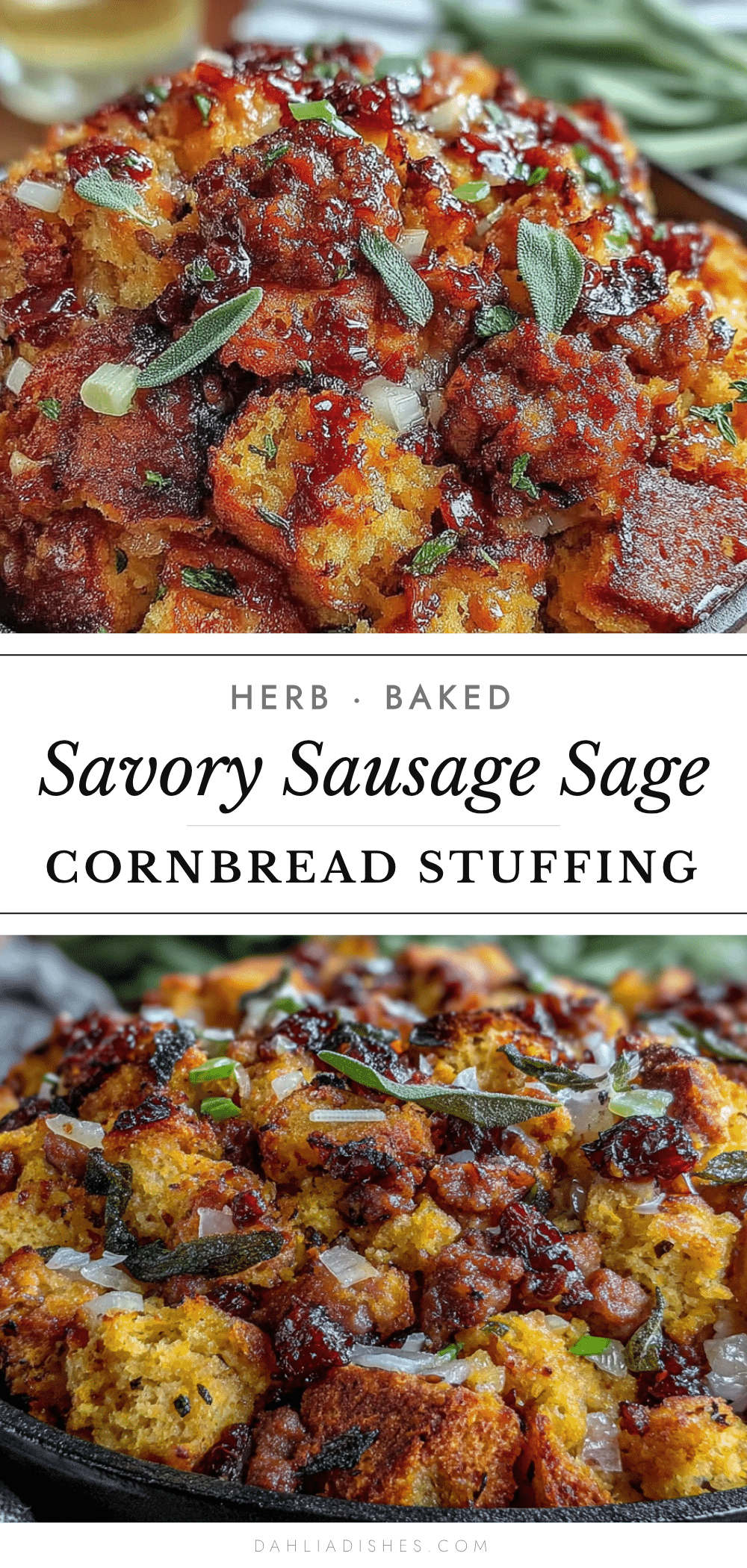
Easy Classic Cornbread Sausage Stuffing Recipe

This classic cornbread stuffing with sausage and sage is the ultimate holiday side dish. It’s quick, easy, and made with simple ingredients for a crowd-pleasing, deeply savory and slightly sweet flavor.
- Prep Time: 30 minutes
- Cook Time: 1 hour 10 minutes
- Total Time: 1 hour 40 minutes (plus overnight drying for cornbread)
- Yield: 8 servings 1x
- Category: Side Dish
- Cuisine: American
Ingredients
- 1 cup (120g) yellow cornmeal
- 1 cup (125g) all-purpose flour
- 1 tablespoon baking powder
- 1 teaspoon salt
- 1/4 cup (50g) granulated sugar
- 1 cup (240ml) buttermilk
- 1/4 cup (60ml) vegetable oil or melted butter
- 2 large eggs, room temperature
- 1 pound (450g) ground pork sausage (mild or sage-flavored)
- 4 tablespoons (60g) unsalted butter
- 1 large yellow onion, diced (about 1.5 cups)
- 3 stalks celery, diced (about 1 cup)
- 3 cloves garlic, minced
- 2 tablespoons fresh sage, chopped (about 8–10 leaves)
- 1 tablespoon fresh thyme leaves (or 1 teaspoon dried)
- 1 teaspoon salt
- 1/2 teaspoon black pepper
- 2 cups (480ml) low-sodium chicken broth
- 2 large eggs, beaten
- 1/4 cup (15g) fresh parsley, chopped (for garnish)
Instructions
- Make the cornbread (day before or early morning): Preheat oven to 400°F (200°C). Grease an 8×8-inch baking pan or 9-inch cast iron skillet. In a large bowl, whisk together cornmeal, flour, baking powder, salt, and sugar. In a separate bowl, whisk buttermilk, oil, and eggs until smooth. Pour wet into dry and stir until just combined. Pour batter into prepared pan and bake for 18-22 minutes, until golden and a toothpick comes out clean. Cool completely, cut into 1-inch cubes, and spread on a bakin…
- Toast the cornbread cubes: Preheat oven to 375°F (190°C). Spread dried cubes on a rimmed baking sheet and toast for 10-12 minutes until lightly golden and crisp on edges. Let cool.
- Cook the sausage and vegetables: In a large skillet over medium-high heat, cook sausage, breaking it up, until browned and cooked through (8-10 minutes). Transfer to a plate with a slotted spoon, leaving fat in pan. Add butter to skillet and melt. Add onion and celery, cook 5-7 minutes until soft. Add garlic, sage, and thyme, cook 1 minute until fragrant.
- Combine everything: In a large mixing bowl, combine toasted cornbread cubes, cooked sausage, and vegetable mixture. Toss gently. In a small bowl, whisk beaten eggs with chicken broth. Pour over cornbread mixture and stir gently until all cubes are moistened. Let sit 5-10 minutes.
- Bake the stuffing: Preheat oven to 350°F (175°C). Transfer mixture to a greased 9×13-inch baking dish. Cover with foil and bake 30 minutes. Remove foil and bake 15-20 minutes more until top is golden brown and crispy (internal temperature 165°F/74°C). Let rest 5 minutes. Garnish with fresh parsley.
Notes
Don’t skip drying the cornbread—it prevents soggy stuffing. Season as you go for layered flavor. Use low-sodium broth to control saltiness. Let mixture rest before baking for even moisture absorption. Cover with foil for moist interior, uncover for crispy top. For a super crunchy top, broil for 2-3 minutes at the end.
Nutrition
- Serving Size: 1 serving (about 1 c
- Calories: 420
- Sugar: 8
- Sodium: 780
- Fat: 22
- Saturated Fat: 8
- Carbohydrates: 38
- Fiber: 3
- Protein: 16
Keywords: cornbread stuffing, sausage stuffing, Thanksgiving stuffing, holiday side dish, cornbread sausage stuffing, easy stuffing recipe