Love this? Save it for later!
Share the inspiration with your friends
The woman at the farm stand watched me eyeing the last basket of Honeycrisp apples like I was planning a heist. She didn’t say anything at first, just wiped her hands on her faded flannel apron and waited. Then she nodded toward the little paper bag of apple cider donuts sitting by the register and said, “You know, those are good, but they’re better in a cake.” I laughed, assuming she meant I should just buy more donuts. But she was already reaching for a napkin and a pen, sketching out something that looked suspiciously like a Bundt pan with arrows and notes scribbled in the margins. “My grandmother used to make this every October,” she said, handing me the napkin. “She said if you’re going to have apple cider, you might as well soak it into something you can share.”
I stuffed that napkin into my coat pocket and honestly forgot about it for a week. When I found it again, the ink had smudged from a coffee spill, and I could only make out half the instructions. But I remembered her face—that knowing look she gave me, like she’d just handed me a secret that didn’t need perfect handwriting to work. So I took what I could read, filled in the gaps with a few late-night baking experiments, and ended up with something that made my whole kitchen smell like a crisp autumn afternoon trapped in a warm hug.
This isn’t just another apple cake, let me tell you. It’s got that same spiced-sugar coating you love from cider donuts, but it’s way easier to make because you don’t have to deal with deep frying or rolling out dough. The Bundt pan does the heavy lifting for you, and the result is this gorgeous, golden ring of cake that’s tender on the inside with just a tiny crunch on the outside from the cinnamon-sugar crust. Maybe you’ve been there—standing in line at an orchard, holding a bag of warm donuts, wishing you could have that flavor without the fuss. That’s exactly why this recipe stayed with me, and why I keep making it every single fall.
Why You’ll Love This Recipe
I’ve tested this cake at least seven times over the past two years, and let me tell you, each version taught me something new. The first one was too dense. The second one fell apart when I flipped it. But by the fourth attempt, I had that magical moment where the cake released from the pan in one perfect piece, and I actually did a little dance in my kitchen. This is the version I keep coming back to, and here’s why it works:
- Quick & Easy: You don’t need a stand mixer or any fancy equipment. Just a bowl, a whisk, and a Bundt pan. The whole thing comes together in about 15 minutes of active prep, then the oven does the rest.
- Simple Ingredients: No weird extracts or hard-to-find spices. You probably have most of this in your pantry right now, minus the apple cider, which is easy to grab at any grocery store this time of year.
- Perfect for Fall Gatherings: This cake is my go-to for Thanksgiving dessert tables, weekend brunches, and even casual Tuesday night cravings. It travels well, slices beautifully, and makes your whole house smell incredible.
- Crowd-Pleaser: I’ve brought this to three different gatherings, and every single time, someone asks for the recipe. Kids love the cinnamon-sugar coating, and adults appreciate that it’s not overly sweet.
- Unbelievably Delicious: The texture is what gets me every time. It’s moist without being soggy, tender without being crumbly, and that apple cider flavor is present but not overpowering. It’s comfort food that actually delivers.
What makes this recipe different from all the other apple cakes out there is the technique of reducing the apple cider before adding it to the batter. That one extra step concentrates the flavor and removes some of the water content, so you get a really intense apple taste without making the cake wet. It’s a small thing, but it makes a huge difference.
Honestly, this is the kind of cake that makes you close your eyes after the first bite. It’s autumn in dessert form—cozy, familiar, and just special enough to feel like a treat without being fussy. Perfect for impressing guests or just making a regular day feel a little more festive.
What Ingredients You Will Need
This recipe uses simple, wholesome ingredients that work together to create that classic apple cider donut flavor in cake form. Most of these are pantry staples, and the fresh apple cider is easy to find during fall months.
For the Cake:
- 1 cup apple cider (reduced to about ¼ cup) — This is the star of the show. I recommend using fresh, unfiltered apple cider if you can find it. The reduction process concentrates the flavor beautifully. Don’t use apple juice here; it’s too thin and won’t give you that same depth.
- 2 ½ cups all-purpose flour (315 grams) — Spoon and level your flour for the best results. Scooping directly from the bag can pack in too much flour and make the cake dry.
- 1 ½ teaspoons baking powder
- ½ teaspoon baking soda
- 1 teaspoon ground cinnamon — I use Saigon cinnamon for its stronger, warmer flavor, but any cinnamon works.
- ½ teaspoon ground nutmeg — Freshly grated if you have it, but pre-ground is perfectly fine.
- ½ teaspoon salt — Just regular table salt or fine sea salt.
- ½ cup unsalted butter (1 stick, 113 grams), softened to room temperature — If you only have salted butter, reduce the added salt to ¼ teaspoon.
- 1 cup packed light brown sugar (200 grams) — Brown sugar adds moisture and a subtle molasses flavor that pairs beautifully with apple cider.
- ½ cup granulated sugar (100 grams)
- 2 large eggs, room temperature — Cold eggs can seize the batter, so let them sit out for about 30 minutes before baking.
- 1 teaspoon vanilla extract — Pure vanilla is best, but imitation works in a pinch.
- ¾ cup buttermilk (180 ml), room temperature — If you don’t have buttermilk, you can make a quick substitute by adding 1 tablespoon of lemon juice or white vinegar to ¾ cup of regular milk and letting it sit for 5 minutes.
For the Cinnamon-Sugar Coating:
- ½ cup granulated sugar (100 grams)
- 1 ½ teaspoons ground cinnamon
- ¼ cup unsalted butter (½ stick, 57 grams), melted — This helps the sugar mixture stick to the warm cake.
One thing I learned the hard way: don’t skip the buttermilk. I tried making this with regular milk once because I was out of buttermilk, and the cake was noticeably less tender. The acidity in buttermilk reacts with the baking soda to create a softer crumb, and it also helps balance the sweetness. If you’re dairy-free, you can use a plant-based buttermilk alternative by adding lemon juice to unsweetened almond or oat milk.
Equipment Needed
You don’t need a lot of fancy tools for this recipe, which is part of why I love it. Here’s what you’ll need:
- 10 to 12-cup Bundt pan — This is non-negotiable. A standard Bundt pan works perfectly. If you’re using a decorative pan with lots of crevices, make sure to grease it really well, or you’ll lose some of the design when you flip it.
- Small saucepan — For reducing the apple cider. A 1-quart size is perfect.
- Large mixing bowl — For the dry ingredients.
- Medium mixing bowl — For the wet ingredients.
- Whisk — A good sturdy whisk makes combining ingredients effortless.
- Rubber spatula — For folding the batter and scraping every last bit into the pan.
- Cooling rack — Essential for even cooling and preventing a soggy bottom.
- Pastry brush — For applying the melted butter to the cake before coating it with cinnamon sugar. If you don’t have one, you can use a paper towel or your fingers (just wash your hands first).
I’ve made this cake using both a non-stick Bundt pan and a regular aluminum one. The non-stick version releases more easily, but if you’re using an older pan, just be extra generous with the butter and flour. My grandmother’s old cast-aluminum Bundt pan is my favorite—it conducts heat beautifully and gives the cake a lovely golden crust.
Preparation Method
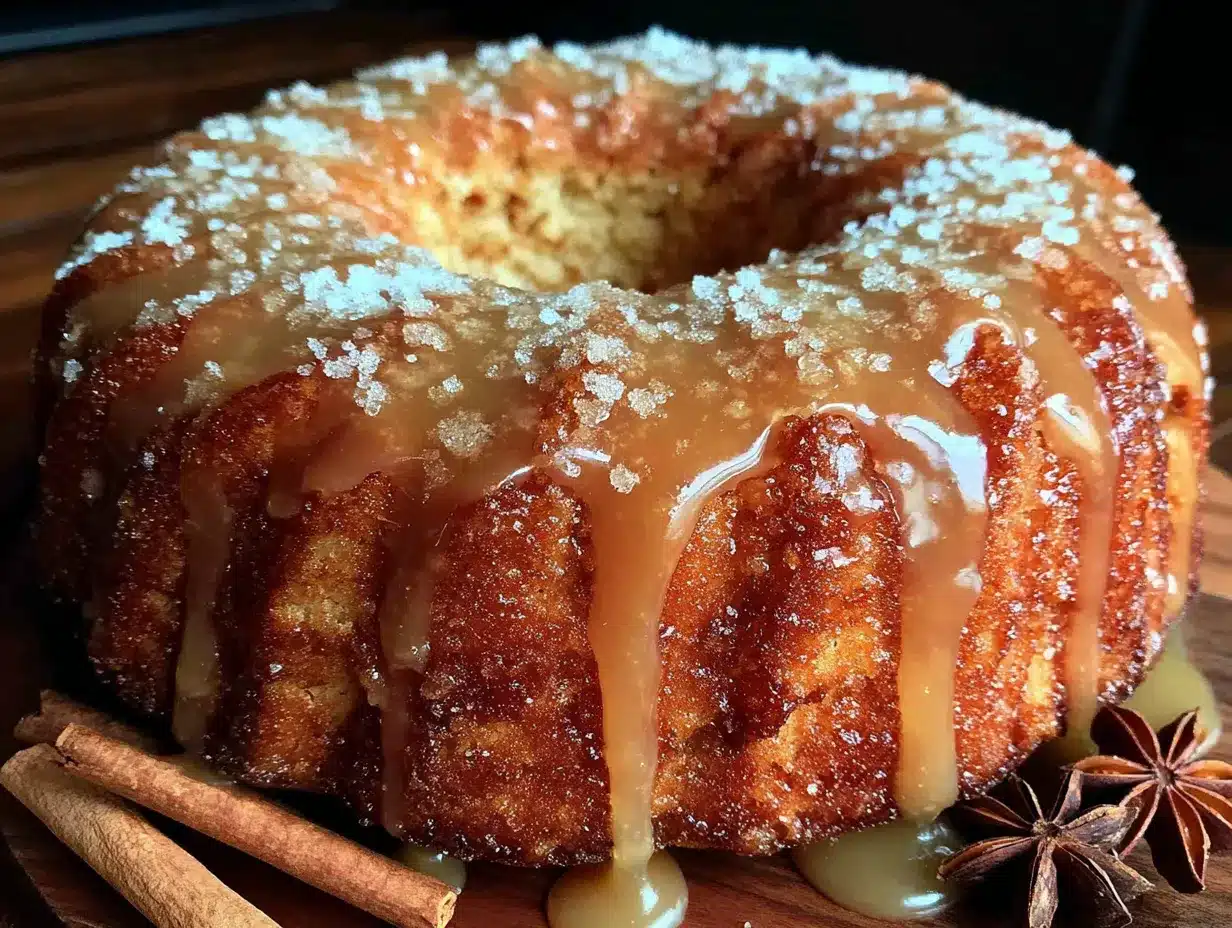
Let’s get baking! I’ve broken this down into clear steps so you can follow along without any hiccups. Trust me, if I can do this after a long workday with a toddler tugging at my apron, you can absolutely nail it.
- Reduce the apple cider: Pour the 1 cup of apple cider into a small saucepan and bring it to a boil over medium-high heat. Once it’s boiling, reduce the heat to medium-low and let it simmer gently for about 12 to 15 minutes, stirring occasionally. You’re looking for it to reduce down to about ¼ cup. It should be syrupy and smell intensely of apples. Watch it carefully toward the end because it can burn quickly. Set it aside to cool while you prepare the rest of the ingredients.
- Preheat and prep the pan: Preheat your oven to 350°F (175°C). Grease your Bundt pan thoroughly with butter or non-stick baking spray, making sure to get into all the nooks and crannies. Then dust it with a little flour, tapping out the excess. This double-coating is your insurance policy against a stuck cake.
- Mix the dry ingredients: In a large bowl, whisk together the 2 ½ cups all-purpose flour, 1 ½ teaspoons baking powder, ½ teaspoon baking soda, 1 teaspoon ground cinnamon, ½ teaspoon ground nutmeg, and ½ teaspoon salt. Set this aside.
- Cream the butter and sugars: In a separate large bowl, beat the ½ cup softened unsalted butter with the 1 cup packed light brown sugar and ½ cup granulated sugar until light and fluffy. This takes about 3 to 4 minutes with a hand mixer or 2 minutes with a stand mixer. You want it to look pale and airy. If you’re doing it by hand, use a wooden spoon and some elbow grease—it’s totally doable, just takes a little longer.
- Add the eggs and vanilla: Beat in the 2 large eggs one at a time, making sure each is fully incorporated before adding the next. Then mix in the 1 teaspoon vanilla extract and the cooled reduced apple cider. The batter might look a little curdled at this point, but don’t worry—that’s normal. The buttermilk will bring it all together in the next step.
- Alternate adding dry ingredients and buttermilk: With the mixer on low speed (or using a spatula if mixing by hand), add about one-third of the flour mixture to the butter mixture, mixing until just combined. Then add half of the ¾ cup buttermilk, mixing again. Continue alternating, ending with the flour mixture. Mix only until you can’t see any more streaks of flour. Overmixing at this stage will make the cake tough, so stop as soon as it comes together.
- Fold the batter one last time: Give the batter a final fold with a rubber spatula, scraping the bottom of the bowl to make sure everything is evenly incorporated. The batter should be thick and smell amazing—like spiced apple cider in a bowl.
- Bake the cake: Pour the batter into your prepared Bundt pan and spread it evenly. Bake at 350°F (175°C) for 45 to 55 minutes, or until a wooden skewer inserted into the center comes out clean or with just a few moist crumbs. The top should be golden brown and spring back when lightly touched. Every oven is different, so start checking at 45 minutes.
- Cool in the pan: Let the cake cool in the pan on a wire rack for exactly 15 minutes. Set a timer—I’ve forgotten this step and ended up with a cake that stuck because I let it cool too long. The residual heat helps it release cleanly.
- Prepare the cinnamon-sugar coating: While the cake is cooling, mix the ½ cup granulated sugar and 1 ½ teaspoons ground cinnamon in a shallow bowl. Melt the ¼ cup unsalted butter in a separate small bowl.
- Release and coat the cake: Place your cooling rack upside down over the Bundt pan, then carefully flip the whole thing over. Lift the pan off gently. If any part sticks, just use a small spatula to coax it out. While the cake is still warm (but not hot), use a pastry brush to coat the entire surface with the melted butter. Then generously sprinkle or roll the cinnamon-sugar mixture over the cake, pressing it gently so it adheres. Don’t skip the butter—it’s what makes the sugar coating stick and gives you that authentic donut experience.
One thing I want to mention: the cake is most tender when it’s still slightly warm from the oven. But honestly, it’s also incredible the next day after the flavors have had time to meld. So don’t stress if you’re making it ahead of time.
Cooking Tips & Techniques
I’ve made enough mistakes in the kitchen to fill a small cookbook, and this recipe taught me some important lessons. Let me share them so you don’t have to learn the hard way.
Don’t rush the cider reduction. I know it’s tempting to crank up the heat and get it over with, but reducing apple cider at a gentle simmer is key. High heat can scorch the sugars and give you a bitter, burnt flavor instead of that sweet, concentrated apple taste. Keep an eye on it, and if you see it starting to foam up too much, lower the heat immediately.
Room temperature ingredients matter. I used to think this was just chef talk until I made a cake with cold eggs and cold buttermilk. The batter was lumpy, the butter seized up, and the cake ended up with a dense, uneven crumb. Take the extra 20 minutes to let your eggs and buttermilk come to room temperature. Your cake will thank you.
Grease the pan like you mean it. Use a pastry brush to get butter into every groove of your Bundt pan, then dust with flour. For really intricate pans, I sometimes use a baking spray that has flour in it (like Baker’s Joy). There’s nothing sadder than a beautiful cake that sticks to the pan and comes out in pieces. Trust me on this one—I’ve been there.
Let the cake cool in the pan for exactly 15 minutes. Too short, and it will fall apart when you try to flip it. Too long, and the steam will make it stick to the pan. Fifteen minutes is the sweet spot. Set a timer and don’t wander off.
If your cake cracks on top, don’t panic. This happens sometimes, especially if your oven runs hot or you overmixed the batter. The cinnamon-sugar coating covers a multitude of sins, and once you slice it, nobody will ever know. I’ve served cracked cakes to guests who raved about them, so just keep going.
For the best texture, use a kitchen scale. I know measuring cups are convenient, but flour is notorious for being inconsistent when scooped. One cup can weigh anywhere from 120 to 150 grams depending on how you scoop it. Using a scale (315 grams for the flour in this recipe) gives you consistent results every time.
Variations & Adaptations
One of the things I love about this cake is how flexible it is. Here are some variations I’ve tried and loved:
Gluten-Free Version: Substitute the all-purpose flour with a good quality 1-to-1 gluten-free baking flour blend. I’ve had great results with King Arthur Measure for Measure. The texture will be slightly more delicate, so handle the cake gently when flipping it. Add an extra tablespoon of buttermilk to compensate for the added absorbency of gluten-free flours.
Dairy-Free Adaptation: Use plant-based butter (I like Miyoko’s or Earth Balance) and substitute the buttermilk with ¾ cup unsweetened almond or oat milk mixed with 1 tablespoon of lemon juice. Let it sit for 5 minutes before using. The cake won’t be quite as tender, but it’s still delicious and nobody will complain.
Spiced-Up Version: Add ¼ teaspoon of ground cloves and ¼ teaspoon of ground ginger to the dry ingredients for a more complex spice profile. This turns it into what I call “chai-spiced apple cider cake,” and it’s perfect for holiday gatherings.
Apple Chunk Addition: Fold in 1 cup of finely diced fresh apple (peeled) into the batter just before pouring it into the pan. Use a firm apple like Granny Smith or Honeycrisp so it holds its shape during baking. This adds little pockets of soft fruit throughout the cake.
Maple Glaze Option: Instead of the cinnamon-sugar coating, whisk together 1 cup powdered sugar, 2 tablespoons maple syrup, and 1 to 2 tablespoons of milk until smooth. Drizzle over the cooled cake. This gives it a more elegant look and a deeper fall flavor.
Mini Bundt Version: Use a mini Bundt pan (6-cavity) and reduce the baking time to 20 to 25 minutes. These are perfect for gifting or for portion control. Just adjust the coating amount accordingly.
I personally love the apple chunk version because it feels more rustic and homemade. The little bursts of apple in every bite remind me of picking apples at a local orchard with my family when I was a kid. But honestly, the original version is so good that I make it more often just because it’s simpler.
Serving & Storage Suggestions
This cake is best served slightly warm or at room temperature. The cinnamon-sugar coating stays delightfully crunchy on the outside while the inside remains tender and moist. Here are some ways to enjoy it:
Serving Ideas: Slice it and serve with a dollop of lightly sweetened whipped cream or a scoop of vanilla ice cream for an extra treat. For breakfast or brunch, a slice pairs beautifully with a hot cup of coffee or a mug of spiced chai. If you’re feeling fancy, drizzle a little caramel sauce over each slice and sprinkle with flaky sea salt.
Storage Instructions: Store the cake in an airtight container at room temperature for up to 3 days. The cinnamon-sugar coating will soften over time, but the cake itself stays moist. If you live in a humid climate, you might want to store it in a paper bag inside the container to absorb excess moisture.
Freezing Tips: This cake freezes beautifully. Wrap the completely cooled cake (without the coating) tightly in plastic wrap, then in a layer of aluminum foil. Freeze for up to 3 months. When you’re ready to serve, thaw it overnight in the refrigerator, then warm it in a 300°F (150°C) oven for about 10 minutes. Add the cinnamon-sugar coating after warming so it stays crunchy.
Reheating Method: For that fresh-from-the-oven experience, microwave individual slices for 15 to 20 seconds. Or place slices on a baking sheet and warm them in a 325°F (160°C) oven for 5 to 7 minutes. The aroma will fill your kitchen all over again.
The flavors actually deepen after the first day, so don’t be afraid to make this a day ahead. I’ve found that the apple cider flavor becomes more pronounced and the spices mellow into a beautiful harmony. It’s one of those rare cakes that gets better with a little patience.
Nutritional Information & Benefits
While this is definitely a treat, it does have some redeeming qualities worth mentioning. Here’s the estimated nutritional breakdown per slice (based on 12 servings):
- Calories: Approximately 380
- Total Fat: 16g
- Saturated Fat: 10g
- Cholesterol: 75mg
- Sodium: 280mg
- Total Carbohydrates: 56g
- Dietary Fiber: 1g
- Sugars: 36g
- Protein: 5g
Health Highlights: The apple cider provides a small amount of vitamin C and antioxidants, especially if you use unfiltered cider. Cinnamon has anti-inflammatory properties and may help regulate blood sugar levels. The buttermilk adds calcium and protein while keeping the cake tender without needing extra fat.
Dietary Considerations: This recipe contains gluten, dairy, and eggs. For gluten-free and dairy-free options, see the variations section above. If you’re watching your sugar intake, you can reduce the granulated sugar in the cake to ¼ cup and skip the coating, though the texture will be slightly different.
I’m not a nutritionist, and I firmly believe that desserts are meant to be enjoyed in moderation. But it’s nice to know that this cake isn’t completely devoid of nutritional value, right? Sometimes a little comfort food is exactly what your soul needs, and that has its own benefits.
Conclusion
This Easy Apple Cider Donut Bundt Cake has become my official fall baking project, and I hope it becomes yours too. It captures everything I love about autumn—the warm spices, the cozy aromas, the simple joy of sharing something homemade with the people you care about. And honestly, it’s so much easier than making actual donuts that I don’t think I’ll ever go back.
What I love most about this recipe is how forgiving it is. You don’t need to be a pastry chef to pull it off. You just need a Bundt pan, some apple cider, and a little bit of patience for that reduction step. The result is a cake that looks impressive enough for a holiday table but feels approachable enough for a random Tuesday evening when you just need something sweet.
I’d love to hear how yours turns out! Did you try any of the variations? Did you discover a new favorite spice combination? Drop a comment below and let me know—I read every single one, and your feedback helps me create better recipes for you. And if you share a photo on social media, tag me so I can see your beautiful creation. Happy baking, friends!
Frequently Asked Questions
Can I use apple juice instead of apple cider?
I wouldn’t recommend it. Apple juice is thinner and less flavorful than apple cider, and it won’t give you that same concentrated taste after reducing. If you’re in a pinch, you can use apple juice, but the cake will be milder and less satisfying. Stick with real apple cider for the best results.
Why did my cake stick to the Bundt pan?
This usually happens for one of two reasons: the pan wasn’t greased thoroughly enough, or the cake was left to cool too long in the pan. Make sure you get butter into every crevice and dust with flour. And remember that 15-minute cooling window—it’s crucial. If your pan is older or has scratches, consider using a baking spray with flour for extra insurance.
Can I make this cake ahead of time?
Absolutely! In fact, the flavors develop even more overnight. Bake the cake, let it cool completely, and store it in an airtight container at room temperature. Add the cinnamon-sugar coating just before serving so it stays crunchy. You can also freeze the uncoated cake for up to 3 months.
How do I know when the apple cider is reduced enough?
You’re looking for it to reduce from 1 cup down to about ¼ cup. It should be syrupy and dark amber in color, and it will coat the back of a spoon. Keep a close eye on it during the last few minutes because it can go from perfect to burnt very quickly. If it smells caramel-like, you’re on the right track. If it smells bitter, you’ve gone too far.
Can I use a different pan if I don’t have a Bundt pan?
You can, but the baking time will change. A 9×5-inch loaf pan will work, but you’ll need to bake it for about 55 to 65 minutes. A 9-inch round cake pan will take about 30 to 35 minutes. Just keep an eye on it and use the toothpick test. The Bundt pan gives you that classic donut shape and more surface area for the cinnamon-sugar coating, so I do recommend it if possible.
PrintEasy Apple Cider Donut Bundt Cake Recipe: Best Homemade Dessert
This Easy Apple Cider Donut Bundt Cake captures the warm, spiced flavor of apple cider donuts in a simple, fuss-free cake. With a tender crumb and a crunchy cinnamon-sugar coating, it’s the perfect fall dessert that’s easy enough for a weekday and impressive enough for a holiday table.
- Prep Time: 15 minutes
- Cook Time: 45-55 minutes
- Total Time: 1 hour 10 minutes
- Yield: 12 servings 1x
- Category: Dessert
- Cuisine: American
Ingredients
- 1 cup apple cider (reduced to about ¼ cup)
- 2 ½ cups all-purpose flour (315 grams)
- 1 ½ teaspoons baking powder
- ½ teaspoon baking soda
- 1 teaspoon ground cinnamon
- ½ teaspoon ground nutmeg
- ½ teaspoon salt
- ½ cup unsalted butter (1 stick, 113 grams), softened to room temperature
- 1 cup packed light brown sugar (200 grams)
- ½ cup granulated sugar (100 grams)
- 2 large eggs, room temperature
- 1 teaspoon vanilla extract
- ¾ cup buttermilk (180 ml), room temperature
- ½ cup granulated sugar (100 grams) (for coating)
- 1 ½ teaspoons ground cinnamon (for coating)
- ¼ cup unsalted butter (½ stick, 57 grams), melted (for coating)
Instructions
- Reduce the apple cider: Pour the 1 cup of apple cider into a small saucepan and bring it to a boil over medium-high heat. Once it’s boiling, reduce the heat to medium-low and let it simmer gently for about 12 to 15 minutes, stirring occasionally, until reduced to about ¼ cup. It should be syrupy and smell intensely of apples. Set it aside to cool.
- Preheat and prep the pan: Preheat your oven to 350°F (175°C). Grease your Bundt pan thoroughly with butter or non-stick baking spray, making sure to get into all the nooks and crannies. Then dust it with a little flour, tapping out the excess.
- Mix the dry ingredients: In a large bowl, whisk together the 2 ½ cups all-purpose flour, 1 ½ teaspoons baking powder, ½ teaspoon baking soda, 1 teaspoon ground cinnamon, ½ teaspoon ground nutmeg, and ½ teaspoon salt. Set this aside.
- Cream the butter and sugars: In a separate large bowl, beat the ½ cup softened unsalted butter with the 1 cup packed light brown sugar and ½ cup granulated sugar until light and fluffy, about 3 to 4 minutes with a hand mixer or 2 minutes with a stand mixer.
- Add the eggs and vanilla: Beat in the 2 large eggs one at a time, making sure each is fully incorporated before adding the next. Then mix in the 1 teaspoon vanilla extract and the cooled reduced apple cider.
- Alternate adding dry ingredients and buttermilk: With the mixer on low speed, add about one-third of the flour mixture to the butter mixture, mixing until just combined. Then add half of the ¾ cup buttermilk, mixing again. Continue alternating, ending with the flour mixture. Mix only until you can’t see any more streaks of flour.
- Fold the batter one last time: Give the batter a final fold with a rubber spatula, scraping the bottom of the bowl to make sure everything is evenly incorporated.
- Bake the cake: Pour the batter into your prepared Bundt pan and spread it evenly. Bake at 350°F (175°C) for 45 to 55 minutes, or until a wooden skewer inserted into the center comes out clean or with just a few moist crumbs.
- Cool in the pan: Let the cake cool in the pan on a wire rack for exactly 15 minutes.
- Prepare the cinnamon-sugar coating: While the cake is cooling, mix the ½ cup granulated sugar and 1 ½ teaspoons ground cinnamon in a shallow bowl. Melt the ¼ cup unsalted butter in a separate small bowl.
- Release and coat the cake: Place your cooling rack upside down over the Bundt pan, then carefully flip the whole thing over. Lift the pan off gently. While the cake is still warm, use a pastry brush to coat the entire surface with the melted butter. Then generously sprinkle or roll the cinnamon-sugar mixture over the cake, pressing it gently so it adheres.
Notes
Don’t rush the cider reduction; gentle simmer is key. Room temperature ingredients matter for best texture. Grease the pan thoroughly to prevent sticking. Let the cake cool in the pan for exactly 15 minutes. If the cake cracks, the cinnamon-sugar coating will cover it. For best results, use a kitchen scale for flour.
Nutrition
- Serving Size: 1 slice
- Calories: 380
- Sugar: 36
- Sodium: 280
- Fat: 16
- Saturated Fat: 10
- Carbohydrates: 56
- Fiber: 1
- Protein: 5
Keywords: apple cider donut cake, bundt cake, fall dessert, apple cake, cinnamon sugar cake, easy apple cake