Love this? Save it for later!
Share the inspiration with your friends
My brother-in-law Mark had sworn off potatoes for years. Not because of carbs or anything sensible like that—he just claimed they were “boring filler food” that didn’t deserve a spot on his plate. I’d watch him push roasted potatoes to the side at family dinners, politely ignoring the buttery chunks like they’d offended him personally. Then last Thanksgiving, I made these Creamy Gruyère Au Gratin Potatoes with Thyme as a “just in case” side dish for everyone else. I caught him standing by the stove at 11 p.m., eating straight from the baking dish with a serving spoon. He didn’t even bother with a plate.
Honestly, that moment made my whole year. Here was a man who’d spent a decade avoiding potatoes, caught red-handed scraping the cheesy edges from the corners of the dish. “These don’t count,” he mumbled with his mouth full. “These are different.” And he wasn’t wrong. There’s something about the way the Gruyère melts into that creamy sauce, how the thyme cuts through the richness, and how the potatoes get tender but not mushy—it’s not your average potato dish. It’s the kind of side that makes you rethink everything you thought you knew.
Maybe you’ve got someone in your life who claims they don’t like potatoes. Or maybe you’re the one who’s been burned by watery, flavorless au gratin dishes at potlucks. I get it. I’ve had my fair share of sad, gluey potato casseroles that tasted more like flour than cheese. But this version? It’s the one that converts people. The make-ahead element isn’t just convenient—it’s actually better the next day, which feels like a cheat code for holiday cooking. Let me tell you, there’s nothing quite like pulling this dish out of the fridge, popping it in the oven, and watching skeptics become believers in real time.
Why You’ll Love This Recipe
I’ve tested this recipe at least a dozen times across different ovens, different potato varieties, and different crowds. Here’s why it keeps earning a permanent spot on my holiday menu and my regular Sunday dinner rotation:
- Make-Ahead Magic : Assemble it up to two days ahead, and the flavors actually get better. The thyme infuses the cream, the cheese settles into every crevice—it’s like the dish marinates itself.
- No Fancy Skills Required : If you can slice a potato and stir a pot, you can make this. No roux-making anxiety, no finicky béchamel that could break. Just cream, cheese, and patience.
- Perfect for Stress-Free Entertaining : When guests are arriving and you’re already juggling a turkey or roast, having a side dish that just needs to be popped in the oven is a lifesaver. You can actually enjoy your own party.
- Crowd-Pleaser That Impresses : I’ve served this to kids who usually pick at vegetables and to food snobs who critique everything. Both groups asked for seconds. The Gruyère gives it that nutty, sophisticated flavor without being overwhelming.
- Unbelievably Creamy Without Being Heavy : The secret is using heavy cream and letting the potatoes slowly absorb it as they bake. No condensed soups, no flour-thickened glop. It’s rich but somehow still light on the palate—if that makes sense.
What makes this different from every other au gratin recipe out there? Two things. First, I use a mix of Gruyère and a touch of Parmesan for depth without making it greasy. Second, I insist on letting the dish rest after baking—this is non-negotiable. That rest time lets the sauce tighten up so you get clean slices instead of a soupy mess. I learned this the hard way after serving what looked like potato soup to my in-laws one Christmas. Never again.
This is the kind of recipe that makes you close your eyes after the first bite. It’s comfort food that feels special enough for a holiday table but easy enough for a Tuesday night roast chicken. No sacrifice required.
What Ingredients You Will Need
This recipe uses simple, high-quality ingredients to create something truly special. The beauty is in the restraint—no long lists of obscure items, just a few perfect things working together.
For the Potatoes
- 2 pounds (about 900g) Yukon Gold potatoes – These are my absolute favorite for au gratin. They have that buttery flavor and creamy texture naturally, and they hold their shape without getting mealy. Russets work in a pinch but can get a bit fluffy. Red potatoes are too waxy—skip those.
- 1 ½ cups (360ml) heavy cream – Don’t skimp here. Half-and-half will make a thinner sauce, and milk will curdle at high heat. Heavy cream gives you that velvety texture that makes this dish unforgettable. I use Organic Valley or local creamery cream when I can find it.
- ½ cup (120ml) whole milk – This thins the cream just enough so it’s not overwhelmingly rich. You could use 2% milk, but I wouldn’t go lower than that.
- 2 cups (about 200g) grated Gruyère cheese – Grate it yourself from a block. The pre-shredded stuff has anti-caking agents that prevent smooth melting. Trust me on this—I learned the hard way when my cheese sauce turned grainy. Gruyère has that nutty, slightly sweet flavor that makes this dish sing.
- ½ cup (about 50g) grated Parmesan cheese – Use real Parmigiano-Reggiano if you can. It adds saltiness and umami that balances the richness of the cream.
- 2 teaspoons fresh thyme leaves – Strip them from the stems right before using. Dried thyme won’t give you the same bright, aromatic quality. I keep a small pot of thyme on my windowsill just for this recipe.
- 3 cloves garlic, minced – Fresh garlic only. The jarred stuff has a metallic taste that ruins the delicate cream sauce.
- 1 teaspoon salt – I use fine sea salt. Adjust based on your cheese—some Gruyères are saltier than others.
- ½ teaspoon black pepper – Freshly ground, please. It makes a difference.
- ¼ teaspoon freshly grated nutmeg – This is optional but magical. Just a whisper of nutmeg brings out the creaminess in a way that’s hard to describe. I use a microplane to grate it fresh.
- 1 tablespoon unsalted butter – For greasing the dish and adding a touch of richness to the top.
For the Topping (Optional but Recommended)
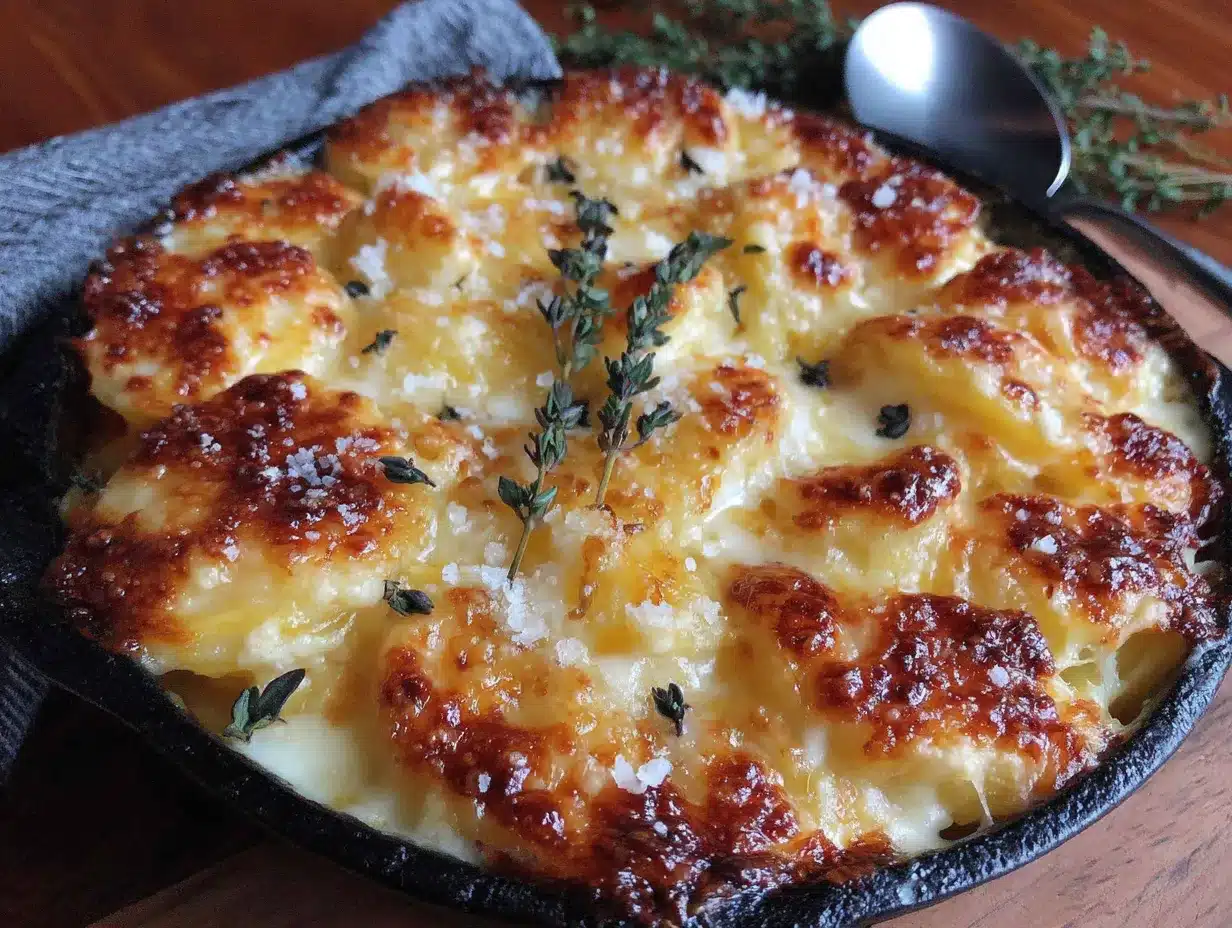
- ¼ cup (about 25g) additional Gruyère – For sprinkling on top during the last 10 minutes of baking. It creates that gorgeous golden crust.
- Fresh thyme sprigs – For garnish. It makes the dish look restaurant-worthy with zero extra effort.
Equipment Needed
You don’t need a fancy kitchen to pull this off. Here’s what you’ll need:
- 9×13 inch (or similar) baking dish – Glass or ceramic works best. Metal dishes can react with the cream and give a slightly metallic taste. I use a 3-quart Le Creuset dish that I found at a garage sale for ten bucks—best investment ever.
- Mandoline slicer or sharp knife – A mandoline gives you perfectly even slices, which is crucial for even cooking. If you use a knife, aim for ⅛-inch thick slices and try to keep them consistent. I’ve sliced my finger more times than I’d like to admit using a knife for this—the mandoline is safer if you use the guard.
- Medium saucepan – For heating the cream mixture. Nothing fancy needed.
- Box grater or food processor with grating disc – For grating your cheese. The food processor makes quick work of it, but I actually prefer the box grater because it gives me more control and doesn’t heat up the cheese.
- Aluminum foil – For covering the dish during the first part of baking.
- Cutting board and chef’s knife – For mincing garlic and stripping thyme leaves.
- Measuring cups and spoons – Accurate measurements matter here, especially for the cream.
If you don’t have a mandoline, don’t run out and buy one just for this. A sharp knife and a steady hand work fine—just take your time. The most important thing is uniform thickness so every potato slice cooks at the same rate.
Preparation Method
This looks like a lot of steps, but I promise it’s straightforward. I’ve broken it down so you can see exactly what’s happening at each stage.
Step 1: Prep Your Ingredients (15 minutes)
Preheat your oven to 375°F (190°C). While it’s heating, peel your potatoes and slice them into ⅛-inch thick rounds. I use a mandoline set to the thinnest setting, then go one notch thicker. If you slice them too thin, they’ll disappear into the cream. Too thick, and they won’t cook through. Aim for the thickness of a thick coin. Place the sliced potatoes in a large bowl of cold water to prevent browning while you prepare the rest.
Step 2: Make the Cream Mixture (10 minutes)
In a medium saucepan over medium heat, combine the heavy cream, whole milk, minced garlic, fresh thyme leaves, salt, pepper, and nutmeg. Stir gently and bring it to a gentle simmer—not a rolling boil. You’ll see tiny bubbles around the edges. Let it simmer for about 3 minutes, stirring occasionally. The garlic will soften and the thyme will perfume the cream. Remove from heat and set aside.
Here’s a tip I learned from burning my first batch: keep the heat moderate. If you boil the cream aggressively, it can scorch on the bottom and develop a weird flavor. Gentle heat is your friend.
Step 3: Grate Your Cheese (5 minutes)
While the cream mixture is cooling slightly, grate your Gruyère and Parmesan. Combine them in a bowl and set aside about ¼ cup of the mixture for the top. I like to grate the cheese while the cream simmers so everything is ready to go.
Step 4: Layer the Dish (15 minutes)
Butter your baking dish generously. Drain the potato slices and pat them dry with a clean kitchen towel—excess water will dilute the cream sauce. Arrange a single layer of potato slices in the bottom of the dish, overlapping them slightly like shingles on a roof. Pour a small amount of the warm cream mixture over the potatoes—just enough to coat them. Sprinkle a handful of the cheese mixture evenly over the top.
Repeat this process: potatoes, cream, cheese. I usually get about 4 to 5 layers depending on the size of my dish. End with a final layer of potatoes, pour the remaining cream over the top, and press down gently with a spatula to ensure the cream settles into all the layers. The cream should come about halfway up the sides of the dish—if it looks too low, add a splash more milk.
Step 5: Cover and Bake (45 minutes)
Cover the dish tightly with aluminum foil and bake for 45 minutes. The foil traps steam and helps the potatoes cook through without drying out. After 45 minutes, remove the foil and check if the potatoes are tender by piercing them with a paring knife—it should slide in with no resistance.
Step 6: Uncover and Finish (15-20 minutes)
If the potatoes are tender, sprinkle the reserved cheese mixture over the top and return the dish to the oven, uncovered. Bake for another 15 to 20 minutes, until the top is golden brown and bubbly. The edges should be caramelized and the cream should be thick and luscious.
Step 7: The Crucial Rest (10-15 minutes)
This is the step I beg you not to skip. Let the dish rest on the counter for at least 10 minutes before serving. I know it’s tempting to dig in immediately, but the rest allows the sauce to set so you get clean, beautiful slices instead of a soupy mess. The first time I made this, I served it straight from the oven and ended up with what looked like potato soup. Patience pays off here.
Make-Ahead Instructions
To make this dish ahead of time, prepare it through Step 5 (covering with foil) but don’t bake it yet. Instead, let it cool to room temperature, then cover and refrigerate for up to 2 days. When you’re ready to bake, add about 10-15 minutes to the covered baking time since you’re starting from cold. Then proceed with the uncovered baking as directed. The flavors actually deepen and improve overnight—I’ve made this for Christmas dinner two days ahead and it was the best version yet.
Cooking Tips & Techniques
I’ve made this recipe enough times to have a few battle scars—and a few hard-won lessons. Here’s what I wish someone had told me when I first started making au gratin potatoes.
Don’t Overcrowd the Layers. I know it’s tempting to just dump all the potatoes in and pour cream over them, but taking the time to arrange them in overlapping layers makes a huge difference. Each slice gets coated in cream and cheese, and they cook evenly. When I rush this step, I end up with some potatoes that are perfectly tender and others that are still crunchy in the middle. Not a good look.
Watch Your Oven Temperature. Every oven runs a little differently. I’ve baked this in three different ovens and the timing varies by up to 15 minutes. Start checking for doneness at the 40-minute mark of the covered baking time. If the potatoes are still firm, give them another 5-10 minutes. Better to check early than to end up with undercooked potatoes.
The Cheese Melting Secret. If your cheese isn’t melting smoothly, it’s probably because you used pre-shredded cheese. Those anti-caking agents (usually cellulose or potato starch) prevent the cheese from clumping in the bag, but they also prevent it from melting into a smooth sauce. Grate your own cheese—it takes 5 extra minutes and makes a world of difference.
My Biggest Failure. I once tried to speed things up by using a higher oven temperature. Big mistake. The cream curdled, the cheese burned on top, and the potatoes were still crunchy in the middle. Low and slow is the way to go. Trust the process.
Timing Strategy for Holidays. If you’re making this for a big meal, assemble it the day before and keep it in the fridge. About an hour before you want to serve, pop it in the oven. This way, your oven is free for other dishes during the busy cooking window, and you’re not scrambling at the last minute.
Variations & Adaptations
This recipe is forgiving enough to play around with. Here are some variations I’ve tried and loved:
Cheese Swaps
Not a Gruyère fan? No problem. Use half Gruyère and half sharp white cheddar for a different but equally delicious flavor. Or try fontina for an even creamier texture. I’ve even used smoked Gouda for a deeper, smokier version that’s amazing with grilled meats. Just avoid pre-shredded blends—they never melt as well.
Herb Variations
Thyme is classic, but rosemary works beautifully too. Use about 1 teaspoon of finely chopped fresh rosemary instead of the thyme. Or try a mix of thyme and a pinch of dried sage for a more savory, almost Thanksgiving-like flavor. In the summer, I sometimes add a few fresh basil leaves between the layers—it’s unexpected but lovely.
Dietary Adaptations
For a gluten-free version, this recipe is naturally gluten-free as written—just double-check your cheese doesn’t have any additives. For a lighter version, you can substitute half the heavy cream with half-and-half, but the texture won’t be quite as luxurious. I’ve also made this with a mix of heavy cream and unsweetened oat milk in a pinch—it worked, but let’s be honest, it wasn’t as good.
Add Some Veggies
Thinly sliced leeks or shallots between the layers add sweetness and depth. I sometimes add a layer of sautéed mushrooms for a more substantial dish that could almost be a main course. Just make sure any added vegetables are cooked or sliced very thin so they’re tender by the time the potatoes are done.
Serving & Storage Suggestions
Serve these potatoes warm, not piping hot. The rest time I mentioned earlier is crucial for texture, but it also means the dish hits the table at the perfect temperature—warm enough to be comforting, but not so hot that it burns mouths.
This dish pairs beautifully with roasted meats like chicken, beef, or lamb. I’ve served it alongside a simple roast chicken and a green salad, and it felt like a complete, satisfying meal. For holidays, it’s the perfect companion to turkey or ham. The richness of the potatoes balances well with something bright and acidic on the plate—a squeeze of lemon over roasted vegetables works wonders.
Storage: Leftovers keep well in the refrigerator for up to 4 days. Store them in an airtight container. The texture does change slightly upon reheating—the cream thickens and the potatoes become a bit more dense, but it’s still delicious. I actually like the leftovers even more sometimes because the flavors have melded together so nicely.
Reheating: The best way to reheat is in the oven at 350°F (175°C) for about 15-20 minutes, covered with foil. The microwave works in a pinch, but it can make the potatoes a bit rubbery. If you’re in a hurry, microwave individual portions for 1-2 minutes, then finish them under the broiler for a minute to crisp up the top.
Freezing: I don’t recommend freezing this dish. The cream sauce can separate and become grainy upon thawing, and the potatoes can turn mushy. If you absolutely must freeze it, do so before baking, and expect the texture to be different. Honestly, it’s so easy to make ahead that freezing isn’t necessary.
Nutritional Information & Benefits
Let’s be real—this is an indulgent dish. But that doesn’t mean it can’t fit into a balanced lifestyle. Here’s the estimated nutrition per serving (based on 8 servings):
- Calories: 380
- Fat: 28g
- Saturated Fat: 17g
- Carbohydrates: 22g
- Fiber: 2g
- Protein: 12g
- Sodium: 480mg
The good news? Potatoes are actually a great source of vitamin C, potassium, and fiber when you leave the skins on (though for this recipe, peeling is best for texture). Gruyère cheese provides calcium and protein, and the thyme adds a dose of antioxidants. Is it a health food? No. But it’s a real food made from real ingredients, and that counts for something.
For those watching their sodium, you can reduce the added salt and rely on the natural saltiness of the cheese. And if you’re serving this as part of a holiday meal, a smaller portion alongside lots of vegetables makes for a balanced plate. I’ve never felt guilty eating a reasonable serving of these potatoes—they’re made with whole ingredients and a lot of love.
Conclusion
These Creamy Gruyère Au Gratin Potatoes with Thyme have become my go-to recipe for every occasion that calls for something special. They’re the dish I bring to potlucks when I want to impress, the side I make for holidays when I want to contribute something memorable, and the comfort food I turn to on cold winter Sundays when all I want is something warm and satisfying.
The make-ahead element is honestly the star of the show here. Being able to assemble this dish when I have a spare hour, then pull it out of the fridge and bake it when life gets chaotic—that’s the kind of practical magic I need in my kitchen. And the fact that it tastes even better the next day? That’s just a bonus.
I hope you give this recipe a try, whether you’re cooking for a crowd or just treating yourself to something special. Feel free to customize it—swap the herbs, change up the cheese, add some extras. Cooking should be about making things that taste good to you. And if you make it, I’d love to hear how it turned out. Drop a comment below or tag me in your photos—there’s nothing that makes my day like seeing someone else fall in love with this dish.
Happy cooking, friends. You’ve got this.
Frequently Asked Questions
Can I use a different type of potato?
Yukon Golds are my top recommendation because they’re naturally creamy and hold their shape well. Russets work in a pinch but can become a bit fluffy and absorb more cream. Avoid waxy potatoes like red or new potatoes—they won’t soften properly and the texture will be off.
Can I make this dairy-free?
I haven’t found a dairy-free version that matches the texture of this recipe. The heavy cream and cheese are essential for the creamy, rich result. You could try using full-fat coconut cream and dairy-free cheese, but the flavor and texture will be significantly different. It’s one of those recipes where the real deal really makes a difference.
Why did my sauce curdle?
Curdling usually happens when the heat is too high or the cream is overheated. Keep your cream mixture at a gentle simmer, not a boil. Also, make sure you’re using full-fat heavy cream—lower-fat options are more prone to curdling. If your sauce does curdle, it’s not ruined—just whisk it vigorously and it should smooth out.
How far ahead can I assemble this dish?
You can assemble the dish up to 2 days ahead and keep it covered in the refrigerator. The flavors actually improve as they meld. Just add about 10-15 minutes to the covered baking time since you’re starting from cold. Don’t assemble it more than 2 days ahead, or the potatoes can start to discolor and the texture may suffer.
Can I halve this recipe?
Absolutely! Halve all the ingredients and use an 8×8 inch baking dish. The baking time should be roughly the same, but start checking for doneness about 5 minutes earlier since the dish is smaller. This is perfect for a smaller gathering or when you don’t want a mountain of leftovers.
Pin This Recipe!
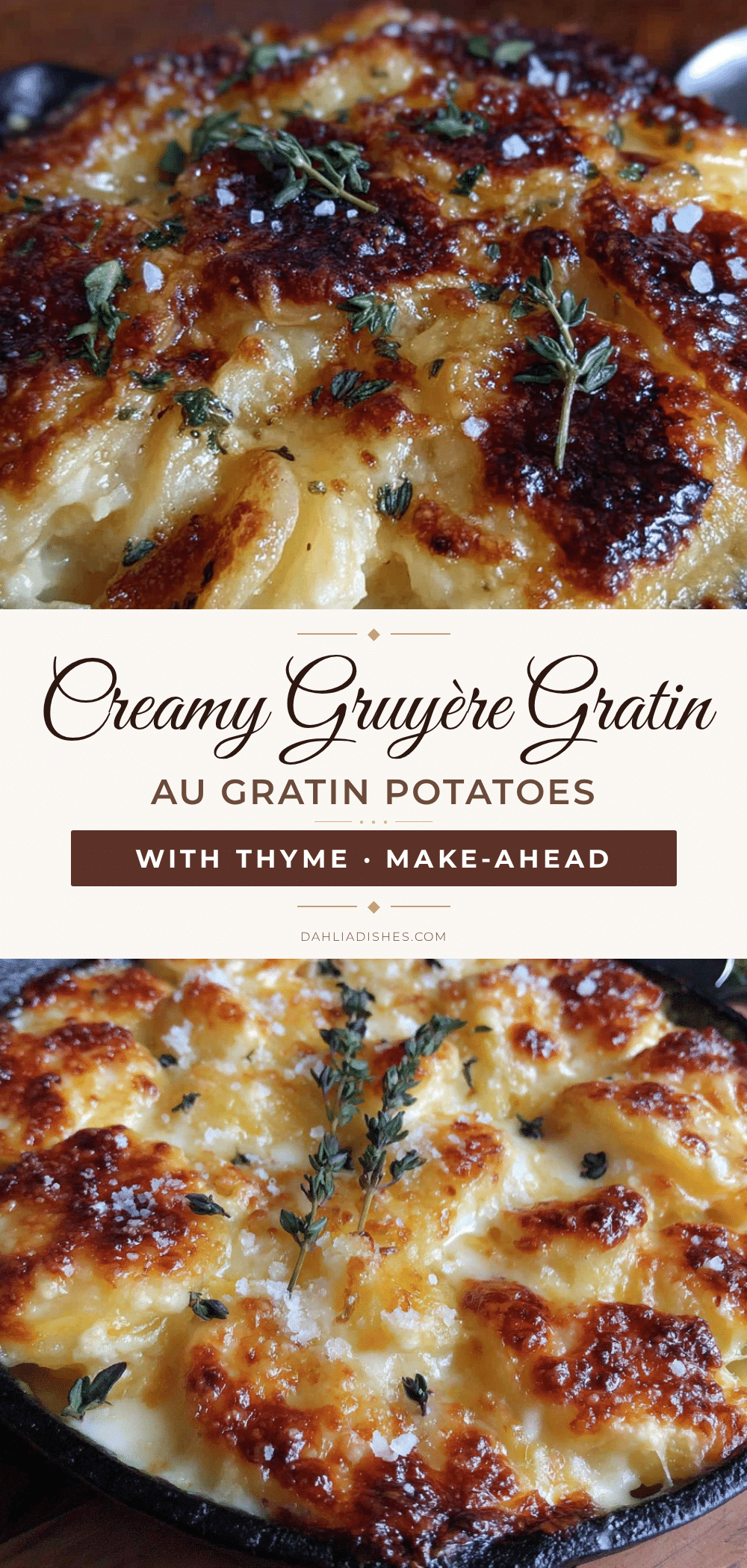
Creamy Gruyère Au Gratin Potatoes with Thyme (Easy Make-Ahead)

These creamy, cheesy au gratin potatoes with Gruyère and thyme are the ultimate make-ahead side dish. Perfect for holidays or Sunday dinners, they convert even the most stubborn potato skeptics.
- Prep Time: 15 minutes
- Cook Time: 1 hour 5 minutes
- Total Time: 1 hour 20 minutes
- Yield: 8 servings 1x
- Category: Side Dish
- Cuisine: French
Ingredients
- 2 pounds (about 900g) Yukon Gold potatoes
- 1 ½ cups (360ml) heavy cream
- ½ cup (120ml) whole milk
- 2 cups (about 200g) grated Gruyère cheese
- ½ cup (about 50g) grated Parmesan cheese
- 2 teaspoons fresh thyme leaves
- 3 cloves garlic, minced
- 1 teaspoon fine sea salt
- ½ teaspoon freshly ground black pepper
- ¼ teaspoon freshly grated nutmeg (optional)
- 1 tablespoon unsalted butter
- ¼ cup (about 25g) additional Gruyère (for topping, optional)
- Fresh thyme sprigs (for garnish, optional)
Instructions
- Preheat oven to 375°F (190°C). Peel potatoes and slice into ⅛-inch thick rounds. Place in a bowl of cold water to prevent browning.
- In a medium saucepan over medium heat, combine heavy cream, whole milk, minced garlic, fresh thyme leaves, salt, pepper, and nutmeg. Bring to a gentle simmer and cook for 3 minutes, stirring occasionally. Remove from heat.
- Grate Gruyère and Parmesan cheeses. Combine in a bowl and set aside ¼ cup for topping.
- Butter a 9×13-inch baking dish. Drain and pat dry potato slices. Arrange a single layer of potatoes in the dish, slightly overlapping. Pour a small amount of warm cream mixture over them and sprinkle with a handful of cheese. Repeat layers (about 4-5 layers total), ending with a final layer of potatoes. Pour remaining cream over top and press down gently.
- Cover tightly with aluminum foil and bake for 45 minutes.
- Remove foil and check potatoes for tenderness with a paring knife. If tender, sprinkle reserved cheese on top and bake uncovered for 15-20 minutes until golden and bubbly.
- Let dish rest for 10-15 minutes before serving to allow sauce to set.
Notes
For make-ahead: assemble through Step 5 (cover with foil) but do not bake. Refrigerate for up to 2 days. Add 10-15 minutes to covered baking time when baking from cold. Let dish rest after baking for clean slices. Grate cheese from a block for best melting.
Nutrition
- Serving Size: 1 serving
- Calories: 380
- Sugar: 2
- Sodium: 480
- Fat: 28
- Saturated Fat: 17
- Carbohydrates: 22
- Fiber: 2
- Protein: 12
Keywords: au gratin potatoes, Gruyère, thyme, make-ahead, holiday side dish, creamy potatoes