Love this? Save it for later!
Share the inspiration with your friends
My accountant, Mr. Henderson, is the last person I’d expect to give me cooking advice. The man wears the same gray cardigan every day, eats a tuna sandwich at his desk precisely at 12:15, and once told me that “adventure” meant trying a different flavor of seltzer. But there I was, stuck on hold with the IRS for forty-seven minutes, watching him unwrap his lunch, when he started talking about Thanksgiving sides. “You’re doing too many pans,” he said, not looking up from his sandwich. “One sheet pan. That’s all you need. My mother-in-law taught me that, and she burned water.” I laughed, mostly out of desperation from the hold music, but he was serious. He scribbled something on a sticky note—his handwriting was impossibly neat—and slid it across the desk. It just said: “Roots, herbs, high heat, don’t crowd.” That was it. No measurements, no temperatures, no timings. Just four cryptic phrases from a man who files taxes for a living.
Honestly, I shoved that sticky note in my purse and forgot about it for three weeks. Then Thanksgiving crept up, and I found myself staring at my oven, panicking about timing. Turkey in there for hours, stuffing needing space, cranberry sauce on the stove, and somehow I needed to fit four different vegetable dishes into a single oven. That’s when I remembered Mr. Henderson’s note. I mean, the man has never once made me laugh, but he apparently knows his way around a sheet pan. I pulled out the biggest baking sheet I owned—the one that barely fits in my oven—and started tossing vegetables with olive oil, salt, and whatever herbs I had left from summer. The result? Honest to goodness, it was the best part of the meal. People went back for seconds. My aunt, who never compliments anything, asked for the recipe. I had to tell her it came from my accountant, and she looked at me like I’d grown a second head.
That’s the thing about this recipe. It sounds almost too simple to be special, but there’s something about roasting everything together on one pan that makes the flavors just… work. The carrots get sweet and caramelized, the Brussels sprouts turn crispy on the edges, the sweet potatoes get all soft and buttery inside. And the best part? You prep it in fifteen minutes, throw it in the oven, and then you can actually enjoy your guests instead of juggling a dozen different pots and pans. Maybe you’ve been there—standing in a hot kitchen, sweating over three different recipes, wondering why you volunteered to host. This recipe is for those moments. It’s the dish that saves your sanity and still makes you look like a hero.
Why You’ll Love This Recipe
Let me tell you why this recipe has become my go-to for every holiday gathering, and honestly, why it might just change your Thanksgiving game forever. I’ve tested this method at least a dozen times—through trial and error, through burnt edges and undercooked centers—and I can say with confidence that this version is foolproof.
- One Pan, Zero Stress: Everything roasts together on a single sheet pan. No juggling multiple dishes, no timing nightmares, no screaming at your oven. You toss everything on one pan, slide it in, and walk away. It’s that simple.
- Crowd-Pleasing Flavors: The combination of caramelized sweet potatoes, crispy Brussels sprouts, tender carrots, and savory red onion creates a flavor profile that appeals to everyone. Even the picky eaters at your table will go back for seconds. I’ve seen it happen.
- Make-Ahead Friendly: You can prep all the vegetables the night before, store them in the fridge, and just toss them with oil and herbs before roasting. This is a lifesaver when you’re trying to coordinate a full Thanksgiving spread.
- Impressive Presentation: The vibrant colors of the roasted vegetables—deep orange sweet potatoes, emerald green Brussels sprouts, bright orange carrots, and purple-red onions—create a stunning visual on any holiday table. It looks like you spent hours on it. You didn’t.
- Dietary Inclusive: This recipe is naturally gluten-free, dairy-free, and vegan. It works for almost every dietary restriction at your table, which means fewer separate dishes to prepare. Everyone can eat from the same pan.
What makes this recipe different from all the other sheet pan sides out there? It’s the technique. Most recipes tell you to just toss everything together and hope for the best. But here’s the thing—different vegetables cook at different rates. Brussels sprouts need high heat to get crispy. Sweet potatoes need time to get tender. Carrots sit somewhere in between. This recipe accounts for all of that, with specific cutting sizes and strategic pan placement that ensures everything finishes at the same time.
This isn’t just another version of roasted vegetables. This is the version that makes people close their eyes after the first bite. It’s comfort food reimagined—healthier, faster, but with the same soul-soothing satisfaction. Perfect for impressing your guests without stress, or turning a simple holiday meal into something truly memorable.
What Ingredients You Will Need
This recipe uses simple, wholesome ingredients that you can find at any grocery store. The magic happens when they all roast together on the pan, their flavors mingling and concentrating into something truly special. Here’s what you’ll need:
For the Roasted Vegetables
- 2 pounds sweet potatoes, peeled and cut into 1-inch cubes (look for firm, evenly shaped sweet potatoes for consistent cooking)
- 1 pound Brussels sprouts, trimmed and halved (choose bright green, firm sprouts with tightly packed leaves)
- 1 pound carrots, peeled and cut into 2-inch pieces (I prefer rainbow carrots for color, but regular orange ones work perfectly)
- 2 large red onions, cut into 1-inch wedges (keep the root end intact so the wedges hold together during roasting)
- 4 cloves garlic, smashed (not minced—smashed cloves release flavor without burning)
- 1/3 cup olive oil (use a good quality extra virgin for best flavor; I recommend California Olive Ranch for its smooth, buttery taste)
- 2 tablespoons fresh rosemary, chopped (dried works too, but use half the amount)
- 2 tablespoons fresh thyme leaves (strip the stems—they’re woody and unpleasant to eat)
- 1 teaspoon salt (I use kosher salt for better control; Diamond Crystal is my go-to brand)
- 1/2 teaspoon black pepper, freshly ground
For the Finishing Touch
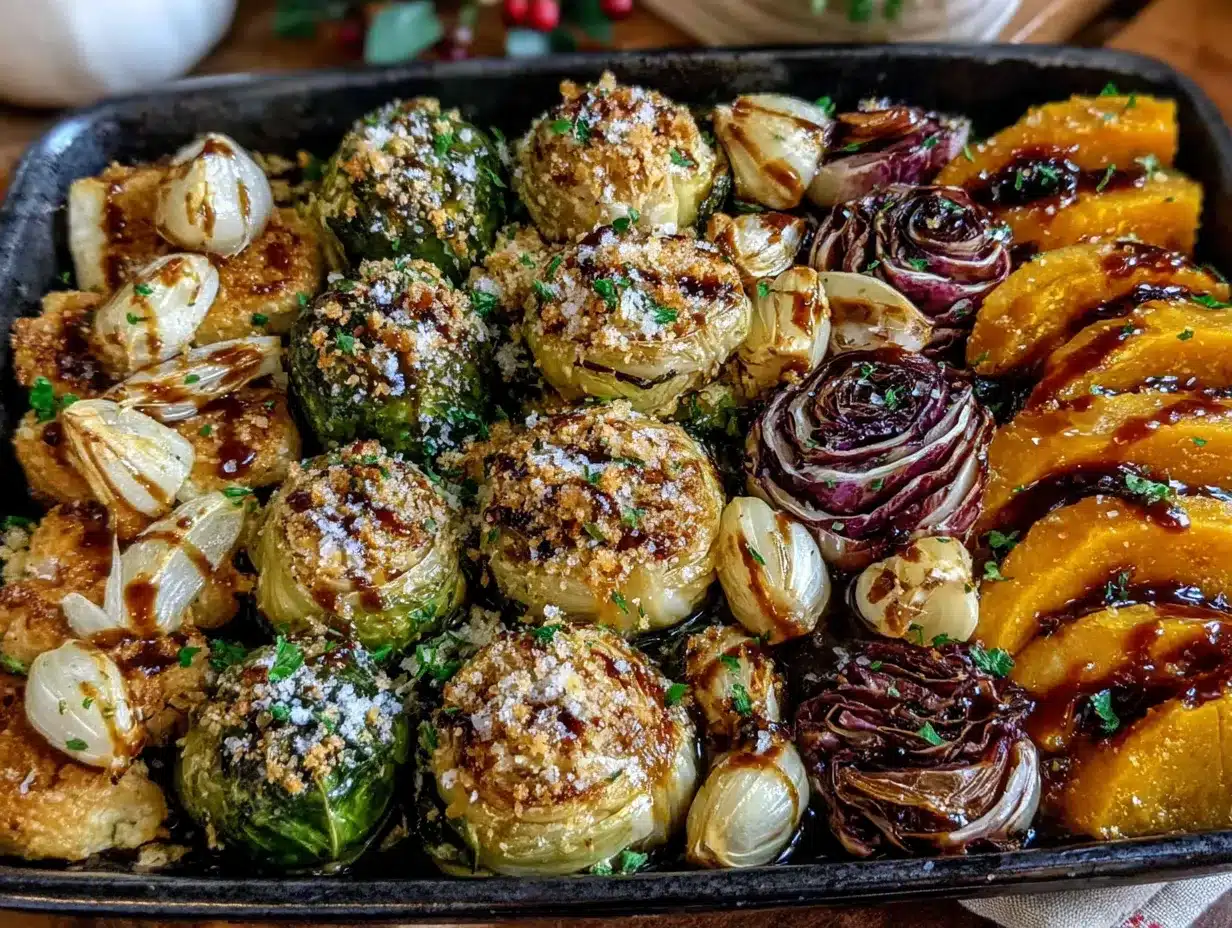
- 2 tablespoons balsamic glaze (store-bought is fine, or reduce 1/2 cup balsamic vinegar on the stove until syrupy)
- 1/4 cup pomegranate seeds (optional, but they add a beautiful pop of color and sweetness)
- 2 tablespoons fresh parsley, chopped (for garnish)
- Flaky sea salt, for finishing (Maldon is my favorite—those little crunchy crystals make a difference)
Substitution Guidance
If you’re missing something, don’t worry. You can swap sweet potatoes for butternut squash or regular potatoes. No Brussels sprouts? Use broccoli florets or cauliflower instead (just cut them into similar-sized pieces). For a different flavor profile, try using smoked paprika and cumin instead of rosemary and thyme—it gives the vegetables a warm, almost smoky taste that’s perfect for fall. If you need to keep this recipe nut-free, it already is. For a lower-carb option, replace the sweet potatoes with additional Brussels sprouts and cauliflower.
Equipment Needed
You don’t need a fancy kitchen to make this recipe work. Here’s what you’ll actually use:
- Large sheet pan (18×13 inches or similar—make sure it has a rim to catch any juices; I use a Nordic Ware half-sheet pan and it’s been through dozens of Thanksgiving dinners)
- Chef’s knife (a sharp one makes all the difference; I learned this the hard way after struggling with a dull knife for years)
- Cutting board (preferably a large one so you have room to work)
- Mixing bowl (large enough to toss all the vegetables together)
- Measuring spoons
- Parchment paper or aluminum foil (for easy cleanup—trust me, your future self will thank you)
- Vegetable peeler (a Y-shaped peeler is faster and more comfortable than the standard straight one)
- Spatula or tongs (for flipping the vegetables halfway through roasting)
If you don’t have a large sheet pan, you can use two smaller ones. Just make sure to rotate them between the oven racks halfway through cooking. And if you’re using parchment paper, don’t skip it—I once forgot and spent twenty minutes scrubbing caramelized sugar off my pan. Not fun.
Preparation Method
- Preheat your oven to 425°F (220°C). This high heat is crucial for getting those crispy edges and caramelized surfaces. While the oven heats up, position one rack in the center of the oven. If you’re using two pans, position racks in the upper and lower thirds.
- Prepare your vegetables. Wash and dry all the vegetables thoroughly. Wet vegetables won’t roast properly—they’ll steam instead. Peel the sweet potatoes and carrots. Cut the sweet potatoes into 1-inch cubes. Cut the carrots into 2-inch pieces (if they’re thick, halve them lengthwise first). Trim the ends off the Brussels sprouts and cut them in half through the stem. Cut the red onions into 1-inch wedges, keeping the root end intact so they don’t fall apart.
- Smash the garlic cloves. Place each clove on your cutting board, lay the flat side of your knife on top, and give it a firm whack with your palm. The skin will loosen, and you can peel it off easily. Smashed garlic releases its flavor more gently than minced garlic, so it won’t burn in the high heat.
- Season the vegetables. Place all the prepared vegetables and smashed garlic in a large mixing bowl. Drizzle with 1/3 cup olive oil. Add the chopped rosemary, thyme leaves, 1 teaspoon salt, and 1/2 teaspoon black pepper. Toss everything together with your hands (yes, get in there—it’s the best way to ensure even coating) until every piece is glistening with oil and herbs.
- Arrange on the sheet pan. Line your sheet pan with parchment paper for easy cleanup. Spread the vegetables in a single, even layer. This is crucial—if the pan is overcrowded, the vegetables will steam instead of roast, and you won’t get those beautiful caramelized edges. If everything doesn’t fit in a single layer, use two pans. Leave a little space around each piece if you can.
- Roast for 20 minutes. Place the pan in the preheated oven and set a timer. Don’t open the oven door during this time—you want the heat to stay consistent.
- Flip and rotate. After 20 minutes, remove the pan from the oven. Use a spatula or tongs to flip each piece of vegetable over. If you’re using two pans, switch their positions between the racks. Return the pan(s) to the oven.
- Roast for another 15-20 minutes. The total roasting time will be 35-40 minutes. Start checking at the 35-minute mark. The vegetables are done when the sweet potatoes are tender enough to be pierced easily with a fork, the Brussels sprouts are crispy on the outside and tender inside, and the carrots are caramelized at the edges. The onions should be soft and slightly charred.
- Finish and serve. Remove the pan from the oven. Drizzle the balsamic glaze over the hot vegetables—it will sizzle and create a beautiful shiny coating. Sprinkle with pomegranate seeds if using, and garnish with fresh parsley. Finish with a pinch of flaky sea salt. Serve immediately while everything is hot and crispy.
Sensory cue: When the vegetables are done, your kitchen should smell like caramelized onions and herbs. The edges of the Brussels sprouts should be dark brown and crispy, not black. If they’re black, your oven runs hot—reduce the temperature to 400°F next time.
Cooking Tips & Techniques
I’ve made this recipe enough times to know exactly where things can go wrong. Here are the lessons I learned the hard way, so you don’t have to.
Don’t crowd the pan. This is the number one mistake people make. If your vegetables are piled on top of each other, they’ll steam instead of roast. You want that beautiful caramelization, and that only happens when the vegetables have room to breathe. If you need to use two pans, do it. The extra five minutes of cleanup is worth it.
Cut everything to the same size. This seems obvious, but I’ve definitely thrown in some giant sweet potato chunks next to tiny Brussels sprouts and wondered why everything was unevenly cooked. Take the extra minute to make sure your pieces are roughly the same size. Your future self will thank you.
Use high heat. 425°F is non-negotiable. Lower temperatures will give you soft, mushy vegetables without any of those crispy edges that make this dish so good. I once tried roasting at 375°F because I was making something else at the same time, and the result was sad, limp vegetables that nobody touched.
Flip halfway through. This ensures even browning on all sides. I’ve forgotten to do this, and the bottom of the vegetables got soggy while the tops were perfectly crispy. Set a timer so you don’t forget.
Let the pan rest for a minute before serving. When you take the pan out of the oven, the vegetables are still cooking from the residual heat. Let them sit for about a minute before you drizzle the balsamic glaze. This prevents the glaze from just sliding off and pooling at the bottom of the pan.
Multitasking strategy: While the vegetables are roasting, you can prepare your other dishes. The 35-40 minute roasting time gives you a perfect window to make gravy, reheat mashed potatoes, or set the table. Just don’t forget to set that timer for flipping!
Variations & Adaptations
One of the best things about this recipe is how flexible it is. Here are some variations I’ve tried and loved:
Maple-Dijon Version: Whisk together 2 tablespoons maple syrup, 1 tablespoon Dijon mustard, and 1 tablespoon apple cider vinegar. Drizzle this over the vegetables during the last 10 minutes of roasting. The maple syrup caramelizes beautifully and adds a sweet-tangy glaze that’s absolutely addictive. I made this version for Friendsgiving last year, and someone asked if they could take the leftovers home. They did.
Spicy Harissa Twist: Stir 2 tablespoons harissa paste into the olive oil before tossing with the vegetables. The smoky heat of the harissa pairs surprisingly well with the sweetness of the roasted carrots and sweet potatoes. This is perfect if you’re serving a crowd that likes a little kick. Start with 1 tablespoon if you’re unsure about the spice level.
Herb Swap: Not a fan of rosemary and thyme? Try using 2 tablespoons of fresh sage and 1 tablespoon of fresh oregano instead. This gives the vegetables a more earthy, almost savory flavor that works beautifully with Thanksgiving turkey. I tried this combination when I ran out of thyme, and honestly, I might prefer it now.
Add Some Protein: If you want to turn this into a main dish, add 1 pound of cubed chicken breast or tofu to the pan. Toss it with the vegetables before roasting. Just make sure the chicken pieces are similar in size to the vegetables so everything cooks evenly. The chicken will be perfectly cooked and infused with all those herb flavors.
Roasted Vegetable Medley with Sausage: Add 1 pound of sliced smoked sausage or kielbasa to the pan during the last 15 minutes of roasting. The sausage releases its flavorful oils as it cooks, coating the vegetables in a savory, smoky layer. This turns the dish into a hearty one-pan meal that’s perfect for a casual weeknight dinner.
Serving & Storage Suggestions
These roasted vegetables are best served hot, straight from the oven. The contrast between the crispy edges and tender interiors is at its peak within the first 15 minutes. Arrange them on a large platter in a single layer so everyone can see the beautiful colors. I like to serve them alongside the turkey, with a bowl of gravy on the side for those who want extra moisture.
What to serve alongside: This dish pairs beautifully with roasted turkey, mashed potatoes, stuffing, and cranberry sauce. It’s also fantastic with grilled chicken, roasted pork tenderloin, or even a simple baked salmon for a lighter meal. For a vegetarian holiday spread, serve it with a lentil loaf or mushroom wellington.
Storage: Leftover roasted vegetables can be stored in an airtight container in the refrigerator for up to 4 days. The flavors actually deepen and meld together overnight, so they’re almost better the next day. I love using leftovers in grain bowls, salads, or as a topping for pizza.
Reheating: The best way to reheat these vegetables is in the oven or air fryer. Spread them on a baking sheet and reheat at 375°F for 5-7 minutes, or until they’re hot and crispy again. The microwave will work in a pinch, but the vegetables will be softer and less crispy. If you’re using the microwave, add a splash of water and cover with a damp paper towel to prevent them from drying out.
Freezing: You can freeze roasted vegetables for up to 3 months. Let them cool completely, then spread them on a baking sheet and freeze until solid. Transfer to a freezer-safe bag or container. To reheat, spread frozen vegetables on a baking sheet and roast at 400°F for 15-20 minutes, or until hot and crispy. No need to thaw first.
Nutritional Information & Benefits
Here’s the nutritional breakdown for one serving (about 1 cup of roasted vegetables):
| Nutrient | Amount |
|---|---|
| Calories | 185 |
| Total Fat | 9g |
| Saturated Fat | 1.5g |
| Cholesterol | 0mg |
| Sodium | 320mg |
| Total Carbohydrates | 26g |
| Dietary Fiber | 5g |
| Sugars | 9g |
| Protein | 3g |
| Vitamin A | 380% DV |
| Vitamin C | 45% DV |
| Iron | 8% DV |
| Potassium | 520mg |
This dish is packed with nutrients. Sweet potatoes are loaded with beta-carotene, which your body converts to vitamin A for healthy vision and immune function. Brussels sprouts are a cruciferous vegetable rich in vitamin C and fiber, supporting digestion and immune health. Carrots provide additional vitamin A and antioxidants. The olive oil adds healthy monounsaturated fats that support heart health.
This recipe is naturally gluten-free, dairy-free, and vegan, making it suitable for most dietary needs. It’s also relatively low in calories for a vegetable side dish, so you can enjoy a generous serving without guilt. The only potential allergen is the garlic, but you can omit it if needed.
Conclusion
I know I started this story with my accountant, Mr. Henderson, and his cryptic sticky note. But honestly, that note has become one of my most treasured kitchen references. Every time I pull out that giant sheet pan and start tossing vegetables with herbs and oil, I think about that moment in his office. The hold music. The gray cardigan. The way he said “don’t crowd” like it was the most obvious advice in the world.
This recipe is worth trying because it solves the biggest problem of holiday cooking: too many dishes, not enough oven space. It’s the dish that lets you actually enjoy your own party instead of sweating over four different pots. And the best part? It tastes like you spent hours on it, when really, you just followed the advice of a quiet accountant who knows more about roasting vegetables than he lets on.
I’d love to hear how this recipe works for you. Did you try any of the variations? Did your guests ask for the recipe? Drop a comment below and let me know. And if you have your own sheet pan secrets, share them—I’m always looking for new tricks to add to my collection. Happy cooking, and may your Thanksgiving be full of crispy edges and happy guests!
Frequently Asked Questions
Can I prepare this recipe ahead of time?
Absolutely! You can chop all the vegetables up to 24 hours in advance and store them in a sealed container in the refrigerator. When you’re ready to cook, just toss them with oil and herbs and roast as directed. You can also roast the vegetables completely, let them cool, and reheat them in a 375°F oven for 10 minutes before serving. The texture won’t be quite as crispy as freshly roasted, but it’s still delicious.
What if I don’t have a large sheet pan?
No problem! Use two smaller baking sheets instead. Just make sure to spread the vegetables in a single layer on each pan. Rotate the pans between the upper and lower oven racks halfway through cooking to ensure even browning. If your pans are dark-colored, reduce the oven temperature by 25°F to prevent burning.
Can I use frozen vegetables instead of fresh?
You can, but the texture won’t be as good. Frozen vegetables release more water as they cook, which can make them soggy instead of crispy. If you’re using frozen, thaw them completely and pat them dry with paper towels before tossing with oil. You may also need to add 5-10 minutes to the roasting time. Fresh vegetables really do give the best results here.
How do I prevent the vegetables from sticking to the pan?
Line your sheet pan with parchment paper or aluminum foil. This creates a non-stick surface and makes cleanup incredibly easy. If you don’t have parchment paper, make sure to use enough olive oil (at least 1/3 cup) and spread it evenly over the pan before adding the vegetables. A well-seasoned cast iron sheet pan also works beautifully.
Can I add other vegetables to this recipe?
Definitely! This recipe is very adaptable. Try adding parsnips, turnips, cauliflower, broccoli, bell peppers, or butternut squash. Just make sure to cut them into similar-sized pieces so everything cooks evenly. Root vegetables like parsnips and turnips will take about the same time as sweet potatoes, while softer vegetables like bell peppers should be added during the last 15 minutes of roasting.
Pin This Recipe!
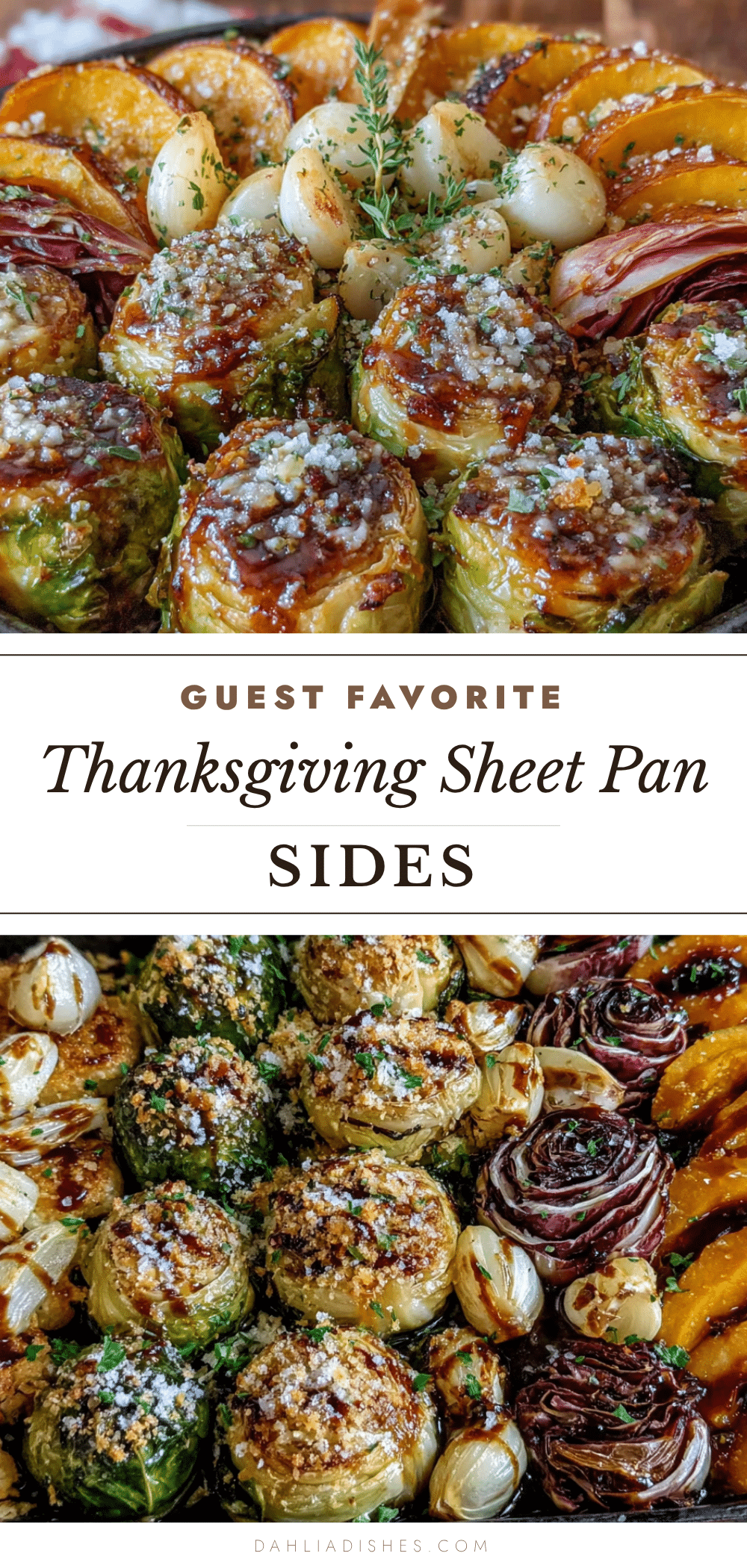
Best Thanksgiving Sheet Pan Sides: Easy One-Pan Recipe
A simple, one-pan roasted vegetable medley featuring sweet potatoes, Brussels sprouts, carrots, and red onions, perfect for Thanksgiving or any holiday meal. This recipe saves oven space and delivers caramelized, crispy vegetables with minimal effort.
- Prep Time: 15 minutes
- Cook Time: 35-40 minutes
- Total Time: 50-55 minutes
- Yield: 8 servings 1x
- Category: Side Dish
- Cuisine: American
Ingredients
- 2 pounds sweet potatoes, peeled and cut into 1-inch cubes
- 1 pound Brussels sprouts, trimmed and halved
- 1 pound carrots, peeled and cut into 2-inch pieces
- 2 large red onions, cut into 1-inch wedges
- 4 cloves garlic, smashed
- 1/3 cup olive oil
- 2 tablespoons fresh rosemary, chopped
- 2 tablespoons fresh thyme leaves
- 1 teaspoon kosher salt
- 1/2 teaspoon black pepper, freshly ground
- 2 tablespoons balsamic glaze
- 1/4 cup pomegranate seeds (optional)
- 2 tablespoons fresh parsley, chopped
- Flaky sea salt, for finishing
Instructions
- Preheat your oven to 425°F (220°C). Position one rack in the center of the oven.
- Wash and dry all vegetables thoroughly. Peel sweet potatoes and carrots. Cut sweet potatoes into 1-inch cubes. Cut carrots into 2-inch pieces (halve thick ones lengthwise). Trim Brussels sprouts and halve through the stem. Cut red onions into 1-inch wedges, keeping root end intact.
- Smash garlic cloves by placing each on a cutting board, laying the flat side of a knife on top, and giving it a firm whack with your palm. Peel off the skin.
- Place all prepared vegetables and smashed garlic in a large mixing bowl. Drizzle with olive oil. Add rosemary, thyme, salt, and pepper. Toss with your hands until evenly coated.
- Line a large sheet pan (18×13 inches) with parchment paper. Spread vegetables in a single, even layer. Do not overcrowd; use two pans if needed.
- Roast for 20 minutes. Do not open the oven door.
- Remove pan from oven. Flip each piece of vegetable using a spatula or tongs. If using two pans, switch their positions between racks.
- Return to oven and roast for another 15-20 minutes, until sweet potatoes are tender, Brussels sprouts are crispy, and carrots are caramelized. Total roasting time: 35-40 minutes.
- Remove from oven. Drizzle balsamic glaze over hot vegetables. Sprinkle with pomegranate seeds (if using) and fresh parsley. Finish with flaky sea salt. Serve immediately.
Notes
Don’t crowd the pan to ensure caramelization. Cut vegetables to uniform size for even cooking. Use high heat (425°F) for crispy edges. Flip halfway through for even browning. Let pan rest 1 minute before adding balsamic glaze. For variations, try maple-Dijon, spicy harissa, or herb swaps.
Nutrition
- Serving Size: 1 cup
- Calories: 185
- Sugar: 9
- Sodium: 320
- Fat: 9
- Saturated Fat: 1.5
- Carbohydrates: 26
- Fiber: 5
- Protein: 3
Keywords: Thanksgiving sides, sheet pan vegetables, roasted vegetables, holiday side dish, one-pan recipe, sweet potatoes, Brussels sprouts, carrots, vegan, gluten-free