Love this? Save it for later!
Share the inspiration with your friends
I was standing in my kitchen, staring at a package of bratwurst and a bowl of apples that were about to go soft. My friend Jenna, who had stopped by to borrow a baking dish, glanced over and said, “Why don’t you just throw them together in one pan?” I started to explain why that wouldn’t work—bratwurst is savory, apples are sweet, they’d clash, right? Then I stopped. Honestly, I had no good reason except that I’d never seen it done before.
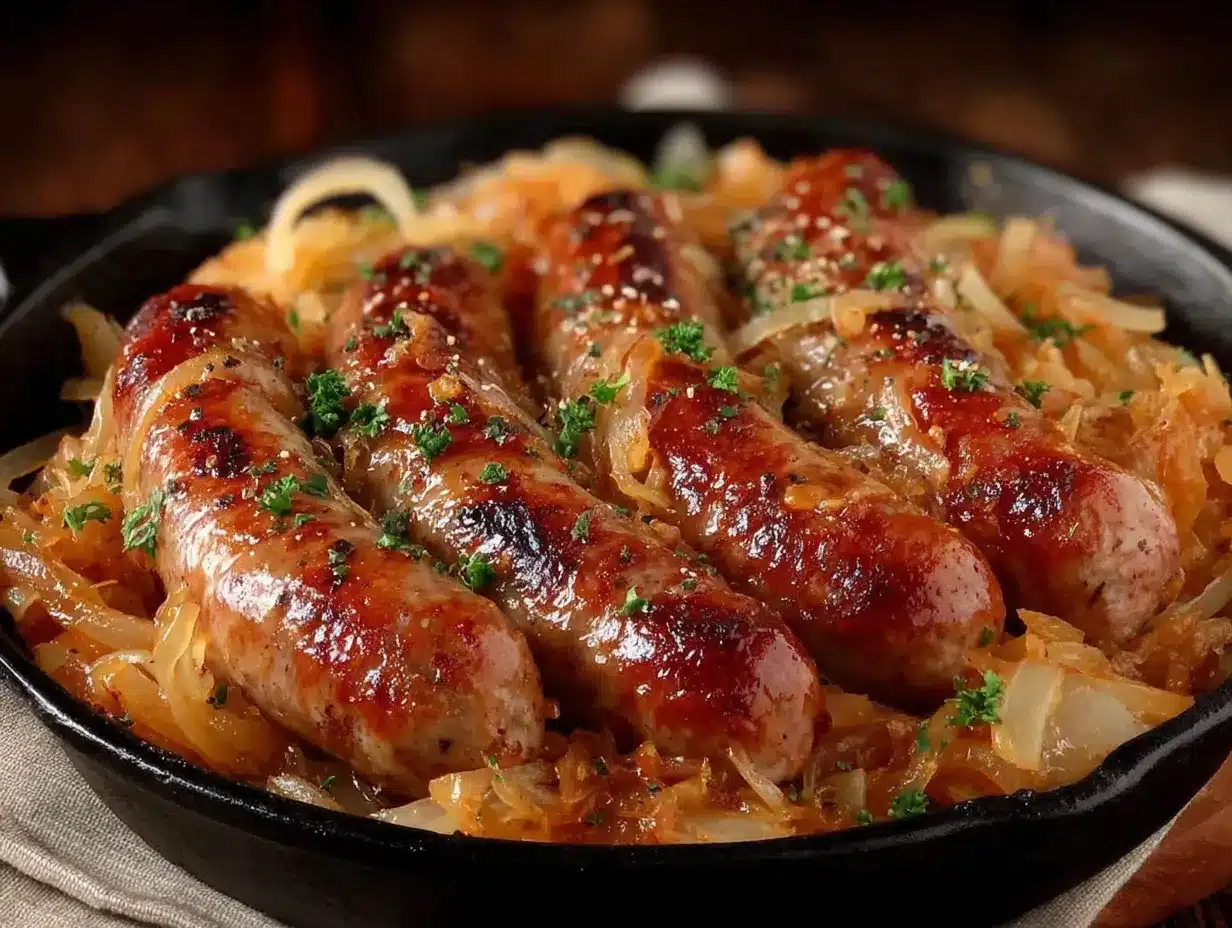
So I grabbed my cast iron skillet, sliced the apples a little thicker than I usually would, and tossed the bratwurst in with some onions I had half-heartedly caramelizing on the back burner. The smell that filled my kitchen was something else—smoky, a little sweet, totally unexpected. I mean, I’ve cooked bratwurst a hundred times. Beer baths, grill marks, the whole Oktoberfest routine. But this? This felt like I stumbled onto something I wasn’t supposed to find.
The first bite was confusing in the best way. The juicy, spiced sausage against the soft, caramelized apples with just a hint of sage—it worked. It really worked. I actually texted Jenna a photo mid-bite with the caption “you were right.” Maybe you’ve been there, where someone suggests something that sounds kinda wrong, but your gut says try it anyway. That’s exactly how this Savory German Bratwurst Apple Skillet was born. And honestly? I haven’t cooked bratwurst any other way since.
Why You’ll Love This Recipe
This isn’t just another sausage recipe that leaves you bored halfway through dinner. This Savory German Bratwurst Apple Skillet hits every single note you want in a one-pan meal. Here’s why it’s become my go-to for busy weeknights and lazy Sunday dinners alike:
- One Pan, Minimal Mess: Everything cooks in a single skillet—brown the bratwurst, soften the apples, build the sauce. Less cleanup means more time actually enjoying your meal.
- Sweet and Savory Perfection: The apples break down just enough to create a natural glaze that coats every bite of sausage. It’s the kind of flavor combination that makes you wonder why you didn’t try it sooner.
- Ready in 30 Minutes: From fridge to table in under half an hour. No marinating, no complicated steps, no stress.
- Simple Pantry Ingredients: You likely have most of these on hand already. Apples, onions, a little broth, and your favorite bratwurst—that’s really all it takes.
- Impressive Without the Fuss: This looks like something you’d order at a rustic German gastropub, but it’s secretly one of the easiest meals you’ll ever make.
- Family Approved: My kids, who normally pick around anything that isn’t chicken nuggets, actually asked for seconds. The apples get sweet enough to win over even the pickiest eaters.
What makes this recipe different from the dozens of other apple-sausage skillets out there is the technique. Instead of just throwing everything in at once, I let the bratwurst get a good sear first, then build the apple mixture in the same pan with the browned bits. That extra step creates layers of flavor you just can’t get from dumping everything together. It’s comfort food that feels a little special—but doesn’t ask you to work for it.
Ingredients You Will Need
This recipe relies on a handful of quality ingredients that work together to create something surprisingly complex. No weird specialty items here—just good, honest food.
For the Skillet
- 4 fresh bratwurst sausages (about 450g or 1 pound) – I prefer Johnsonville or a local butcher’s bratwurst for that perfect blend of pork and spices. Look for uncooked, fresh brats, not pre-smoked.
- 2 tablespoons unsalted butter (30g) – Adds richness and helps the apples caramelize without burning.
- 1 large yellow onion, thinly sliced (about 200g) – Sweet onions work great too, but yellow onions give the best savory depth.
- 2 medium apples, cored and sliced into ¼-inch wedges (about 300g) – Honeycrisp or Fuji hold their shape well. Granny Smith adds a nice tart contrast if you prefer less sweetness.
- ½ cup apple cider or apple juice (120ml) – This deglazes the pan and creates the base for the sauce. Use unsweetened if you want to control the sugar.
- ½ cup low-sodium chicken broth (120ml) – Adds savory balance to the sweetness of the apples.
- 1 tablespoon Dijon mustard (15g) – A little tang cuts through the richness beautifully.
- 1 teaspoon fresh thyme leaves (or ½ teaspoon dried) – Earthy and slightly floral, it ties the sweet and savory together.
- ½ teaspoon salt – Adjust to taste, especially depending on your broth and bratwurst.
- ¼ teaspoon black pepper – Freshly ground, please.
For Garnish (Optional but Recommended)
- 2 tablespoons fresh parsley, chopped – Adds a pop of color and freshness.
- Additional Dijon mustard for serving – Some people love an extra dollop on the side.
Ingredient Tips: If you can find apple cider from a local orchard in the fall, use it—the flavor is noticeably richer than store-bought juice. For the bratwurst, avoid pre-cooked or smoked varieties for this recipe; the fresh ones release fat as they cook, which flavors the apples perfectly. And if you’re gluten-free, double-check your bratwurst ingredients—some brands use breadcrumbs as binders.
Equipment Needed
You don’t need a fancy kitchen to pull this off. Here’s what you’ll need:
- Large cast iron skillet or heavy-bottomed pan (12-inch or 30cm) – Cast iron holds heat evenly and gives you that beautiful sear on the bratwurst. A stainless steel skillet works too, just watch the heat so nothing sticks.
- Sharp chef’s knife – For slicing apples and onions cleanly. A dull knife will bruise the apples and make you work harder than you need to.
- Cutting board – Preferably one with a groove to catch juices.
- Wooden spoon or spatula – For stirring without scratching your pan.
- Tongs – Makes flipping the bratwurst much easier than using a fork.
- Measuring cups and spoons – For the liquids and seasonings.
Budget-Friendly Tip: If you don’t own a cast iron skillet, a non-stick pan will work in a pinch. Just know you won’t get quite as deep of a sear on the bratwurst. I picked up my cast iron at a thrift store for eight dollars—best kitchen investment I ever made.
Preparation Method
Let me walk you through this step by step. Trust the process—each stage builds on the last.
- Prep your ingredients first. Core and slice the apples into ¼-inch wedges. Thinly slice the onion. Mince the garlic if you’re using fresh. Having everything ready before you start cooking makes the whole process smoother. (I learned this the hard way after burning onions while frantically chopping apples.)
- Brown the bratwurst. Heat your cast iron skillet over medium-high heat. Add the bratwurst and cook for 4-5 minutes per side, until deeply browned. Don’t crowd them—give each sausage room to develop that crust. You’re not cooking them through yet, just building flavor. Remove to a plate and set aside.
- Cook the aromatics. Reduce heat to medium. Add the butter to the pan. Once it melts, toss in the sliced onions. Cook for 4-5 minutes, scraping up those browned bits from the bottom of the pan—that’s pure flavor. The onions should be soft and starting to turn golden at the edges.
- Add the apples. Stir in the apple slices and cook for 3-4 minutes, stirring occasionally. You want them to soften slightly but still hold their shape. They’ll release a little juice, which is perfect.
- Deglaze the pan. Pour in the apple cider and chicken broth. Use your wooden spoon to scrape up any remaining browned bits. Stir in the Dijon mustard, thyme, salt, and pepper. Let this simmer for 2 minutes—the liquid will reduce slightly and start to look like a light sauce.
- Return the bratwurst. Nestle the browned bratwurst back into the skillet, pushing them down into the apple-onion mixture. Spoon some of the liquid over the tops.
- Simmer to finish. Cover the skillet, reduce heat to medium-low, and let everything cook together for 12-15 minutes. The bratwurst should reach an internal temperature of 160°F (71°C). The apples will be tender but not mushy, and the sauce will have thickened slightly.
- Rest and serve. Remove from heat. Let the skillet rest for 5 minutes before serving. This allows the juices to redistribute and the flavors to settle. Sprinkle with fresh parsley and serve straight from the pan.
Sensory Cue: When the apples are ready, they should offer slight resistance when pierced with a fork but not be crunchy. The sauce should coat the back of a spoon. If it seems too thin, let it simmer uncovered for an extra minute or two.
Cooking Tips & Techniques
After making this Savory German Bratwurst Apple Skillet about a dozen times (yes, I got obsessed), here are the things I wish someone had told me:
Don’t skip the sear. I know it’s tempting to just simmer everything together and save a step, but that browned crust on the bratwurst is where the deep, savory flavor comes from. It’s non-negotiable. If you’re short on time, sear them on high heat for just 2-3 minutes per side—that’s enough to build flavor without adding much time.
Watch your apple variety. I once used McIntosh apples because that’s what I had, and they basically dissolved into applesauce. Great for oatmeal, not so great for this dish. Stick with firmer apples like Honeycrisp, Fuji, or Braeburn. They hold their shape and give you that pleasant contrast of soft but not mushy.
Don’t overcrowd the pan. If you’re doubling the recipe, cook the bratwurst in batches. If you crowd them, they steam instead of sear, and you lose all that beautiful browning. I made this mistake when cooking for a crowd—ended up with pale, sad sausages. Learn from my failure.
Let the sauce do its thing. That moment when you add the cider and broth and scrape up the fond? That’s called deglazing, and it’s the secret to restaurant-quality flavor. Those browned bits stuck to the pan are concentrated sausage goodness—don’t waste them.
Temperature check matters. Brats are done at 160°F (71°C). If you don’t have a meat thermometer, cut into one sausage to check—the juices should run clear, and there should be no pink in the center. Overcooking makes them dry and rubbery, so pull them off right when they hit temp.
Variations & Adaptations
One of the best things about this recipe is how flexible it is. Here are a few ways I’ve tweaked it depending on what I had on hand or who I was cooking for:
Apple and Pork Sausage with Sauerkraut: Add ½ cup of drained sauerkraut along with the apples. It adds that classic German tang and makes the dish feel even more authentic. My neighbor Karl, who grew up in Bavaria, gave this his official seal of approval.
Chicken Apple Sausage Version: Swap the bratwurst for chicken apple sausage if you want something lighter. The cooking time stays about the same, and the apple flavor gets even more pronounced. Great for spring when you want something less heavy.
Low-Carb Adaptation: Skip the apple cider and use all chicken broth. Replace the apples with 1 cup of diced celery root or turnips. You’ll lose some of the sweetness, so add an extra tablespoon of Dijon mustard to keep the flavor interesting.
Spicy Kick: Add ½ teaspoon of red pepper flakes along with the onions, or use spicy Italian sausage instead of bratwurst. The heat plays surprisingly well with the sweet apples.
Fall Harvest Version: Toss in ½ cup of halved Brussels sprouts or cubed butternut squash along with the apples. Roast them in the pan for a few extra minutes before adding the liquid. It turns this into a full one-pan autumn dinner.
Dairy-Free: Substitute the butter with olive oil or a plant-based butter. The flavor changes slightly but still works beautifully.
Serving & Storage Suggestions
This skillet is a complete meal on its own, but here’s how I like to round it out:
Serving Temperature: Serve hot, straight from the skillet. The apples and sauce should be bubbling when you bring it to the table. Let it rest for 5 minutes first so nobody burns their mouth.
What to Serve With It: Mashed potatoes are my top pick—they soak up that apple-cider sauce like a dream. Buttered egg noodles, crusty bread for dipping, or even a simple side of roasted green beans all work great. For a lighter option, try it over a bed of arugula with a squeeze of lemon.
Storage: Leftovers keep well in an airtight container in the refrigerator for up to 3 days. The flavors actually meld together overnight and get even better. I’ve been known to make a double batch just for leftovers.
Reheating: The best way is back in a skillet over medium-low heat with a splash of broth or water to loosen the sauce. Microwave works in a pinch but can make the apples mushy. If using the microwave, cover the dish and heat in 30-second bursts.
Freezing: This freezes surprisingly well. Let it cool completely, then transfer to a freezer-safe container. It’ll keep for up to 2 months. Thaw overnight in the fridge and reheat in a skillet. The apples will be softer after freezing, but the flavor stays fantastic.
Flavor Development: Here’s something I noticed—day-old leftovers taste even better than the fresh version. The apple and mustard flavors mellow and blend overnight. So if you can plan ahead, making this a day before you want to serve it is actually a smart move.
Nutritional Information & Benefits
Here’s a rough estimate per serving (one bratwurst with about ¾ cup of the apple-onion mixture):
- Calories: 410
- Protein: 18g
- Fat: 28g
- Carbohydrates: 22g
- Fiber: 3g
- Sugar: 14g
- Sodium: 780mg
Health Highlights: Apples are a good source of fiber and vitamin C, and they contain antioxidants called flavonoids that support heart health. Onions bring quercetin, another antioxidant with anti-inflammatory properties. The bratwurst provides protein and B vitamins, though it’s also higher in saturated fat and sodium—so this is definitely a treat meal, not an everyday thing.
Dietary Notes: This recipe is naturally gluten-free if you check your bratwurst and broth labels. It’s not low-carb due to the apples, but swapping in lower-carb veggies as mentioned above can help. If you’re watching sodium, use low-sodium broth and look for bratwurst with reduced salt.
My Take: I don’t believe in labeling food as “good” or “bad.” This skillet is hearty, satisfying, and made with real ingredients. It fills you up in a way that processed convenience meals just can’t. That counts for something.
FAQs
Can I use pre-cooked bratwurst for this recipe?
You can, but the texture and flavor won’t be the same. Pre-cooked brats don’t release as much fat during browning, so you’ll get less flavor in the sauce. If that’s all you have, skip the initial sear and just simmer them with the apples for 10 minutes to warm through.
What’s the best apple for this dish?
Honeycrisp or Fuji are my top choices. They hold their shape during cooking and offer a nice balance of sweet and tart. Granny Smith works if you prefer a tangier result. Avoid Red Delicious—they turn into mush.
Can I make this in a slow cooker?
Yes, with adjustments. Brown the bratwurst and onions in a skillet first, then transfer everything to the slow cooker. Cook on low for 4-5 hours. The apples will be much softer, almost like a compote, but the flavor is still great. Add the fresh parsley at the end for color.
How do I prevent the apples from getting too mushy?
Don’t overcook them. Add the apples after the onions have softened, and only cook them for 3-4 minutes before adding the liquid. Then simmer covered for just 12-15 minutes. If you prefer firmer apples, add them 5 minutes into the simmering stage instead of at the beginning.
Can I use turkey or chicken bratwurst?
Absolutely. Poultry brats work well here, though they’re leaner so you might need to add a tablespoon of oil to the pan for browning. Watch the internal temperature—poultry sausages are done at 165°F (74°C).
Conclusion
This Savory German Bratwurst Apple Skillet is proof that the best recipes often come from happy accidents. Jenna’s suggestion that day felt wrong in theory, but in practice, it was one of those kitchen moments that reminds me why I love cooking—there’s always something new to discover, even with ingredients I’ve used a hundred times.
I hope you give this one a try, especially as the weather turns cool and you’re craving something warm and satisfying. Play with the variations, use whatever apples you have, and don’t stress about perfection. The beauty of a one-pan meal is that it forgives small mistakes. Serve it with crusty bread, a cold beer, or just a fork—it works either way.
If you make this, I’d love to hear how it turned out. Drop a comment below or tag me in your photos. And hey, if someone in your life suggests a weird-sounding kitchen idea, maybe give it a shot. You never know—you might end up with a new favorite dinner.
Pin This Recipe!

Best Savory German Bratwurst Apple Skillet Recipe

A one-pan meal featuring juicy bratwurst and caramelized apples in a savory-sweet sauce. Ready in 30 minutes, this rustic German-inspired dish is perfect for busy weeknights and impresses with minimal effort.
- Prep Time: 10 minutes
- Cook Time: 25 minutes
- Total Time: 35 minutes
- Yield: 4 servings 1x
- Category: Main Course
- Cuisine: German
Ingredients
- 4 fresh bratwurst sausages (about 1 pound or 450g)
- 2 tablespoons unsalted butter (30g)
- 1 large yellow onion, thinly sliced (about 200g)
- 2 medium apples, cored and sliced into ¼-inch wedges (about 300g, Honeycrisp or Fuji recommended)
- ½ cup apple cider or apple juice (120ml)
- ½ cup low-sodium chicken broth (120ml)
- 1 tablespoon Dijon mustard (15g)
- 1 teaspoon fresh thyme leaves (or ½ teaspoon dried)
- ½ teaspoon salt
- ¼ teaspoon black pepper
- 2 tablespoons fresh parsley, chopped (for garnish)
- Additional Dijon mustard for serving (optional)
Instructions
- Prep your ingredients first: core and slice apples into ¼-inch wedges, thinly slice onion, and mince garlic if using.
- Heat a large cast iron skillet over medium-high heat. Add bratwurst and cook for 4-5 minutes per side until deeply browned. Remove to a plate and set aside.
- Reduce heat to medium. Add butter to the pan. Once melted, add sliced onions and cook for 4-5 minutes, scraping up browned bits from the bottom.
- Stir in apple slices and cook for 3-4 minutes, stirring occasionally, until slightly softened.
- Pour in apple cider and chicken broth. Scrape up any remaining browned bits. Stir in Dijon mustard, thyme, salt, and pepper. Simmer for 2 minutes.
- Nestle the browned bratwurst back into the skillet, pushing them into the apple-onion mixture. Spoon some liquid over the tops.
- Cover the skillet, reduce heat to medium-low, and cook for 12-15 minutes until bratwurst reaches an internal temperature of 160°F (71°C).
- Remove from heat and let rest for 5 minutes. Sprinkle with fresh parsley and serve straight from the pan.
Notes
For best results, use fresh (not pre-cooked) bratwurst. Honeycrisp or Fuji apples hold their shape best. Don’t skip the sear—it builds deep flavor. Leftovers taste even better the next day. For a dairy-free version, substitute butter with olive oil.
Nutrition
- Serving Size: 1 bratwurst with abo
- Calories: 410
- Sugar: 14
- Sodium: 780
- Fat: 28
- Saturated Fat: 10
- Carbohydrates: 22
- Fiber: 3
- Protein: 18
Keywords: bratwurst, apple skillet, one-pan meal, German recipe, fall dinner, savory sweet, 30-minute meal