Love this? Save it for later!
Share the inspiration with your friends
This was supposed to be a simple weeknight roasted chicken. I had the bird seasoned, the potatoes chopped, and the oven preheating to 375. Then I realized I’d grabbed the wrong bag from the crisper drawer. Instead of carrots, I had a two-pound butternut squash staring back at me. The chicken was already in the oven, and honestly, I was too tired to care. I just cubed the squash, tossed it with oil and salt, and shoved it in on the rack below. Thirty minutes later, the chicken was perfect, but the squash? It was caramelized on the edges, soft in the middle, and smelled like a fall candle had exploded in my kitchen. I mashed a few pieces with a fork, stirred in some broth I had in the freezer, and took a sip. I actually said out loud, “Wait, what?” I mean, it was ridiculous. I’d been making butternut squash soup for years the traditional way—boiling it in a pot with stock until it got soft. This was completely different. The roasting had concentrated the sweetness and added this deep, almost nutty flavor I’d never gotten before. I grabbed a pad of butter and some dried sage from the cabinet, melted them together in a pan, and drizzled it over the soup. My husband walked in and asked what smelled so good. I told him it was a mistake. He said it tasted like I’d planned it for weeks. Maybe you’ve been there—when the kitchen throws you a curveball and you accidentally stumble onto something you’ll make for the rest of your life. That night, I scribbled the rough recipe on a napkin. I’ve been perfecting it ever since, and now I’m pretty sure I’ll never boil squash again.
Why You’ll Love This Recipe
If you’re planning a dinner party or a festive get-together, this is the soup that steals the show without stealing your time. It looks fancy—that ribbon of sage brown butter swirling on top gives it serious restaurant energy—but it’s actually one of the easiest things you can pull off when guests are on their way. The whole dish comes together in about 45 minutes, and most of that is hands-off oven time. You can roast the squash ahead of time, too, which is a lifesaver when you’re juggling appetizers and a main course.
- Simple Ingredients: You only need a handful of things—butternut squash, onion, garlic, broth, butter, and fresh sage. No fancy grocery store trips required.
- Perfect for Hosting: This soup scales beautifully. Double it for a crowd, serve it in small cups as a starter, or ladle it into big bowls for a cozy main course. It’s flexible enough for a potluck or a sit-down dinner.
- Crowd-Pleaser: I’ve served this to picky kids, vegan friends (just swap the butter for olive oil), and my uncle who claims he doesn’t like soup. Every single person has asked for the recipe.
- Unbelievably Delicious: The roasted squash gives you this deep, caramelized sweetness that you just can’t get from boiling. And that sage brown butter? It adds a nutty, herbaceous finish that makes people close their eyes after the first spoonful.
This isn’t just another butternut squash soup recipe. It’s the one you’ll pull out when you want to impress without stress. It’s comfort food reimagined—richer, faster, and with the same soul-soothing satisfaction you crave on a cool evening.
What Ingredients You Will Need
This recipe uses simple, wholesome ingredients to deliver bold flavor and a silky texture. Most of these are pantry staples, especially in the fall, and the ones that aren’t are easy to find at any grocery store.
For the Soup
- 1 large butternut squash (about 3 pounds / 1.4 kg) — peeled, seeded, and cut into 1-inch cubes. Look for a squash with a long neck and a small bulb; you get more usable flesh that way.
- 1 medium yellow onion (about 8 ounces / 225 g) — roughly chopped. I prefer yellow onions here for their balanced sweetness after roasting.
- 3 cloves garlic — smashed. Leave the skins on for roasting; they slip right off afterward and the garlic gets sweeter.
- 2 tablespoons olive oil — for roasting. Use a good-quality extra virgin if you have it.
- 4 cups (960 ml) vegetable broth — or chicken broth if you’re not keeping it vegetarian. I like Better Than Bouillon roasted vegetable base for the deepest flavor.
- 1/2 teaspoon salt — plus more to taste. I use fine sea salt.
- 1/4 teaspoon black pepper — freshly ground.
- 1/4 teaspoon ground nutmeg — optional, but it adds a warm background note.
For the Sage Brown Butter

- 4 tablespoons (56 g) unsalted butter — I recommend Kerrygold for its rich, creamy flavor that browns beautifully.
- 8-10 fresh sage leaves — plus a few small ones for garnish. If fresh sage is hard to find, dried sage works in a pinch (use 1 teaspoon).
- Flaky sea salt — for finishing, like Maldon.
Substitution tip: For a dairy-free version, use a high-quality vegan butter or good olive oil for the brown butter. The flavor will be different but still delicious. You can also swap the vegetable broth for chicken broth if you’re not worried about keeping it vegetarian.
Equipment Needed
The good news is you don’t need anything fancy for this soup. Here’s what you’ll want on hand:
- Large rimmed baking sheet — a half-sheet pan (18×13 inches) works perfectly. If you don’t have one, any large baking pan with edges will do.
- Sharp chef’s knife — peeling and cubing butternut squash is the hardest part of this recipe. A dull knife makes it dangerous. Trust me, I’ve learned that the hard way.
- Vegetable peeler — a Y-peeler is my favorite for squash because it’s easier to control.
- Large pot or Dutch oven — 5 to 6 quarts. A Dutch oven holds heat beautifully for simmering the soup.
- Immersion blender — this is my preferred tool because you can blend the soup right in the pot. If you don’t have one, a regular blender works fine. Just let the soup cool slightly and blend in batches.
- Small skillet — for browning the butter and sage.
- Measuring cups and spoons — for accuracy.
If you’re on a budget, skip the immersion blender and use a standard blender. Just be careful with hot liquids—fill the blender only halfway and hold the lid down with a kitchen towel.
Preparation Method
Let’s get cooking. This soup comes together in a few simple steps, and I’ll walk you through each one so you feel confident.
-
Preheat the oven to 400°F (200°C). Place your large baking sheet in the oven while it preheats. A hot pan helps the squash start caramelizing immediately.
-
Prepare the squash. Peel the butternut squash with your vegetable peeler. Cut off the top and bottom, then slice it in half where the narrow neck meets the bulb. Cut each piece in half lengthwise and scoop out the seeds with a spoon. Cube the flesh into 1-inch pieces. This should give you about 6 cups of cubed squash. (Tip: If you’re short on time, many stores sell pre-cut butternut squash. Just look for fresh, firm pieces without any brown spots.)
-
Roast the vegetables. Carefully remove the hot baking sheet from the oven. Toss the cubed squash, chopped onion, and smashed garlic cloves with the olive oil, salt, and pepper. Spread everything in a single layer. Roast for 25-30 minutes, flipping halfway through, until the squash is tender and the edges are golden brown. The onions should be soft and slightly charred. Your kitchen will smell incredible at this point.
-
Simmer the soup. Transfer the roasted vegetables to your large pot or Dutch oven. Add the vegetable broth and nutmeg. Bring to a boil over medium-high heat, then reduce to a simmer. Cook for 10 minutes, stirring occasionally, to let the flavors meld together.
-
Blend until smooth. Remove the pot from heat. Use your immersion blender to puree the soup until it’s completely smooth and velvety. If you’re using a regular blender, let the soup cool for 5 minutes, then blend in batches. Be careful—hot liquid expands. Fill the blender only halfway and hold the lid down firmly with a towel. Return the blended soup to the pot.
-
Make the sage brown butter. While the soup is simmering, melt the butter in a small skillet over medium heat. Swirl the pan occasionally. After about 3 minutes, the butter will start to foam and turn golden. Add the sage leaves and continue cooking for another 1-2 minutes, swirling constantly. The butter will turn a deep amber color and smell nutty and toasty. The sage leaves will crisp up. Remove from heat immediately—brown butter can go from perfect to burnt in seconds.
-
Finish and serve. Ladle the hot soup into bowls. Drizzle a spoonful of sage brown butter over each serving. Garnish with a crispy sage leaf and a pinch of flaky sea salt. Serve right away while it’s hot.
Cooking Tips & Techniques
I’ve made this soup at least two dozen times, and I’ve learned a few things along the way. Let me save you some trouble.
Don’t overcrowd the baking sheet. If the squash pieces are piled on top of each other, they’ll steam instead of roast. You want that golden-brown caramelization, so spread everything in a single layer. Use two sheets if you need to.
Watch the brown butter like a hawk. The first time I made this, I walked away to answer a text and came back to burnt butter. It goes from golden to black in about 30 seconds. Once you see the butter turn amber and smell that nutty aroma, pull it off the heat. The residual heat will continue cooking it for a few seconds.
Season in layers. I add salt at the roasting stage, then again after blending. Tasting and adjusting at the end is crucial because the broth and squash absorb salt differently. You might need another pinch of salt or a crack of pepper.
Make it ahead. This soup actually tastes better the next day. The flavors deepen overnight. If you’re hosting, roast the squash and onions a day ahead, then finish the soup the day of your party. Just reheat gently and make the brown butter fresh right before serving.
Texture troubleshooting. If your soup is too thick, add more broth or a splash of water until it reaches your desired consistency. If it’s too thin, let it simmer uncovered for 5-10 minutes to reduce and concentrate the flavor.
Variations & Adaptations
This recipe is a great base, and I’ve played around with it plenty. Here are a few ways to make it your own.
Spicy version: Add a pinch of cayenne pepper or red pepper flakes along with the nutmeg. The heat cuts through the sweetness of the squash beautifully. I did this for a game-day gathering and it was a hit.
Coconut twist: Replace half the vegetable broth with full-fat coconut milk. It makes the soup incredibly creamy and adds a subtle tropical note. Skip the sage brown butter and top with toasted coconut flakes instead.
Apple and squash combo: Toss one peeled and cubed apple (Granny Smith or Honeycrisp) onto the baking sheet with the squash. The apple adds a bright, fruity acidity that balances the richness. This is my favorite fall variation.
Dairy-free adaptation: Use olive oil or a high-quality vegan butter for the brown butter. The flavor will be different but still delicious. I’ve used Miyoko’s vegan butter and it browned surprisingly well.
Roasted garlic option: Add a whole head of garlic (cut in half crosswise) to the baking sheet. Roast it alongside the squash, then squeeze the soft cloves into the pot before blending. It adds a mellow, sweet garlic flavor that’s incredible.
Serving & Storage Suggestions
This soup is versatile when it comes to serving. For a dinner party, I like to serve it in small cups or bowls as a first course. It sets the tone for the meal without filling anyone up. For a cozy weeknight dinner, ladle it into big bowls and serve with crusty bread or a simple green salad. I’ve also brought it to potlucks in a thermos—it travels well and stays hot for hours.
For presentation, the sage brown butter drizzle is key. I pour it in a spiral over the top of each bowl and place one crispy sage leaf right in the center. A sprinkle of flaky sea salt adds a nice crunch and a pop of visual interest. If you’re feeling extra fancy, add a swirl of heavy cream or coconut milk alongside the brown butter.
Storage: Let the soup cool completely, then transfer it to an airtight container. It will keep in the refrigerator for up to 5 days. The flavors actually get better after a day or two.
Freezing: This soup freezes beautifully. Pour it into freezer-safe bags or containers, leaving an inch of headroom for expansion. Freeze for up to 3 months. Thaw overnight in the refrigerator before reheating.
Reheating: Warm the soup gently on the stovetop over medium-low heat, stirring occasionally. If it seems too thick after thawing, add a splash of broth or water. Make the brown butter fresh when you’re ready to serve—it only takes a few minutes and tastes much better than reheated butter.
Nutritional Information & Benefits
Per serving (based on 6 servings, using vegetable broth and unsalted butter):
- Calories: 220
- Fat: 12g
- Saturated Fat: 6g
- Carbohydrates: 28g
- Fiber: 5g
- Sugar: 8g
- Protein: 3g
- Sodium: 580mg
Butternut squash is packed with vitamin A (over 200% of your daily needs per serving), vitamin C, and potassium. The roasting process preserves these nutrients better than boiling, which can leach vitamins into the cooking water. The sage in the brown butter isn’t just for flavor—it’s also rich in antioxidants and has anti-inflammatory properties. This soup is naturally gluten-free and can be made dairy-free with simple swaps. It’s a comforting, nutrient-dense dish that feels indulgent but is actually pretty good for you.
Conclusion
This roasted butternut squash soup with sage brown butter is the kind of recipe that makes you look like a hero in the kitchen with almost no effort. It started as a happy accident, but it’s become my go-to for fall gatherings, holiday dinners, and quiet nights when I need a bowl of something warm and comforting. The deep, caramelized flavor from the roasted squash, the nutty richness of the brown butter, and the crisp sage leaves on top—it’s simple food that feels special.
I hope you make this soup your own. Add a little heat, swap in coconut milk, or double the batch for a crowd. Whatever you do, don’t skip the brown butter. That’s the magic right there.
If you try this recipe, I’d love to hear about it. Leave a comment below, tag me in your photos, or tell me how you made it your own. Happy cooking!
Frequently Asked Questions
Can I use frozen butternut squash instead of fresh?
Yes, but the texture won’t be quite as caramelized. Frozen squash releases more water as it roasts, so it tends to steam rather than brown. If you use frozen, spread it on the baking sheet and don’t overcrowd it. Roast for an extra 10 minutes, and consider adding a tablespoon of butter or oil to help with browning.
How do I peel and cut butternut squash safely?
Start by cutting off the top and bottom so the squash sits flat. Use a sharp Y-peeler to remove the skin. Slice the squash in half where the narrow neck meets the bulb, then cut each piece in half lengthwise. Scoop out the seeds with a spoon. Cube the flesh into even pieces. A sharp knife is your best friend here—dull knives are more dangerous because they slip.
Can I make this soup in a slow cooker or Instant Pot?
Absolutely. For a slow cooker, roast the squash and onions in the oven first, then transfer them to the slow cooker with the broth. Cook on low for 4 hours or high for 2 hours, then blend. For an Instant Pot, use the sauté function to brown the onions and garlic, add the roasted squash and broth, and pressure cook on high for 5 minutes. Quick release, then blend.
What can I use instead of sage for the brown butter?
Fresh thyme or rosemary work beautifully. Rosemary gives a more piney, aromatic flavor, while thyme adds an earthy, slightly floral note. You can also use dried herbs—just use about a teaspoon and add them to the butter after it browns to avoid burning.
How can I make the soup creamier without adding dairy?
Blend in a can of full-fat coconut milk or a peeled, boiled potato. The potato adds starchiness and body without changing the flavor much. You can also blend in a handful of raw cashews that have been soaked in hot water for 30 minutes—they add a rich, creamy texture that’s completely dairy-free.
Pin This Recipe!
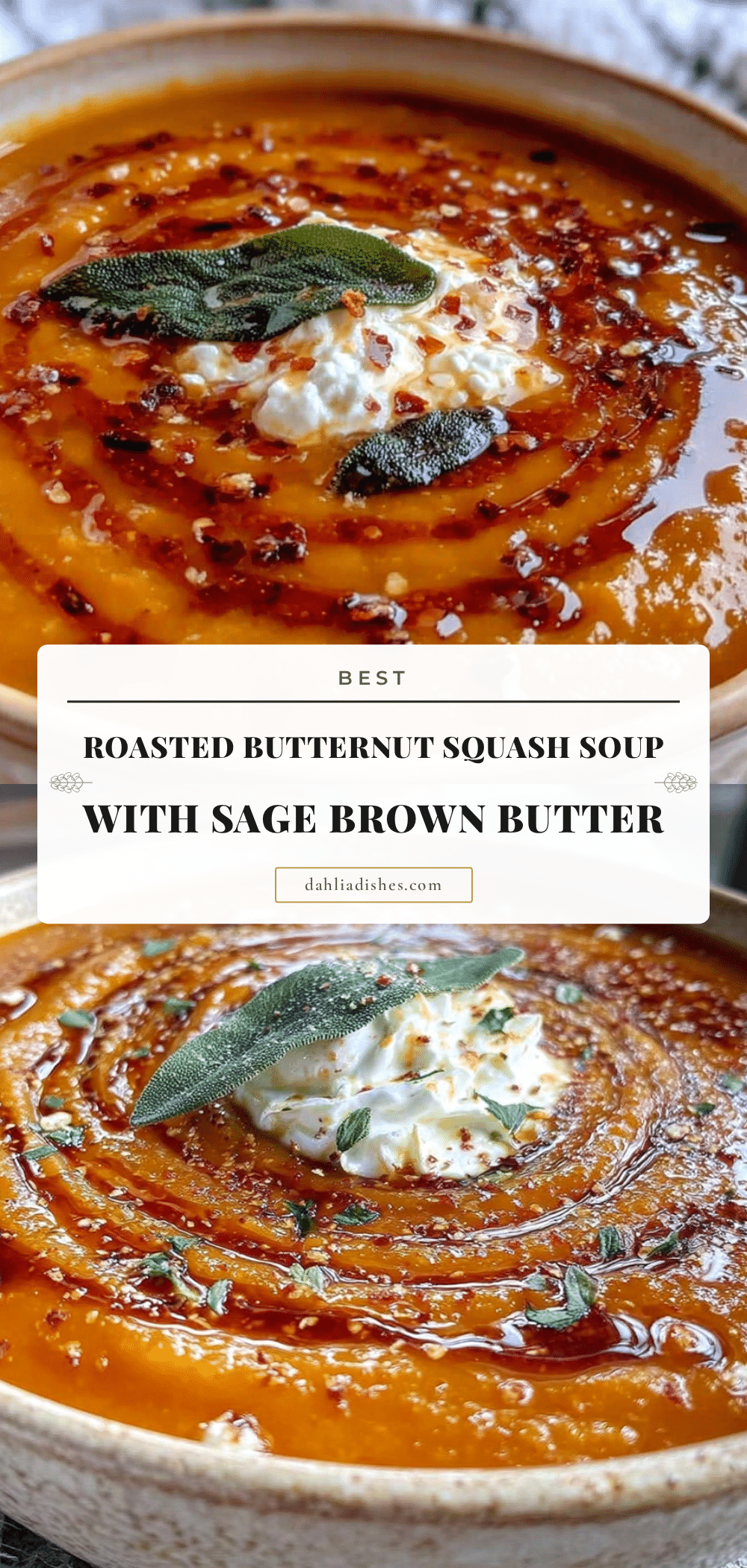
Best Roasted Butternut Squash Soup with Sage Brown Butter

This roasted butternut squash soup with sage brown butter is a happy accident turned into a fall favorite. The roasting concentrates the squash’s sweetness, creating a deep, nutty flavor, while the sage brown butter adds a rich, herbaceous finish.
- Prep Time: 15 minutes
- Cook Time: 30 minutes
- Total Time: 45 minutes
- Yield: 6 servings 1x
- Category: Soup
- Cuisine: American
Ingredients
- 1 large butternut squash (about 3 pounds / 1.4 kg), peeled, seeded, and cut into 1-inch cubes
- 1 medium yellow onion (about 8 ounces / 225 g), roughly chopped
- 3 cloves garlic, smashed
- 2 tablespoons olive oil
- 4 cups (960 ml) vegetable broth
- 1/2 teaspoon salt, plus more to taste
- 1/4 teaspoon black pepper, freshly ground
- 1/4 teaspoon ground nutmeg (optional)
- 4 tablespoons (56 g) unsalted butter
- 8–10 fresh sage leaves, plus a few small ones for garnish
- Flaky sea salt, for finishing
Instructions
- Preheat the oven to 400°F (200°C). Place a large baking sheet in the oven while it preheats.
- Peel the butternut squash, cut off the top and bottom, slice in half where the narrow neck meets the bulb, cut each piece in half lengthwise, scoop out seeds, and cube into 1-inch pieces (about 6 cups).
- Carefully remove the hot baking sheet from the oven. Toss the cubed squash, chopped onion, and smashed garlic cloves with olive oil, salt, and pepper. Spread in a single layer. Roast for 25-30 minutes, flipping halfway, until squash is tender and edges are golden brown.
- Transfer the roasted vegetables to a large pot or Dutch oven. Add vegetable broth and nutmeg. Bring to a boil over medium-high heat, then reduce to a simmer. Cook for 10 minutes, stirring occasionally.
- Remove from heat. Use an immersion blender to puree the soup until smooth. If using a regular blender, let cool for 5 minutes, then blend in batches (fill blender only halfway).
- While the soup simmers, melt butter in a small skillet over medium heat. Swirl occasionally. After about 3 minutes, when butter foams and turns golden, add sage leaves. Cook for 1-2 minutes, swirling constantly, until butter turns deep amber and sage leaves crisp. Remove from heat immediately.
- Ladle hot soup into bowls. Drizzle sage brown butter over each serving. Garnish with a crispy sage leaf and a pinch of flaky sea salt. Serve immediately.
Notes
Don’t overcrowd the baking sheet; spread vegetables in a single layer for best caramelization. Watch the brown butter carefully—it can go from perfect to burnt in seconds. Season in layers: add salt at roasting and adjust after blending. Soup tastes even better the next day. For a dairy-free version, use vegan butter or olive oil. To make soup creamier without dairy, blend in full-fat coconut milk, a boiled potato, or soaked cashews.
Nutrition
- Serving Size: 1 bowl (about 1.5 cu
- Calories: 220
- Sugar: 8
- Sodium: 580
- Fat: 12
- Saturated Fat: 6
- Carbohydrates: 28
- Fiber: 5
- Protein: 3
Keywords: roasted butternut squash soup, sage brown butter, fall soup, easy soup, vegetarian soup, gluten-free soup