Love this? Save it for later!
Share the inspiration with your friends
There used to be a diner off Highway 61, just south of where I grew up, that made a meatloaf that practically had its own gravitational pull. When they closed—just shuttered up one Tuesday with a taped-up note saying “Retired, thanks for the memories”—I felt a genuine pang of loss. I mean, that meatloaf was the reason we braved the vinyl seats with the torn patches and the coffee that tasted like it had been simmering since 1987. After twelve tries—twelve, let me tell you, some of them were dry enough to use as building material—I finally got it. This old-fashioned meatloaf with brown sugar glaze is the one that finally made me stop missing that diner.
I remember the first time I attempted the recreation. I was so focused on the meat mixture that I completely forgot to line my loaf pan with parchment. Let’s just say, scraping caramelized brown sugar glaze off a stuck pan is not my idea of a good time. But that’s the thing about cooking, right? You mess up, you learn, and you end up with a version that’s even better than the original. This recipe is the result of all those happy accidents and determined tweaks.
Honestly, this isn’t just any meatloaf. The brown sugar glaze is the real star here—it gets all sticky and caramelized on the edges, creating this sweet-savory crust that’s absolutely addictive. Maybe you’ve been there, chasing a flavor from your past. This is the one that finally delivered for me, and I think it will for you too.
Why You’ll Love This Recipe
This old-fashioned meatloaf with brown sugar glaze isn’t just another weeknight dinner. It’s the kind of meal that feels like a hug on a plate. Here is why it has become a staple in my kitchen and why I think it will become one in yours.
- Quick & Easy : Comes together in about 15 minutes of active prep. The oven does the rest of the work, making it perfect for busy weeknights or a lazy Sunday supper.
- Simple Ingredients : You likely have everything in your pantry and fridge right now. No fancy grocery trips or obscure ingredients needed.
- Perfect for Family Dinners : This is the ultimate crowd-pleaser. Kids love the sweet glaze, and adults appreciate the rich, savory flavor.
- Unbelievably Delicious : The texture is moist and tender, never dry or crumbly. That brown sugar glaze creates a sticky, caramelized crust that is pure magic.
- Foolproof Method : I’ve tested this recipe more times than I care to count. The technique of using a panade (a mixture of milk and breadcrumbs) ensures a perfectly moist meatloaf every single time.
What sets this recipe apart is the double hit of glaze. You brush it on before baking and then again halfway through, creating layers of flavor that soak into the meat. It’s not just a topping; it’s an integral part of the dish. This isn’t your grandma’s dry meatloaf—it’s the upgraded, foolproof version that still tastes like home.
This recipe is the kind that makes you close your eyes after the first bite. It’s comfort food at its finest—hearty, satisfying, and deeply nostalgic. Perfect for impressing guests without stress, or turning a simple Tuesday into something memorable.
What Ingredients You Will Need
This recipe uses simple, wholesome ingredients to deliver bold flavor and satisfying texture without the fuss. Most of these are pantry staples, which makes this dish perfect for those nights when you need dinner on the table without a trip to the store.
For the Meatloaf
- Ground beef (80/20) : 2 pounds. The 80/20 ratio is important—enough fat to keep the meatloaf moist, but not so much that it’s greasy. I prefer ground chuck for the best flavor.
- Breadcrumbs (plain, unseasoned) : 1 cup. These act as a binder and help retain moisture. Use panko for a lighter texture if you prefer.
- Whole milk : ½ cup. This creates the panade that keeps the meatloaf tender. You can use 2% or even oat milk in a pinch, but whole milk gives the best results.
- Yellow onion : 1 medium, finely diced. Sautéing the onion first is a game-changer—it releases sweetness and prevents that raw onion crunch.
- Garlic : 3 cloves, minced. Fresh garlic is non-negotiable here. The jarred stuff just doesn’t have the same punch.
- Large eggs : 2, lightly beaten. Eggs are the glue that holds everything together.
- Worcestershire sauce : 2 tablespoons. This adds that deep, umami flavor that makes meatloaf taste like it’s been cooking for hours.
- Ketchup : ¼ cup. Adds a touch of sweetness and acidity to the meat mixture.
- Dijon mustard : 1 tablespoon. Just a little bit adds a subtle tang that balances the sweetness of the glaze.
- Kosher salt : 1½ teaspoons. I use Diamond Crystal; if you use Morton’s, reduce to 1 teaspoon.
- Black pepper : 1 teaspoon, freshly ground.
- Dried thyme : 1 teaspoon. This earthy herb adds a lovely background note.
- Fresh parsley : ¼ cup, chopped (optional, but nice for color).
For the Brown Sugar Glaze
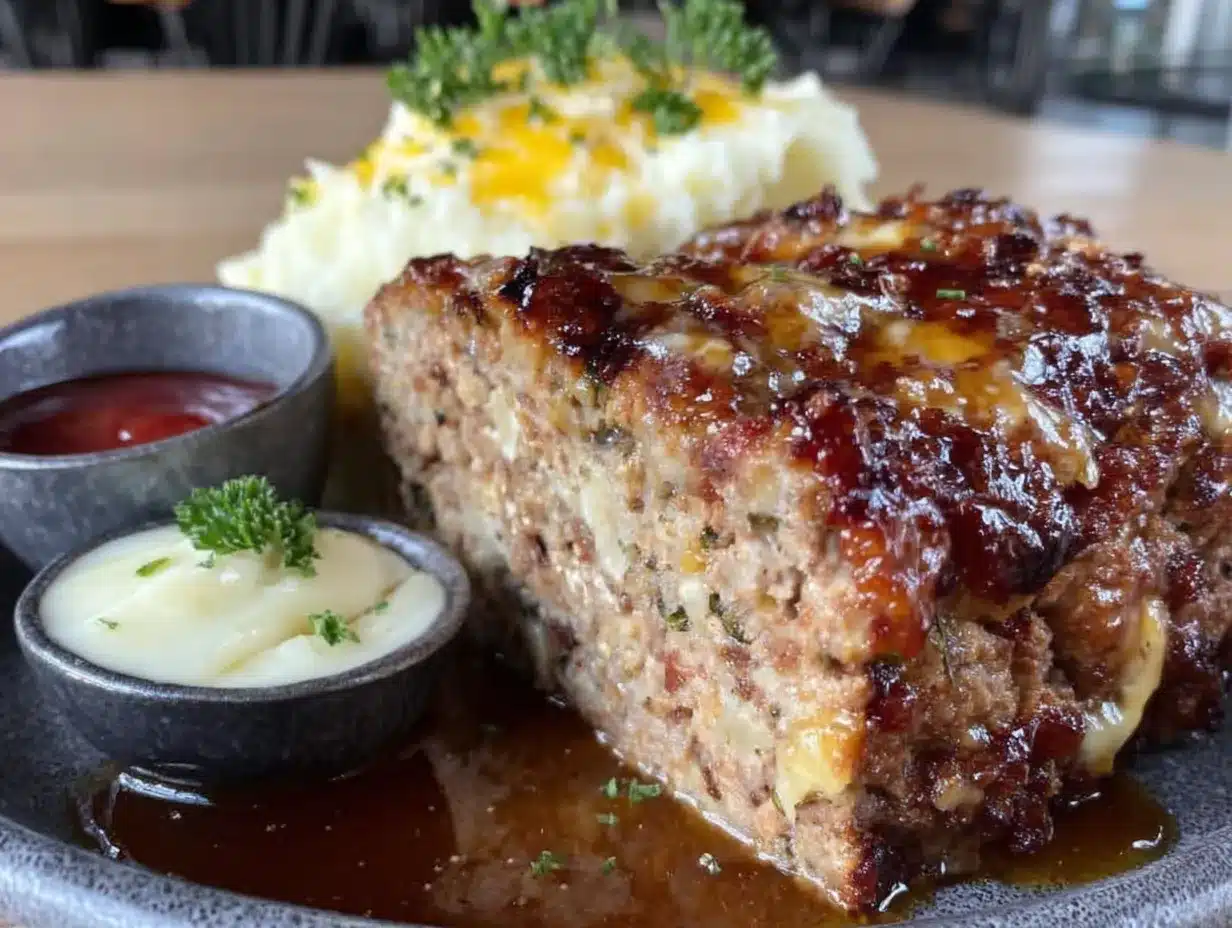
- Ketchup : ¾ cup. This is the base of the glaze.
- Brown sugar (packed) : ½ cup. Light or dark brown sugar both work. Dark brown sugar will give a deeper, more molasses-like flavor.
- Apple cider vinegar : 1 tablespoon. This cuts through the sweetness and adds a necessary tang.
- Worcestershire sauce : 1 teaspoon. Adds depth to the glaze.
- Garlic powder : ½ teaspoon. Not fresh garlic here—powder dissolves better into the glaze.
Ingredient Tips: For the best texture, use a light hand when mixing the meat. Overmixing can make the meatloaf tough. I also recommend using a rimmed baking sheet lined with foil under your loaf pan—the glaze will bubble over, and trust me, you don’t want that burning on the bottom of your oven.
Equipment Needed
You don’t need a fancy kitchen to make this old-fashioned meatloaf. Here’s what you’ll need:
- 9×5-inch loaf pan : A standard loaf pan works perfectly. If you don’t have one, you can shape the meatloaf free-form on a lined baking sheet—just reduce the cooking time by about 10 minutes.
- Large mixing bowl : For combining all the ingredients.
- Small saucepan : For making the glaze. A small skillet works too.
- Whisk : For combining the glaze ingredients smoothly.
- Chef’s knife and cutting board : For dicing the onion and mincing the garlic.
- Measuring cups and spoons : Accuracy matters, especially with the salt and seasonings.
- Parchment paper or aluminum foil : Lining the pan makes cleanup a breeze.
- Instant-read thermometer : This is my secret weapon. It takes the guesswork out of knowing when the meatloaf is perfectly done.
I’ve made this recipe with a cheap loaf pan from the dollar store and it turned out great. The only thing I’d splurge on is a good instant-read thermometer—it saves you from overbaking and drying out the meatloaf.
Preparation Method
This method is designed to be straightforward, but I’ve included all the little details that make the difference between a good meatloaf and a great one. Let’s get started.
- Preheat the oven to 350°F (175°C). Position a rack in the middle of the oven. Line a 9×5-inch loaf pan with parchment paper, leaving some overhang on the long sides—this will help you lift the meatloaf out later.
- Make the brown sugar glaze. In a small saucepan, combine ¾ cup ketchup, ½ cup packed brown sugar, 1 tablespoon apple cider vinegar, 1 teaspoon Worcestershire sauce, and ½ teaspoon garlic powder. Whisk over medium heat until the sugar dissolves and the mixture is smooth, about 2-3 minutes. Remove from heat and set aside. The glaze will thicken slightly as it cools.
- Sauté the onion and garlic. Heat 1 tablespoon of olive oil in a small skillet over medium heat. Add the finely diced onion and cook until softened and translucent, about 4-5 minutes. Add the minced garlic and cook for another 30 seconds until fragrant. Let this cool slightly—you don’t want hot onions cooking the meat prematurely.
- Make the panade. In a large mixing bowl, combine 1 cup of breadcrumbs with ½ cup of whole milk. Let it sit for 5 minutes until the breadcrumbs have absorbed the milk and formed a paste. This is your panade, and it’s the secret to a moist meatloaf.
- Mix the meatloaf ingredients. To the panade, add the sautéed onion and garlic, 2 beaten eggs, 2 tablespoons Worcestershire sauce, ¼ cup ketchup, 1 tablespoon Dijon mustard, 1½ teaspoons kosher salt, 1 teaspoon black pepper, and 1 teaspoon dried thyme. Mix until just combined. Add 2 pounds of ground beef and use your hands to gently mix everything together. Be careful not to overmix—stop as soon as the ingredients are evenly distributed. Overworking the meat will make it tough.
- Shape the meatloaf. Transfer the meat mixture to the prepared loaf pan. Gently press it into an even shape, making sure there are no air pockets. Don’t pack it down too firmly—you want it to be cohesive but not dense.
- Apply the first layer of glaze. Brush about ⅓ of the brown sugar glaze over the top of the meatloaf, spreading it evenly. Reserve the remaining glaze for later.
- Bake for 45 minutes. Place the loaf pan on a rimmed baking sheet (to catch any glaze that bubbles over). Bake for 45 minutes. After 45 minutes, carefully remove the pan from the oven and brush another ⅓ of the glaze over the top. Return to the oven.
- Continue baking until done. Bake for another 15-20 minutes, or until the internal temperature reaches 160°F (71°C) when measured with an instant-read thermometer inserted into the center of the meatloaf. The top should be caramelized and sticky.
- Rest before slicing. Remove the meatloaf from the oven and let it rest in the pan for 10-15 minutes. This is crucial—the juices need time to redistribute. If you slice it immediately, it will fall apart. After resting, use the parchment paper to lift the meatloaf out of the pan. Brush with the remaining glaze for a final glossy finish.
- Slice and serve. Use a sharp knife to cut thick slices. Serve warm with your favorite sides.
Sensory Cues: The meatloaf should look deep brown and glossy on top. When you insert the thermometer, it should slide in easily. The aroma will be incredible—sweet, savory, and slightly tangy from the glaze. The edges should be slightly caramelized and sticky to the touch.
Cooking Tips & Techniques
After making this recipe more times than I can count, I’ve learned a few things that make the process smoother and the results more consistent. Here are my best tips.
Don’t skip the panade. I know it sounds fancy, but it’s just breadcrumbs soaked in milk. This mixture releases moisture during baking, keeping the meatloaf tender and preventing it from drying out. I once skipped it because I was out of milk, and the result was dry and crumbly. Never again.
Use a light touch when mixing. This is probably the most common mistake. Overmixing the ground beef compacts the proteins, resulting in a dense, tough meatloaf. Use your hands and mix just until everything is combined. Stop the moment you don’t see any more streaks of egg or breadcrumbs.
Sauté the onions first. Raw onions release moisture as they cook, which can make the meatloaf soggy. Sautéing them first concentrates their flavor and removes excess water. It’s an extra step, but it makes a noticeable difference.
Let it rest. I know you’re hungry, but patience pays off. Resting the meatloaf allows the juices to settle, making for cleaner slices and a better texture. If you slice too soon, you’ll end up with a crumbly mess on your plate.
Use a thermometer. This is non-negotiable for me. Ovens vary, and meatloaf thickness can vary. The only way to know for sure that it’s done without being overdone is to use an instant-read thermometer. 160°F (71°C) is the sweet spot.
Line your pan. The glaze gets incredibly sticky as it caramelizes. Without parchment paper, you’ll be scrubbing your loaf pan for an hour. Just trust me on this one.
Variations & Adaptations
This old-fashioned meatloaf is wonderfully adaptable. Here are some variations I’ve tried and loved.
Turkey Meatloaf: Substitute ground turkey (93/7) for the beef. Turkey is leaner, so add 2 tablespoons of olive oil to the panade to keep it moist. The cooking time remains the same. My sister-in-law makes this version and swears by it.
Gluten-Free Option: Use gluten-free breadcrumbs or crushed gluten-free crackers. I’ve used crushed Rice Chex in a pinch, and it worked surprisingly well. Just make sure your Worcestershire sauce is gluten-free too—Lea & Perrins is a safe bet.
Cheesy Stuffed Meatloaf: After mixing the meat, flatten it into a rectangle on a piece of parchment. Sprinkle 1 cup of shredded cheddar or mozzarella down the center, then roll it up like a log and place it in the pan. The melted cheese in the middle is a delicious surprise.
Spicy Kick: Add 1-2 tablespoons of sriracha or your favorite hot sauce to the meat mixture, and stir ½ teaspoon of cayenne pepper into the glaze. The heat pairs beautifully with the sweet brown sugar.
Bacon-Wrapped Meatloaf: After shaping the meatloaf, lay 6-8 strips of bacon over the top, tucking the ends under the loaf. The bacon adds a smoky flavor and keeps the top extra moist. Bake as directed, but check the internal temperature after 50 minutes—the bacon can speed up cooking slightly.
Mini Meatloaves: Divide the mixture into 6-8 muffin tins and bake for 20-25 minutes. These are perfect for meal prep or for getting dinner on the table in a hurry. The glaze gets extra caramelized on the smaller surfaces.
Serving & Storage Suggestions
This meatloaf is incredibly versatile when it comes to serving and storing. Here’s how to make the most of it.
Serving: Slice the meatloaf into thick, hearty slices—about 1-inch thick. Serve it warm, straight from the oven. The classic sides are mashed potatoes and green beans, but I love it with roasted carrots and a simple side salad. The glaze also makes a fantastic sauce to spoon over the top.
Complementary Dishes: This meatloaf pairs beautifully with creamy mashed potatoes, buttery corn on the cob, or roasted Brussels sprouts. For a truly nostalgic meal, serve it with a side of macaroni and cheese and a slice of buttered white bread. A glass of red wine or a cold beer is a nice touch for the adults.
Storage: Leftover meatloaf keeps beautifully. Store slices in an airtight container in the refrigerator for up to 4 days. The flavors actually meld together and deepen overnight, making leftovers even better than the first meal.
Freezing: You can freeze the whole cooked meatloaf or individual slices. Wrap tightly in plastic wrap, then in aluminum foil, and freeze for up to 3 months. To thaw, transfer to the refrigerator overnight. Reheat in a 350°F oven until warmed through, about 15-20 minutes for slices.
Reheating: For the best results, reheat slices in a skillet over medium-low heat with a splash of water or beef broth. Cover the skillet with a lid to trap steam, which will keep the meatloaf moist. You can also microwave individual slices, but the texture won’t be as good.
Cold Meatloaf Sandwiches: This is my favorite way to enjoy leftovers. Slice the cold meatloaf thick, layer it on white bread with a smear of mayo and a pile of potato chips, and you’ve got a lunch that beats any deli sandwich.
Nutritional Information & Benefits
This old-fashioned meatloaf is a hearty, satisfying meal. Here’s a rough estimate of the nutritional breakdown per serving (based on 8 servings).
| Nutrient | Amount Per Serving |
|---|---|
| Calories | 420 |
| Protein | 32g |
| Fat | 22g |
| Saturated Fat | 9g |
| Carbohydrates | 28g |
| Fiber | 1g |
| Sugar | 18g |
| Sodium | 780mg |
Health Benefits: Ground beef is an excellent source of high-quality protein, iron, and B vitamins, particularly B12, which is essential for energy and nerve function. The onions and garlic provide antioxidants and anti-inflammatory compounds. While this isn’t a low-calorie meal, it’s a nutrient-dense option that provides sustained energy.
Dietary Considerations: This recipe contains gluten (from breadcrumbs) and dairy (from milk). For a gluten-free version, use gluten-free breadcrumbs. For a dairy-free version, substitute the milk with unsweetened almond milk or oat milk. The meatloaf is naturally low-carb if you skip the breadcrumbs and use almond flour instead.
Allergens: This recipe contains wheat (gluten), dairy (milk), and eggs. Please adjust accordingly for your dietary needs.
Conclusion
This old-fashioned meatloaf with brown sugar glaze is more than just a recipe—it’s a piece of my history, finally perfected. It’s the kind of meal that brings people together, fills the house with an incredible aroma, and leaves everyone asking for seconds. I love that it’s simple enough for a Tuesday night but special enough for a Sunday dinner with the family.
I encourage you to make this your own. Play with the glaze, try different meat blends, or stuff it with cheese. The best recipes are the ones that evolve with you. And honestly, there’s nothing quite like the satisfaction of pulling a perfectly caramelized meatloaf out of the oven and knowing you made it yourself.
If you give this recipe a try, I’d love to hear about it! Drop a comment below and let me know how it turned out. Did you add your own twist? Did your kids ask for seconds? Share your stories—they make my day. And don’t forget to pin this recipe for later. Happy cooking, friends!
Frequently Asked Questions
Can I make this meatloaf ahead of time?
Absolutely. You can assemble the meatloaf up to 24 hours in advance and keep it covered in the refrigerator. When you’re ready to bake, just add about 10-15 minutes to the cooking time since you’re starting from cold. The glaze can also be made ahead and stored in the fridge for up to a week.
Why is my meatloaf falling apart?
This usually happens for one of two reasons: either the mixture was too wet (too much milk or eggs) or you didn’t let it rest long enough after baking. Make sure you’re measuring your breadcrumbs and milk accurately, and always let the meatloaf rest for at least 10 minutes before slicing. The resting time allows the proteins to set and the juices to redistribute.
Can I use something other than breadcrumbs?
Yes! Crushed crackers (saltines or Ritz work well), rolled oats, or even crushed pork rinds for a low-carb option are all great substitutes. If using oats, use old-fashioned rolled oats, not quick-cooking. The ratio is roughly the same—1 cup of substitute for 1 cup of breadcrumbs.
How do I know when the meatloaf is done without a thermometer?
While a thermometer is the most reliable method, you can check by inserting a knife into the center. If the juices run clear (not pink), and the meatloaf feels firm to the touch, it’s likely done. The internal temperature should be 160°F (71°C), but if you don’t have a thermometer, look for the meat to pull away slightly from the sides of the pan and the glaze to be deeply caramelized.
Can I double this recipe?
Definitely. This recipe doubles beautifully. Use a larger pan (like a 10×5-inch loaf pan or two 9×5-inch pans) and increase the baking time by about 15-20 minutes. Always check the internal temperature to be sure. The glaze recipe can be doubled as well—just use a slightly larger saucepan.
Pin This Recipe!
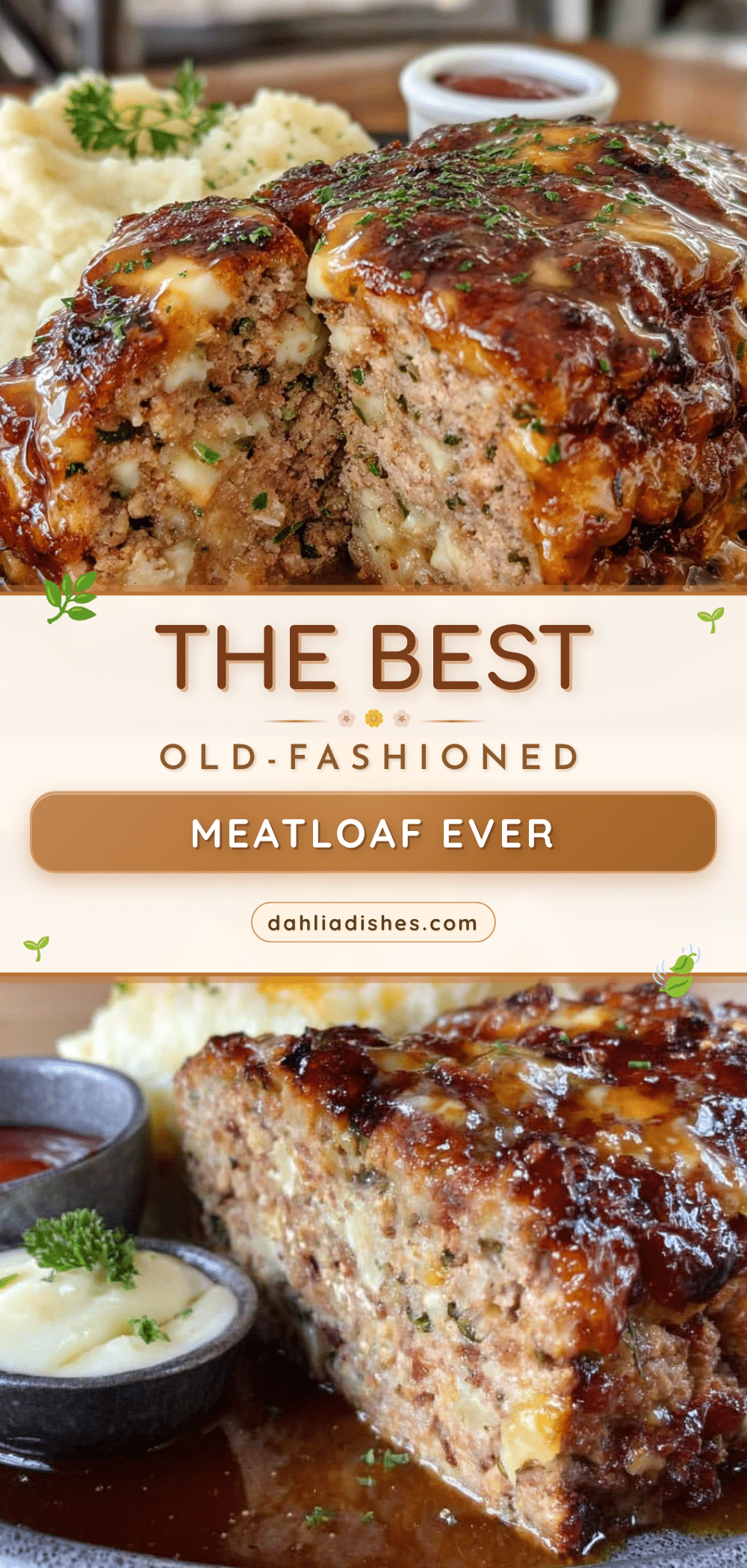
Best Old-Fashioned Meatloaf with Easy Brown Sugar Glaze

This old-fashioned meatloaf with brown sugar glaze is moist, tender, and topped with a sticky, caramelized glaze that’s absolutely addictive. It’s the ultimate comfort food that brings people together.
- Prep Time: 15 minutes
- Cook Time: 1 hour 5 minutes
- Total Time: 1 hour 20 minutes
- Yield: 8 servings 1x
- Category: Main Course
- Cuisine: American
Ingredients
- 2 pounds ground beef (80/20)
- 1 cup plain unseasoned breadcrumbs
- ½ cup whole milk
- 1 medium yellow onion, finely diced
- 3 cloves garlic, minced
- 2 large eggs, lightly beaten
- 2 tablespoons Worcestershire sauce
- ¼ cup ketchup
- 1 tablespoon Dijon mustard
- 1½ teaspoons kosher salt
- 1 teaspoon black pepper, freshly ground
- 1 teaspoon dried thyme
- ¼ cup fresh parsley, chopped (optional)
- ¾ cup ketchup (for glaze)
- ½ cup brown sugar, packed
- 1 tablespoon apple cider vinegar
- 1 teaspoon Worcestershire sauce (for glaze)
- ½ teaspoon garlic powder
Instructions
- Preheat the oven to 350°F (175°C). Position a rack in the middle of the oven. Line a 9×5-inch loaf pan with parchment paper, leaving some overhang on the long sides.
- Make the brown sugar glaze: In a small saucepan, combine ¾ cup ketchup, ½ cup packed brown sugar, 1 tablespoon apple cider vinegar, 1 teaspoon Worcestershire sauce, and ½ teaspoon garlic powder. Whisk over medium heat until the sugar dissolves and the mixture is smooth, about 2-3 minutes. Remove from heat and set aside.
- Sauté the onion and garlic: Heat 1 tablespoon of olive oil in a small skillet over medium heat. Add the finely diced onion and cook until softened and translucent, about 4-5 minutes. Add the minced garlic and cook for another 30 seconds until fragrant. Let cool slightly.
- Make the panade: In a large mixing bowl, combine 1 cup of breadcrumbs with ½ cup of whole milk. Let it sit for 5 minutes until the breadcrumbs have absorbed the milk and formed a paste.
- Mix the meatloaf ingredients: To the panade, add the sautéed onion and garlic, 2 beaten eggs, 2 tablespoons Worcestershire sauce, ¼ cup ketchup, 1 tablespoon Dijon mustard, 1½ teaspoons kosher salt, 1 teaspoon black pepper, and 1 teaspoon dried thyme. Mix until just combined. Add 2 pounds of ground beef and use your hands to gently mix everything together. Be careful not to overmix.
- Shape the meatloaf: Transfer the meat mixture to the prepared loaf pan. Gently press it into an even shape, making sure there are no air pockets. Don’t pack it down too firmly.
- Apply the first layer of glaze: Brush about ⅓ of the brown sugar glaze over the top of the meatloaf, spreading it evenly. Reserve the remaining glaze for later.
- Bake for 45 minutes: Place the loaf pan on a rimmed baking sheet. Bake for 45 minutes. After 45 minutes, carefully remove the pan from the oven and brush another ⅓ of the glaze over the top. Return to the oven.
- Continue baking until done: Bake for another 15-20 minutes, or until the internal temperature reaches 160°F (71°C) when measured with an instant-read thermometer inserted into the center of the meatloaf.
- Rest before slicing: Remove the meatloaf from the oven and let it rest in the pan for 10-15 minutes. After resting, use the parchment paper to lift the meatloaf out of the pan. Brush with the remaining glaze for a final glossy finish.
- Slice and serve: Use a sharp knife to cut thick slices. Serve warm with your favorite sides.
Notes
Don’t skip the panade (breadcrumbs soaked in milk) as it keeps the meatloaf moist. Use a light touch when mixing to avoid a dense texture. Sauté the onions first to concentrate flavor and remove excess moisture. Let the meatloaf rest for 10-15 minutes before slicing to allow juices to redistribute. Line the pan with parchment paper for easy cleanup.
Nutrition
- Serving Size: 1 slice (1/8 of meat
- Calories: 420
- Sugar: 18
- Sodium: 780
- Fat: 22
- Saturated Fat: 9
- Carbohydrates: 28
- Fiber: 1
- Protein: 32
Keywords: meatloaf, old-fashioned meatloaf, brown sugar glaze, comfort food, ground beef, easy dinner, family dinner