Love this? Save it for later!
Share the inspiration with your friends
My neighbor Karl asked me why I couldn’t just throw the bratwurst in the same pan as the sauerkraut from the beginning. I started to explain why that wouldn’t work — something about searing the sausage separately, keeping the flavors distinct, all that nonsense I’d read in a cookbook once. Then I stopped. Karl had been making German food for forty years. He wasn’t asking for cooking advice. He was telling me I was overcomplicating things.
So I tried it his way. One skillet, everything together, no separate pans to wash. And honestly? It was the best bratwurst I’d ever made. The sauerkraut soaked up all those rendered juices from the sausage, and the bratwurst stayed tender instead of drying out. I felt a little ridiculous, standing there with my fancy technique and my extra dirty dishes, while Karl had the answer all along. Maybe you’ve been there — that moment when someone casually suggests something so simple you almost ignore it, and then it turns out to be genius.
This savory German bratwurst skillet with sauerkraut became a regular in my kitchen after that night. It’s one of those meals that feels like a special occasion but comes together on a random Tuesday. The whole thing cooks in under thirty minutes, and the flavors meld together in a way that separate cooking just can’t match. I keep making it because it reminds me to stop overthinking sometimes. And honestly, it’s just really, really good.
Why You’ll Love This Recipe
This savory German bratwurst skillet with sauerkraut has earned a permanent spot in my meal rotation, and I think it’ll do the same in yours. I’ve tested this recipe about a dozen times now, tweaking the seasoning ratios and trying different sausage brands, and this version is the one I keep coming back to.
- Quick & Easy : You’re looking at about 25 minutes from start to finish, including prep. This is perfect for those nights when you need dinner on the table fast but still want something that feels substantial.
- Simple Ingredients : Five main ingredients, and you probably already have the pantry staples. No special trips to a German deli required — though feel free if you have one nearby.
- Perfect for Weeknights : This isn’t a weekend project recipe. It’s the kind of meal you can throw together after a long day when you want comfort food without the fuss.
- Crowd-Pleaser : I’ve served this to picky eaters, sausage skeptics, and my aunt who claims she doesn’t like sauerkraut. Empty plates all around. The magic is in how the flavors balance each other.
- Unbelievably Delicious : The way the sauerkraut caramelizes slightly against the hot pan, the way the bratwurst releases its juices into the onions — it’s next-level comfort food that tastes like it simmered for hours.
What makes this recipe different from other bratwurst skillets is the technique. Most recipes have you cook everything separately and combine at the end. But cooking the bratwurst directly in the sauerkraut mixture means the sausage stays incredibly moist while infusing the kraut with all that savory goodness. It’s not just another version — it’s the best version.
This is the kind of meal that makes you close your eyes after the first bite. It’s comfort food reimagined — faster, simpler, but with the same soul-soothing satisfaction. Perfect for impressing guests without stress, or turning a simple Tuesday into something memorable.
What Ingredients You Will Need
This recipe uses simple, wholesome ingredients that come together to create something much greater than the sum of their parts. Most of these are pantry staples or easy to find at any grocery store.
- 4 bratwurst sausages (about 1 pound, fresh or pre-cooked; I prefer Johnsonville or your local butcher’s fresh bratwurst for best flavor)
- 1 tablespoon olive oil (or any neutral cooking oil)
- 1 medium yellow onion, thinly sliced (about 1 cup; sweet onions also work well here)
- 2 cups sauerkraut, drained but not rinsed (look for refrigerated sauerkraut in the deli section — it has better texture and flavor than the canned stuff)
- 1/2 cup chicken broth (low-sodium preferred, or use vegetable broth for a lighter flavor)
- 1 teaspoon caraway seeds (optional but highly recommended — they add that classic German flavor)
- 1/2 teaspoon black pepper, freshly ground
- 1 tablespoon whole grain mustard (for serving; Dijon works too)
- Fresh parsley, chopped (for garnish, optional)
For the bratwurst, I recommend fresh bratwurst from the meat counter if you can find it. They’re plumper and juicier than the pre-cooked kind. If you only have pre-cooked bratwurst, that’s fine — just reduce the cooking time slightly since they’re already cooked through.
The sauerkraut is the star here, so don’t skimp. Look for bags or jars in the refrigerated section of your grocery store. The texture is crunchier and the flavor is more balanced than the shelf-stable cans. If you only have canned sauerkraut, rinse it briefly to remove some of the brine, then squeeze out the excess liquid.
For a gluten-free option, check that your bratwurst is gluten-free (some brands use breadcrumbs as a binder). The rest of the ingredients are naturally gluten-free. For a dairy-free version, this recipe already is dairy-free — just double-check your mustard.
Equipment Needed
You don’t need much for this recipe, which is part of its charm. Here’s what you’ll need:
- Large skillet or cast iron pan (12-inch is ideal; a cast iron skillet gives the best browning, but any heavy-bottomed pan works)
- Sharp knife (for slicing the onion and parsley)
- Cutting board
- Wooden spoon or spatula
- Tongs (for turning the bratwurst)
- Measuring spoons
If you don’t have a cast iron skillet, don’t worry. I’ve made this in a stainless steel pan and even a non-stick skillet, and it works great. The key is using a pan that’s large enough to hold everything without overcrowding. If your pan is too small, the ingredients will steam instead of browning.
I picked up my cast iron skillet at a garage sale for five dollars, and it’s my favorite kitchen tool. If you’re buying new, Lodge makes affordable, reliable cast iron that lasts forever. Just season it well and it’ll serve you for decades.
Preparation Method

Let me walk you through this step by step. Trust me, it’s easier than you think.
Step 1: Prep your ingredients (5 minutes)
Start by slicing your onion into thin half-rings. I like to cut the onion in half through the root end, then slice crosswise into thin strips. This gives you nice, even pieces that cook evenly. Drain your sauerkraut in a colander but don’t rinse it — you want some of that tangy brine for flavor. Give it a gentle squeeze to remove excess liquid, but don’t press too hard.
Step 2: Brown the bratwurst (8 minutes)
Heat your skillet over medium-high heat and add the olive oil. Once the oil shimmers, add the bratwurst. Cook for about 4 minutes per side, until they’re nicely browned. You’re not cooking them through here — just getting that beautiful golden crust. The sizzle when they hit the pan is exactly what you want to hear. Don’t crowd the pan; if your skillet is small, cook the bratwurst in batches.
Here’s a tip I learned from burning my fingers: use tongs to turn the sausages, not a fork. Piercing the casing lets the juices escape, and you want those juices inside the sausage.
Step 3: Cook the onions (5 minutes)
Remove the bratwurst to a plate and set aside. Reduce the heat to medium. Add the sliced onions to the pan with the rendered fat and oil. Cook for about 5 minutes, stirring occasionally, until the onions are soft and starting to turn golden at the edges. If the pan looks dry, add a splash of the chicken broth. The onions should be fragrant and sweet, not burnt.
Step 4: Add the sauerkraut and seasonings (2 minutes)
Add the drained sauerkraut to the pan with the onions. Sprinkle in the caraway seeds and black pepper. Stir everything together and let it cook for about 2 minutes, allowing the flavors to mingle. The sauerkraut should smell tangy and warm, not sharp or vinegary.
Step 5: Simmer everything together (10 minutes)
Nestle the browned bratwurst back into the pan, pushing them down into the sauerkraut mixture. Pour in the chicken broth. Bring the liquid to a gentle simmer, then reduce the heat to low. Cover the pan and let it cook for 10 minutes. The steam will finish cooking the bratwurst while the sauerkraut absorbs all those savory juices.
Step 6: Finish and serve (2 minutes)
Remove the lid and let the liquid reduce slightly for about a minute. Taste the sauerkraut and adjust seasoning if needed — you probably won’t need salt since the bratwurst and sauerkraut are already salty. Serve hot with a dollop of whole grain mustard on the side and a sprinkle of fresh parsley if you’re feeling fancy.
The whole pan should look glossy and inviting, with the bratwurst plump and juicy. The sauerkraut should be tender but still have a little bite to it.
Cooking Tips & Techniques
I’ve made this savory German bratwurst skillet with sauerkraut enough times to have learned a few things the hard way. Here are my best tips so you don’t have to repeat my mistakes.
Don’t skip the browning step. I know it’s tempting to just throw everything in the pan and save time, but that initial sear on the bratwurst is where all the flavor lives. The Maillard reaction — that browning that happens when meat hits a hot pan — creates depth you can’t get any other way. I once tried skipping this step when I was in a rush, and the result was pale, sad sausages with none of that savory richness.
Watch your heat. Medium-high for browning, then medium for the onions, then low for simmering. If you keep the heat too high when you add the sauerkraut, it’ll burn before the flavors have a chance to meld. I made this mistake early on and ended up with scorched kraut that tasted bitter. Low and slow is your friend for the simmering stage.
Let it rest. After you turn off the heat, let the skillet sit for about 5 minutes before serving. This allows the juices to redistribute and the flavors to settle. I’m impatient too, but this little wait makes a difference.
Multitask smartly. While the bratwurst is browning, you can slice the onion. While the onions are cooking, you can drain the sauerkraut. This recipe moves fast, so having everything prepped before you start cooking makes the process smooth and stress-free.
Use the right pan size. A 12-inch skillet is perfect. If your pan is too small, everything gets crowded and steams instead of browning. If it’s too large, the liquid evaporates too quickly and you end up with dry sauerkraut.
Variations & Adaptations
One of the things I love about this savory German bratwurst skillet with sauerkraut is how adaptable it is. Here are some variations I’ve tried and loved.
Beer-Braised Version: Replace the chicken broth with 1/2 cup of your favorite beer — a German lager or pilsner works beautifully. The beer adds a malty depth that complements the bratwurst perfectly. Just let it simmer a few minutes longer to cook off the alcohol. I tried this with a dark beer once, and it was fantastic but slightly bitter — stick with lighter beers for the best balance.
Apple and Onion Twist: Add one peeled and sliced apple along with the onions. The sweetness of the apple balances the tangy sauerkraut beautifully. Granny Smith or Honeycrisp both work well. This is actually how my grandmother used to make it, and it’s a lovely variation for fall.
Spicy Kick: Add 1/2 teaspoon of red pepper flakes along with the caraway seeds, or use spicy bratwurst instead of regular. The heat cuts through the richness of the sausage and adds a whole new dimension. I did this on a whim one night and it’s become my husband’s favorite version.
Low-Carb/Keto-Friendly: This recipe is already low in carbs — the sauerkraut is fermented and low-carb friendly. Just skip any starchy sides and serve with roasted vegetables or a simple salad. The bratwurst provides plenty of protein and fat to keep you satisfied.
Smoky Version: Use smoked bratwurst or add 1/2 teaspoon of smoked paprika along with the seasonings. The smokiness pairs beautifully with the tangy sauerkraut and gives the dish a whole different character.
Serving & Storage Suggestions
This savory German bratwurst skillet with sauerkraut is incredibly versatile when it comes to serving. Here’s how I like to do it.
Serving Temperature: Serve hot, straight from the skillet. The bratwurst should be piping hot in the center, and the sauerkraut should be steaming. I like to bring the whole skillet to the table for a family-style presentation — it looks rustic and inviting.
What to Serve With It: This dish pairs beautifully with crusty bread or soft pretzels to soak up the juices. For a heartier meal, serve over mashed potatoes or egg noodles. A simple green salad with a tangy vinaigrette cuts through the richness nicely. And of course, a cold German beer is the perfect beverage pairing.
Storage Instructions: Leftovers keep well in an airtight container in the refrigerator for up to 4 days. The flavors actually meld and deepen overnight, so it’s even better the next day. I often make a double batch just for the leftovers.
Reheating Methods: The best way to reheat is in a skillet over medium-low heat with a splash of broth or water to prevent drying out. Cover and heat for about 5-7 minutes, stirring occasionally. You can also microwave individual portions, but the texture won’t be as good. I don’t recommend freezing this dish — the sauerkraut can become mushy when thawed.
Flavor Development: If you’re planning ahead, this is one of those rare recipes that actually improves after a day in the fridge. The bratwurst continues to absorb the sauerkraut’s flavor, and everything becomes more harmonious. I’ve been known to make it on Sunday for Monday night dinner.
Nutritional Information & Benefits
Here’s the approximate nutritional breakdown per serving (one bratwurst with about 1/2 cup sauerkraut mixture):
- Calories: 380
- Protein: 18g
- Fat: 28g
- Carbohydrates: 8g
- Fiber: 3g
- Sugar: 4g
- Sodium: 980mg
The sauerkraut is the real hero here nutritionally. It’s fermented, which means it contains probiotics that support gut health. It’s also rich in vitamin C and vitamin K, and it’s low in calories. The bratwurst provides high-quality protein and B vitamins, particularly B12.
This meal is naturally gluten-free (check your bratwurst brand) and dairy-free, making it suitable for many dietary restrictions. It’s also low in carbs, with the majority of carbohydrates coming from the onions and sauerkraut. If you’re watching your sodium, look for low-sodium sauerkraut and use low-sodium broth.
I’m not a nutritionist, but I do believe that eating fermented foods like sauerkraut is one of the simplest things you can do for your digestive health. This recipe makes it easy to get those benefits in a meal that actually tastes amazing.
Conclusion
This savory German bratwurst skillet with sauerkraut is proof that simple food, made well, is truly the best kind of comfort food. It’s the recipe I turn to when I want something satisfying without spending hours in the kitchen. It’s the meal I serve when I want to impress without stress. And honestly, it’s just really, really good.
I hope you’ll try it Karl’s way — everything in one pan, no fuss, no separate steps. And then I hope you’ll make it your own. Add more caraway seeds if you love them. Throw in an apple if you’re feeling fancy. Use spicy bratwurst if that’s your thing. This recipe is forgiving and adaptable, just like the best family recipes always are.
I’d love to hear how it turns out for you. Drop a comment below and let me know if you made any tweaks, or if this became a regular in your kitchen like it did in mine. And if you’re looking for another one-pan wonder, you might enjoy this creamy German sausage and potato skillet — it’s another weeknight favorite in my house. Happy cooking!
Frequently Asked Questions
Can I use pre-cooked bratwurst for this recipe?
Absolutely. Pre-cooked bratwurst works just fine. Just reduce the simmering time to about 5-7 minutes since they’re already cooked through. You still want to brown them first for flavor, though.
How do I keep the bratwurst from drying out?
The key is not overcooking them. Use a meat thermometer if you have one — bratwurst is done at 160°F. Also, cooking them in the sauerkraut mixture helps keep them moist. And remember, don’t pierce the casing with a fork while browning.
Can I make this in a slow cooker?
You can, but I don’t recommend it. The bratwurst won’t brown properly, and you’ll lose that caramelized flavor. If you’re in a pinch, brown the bratwurst and onions in a skillet first, then transfer everything to a slow cooker and cook on low for 2-3 hours.
What’s the best way to reheat leftovers?
A skillet over medium-low heat with a splash of broth or water works best. Cover and heat for 5-7 minutes. The microwave works in a pinch, but the texture won’t be as good.
Can I add potatoes to this dish?
Yes! Add 2-3 cubed potatoes (about 1-inch pieces) along with the sauerkraut. You may need to add a bit more broth to ensure the potatoes cook through. This makes it a complete one-pan meal. For a similar concept, check out this German sausage and potato casserole.
Pin This Recipe!
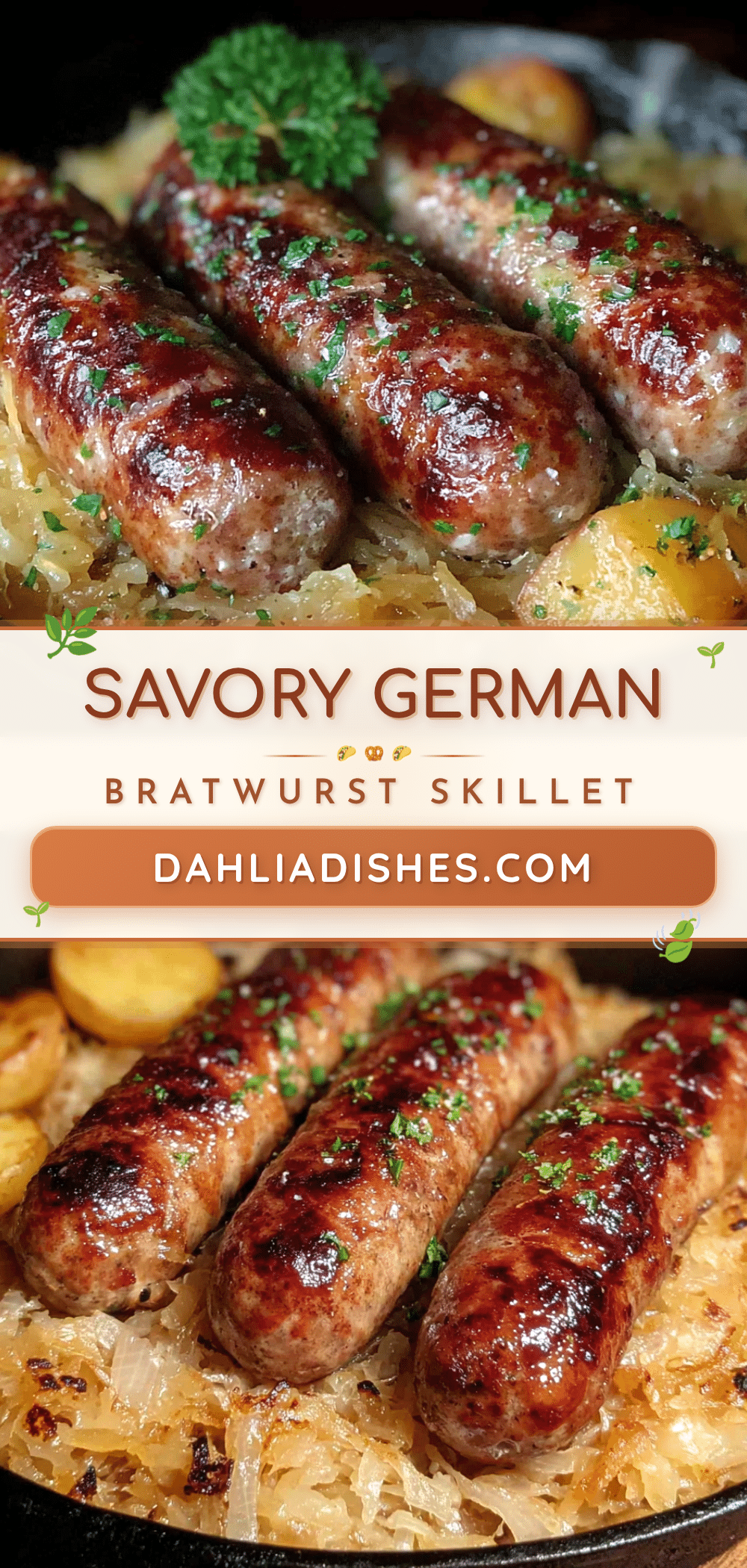
Best Easy German Bratwurst Skillet with Sauerkraut

A simple one-pan German bratwurst skillet with sauerkraut that comes together in under 30 minutes. The bratwurst stays tender and juicy while the sauerkraut absorbs all the savory juices, creating a comforting weeknight meal.
- Prep Time: 5 minutes
- Cook Time: 20 minutes
- Total Time: 25 minutes
- Yield: 4 servings 1x
- Category: Main Course
- Cuisine: German
Ingredients
- 4 bratwurst sausages (about 1 pound, fresh or pre-cooked)
- 1 tablespoon olive oil
- 1 medium yellow onion, thinly sliced (about 1 cup)
- 2 cups sauerkraut, drained but not rinsed
- 1/2 cup chicken broth (low-sodium preferred)
- 1 teaspoon caraway seeds (optional)
- 1/2 teaspoon black pepper, freshly ground
- 1 tablespoon whole grain mustard (for serving)
- Fresh parsley, chopped (for garnish, optional)
Instructions
- Prep your ingredients: Slice the onion into thin half-rings. Drain the sauerkraut in a colander (do not rinse) and gently squeeze out excess liquid.
- Brown the bratwurst: Heat a large skillet over medium-high heat and add olive oil. Once shimmering, add the bratwurst and cook for about 4 minutes per side until nicely browned. Use tongs to turn the sausages to avoid piercing the casing.
- Cook the onions: Remove the bratwurst to a plate. Reduce heat to medium. Add the sliced onions to the pan with the rendered fat and oil. Cook for about 5 minutes, stirring occasionally, until soft and golden at the edges. Add a splash of chicken broth if the pan looks dry.
- Add the sauerkraut and seasonings: Add the drained sauerkraut to the pan with the onions. Sprinkle in the caraway seeds and black pepper. Stir and cook for about 2 minutes.
- Simmer everything together: Nestle the browned bratwurst back into the pan, pushing them into the sauerkraut mixture. Pour in the chicken broth. Bring to a gentle simmer, then reduce heat to low. Cover and cook for 10 minutes.
- Finish and serve: Remove the lid and let the liquid reduce slightly for about 1 minute. Taste and adjust seasoning if needed. Serve hot with a dollop of whole grain mustard and a sprinkle of fresh parsley.
Notes
For best results, use fresh bratwurst from the meat counter. Refrigerated sauerkraut has better texture and flavor than canned. If using pre-cooked bratwurst, reduce simmering time to 5-7 minutes. Let the skillet rest for 5 minutes before serving to allow flavors to meld.
Nutrition
- Serving Size: 1 bratwurst with abo
- Calories: 380
- Sugar: 4
- Sodium: 980
- Fat: 28
- Saturated Fat: 10
- Carbohydrates: 8
- Fiber: 3
- Protein: 18
Keywords: bratwurst, sauerkraut, German skillet, one-pan meal, weeknight dinner, easy recipe