Love this? Save it for later!
Share the inspiration with your friends
My neighbor Rose watched me wrestling with a bag of frozen cranberries one November afternoon, my kitchen counter a disaster zone of flour and butter wrappers. She didn’t say anything at first. Then she disappeared into her own apartment and came back holding a small, crinkled index card, the edges soft from years of use. “Try these,” she said, handing it over like it was no big deal. “They’re the ones everyone asks me for.”
The card just said “Cranberry Cookies” in her tidy handwriting, but the first batch I made from it? Honestly, they vanished before I could even get a proper photo. I’ve tweaked things over the years—added a punch of orange zest, swapped in a glossy orange glaze, and figured out the exact bake time for that perfect shortbread crumble. These cranberry orange shortbread cookies have become my own little party trick. Every single time I bring them to a holiday gathering or a casual potluck, someone corners me for the recipe. Maybe you’ve been there—you find a recipe that just works, and suddenly it’s your signature thing. That’s what these are for me now: the cookie that makes me look like I have my act together, even when I definitely don’t.
What I love most is how unassuming they are. They’re not fussy or over-the-top. They’re just… perfect. The tart pop of cranberry against the sweet, buttery shortbread, finished with that bright orange glaze—it’s a combination that stops people mid-conversation. I keep making them because they remind me of that afternoon with Rose, and because watching someone take that first bite never gets old. It’s the kind of recipe that doesn’t just feed people; it connects them.
Why You’ll Love This Recipe
I’ve tested these cookies more times than I care to admit, tweaking the butter temperature, the zest amount, even the glaze consistency. This version is the one I keep coming back to—and the one that keeps getting requested. Here’s why it works so well, especially when you’re cooking to impress.
- Perfect for Hosting: These cookies are a dream for dinner parties and holiday gatherings. You can make the dough ahead, slice and bake when guests arrive, and the kitchen will smell like heaven. They look fancy on a platter with zero stress.
- Simple Ingredients: No weird extracts or hard-to-find items. Butter, sugar, flour, fresh or frozen cranberries, and an orange. You probably have most of this already.
- Crowd-Pleaser: I’ve served these to kids, grandparents, and picky in-laws. The response is always the same—quiet munching followed by “Can I have another one?” They’re not too sweet, not too tart, just right.
- Make-Ahead Friendly: The dough freezes beautifully. Roll it into logs, wrap tightly, and slice fresh cookies whenever you need them. Perfect for those “I forgot I’m hosting” moments.
- Unbelievably Delicious: That shortbread texture—crumbly but not dry, buttery but not greasy—paired with bursts of tart cranberry and a citrusy glaze? It’s the kind of cookie that makes you close your eyes after the first bite.
What sets this recipe apart is the technique. I use cold butter cut into the flour, which gives the shortbread that signature sandy, melt-in-your-mouth texture instead of a cakey cookie. The orange zest goes into both the dough and the glaze, creating a layered citrus flavor that feels bright and festive without overpowering the cranberries. It’s not another basic shortbread—it’s the best version I’ve found, and I’ve tried a lot.
These cookies are comfort food reimagined. They’re familiar enough to feel nostalgic but elevated enough to impress your guests. And honestly, they make you look like a pastry chef even if you’re just a home cook who really, really likes butter.
What Ingredients You Will Need
This recipe uses simple, wholesome ingredients to deliver bold flavor and satisfying texture without the fuss. Most are pantry staples, and the few specialty items are easy to find. Here’s what you’ll need, grouped by their role in the recipe.
For the Shortbread Dough
- 1 cup (226g) unsalted butter, cold and cut into small cubes – Cold butter is key for that crumbly shortbread texture. I prefer Kerrygold or Plugrà for their higher butterfat content, which gives a richer flavor.
- 1/2 cup (100g) granulated sugar – Adds sweetness without overpowering the other flavors. You can reduce this slightly if you prefer a less sweet cookie, but don’t go below 1/3 cup or the texture suffers.
- 2 cups (250g) all-purpose flour – Spoon and level your flour for accuracy. Too much flour makes dry cookies.
- 1/4 teaspoon salt – Balances the sweetness and enhances the butter flavor. Use fine sea salt if you have it.
- 1 tablespoon orange zest – From about one large orange. Zest before juicing for the glaze. This is where the bright, fresh flavor comes from.
- 3/4 cup (85g) dried cranberries, roughly chopped – Dried cranberries rehydrate slightly in the dough and give concentrated bursts of tartness. I use Craisins but any brand works. Fresh cranberries can be used in a pinch, but they add more moisture and make the dough stickier—see the variation section for tips.
For the Orange Glaze
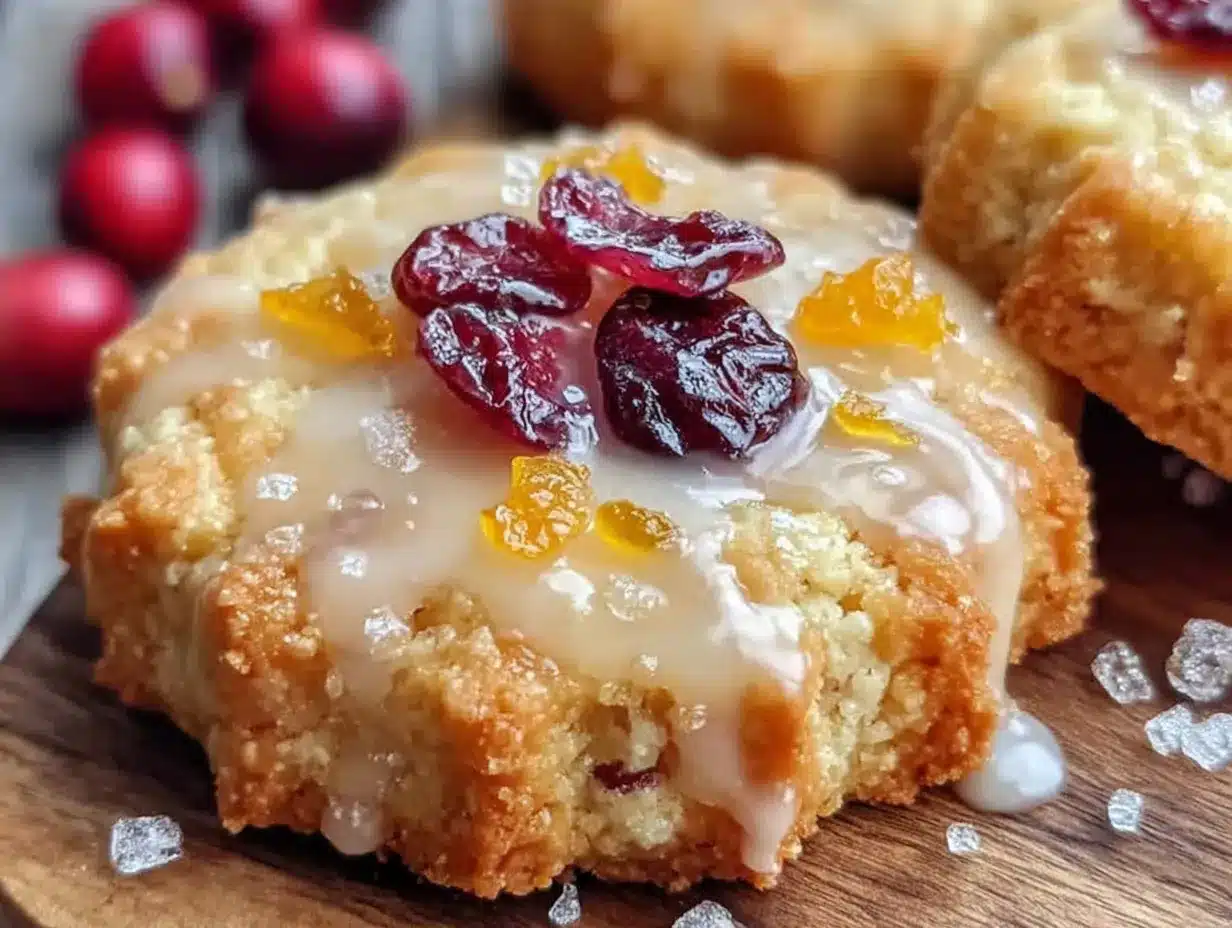
- 1 cup (120g) powdered sugar, sifted – Sifting prevents lumps in your glaze. No one wants a lumpy glaze on a pretty cookie.
- 2-3 tablespoons fresh orange juice – Fresh juice makes a huge difference here. Bottled juice has a flat, metallic taste that ruins the bright citrus note.
- 1/2 teaspoon orange zest – Adds little flecks of color and an extra punch of flavor.
- Pinch of salt – Just a tiny bit to balance the sweetness.
Ingredient Tips & Substitutions
- Butter: Unsalted is best so you control the salt. If you only have salted, reduce the added salt to 1/8 teaspoon.
- Dried Cranberries: Feel free to substitute dried cherries or chopped dried apricots for a different flavor profile. Tart cherries are especially lovely with the orange.
- Orange: Any variety works, but navel oranges are my go-to for their sweetness and easy-to-zest skin. Avoid using the white pith—it’s bitter.
- Gluten-Free Option: Use a 1:1 gluten-free baking flour blend. I’ve tested this with Bob’s Red Mill Gluten-Free 1-to-1 Baking Flour and the texture is remarkably close to the original.
- Vegan Option: Substitute the butter with a high-quality vegan butter stick (not tub margarine). Miyoko’s or Country Crock Plant Butter work well. The texture will be slightly less crumbly but still delicious.
Equipment Needed
You don’t need a fancy bakery setup for these cookies. Here’s what I use, along with some budget-friendly alternatives.
- Food processor or pastry cutter – A food processor makes cutting cold butter into flour effortless. If you don’t have one, a pastry cutter or even two forks work fine—it just takes a little more elbow grease. I’ve done it both ways and honestly, the hand-mixed version feels more satisfying.
- Mixing bowls – One large bowl for the dough, one small bowl for the glaze.
- Zester or microplane – A microplane gives you fine, fluffy zest without the bitter pith. A box grater works in a pinch, but the zest will be coarser.
- Parchment paper – Essential for lining your baking sheets. It prevents sticking and makes cleanup a breeze.
- Baking sheets – Light-colored metal sheets give the most even bake. Dark sheets can cause the bottoms to brown too quickly.
- Wire cooling rack – Lets air circulate around the cookies so they cool evenly and the glaze sets properly.
- Sharp knife – For slicing the dough logs cleanly. A serrated knife works well too.
- Plastic wrap – For wrapping and chilling the dough logs.
My personal tip: invest in a good microplane. It costs around $10 and makes zesting so much easier. I’ve had mine for years and it’s still sharp.
Preparation Method
Let’s get baking. These steps are detailed enough that even a first-timer will feel confident. Take your time with the chilling—it’s the secret to that perfect shortbread texture.
- Zest and juice your orange first. Before you do anything else, zest the orange into a small bowl. Then cut it in half and juice it into another small bowl. You need about 1 tablespoon of zest for the dough and 1/2 teaspoon for the glaze, plus 2-3 tablespoons of juice. Having these ready makes the process smoother.
- Combine the dry ingredients. In your food processor bowl (or a large mixing bowl), add the 2 cups of flour, 1/4 teaspoon salt, and 1 tablespoon of orange zest. Pulse a few times to combine. If you’re mixing by hand, whisk them together well.
- Cut in the cold butter. Scatter the cold, cubed butter over the flour mixture. If using a food processor, pulse in short bursts—about 10-12 pulses—until the mixture looks like coarse meal with some pea-sized butter pieces remaining. Don’t over-process; you want those little butter bits for flakiness. By hand, use a pastry cutter or your fingertips to work the butter into the flour until you get that same sandy texture.
- Add the sugar and cranberries. Sprinkle the 1/2 cup of sugar and the chopped dried cranberries over the butter-flour mixture. Pulse just a few times to incorporate, or stir gently by hand. The dough will look dry and crumbly—that’s exactly right.
- Bring the dough together. Turn the crumbly mixture out onto a clean work surface. Gather it together with your hands, pressing gently until it forms a cohesive dough. Don’t knead it; you want to handle it as little as possible to keep the butter cold. If the dough feels too dry to come together, sprinkle a teaspoon of cold water over it and press again.
- Shape into logs. Divide the dough in half. On a lightly floured surface, roll each half into a log about 8 inches long and 1.5 inches in diameter. Don’t worry if they’re not perfectly round—rustic is charming. Wrap each log tightly in plastic wrap and twist the ends to seal.
- Chill the dough. Refrigerate the wrapped logs for at least 2 hours, or up to 3 days. This step is non-negotiable. Chilling solidifies the butter, which prevents the cookies from spreading too much in the oven and gives them that signature shortbread crumble. If you’re in a hurry, pop them in the freezer for 45 minutes.
- Preheat and prep. When you’re ready to bake, preheat your oven to 350°F (175°C). Line two baking sheets with parchment paper.
- Slice the cookies. Unwrap one dough log and place it on a cutting board. Using a sharp knife, slice the log into rounds about 1/4-inch thick. I aim for about 18-20 cookies per log. If the slices crack or crumble slightly, just press them back together with your fingers—they’ll bake up fine.
- Bake. Arrange the slices on the prepared baking sheets, spacing them about 1 inch apart. Bake for 12-14 minutes, or until the edges are just barely golden brown. The centers will look pale and slightly soft. Don’t overbake—shortbread continues to set as it cools.
- Cool completely. Let the cookies cool on the baking sheet for 5 minutes, then transfer them to a wire rack to cool completely. This is important: if you glaze them while they’re still warm, the glaze will slide right off and make a sticky mess.
- Make the glaze. While the cookies cool, whisk together the sifted powdered sugar, 2 tablespoons of fresh orange juice, the 1/2 teaspoon of orange zest, and a pinch of salt. The glaze should be thick but pourable—think heavy cream consistency. If it’s too thick, add another teaspoon of juice. If it’s too thin, add a little more powdered sugar.
- Glaze the cookies. Once the cookies are completely cool, drizzle the glaze over them using a spoon or a small piping bag (a zip-top bag with the corner snipped off works great). Let the glaze set for about 30 minutes before serving or stacking.
Cooking Tips & Techniques
Over the years, I’ve made every mistake you can imagine with these cookies. Here’s what I’ve learned so you don’t have to repeat my errors.
Keep everything cold. Warm butter is the enemy of shortbread. If your kitchen is hot, chill your mixing bowl and flour before starting. I once made these on a sweltering August afternoon and the dough was a greasy mess—lesson learned.
Don’t overwork the dough. The more you handle shortbread dough, the tougher it gets. Mix just until it comes together, then stop. A little patience goes a long way.
Slice evenly. Try to cut the logs into uniform slices so they bake at the same rate. Uneven slices mean some cookies will be overdone while others are underbaked. If your first few slices are wonky, just press them back into shape with your fingers.
Watch the edges. Shortbread can go from perfectly baked to overbaked in about 30 seconds. Start checking at the 12-minute mark. The edges should be just barely golden, not brown. The centers will look pale and slightly soft—that’s the goal.
Glaze with confidence. Don’t be too precious with the drizzle. A slightly messy, rustic glaze looks more homemade and inviting than a perfect, uniform coating. I actually prefer when the glaze drips unevenly over the edges—it looks like a bakery window display.
Multitask like a pro. While one batch bakes, slice the next log. While cookies cool, make the glaze. This keeps the process moving and prevents bottlenecks. I’ve learned to prep everything before I start baking so I’m not scrambling mid-recipe.
Variations & Adaptations
One of the best things about this recipe is how flexible it is. Here are some ways to make it your own, whether you’re cooking for dietary needs or just want to switch things up.
- Fresh Cranberry Version: If you want to use fresh cranberries, roughly chop 3/4 cup and toss them with 1 tablespoon of flour before adding to the dough. This absorbs some of their moisture and prevents the dough from getting too sticky. The cookies will have a slightly softer texture and more tart pops.
- Lemon Variation: Swap the orange zest and juice for lemon. Use 1 tablespoon lemon zest in the dough and 2-3 tablespoons lemon juice in the glaze. Add 1 teaspoon of lemon extract to the dough for an extra citrus punch. These are a huge hit in spring and summer.
- Pistachio & Cranberry: Add 1/3 cup of finely chopped pistachios to the dough along with the cranberries. The green pistachios against the red cranberries make these cookies look incredibly festive for Christmas. The nutty flavor also pairs beautifully with the orange glaze.
- Gluten-Free Adaptation: As mentioned, use a 1:1 gluten-free flour blend. I’ve found that chilling the dough for at least 3 hours helps the gluten-free flour absorb moisture and gives a better texture. The cookies will be slightly more delicate, so handle them gently.
- Vegan Adaptation: Swap the butter for vegan butter sticks and use a flax egg (1 tablespoon ground flaxseed mixed with 3 tablespoons water, let sit for 5 minutes) if the dough seems dry. The texture will be a bit softer, but the flavor is still fantastic.
I tried the pistachio version last Christmas and it was the first batch to disappear. My sister-in-law, who claims she “doesn’t like shortbread,” ate six of them before I could say a word. Sometimes the best variations come from just playing around.
Serving & Storage Suggestions
These cookies are incredibly versatile when it comes to serving. Here’s how to make them shine at your next gathering.
Serving Temperature: I prefer these cookies at room temperature, which lets the shortbread texture fully shine. If you’ve stored them in the fridge, let them sit out for 15-20 minutes before serving. The glaze will be set but the cookie will have that perfect crumbly bite.
Presentation Tips: Arrange the cookies on a large platter or cake stand in a single layer or slightly overlapping. Sprinkle a few extra dried cranberries and a little fresh orange zest over the top for a pop of color. For holiday gatherings, I like to nestle them among sprigs of rosemary or fresh cranberries—it looks stunning with minimal effort.
What to Serve Alongside: These cookies are fantastic with a cup of hot tea or coffee. For a dessert spread, pair them with a dark chocolate tart or a simple vanilla panna cotta. They also make a lovely addition to a cookie platter alongside classic chocolate chip and oatmeal raisin cookies.
Storage Instructions: Store the cookies in an airtight container at room temperature for up to 5 days. Place a sheet of parchment paper between layers to prevent the glaze from sticking. Do not refrigerate them—the fridge dries out shortbread and makes it crumbly in a bad way.
Freezing Instructions: You can freeze the baked, unglazed cookies for up to 3 months. Place them in a single layer in a freezer-safe container with parchment between layers. Thaw at room temperature, then glaze before serving. The dough logs also freeze beautifully—wrap tightly in plastic wrap and then foil, and freeze for up to 3 months. Slice and bake directly from frozen, adding 1-2 minutes to the bake time.
Flavor Development: Honestly, these cookies taste even better the day after baking. The flavors meld together and the shortbread texture softens slightly, becoming even more tender. If you can resist eating them all on day one, you’re in for a treat on day two.
Nutritional Information & Benefits
While these are definitely a treat, there are a few redeeming qualities worth noting. Here’s the estimated nutritional breakdown per cookie (based on 36 cookies).
| Nutrient | Amount per Cookie |
|---|---|
| Calories | 120 |
| Total Fat | 7g |
| Saturated Fat | 4g |
| Cholesterol | 20mg |
| Sodium | 30mg |
| Total Carbohydrates | 14g |
| Dietary Fiber | 0.5g |
| Sugars | 8g |
| Protein | 1g |
Health Highlights: Cranberries are packed with antioxidants and vitamin C, which support immune health. Oranges provide additional vitamin C and flavonoids. While the butter and sugar are indulgent, using high-quality ingredients means you’re getting more flavor per bite, which can help with portion control. I always remind myself that a homemade cookie made with real butter is far better than anything processed from a box.
Dietary Considerations: This recipe contains gluten and dairy. For gluten-free and vegan adaptations, see the variations section above. These cookies are nut-free in their basic form (unless you add pistachios), making them a safe option for many school or office gatherings.
Conclusion
These cranberry orange shortbread cookies have become my go-to for every gathering, from Thanksgiving to book club to last-minute dinner parties. They’re proof that you don’t need complicated techniques or exotic ingredients to make something truly memorable. With their buttery crumb, tart cranberry bursts, and bright citrus glaze, they hit every note—comforting, festive, and utterly delicious.
I hope you’ll make them your own. Maybe you’ll add extra zest like I do, or swap in lemon for a springtime twist. Maybe you’ll double the batch so you have some to freeze for emergencies (highly recommended). Whatever you do, don’t skip the chilling step, and don’t be afraid to get a little messy with that glaze.
If you make these, I’d love to hear about it. Drop a comment below and tell me how they turned out, or share a photo of your cookie platter. Did you try a variation? Did your guests go wild for them? Let’s keep this recipe conversation going—because honestly, the best recipes are the ones we share.
Happy baking, friends. Your holiday table is about to get a whole lot sweeter.
Frequently Asked Questions
Can I use fresh cranberries instead of dried?
Yes, you can! Roughly chop 3/4 cup of fresh cranberries and toss them with 1 tablespoon of flour before adding to the dough. This helps absorb excess moisture. The cookies will have a slightly softer texture and more pronounced tartness. Just be aware that fresh cranberries release moisture as they bake, so the dough may be a bit stickier to work with.
How do I prevent my shortbread cookies from spreading too much?
The key is chilling the dough thoroughly. Make sure your butter is cold when you start, and refrigerate the shaped logs for at least 2 hours (or up to 3 days). If your kitchen is warm, pop the sliced cookies in the fridge for 10 minutes before baking. Also, avoid over-creaming the butter and sugar—you want a sandy texture, not a fluffy one.
Can I make the dough ahead of time?
Absolutely. The dough logs can be refrigerated for up to 3 days or frozen for up to 3 months. If freezing, wrap tightly in plastic wrap and then foil. When ready to bake, slice the logs directly from frozen (add 1-2 minutes to the bake time) or thaw overnight in the fridge. This is my favorite make-ahead trick for holiday baking.
Why did my glaze turn out lumpy?
Lumpy glaze usually means the powdered sugar wasn’t sifted before mixing. Powdered sugar tends to clump, and those clumps don’t dissolve easily in liquid. Always sift your powdered sugar into the bowl, then whisk in the orange juice gradually. If you still get lumps, strain the glaze through a fine-mesh sieve before drizzling.
Can I double this recipe?
Yes, this recipe doubles beautifully. Simply multiply all ingredients by two. You may need to work in batches if using a food processor, as the dough can be too much for a standard-sized machine. When doubling, I recommend making four logs instead of two for easier handling. The bake time remains the same, but you’ll need to rotate your baking sheets halfway through for even browning.
Pin This Recipe!

Best Easy Cranberry Orange Shortbread Cookies Recipe
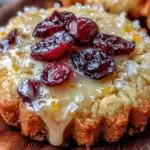
These buttery shortbread cookies are packed with tart dried cranberries and bright orange zest, then finished with a glossy orange glaze. They’re the perfect make-ahead holiday treat that disappears at every gathering.
- Prep Time: 20 minutes
- Cook Time: 12-14 minutes
- Total Time: 2 hours 35 minutes (includes chilling)
- Yield: 36 cookies 1x
- Category: Dessert
- Cuisine: American
Ingredients
- 1 cup (226g) unsalted butter, cold and cut into small cubes
- 1/2 cup (100g) granulated sugar
- 2 cups (250g) all-purpose flour
- 1/4 teaspoon salt
- 1 tablespoon orange zest
- 3/4 cup (85g) dried cranberries, roughly chopped
- 1 cup (120g) powdered sugar, sifted
- 2–3 tablespoons fresh orange juice
- 1/2 teaspoon orange zest
- Pinch of salt
Instructions
- Zest and juice your orange first. Zest the orange into a small bowl, then cut it in half and juice it into another small bowl. You need about 1 tablespoon of zest for the dough and 1/2 teaspoon for the glaze, plus 2-3 tablespoons of juice.
- Combine the dry ingredients. In your food processor bowl (or a large mixing bowl), add the 2 cups of flour, 1/4 teaspoon salt, and 1 tablespoon of orange zest. Pulse a few times to combine. If mixing by hand, whisk them together well.
- Cut in the cold butter. Scatter the cold, cubed butter over the flour mixture. If using a food processor, pulse in short bursts—about 10-12 pulses—until the mixture looks like coarse meal with some pea-sized butter pieces remaining. By hand, use a pastry cutter or your fingertips to work the butter into the flour until you get that same sandy texture.
- Add the sugar and cranberries. Sprinkle the 1/2 cup of sugar and the chopped dried cranberries over the butter-flour mixture. Pulse just a few times to incorporate, or stir gently by hand. The dough will look dry and crumbly.
- Bring the dough together. Turn the crumbly mixture out onto a clean work surface. Gather it together with your hands, pressing gently until it forms a cohesive dough. Don’t knead it. If the dough feels too dry, sprinkle a teaspoon of cold water over it and press again.
- Shape into logs. Divide the dough in half. On a lightly floured surface, roll each half into a log about 8 inches long and 1.5 inches in diameter. Wrap each log tightly in plastic wrap and twist the ends to seal.
- Chill the dough. Refrigerate the wrapped logs for at least 2 hours, or up to 3 days. If in a hurry, pop them in the freezer for 45 minutes.
- Preheat and prep. When ready to bake, preheat your oven to 350°F (175°C). Line two baking sheets with parchment paper.
- Slice the cookies. Unwrap one dough log and place it on a cutting board. Using a sharp knife, slice the log into rounds about 1/4-inch thick. Aim for about 18-20 cookies per log. If slices crack, press them back together with your fingers.
- Bake. Arrange the slices on the prepared baking sheets, spacing them about 1 inch apart. Bake for 12-14 minutes, or until the edges are just barely golden brown. The centers will look pale and slightly soft.
- Cool completely. Let the cookies cool on the baking sheet for 5 minutes, then transfer them to a wire rack to cool completely.
- Make the glaze. While the cookies cool, whisk together the sifted powdered sugar, 2 tablespoons of fresh orange juice, the 1/2 teaspoon of orange zest, and a pinch of salt. The glaze should be thick but pourable—think heavy cream consistency. If too thick, add another teaspoon of juice. If too thin, add more powdered sugar.
- Glaze the cookies. Once the cookies are completely cool, drizzle the glaze over them using a spoon or a small piping bag. Let the glaze set for about 30 minutes before serving or stacking.
Notes
Keep everything cold for the best shortbread texture. Don’t overwork the dough. Slice evenly for uniform baking. Watch the edges—shortbread can go from perfectly baked to overbaked in about 30 seconds. Glaze with confidence; a rustic look is charming. These cookies taste even better the day after baking.
Nutrition
- Serving Size: 1 cookie
- Calories: 120
- Sugar: 8
- Sodium: 30
- Fat: 7
- Saturated Fat: 4
- Carbohydrates: 14
- Fiber: 0.5
- Protein: 1
Keywords: cranberry orange shortbread cookies, easy shortbread recipe, holiday cookies, make-ahead cookies, cranberry cookies