Love this? Save it for later!
Share the inspiration with your friends
I was standing in my kitchen last Tuesday, staring at the clock like it had personally offended me. Dinner needed to happen in twenty minutes, my fridge was playing a sad game of “guess what’s still edible,” and I had that familiar low-level panic that comes with a hungry family and zero time. That’s when my eyes landed on the flank steak I’d defrosted without a plan, a head of broccoli that was still hanging in there, and a bottle of soy sauce. The sizzle when that beef hit the hot pan—honestly, it was like a little promise. I wasn’t just making dinner; I was about to save my own evening.
Look, I’ve made a lot of stir-fries in my day. Some were good, some were, well, edible. But this one-pot beef and broccoli situation? It was different. It came together so fast I actually had time to wipe down the counter before we ate. And the flavor—that deep, savory, slightly sweet sauce that clings to every piece of meat and every floret—it tasted like I’d been simmering it for hours. I mean, I hadn’t. It was maybe eighteen minutes from start to plate. But nobody needed to know that.
Maybe you’ve been there, standing in your own kitchen, wondering how to pull off a real meal when the day has already taken everything you’ve got. This recipe is for those nights. It’s fast, it’s forgiving, and it’s the kind of dinner that makes everyone at the table go quiet for a minute—the good kind of quiet. The “I can’t believe this came out of my kitchen” kind of quiet. And honestly? That’s why I keep coming back to it.
Why You’ll Love This Recipe
Let me tell you why this one-pot beef and broccoli stir fry has earned a permanent spot in my weekly rotation. I’ve tested this recipe more times than I care to admit—tweaking the sauce ratio, adjusting the heat, figuring out the exact moment to add the broccoli so it’s tender but still has a little bite. What I landed on is something I’m genuinely proud to share.
- Quick & Easy: We’re talking about 20 minutes from start to finish. That’s less time than it takes to decide what to order for delivery. Seriously.
- Simple Ingredients: You probably have most of these in your pantry and fridge right now. No trips to a specialty store, no hunting down obscure Asian ingredients. Just honest, accessible stuff.
- Perfect for Busy Weeknights: This is the recipe you pull out when you have exactly zero energy left but still want to feed your people something real. It’s my go-to for Tuesday night survival mode.
- Crowd-Pleaser: My kids inhale this. My husband asks for seconds. Even my picky neighbor who “doesn’t really like broccoli” cleaned her plate. It’s magic, I tell you.
- Unbelievably Delicious: The sauce is the star here—it’s glossy, savory, with just a hint of sweetness and a little kick from the ginger. It coats every piece of beef and every floret in pure flavor.
What makes this version different from the hundreds of other beef and broccoli recipes out there? It’s the technique. I’m not just throwing everything in a pot and hoping for the best. There’s a method to the madness—searing the beef in batches so it actually browns instead of steams, using the fond (those browned bits on the bottom of the pan) to build a sauce with real depth, and adding the broccoli at just the right moment so it’s tender-crisp, not mushy. This isn’t just another stir-fry. It’s the one I make when I want to impress myself.
This recipe is comfort food reimagined—faster, simpler, but with the same soul-soothing satisfaction. It’s perfect for impressing guests without stress, or turning a simple Tuesday into something memorable. And honestly? It’s the kind of meal that makes you close your eyes after the first bite. I’m not kidding.
What Ingredients You Will Need
This recipe uses simple, wholesome ingredients to deliver bold flavor and satisfying texture without the fuss. Most of these are pantry staples, which is exactly what you want on a busy weeknight. Let me walk you through what you’ll need and why each one matters.
For the Beef and Broccoli
- 1 pound flank steak or sirloin steak — sliced thinly against the grain (this is key for tenderness; I prefer flank steak for its beefy flavor, but sirloin works great too)
- 4 cups broccoli florets — about 1 large head, cut into bite-sized pieces (look for florets that are all roughly the same size so they cook evenly)
- 2 tablespoons vegetable oil — or any neutral oil with a high smoke point like avocado or canola (I use avocado oil because it handles high heat without burning)
- 3 cloves garlic — minced (fresh is non-negotiable here; the jarred stuff just doesn’t have the same punch)
- 1 tablespoon fresh ginger — grated (I keep a knob of ginger in the freezer and grate it straight into the pan—it releases more juice that way)
For the Sauce
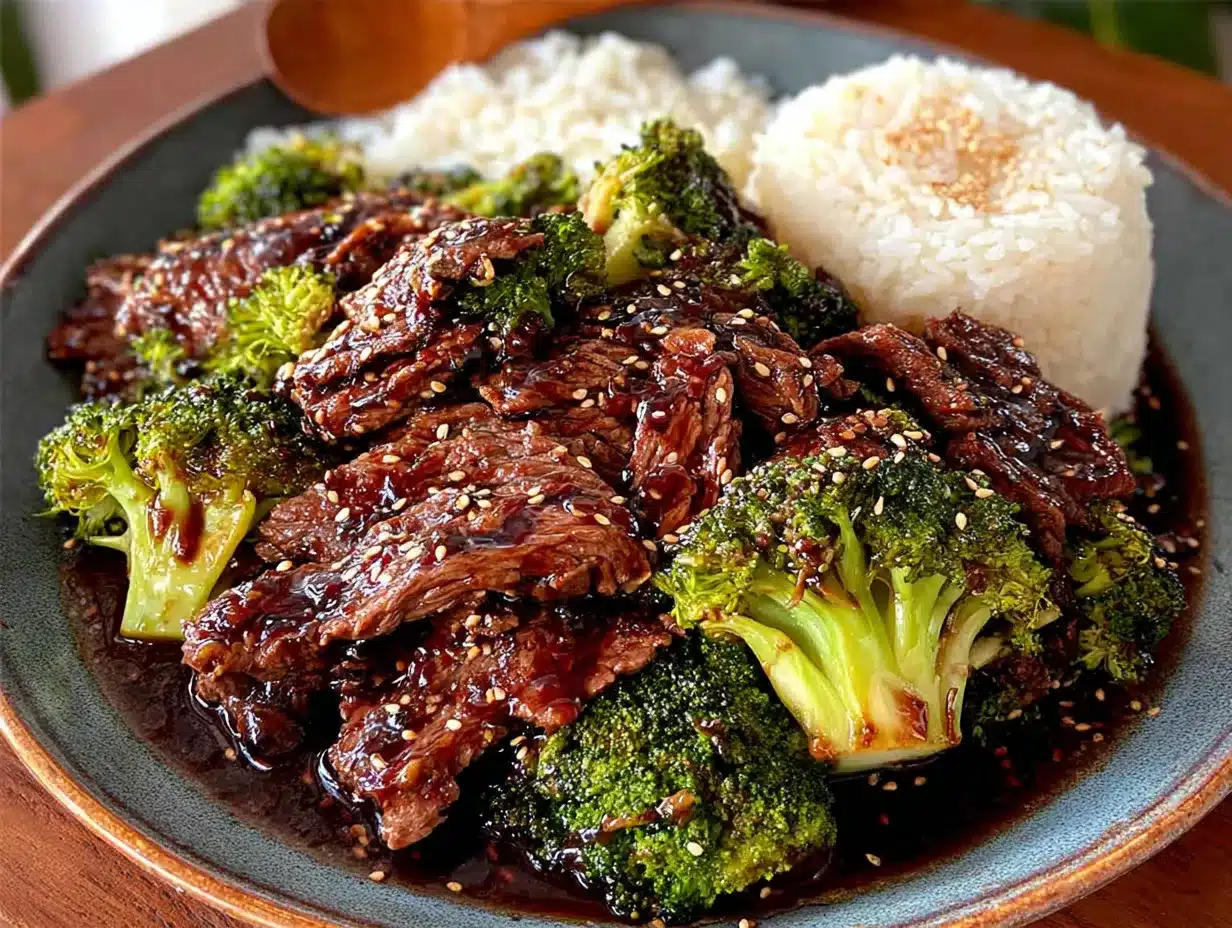
- 1/3 cup low-sodium soy sauce — or tamari for gluten-free (I recommend Kikkoman or San-J for consistent flavor)
- 2 tablespoons brown sugar — packed (this balances the saltiness and helps create that glossy finish)
- 2 tablespoons oyster sauce — (this is the secret ingredient that gives the sauce its depth; look for Lee Kum Kee brand)
- 1 tablespoon rice vinegar — (adds a subtle tang that brightens everything up; unseasoned is best)
- 1 teaspoon sesame oil — (a little goes a long way; add it at the end for that nutty aroma)
- 1/2 cup beef broth — or chicken broth (helps thin the sauce and adds another layer of savory flavor)
- 1 tablespoon cornstarch — mixed with 2 tablespoons cold water to make a slurry (this is what thickens the sauce to that perfect glossy consistency)
For Serving
- Cooked white rice or brown rice — for serving (jasmine rice is my personal favorite; it’s fragrant and fluffy)
- Optional: sesame seeds and sliced green onions — for garnish (they add a nice pop of color and a little extra texture)
One thing I’ve learned the hard way: don’t skip the oyster sauce. I tried making this once without it, thinking I could just use extra soy sauce, and the flavor fell flat. Oyster sauce adds that umami richness that makes this taste like takeout—but better. If you’re vegetarian, there are mushroom-based oyster sauces that work beautifully. Also, if you can’t find flank steak, chuck steak sliced thin works in a pinch, just make sure you cut it against the grain for tenderness.
Equipment Needed
You don’t need a lot of fancy equipment for this one, which is part of the beauty. Here’s what you’ll need:
- Large skillet or wok — 12-inch is ideal; a wok is traditional and gives you more room to toss everything, but a deep skillet works perfectly (I use my trusty cast iron skillet most of the time)
- Sharp chef’s knife — for slicing the beef thinly against the grain (a dull knife makes this frustrating; trust me on this one)
- Cutting board — preferably one with a groove to catch juices
- Measuring spoons and cups — for the sauce ingredients
- Small bowl — for mixing the cornstarch slurry
- Wooden spoon or spatula — for stirring (metal can scratch non-stick pans)
- Tongs — for flipping the beef (so much easier than a spatula)
If you don’t have a wok, don’t worry. I’ve made this in a regular non-stick skillet more times than I can count, and it turns out great every time. The key is making sure your pan is big enough so everything has room to brown instead of steam. If your pan is too small, cook the beef in batches—it’s worth the extra few minutes. Also, if you’re using a cast iron skillet, make sure it’s well-seasoned so the beef doesn’t stick. I learned that lesson the messy way.
Preparation Method
Alright, let’s get cooking. This comes together fast, so I recommend having everything prepped and measured before you turn on the heat. Trust me, there’s nothing worse than scrambling to mince garlic while your beef is burning.
- Prep the beef (5 minutes): Place your flank steak in the freezer for about 15 minutes before slicing—this firms it up and makes thin slicing so much easier. Slice the beef across the grain into thin strips, about 1/4-inch thick. Pat the slices dry with paper towels (this helps them brown instead of steam). Season lightly with a pinch of salt and pepper.
- Make the sauce (3 minutes): In a small bowl, whisk together the soy sauce, brown sugar, oyster sauce, rice vinegar, sesame oil, and beef broth. Set aside. In another small bowl, mix the cornstarch with cold water to make a slurry. Set that aside too.
- Prep the broccoli (2 minutes): Cut the broccoli into bite-sized florets. If the stems are thick, peel them and slice them thinly—they’re delicious and you shouldn’t waste them. Pat the florets dry so they don’t make the pan steam.
- Heat the pan (1 minute): Place your skillet or wok over high heat and add 1 tablespoon of vegetable oil. Wait until the oil is shimmering and you see a wisp of smoke—that’s your cue that it’s hot enough.
- Sear the beef (4 minutes): Add half the beef strips in a single layer. Don’t overcrowd the pan! Let them sear undisturbed for 1-2 minutes until a deep brown crust forms. Flip and cook for another 1 minute. Transfer to a plate. Repeat with the remaining beef and another tablespoon of oil. The beef should be cooked through but still tender—don’t overcook it here because it will cook again in the sauce.
- Cook the aromatics (1 minute): Reduce the heat to medium-high. Add the garlic and ginger to the pan. Stir constantly for about 30 seconds until fragrant—don’t let them burn or they’ll turn bitter. You should smell that amazing garlic-ginger aroma immediately.
- Add the broccoli (4 minutes): Toss in the broccoli florets. Stir-fry for 2-3 minutes until they turn bright green and start to get a little char on the edges. If the pan looks dry, add a splash of water or broth. The broccoli should be tender-crisp—still firm but easy to pierce with a fork.
- Combine everything (2 minutes): Return the beef to the pan, along with any juices that collected on the plate. Pour the sauce over everything. Give it a good stir. Let it simmer for about 1 minute, allowing the flavors to meld.
- Thicken the sauce (1 minute): Give the cornstarch slurry a quick stir (it settles fast) and pour it into the pan. Stir constantly for about 30-60 seconds as the sauce thickens and becomes glossy. You’ll see it go from watery to coating the back of a spoon. If it’s too thick, add a splash of water. Too thin? Let it simmer another minute.
- Serve immediately: Remove from heat. Serve over steamed rice. Garnish with sesame seeds and sliced green onions if you’re feeling fancy. Eat it while it’s hot—this dish doesn’t wait for anyone.
A quick note: the sauce will continue to thicken as it sits, so if you’re serving it family-style, you might want to add a splash of water before reheating leftovers. Also, if you like your broccoli softer, add it a minute earlier. I prefer mine with a little crunch, so I keep the cooking time on the shorter side. You do you.
Cooking Tips & Techniques
I’ve made this recipe probably fifty times now, and I’ve learned a few things the hard way. Here are my best tips for getting it right every single time.
Get your pan screaming hot. This is the single most important tip for a good stir-fry. If your pan isn’t hot enough, the beef will release its juices and steam instead of sear. You want that deep, caramelized crust. I wait until I see a wisp of smoke rising from the oil before I add the beef. It feels aggressive, but trust the process.
Don’t skip the cornstarch on the beef. Some recipes call for coating the beef in cornstarch before searing. I don’t do that here—the sauce does the thickening work—but I do make sure the beef is very dry before it hits the pan. Pat it with paper towels. Wet beef is sad beef.
Cut against the grain. This is non-negotiable for tender beef. Look at the raw steak and you’ll see lines running through it—that’s the grain. Slice perpendicular to those lines. If you cut with the grain, you’ll end up with chewy, stringy meat. I learned this after one particularly tough batch that my jaw still remembers.
Prep everything before you start. Stir-frying is fast and furious. You won’t have time to mince garlic or measure soy sauce once the pan is hot. I use the “mise en place” method—everything in its place. Small bowls for ingredients, measured and ready. It makes the whole process feel calm and controlled.
One common mistake: adding the broccoli too early and ending up with mushy, sad florets. Broccoli only needs 3-4 minutes in a hot pan. Any longer and it turns into baby food. I add it after the aromatics, when the pan is still hot but not screaming, and I keep it moving so it chars evenly without burning.
Another mistake: using too much sauce. I know it’s tempting to pour the whole bowl in, but you want the sauce to coat the ingredients, not drown them. The cornstarch slurry will thicken it, but if you start with too much liquid, you’ll end up with soup. Trust the measurements—they’ve been tested.
And here’s a little pro tip: if your sauce isn’t thickening, it might be because your cornstarch slurry settled. Always give it a quick stir before adding it to the pan. Also, make sure your sauce is actually simmering—cornstarch needs heat to activate. If it’s just warm, it won’t thicken properly.
Variations & Adaptations
This recipe is wonderfully flexible. Here are some ways to make it your own.
Make it gluten-free: Swap the soy sauce for tamari or coconut aminos, and use a gluten-free oyster sauce (or mushroom sauce). The flavor profile stays almost identical, and you won’t miss the gluten at all. I’ve made this for gluten-sensitive friends and they couldn’t tell the difference.
Make it vegetarian: Replace the beef with firm tofu or tempeh. Press the tofu for 15 minutes to remove excess moisture, then cube it and sear it the same way you would the beef. Use vegetable broth instead of beef broth, and mushroom-based oyster sauce. The broccoli and sauce are so flavorful that you honestly won’t miss the meat.
Add more vegetables: This is a great way to clean out your fridge. Throw in sliced bell peppers, snap peas, carrots, or mushrooms. Just add them in order of cooking time—harder vegetables like carrots go in first, softer ones like snap peas go in last. I’ve done a version with red bell pepper and snow peas that was absolutely gorgeous.
Spice it up: If you like heat, add 1-2 teaspoons of sriracha or chili garlic sauce to the sauce mixture. Or toss in some dried red pepper flakes when you cook the garlic and ginger. I’ve made a spicy version that my husband calls “fire broccoli” and it’s become a regular request.
Use a different protein: Chicken, pork, or shrimp all work beautifully here. For chicken, use boneless thighs for the juiciest results. For shrimp, cook them just until pink—about 2 minutes total. I’ve even used leftover rotisserie chicken in a pinch, just adding it at the end to warm through.
One variation I’ve tried that surprised me: using orange juice instead of rice vinegar in the sauce. It gave the dish a sweet, citrusy twist that was honestly delicious. It’s not traditional, but sometimes breaking the rules leads to happy accidents.
Serving & Storage Suggestions
This dish is best served immediately, straight from the pan to the plate. The sauce is at its glossiest, the broccoli is perfectly tender-crisp, and the beef is at its most tender. Serve it over a bed of steamed jasmine rice or brown rice. I also love it with cauliflower rice for a low-carb option—the sauce soaks into the cauliflower just as beautifully.
For a complete meal, pair this with a simple cucumber salad or some steamed edamame. The cool, fresh crunch of cucumber balances the warm, savory stir-fry perfectly. If you’re feeling fancy, a side of spring rolls or dumplings makes this feel like a feast.
Storage: Leftovers keep well in an airtight container in the refrigerator for up to 3 days. The flavors actually meld and deepen overnight, so sometimes I look forward to leftovers more than the original meal. Just be aware that the broccoli will soften as it sits—it won’t have that same fresh crunch, but it’s still delicious.
Reheating: The best way to reheat this is in a hot skillet or wok over medium-high heat. Add a splash of water or broth to loosen the sauce, and stir-fry for 2-3 minutes until heated through. You can also microwave it, but the texture won’t be as good. If you’re using the microwave, cover the bowl and heat in 30-second bursts, stirring between each.
Freezing: I don’t recommend freezing this dish. The broccoli turns mushy when thawed, and the sauce can separate. If you want to meal prep, I suggest freezing just the cooked beef and sauce (without the broccoli), then adding fresh broccoli when you reheat. That way you get the best of both worlds—convenience and texture.
One thing I’ve noticed: this dish tastes even better the next day if you let it cool completely before refrigerating. The sauce thickens and clings to everything more intensely. It’s a great make-ahead option for busy weeks.
Nutritional Information & Benefits
Here’s an approximate nutritional breakdown for one serving (based on 4 servings, without rice):
| Nutrient | Amount per Serving |
|---|---|
| Calories | 320 |
| Protein | 28g |
| Fat | 16g |
| Carbohydrates | 14g |
| Fiber | 4g |
| Sugar | 7g |
| Sodium | 780mg |
This dish is packed with protein from the beef, which helps keep you full and satisfied. Broccoli is a nutritional powerhouse—it’s loaded with vitamin C, vitamin K, fiber, and antioxidants. The ginger and garlic aren’t just for flavor; they have anti-inflammatory properties and support immune health. If you’re watching your sodium, use low-sodium soy sauce and reduce the amount of oyster sauce. For a lower-carb option, skip the rice or use cauliflower rice. This recipe is naturally dairy-free and can be made gluten-free with simple substitutions. It’s a balanced meal that feels indulgent but is actually pretty good for you.
Conclusion
This one-pot beef and broccoli stir fry has saved my sanity more times than I can count. It’s the recipe I turn to when I need dinner on the table fast, when I want something that tastes like I spent hours in the kitchen but actually didn’t, and when I need to remind myself that cooking can be simple and joyful. It’s not about perfection—it’s about feeding the people you love with food that makes them happy.
I hope you give this recipe a try. Make it your own. Add extra garlic if you’re a garlic lover like me. Throw in whatever vegetables are languishing in your fridge. Serve it over noodles instead of rice. The beauty of a good stir-fry is that it’s forgiving and flexible. It meets you where you are.
I’d love to hear how it turns out for you. Did you add your own twist? Did your kids clean their plates? Did you finally conquer that fear of high-heat cooking? Drop a comment below and let me know. And if you share a photo on Pinterest, tag me—I want to see your beautiful creation. Happy cooking, friends!
Frequently Asked Questions
Can I use frozen broccoli instead of fresh?
You can, but I don’t recommend it. Frozen broccoli releases a lot of water as it cooks, which can make your sauce watery and your broccoli mushy. If you’re in a pinch, thaw the frozen broccoli completely and pat it very dry before adding it to the pan. Fresh broccoli gives you that perfect tender-crisp texture that makes this dish shine.
How do I prevent the beef from being tough?
The two most important things are cutting against the grain and not overcooking it. Slice the beef thinly across the lines of the muscle fibers. Also, don’t crowd the pan—cook in batches so the beef sears instead of steams. And remove it from the pan as soon as it’s cooked through; it will finish cooking when you add it back to the sauce.
Can I make this ahead of time for meal prep?
Yes, with a small adjustment. Cook the beef and sauce, but leave the broccoli out. Store the beef and sauce in the fridge, then when you’re ready to eat, quickly stir-fry fresh broccoli and combine everything. The broccoli stays crunchy, and the beef stays tender. It takes just a few extra minutes and makes a huge difference.
What can I use instead of oyster sauce?
If you don’t have oyster sauce, you can use hoisin sauce for a sweeter flavor, or a mixture of soy sauce and a little extra brown sugar. For a vegetarian option, look for mushroom-based oyster sauce—it has a similar umami depth. I’ve also used fish sauce in a pinch, but use it sparingly because it’s much saltier.
How do I make the sauce thicker?
Make sure your cornstarch slurry is well-mixed before adding it—cornstarch settles quickly. Also, the sauce needs to be simmering (not just warm) for the cornstarch to activate. If it’s still too thin after a minute, mix another teaspoon of cornstarch with a tablespoon of cold water and add it in. Let it simmer for another 30 seconds and it should thicken right up.
Pin This Recipe!
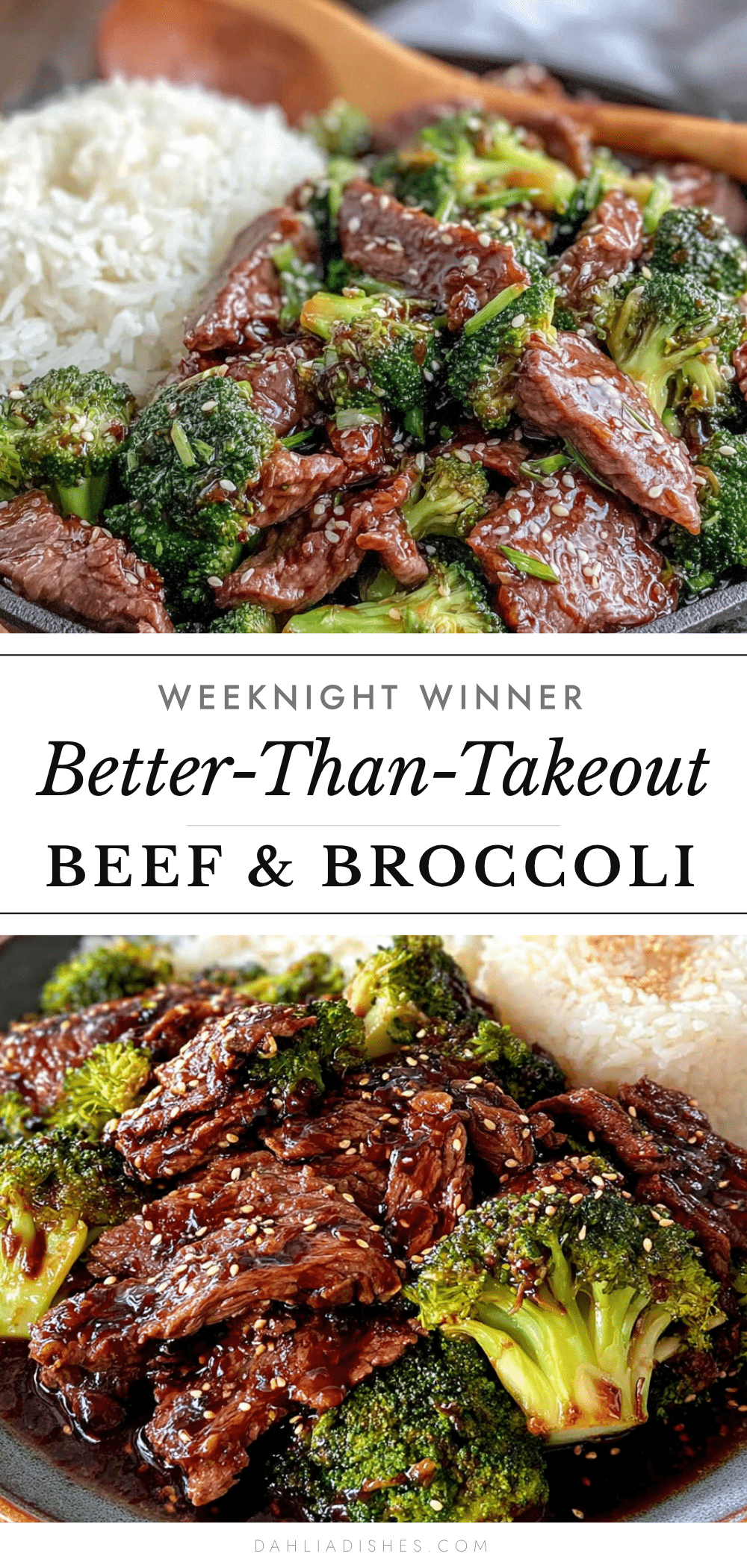
Easy One-Pot Beef and Broccoli Stir Fry Recipe
This quick and easy one-pot beef and broccoli stir fry comes together in about 20 minutes, delivering deep, savory flavor with simple ingredients. Perfect for busy weeknights, it’s a crowd-pleaser that tastes like takeout but better.
- Prep Time: 10 minutes
- Cook Time: 10 minutes
- Total Time: 20 minutes
- Yield: 4 servings 1x
- Category: Main Course
- Cuisine: Asian
Ingredients
- 1 pound flank steak or sirloin steak, sliced thinly against the grain
- 4 cups broccoli florets (about 1 large head)
- 2 tablespoons vegetable oil (or avocado/canola oil)
- 3 cloves garlic, minced
- 1 tablespoon fresh ginger, grated
- 1/3 cup low-sodium soy sauce (or tamari for gluten-free)
- 2 tablespoons brown sugar, packed
- 2 tablespoons oyster sauce
- 1 tablespoon rice vinegar (unseasoned)
- 1 teaspoon sesame oil
- 1/2 cup beef broth (or chicken broth)
- 1 tablespoon cornstarch mixed with 2 tablespoons cold water (slurry)
- Cooked white rice or brown rice, for serving
- Optional: sesame seeds and sliced green onions, for garnish
Instructions
- Prep the beef: Place flank steak in the freezer for about 15 minutes to firm up, then slice thinly across the grain into 1/4-inch strips. Pat dry with paper towels and season lightly with salt and pepper.
- Make the sauce: In a small bowl, whisk together soy sauce, brown sugar, oyster sauce, rice vinegar, sesame oil, and beef broth. In another small bowl, mix cornstarch with cold water to make a slurry. Set both aside.
- Prep the broccoli: Cut broccoli into bite-sized florets. If stems are thick, peel and slice thinly. Pat florets dry.
- Heat the pan: Place a large skillet or wok over high heat and add 1 tablespoon vegetable oil. Heat until shimmering and a wisp of smoke appears.
- Sear the beef: Add half the beef strips in a single layer. Sear undisturbed for 1-2 minutes until a deep brown crust forms, then flip and cook for another 1 minute. Transfer to a plate. Repeat with remaining beef and another tablespoon of oil.
- Cook the aromatics: Reduce heat to medium-high. Add garlic and ginger to the pan. Stir constantly for about 30 seconds until fragrant.
- Add the broccoli: Toss in broccoli florets. Stir-fry for 2-3 minutes until bright green and slightly charred on edges. Add a splash of water or broth if the pan looks dry.
- Combine everything: Return the beef to the pan along with any juices. Pour the sauce over everything. Stir and let simmer for about 1 minute.
- Thicken the sauce: Stir the cornstarch slurry, then pour it into the pan. Stir constantly for 30-60 seconds until the sauce thickens and becomes glossy. Adjust consistency with water if needed.
- Serve immediately: Remove from heat. Serve over steamed rice. Garnish with sesame seeds and sliced green onions if desired.
Notes
For best results, get your pan screaming hot before adding beef. Cut beef against the grain for tenderness. Prep all ingredients before starting to cook. The sauce will continue to thicken as it sits; add a splash of water when reheating leftovers. For gluten-free, use tamari and gluten-free oyster sauce. For vegetarian, replace beef with firm tofu and use vegetable broth.
Nutrition
- Serving Size: 1 serving (without r
- Calories: 320
- Sugar: 7
- Sodium: 780
- Fat: 16
- Saturated Fat: 4
- Carbohydrates: 14
- Fiber: 4
- Protein: 28
Keywords: beef and broccoli, stir fry, one-pot, quick dinner, weeknight meal, easy recipe