Love this? Save it for later!
Share the inspiration with your friends
There used to be a tiny bed-and-breakfast in the coastal town of Cannon Beach, Oregon, called The Sandpiper Inn. It was run by a woman named Margaret who made this overnight baked French toast casserole that people would literally drive hours for. When she retired and the inn was sold to a developer who turned it into a vacation rental conglomerate, I honestly felt a little lost. That casserole was my go-to for holiday mornings, lazy Saturdays, and any time I wanted to feel like I was on vacation without leaving my kitchen.
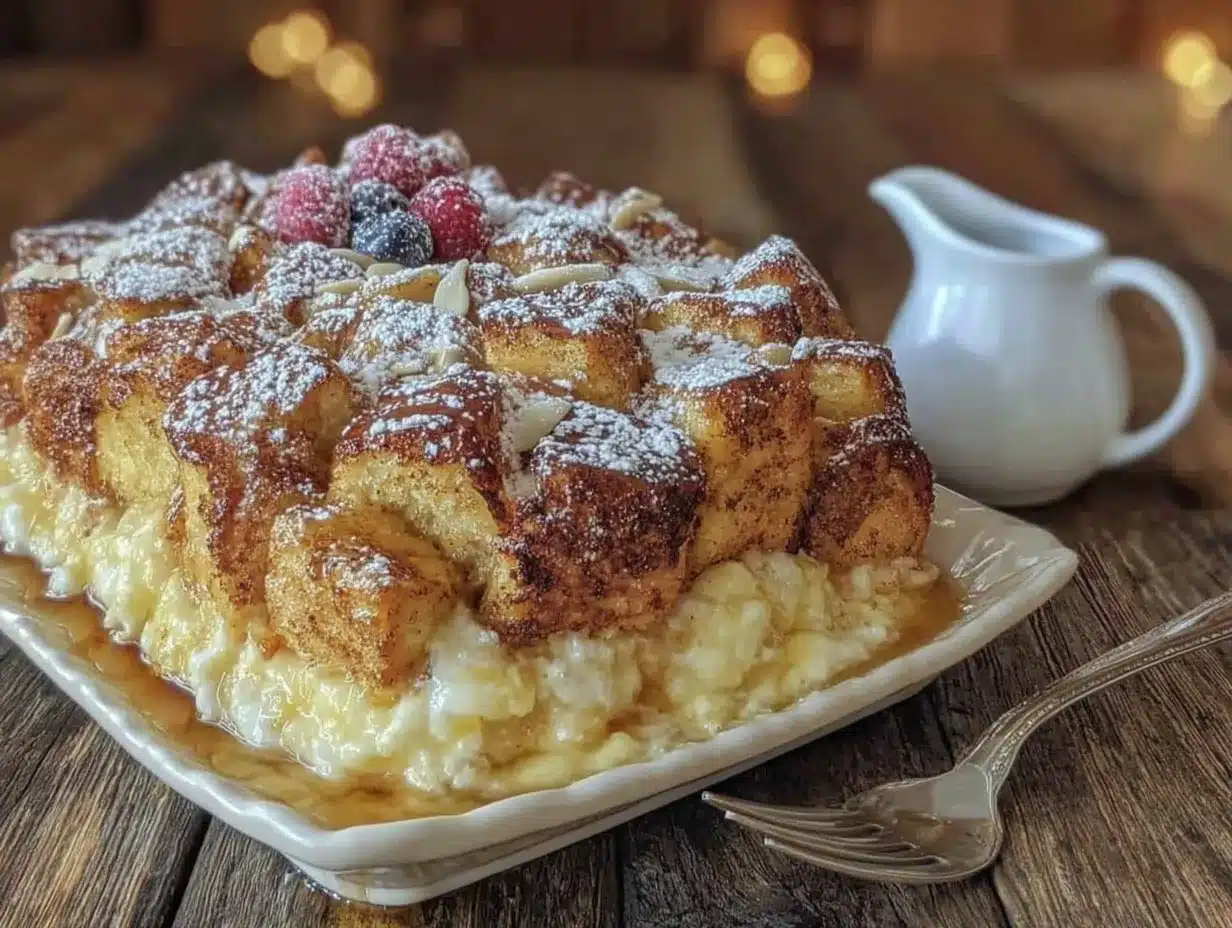
After about seven tries — some burnt, some soggy, one that my husband politely called “aggressively sweet” — I finally got it. This overnight baked French toast casserole is the exact replica of that magical breakfast from The Sandpiper. It has that perfect custard-like center, those caramelized edges that get just a little crispy, and the kind of cinnamon-vanilla aroma that makes everyone wander into the kitchen in their pajamas.
I cracked a ceramic baking dish on attempt number four. Margaret would have laughed at the mess I made. But you know what? That failure taught me something important about the bread-to-custard ratio that I’m sharing with you today. Maybe you’ve been chasing a breakfast memory too — something from a trip, a grandmother’s kitchen, or a favorite café that closed. This overnight baked French toast casserole is the one that brings that feeling back. It stays with me because it’s not just breakfast. It’s the smell of a Saturday morning where nothing else matters.
Why You’ll Love This Recipe
Let me tell you why this overnight baked French toast casserole has earned a permanent spot in my breakfast rotation. I’ve tested it for holiday brunches, sleepy weekday mornings, and even a backyard wedding shower. It never disappoints.
- Quick & Easy : Ten minutes of prep the night before, then just pop it in the oven the next morning. Perfect for when you want a fancy breakfast without the early wake-up call.
- Simple Ingredients : You probably have everything in your kitchen right now. Bread, eggs, milk, cinnamon, vanilla, and a little butter. No special trips to the store required.
- Perfect for Holidays : Christmas morning, Easter brunch, Mother’s Day — this overnight baked French toast casserole feeds a crowd with zero stress. I’ve made it for Thanksgiving morning while the turkey was thawing, and it saved my sanity.
- Crowd-Pleaser : Kids devour it. Adults ask for the recipe. My neighbor Linda, who claims she “doesn’t do sweet breakfasts,” ate three servings. Three.
- Unbelievably Delicious : The texture is what gets everyone. The top gets golden and slightly crunchy, while the inside stays soft and custard-like. It’s like eating a warm hug.
What makes this overnight baked French toast casserole different from all the other recipes out there? It’s the ratio. I spent way too many tries figuring out the exact balance of eggs to milk so you get that perfect custard that holds together without being soggy. Plus, I use a trick of letting the bread soak for at least eight hours — not just overnight — so every single bite is infused with that cinnamon-vanilla goodness. This isn’t just another version. It’s the one that makes people close their eyes after the first bite and go quiet for a second. That’s the kind of breakfast I want to share with you.
What Ingredients You Will Need
This overnight baked French toast casserole uses simple, honest ingredients that come together to create something truly special. Most of these are pantry staples, which makes this recipe perfect for spontaneous breakfast plans or holiday mornings when you don’t want to fight the grocery store crowds.
- Bread : 1 large loaf (about 16 ounces) of day-old brioche, challah, or French bread, cut into 1-inch cubes. Day-old bread is key here — it soaks up the custard without turning into mush. I prefer brioche for its richness, but challah works beautifully too. If you only have fresh bread, toast the cubes in a 300°F oven for 8-10 minutes first.
- Eggs : 8 large eggs, at room temperature. Room temperature eggs blend more smoothly into the custard. If you forgot to take them out of the fridge, place them in a bowl of warm water for 5 minutes.
- Whole Milk : 2 cups. Whole milk gives the richest custard, but 2% works in a pinch. I don’t recommend skim milk — the casserole needs that fat for proper texture.
- Heavy Cream : 1 cup. This is the secret to that luxurious, silky custard. You can substitute with half-and-half if needed, but the texture won’t be quite as decadent.
- Granulated Sugar : 1/2 cup. Just enough sweetness without overpowering the other flavors.
- Brown Sugar : 1/2 cup, packed. I use light brown sugar for the topping. It creates that caramelized crust that makes this overnight baked French toast casserole so irresistible.
- Vanilla Extract : 2 teaspoons. Pure vanilla extract makes a difference here. I recommend Nielsen-Massey or simply organic brands for the best flavor.
- Ground Cinnamon : 2 teaspoons. Fresh cinnamon matters — check your jar’s expiration date. If it’s been sitting in your pantry for two years, it’s time for a new one.
- Ground Nutmeg : 1/4 teaspoon. Just a touch adds warmth and depth. Freshly grated is amazing if you have it.
- Salt : 1/4 teaspoon. Don’t skip this. Salt balances sweetness and enhances all the other flavors.
- Unsalted Butter : 4 tablespoons, melted, plus more for greasing the dish. I use Kerrygold for its rich flavor, but any good unsalted butter works.
- Optional Toppings : Maple syrup, fresh berries, powdered sugar, or whipped cream for serving. The casserole is wonderful on its own, but toppings make it feel extra special.
Equipment Needed
You don’t need a fancy kitchen to make this overnight baked French toast casserole. Here’s what you’ll need:
- 9×13-inch Baking Dish : This is the standard size for feeding a crowd. If you’re making a half batch, an 8×8-inch dish works perfectly.
- Large Mixing Bowl : You need room to whisk the custard without splashing everywhere. I use my grandmother’s old ceramic bowl, but any large bowl works.
- Whisk : A good whisk ensures smooth, lump-free custard. A fork works in a pinch, but you’ll be whisking longer.
- Measuring Cups and Spoons : Accurate measurements matter for the custard ratio. I use glass measuring cups for liquids and metal ones for dry ingredients.
- Plastic Wrap or Aluminum Foil : For covering the dish overnight. Plastic wrap creates a tighter seal, but foil is easier to work with.
- Sharp Knife and Cutting Board : For cubing the bread. A serrated knife works best for crusty bread without crushing it.
- Spatula : For spreading the bread cubes evenly and pressing them down into the custard.
If you don’t have a 9×13-inch dish, you can use two 8×8-inch dishes or even a cast iron skillet. I’ve made this in a disposable aluminum pan for camping trips, and it worked just fine. The key is making sure your dish is deep enough to hold all that custard without overflowing.
Preparation Method
- Prepare the Bread : Cut your day-old bread into 1-inch cubes. Don’t stress about perfect squares — rustic chunks work beautifully and give the casserole more texture. Spread the cubes on a baking sheet and let them sit out for an hour if you’re using fresh bread. This helps them dry out slightly, which means better custard absorption.
- Grease the Baking Dish : Butter your 9×13-inch dish generously. Don’t skimp here — it prevents sticking and adds flavor to the edges. I use a paper towel to spread the butter evenly across the bottom and up the sides.
- Make the Custard : In your large mixing bowl, whisk together the eggs until they’re completely broken up and slightly frothy. This takes about 30 seconds of vigorous whisking. Add the whole milk, heavy cream, granulated sugar, vanilla extract, cinnamon, nutmeg, and salt. Whisk until everything is fully combined and the sugar has started to dissolve. Taste the custard — it should be sweet but not cloying, with a warm cinnamon finish.
- Assemble the Casserole : Place half of the bread cubes in the greased baking dish, spreading them evenly. Pour half of the custard over the bread, making sure every cube gets some love. Add the remaining bread cubes on top, then pour the rest of the custard over everything. Gently press down on the bread with a spatula to help it absorb the custard. Some cubes will stick up above the custard — that’s perfect. Those will get beautifully crispy in the oven.
- Let It Soak : Cover the dish tightly with plastic wrap or aluminum foil and refrigerate for at least 8 hours, or up to 24 hours. The longer it sits, the more the bread absorbs the custard, creating that perfect texture. I usually make this the night before I plan to serve it. If you’re in a hurry, 4 hours minimum will work, but the results won’t be as good.
- Prepare the Topping : In a small bowl, mix the brown sugar and melted butter together until you have a thick, sandy paste. Set it aside at room temperature.
- Bake the Casserole : The next morning, preheat your oven to 350°F. Remove the casserole from the refrigerator and let it sit on the counter while the oven heats up — about 15 minutes. Take off the plastic wrap or foil and sprinkle the brown sugar-butter mixture evenly over the top. Bake for 40-45 minutes, until the top is golden brown and the center is set but still slightly jiggly. A knife inserted in the center should come out clean. The kitchen will smell absolutely incredible at this point.
- Rest Before Serving : Let the casserole rest for 5-10 minutes after it comes out of the oven. This allows the custard to set fully. If you cut into it immediately, it will be too runny. I know it’s hard to wait, but trust me on this one.
- Serve and Enjoy : Cut into squares and serve warm. Drizzle with maple syrup, sprinkle with powdered sugar, and add fresh berries if you’re feeling fancy. This overnight baked French toast casserole is wonderful on its own, but a little extra sweetness never hurts.
Cooking Tips & Techniques
After making this overnight baked French toast casserole more times than I can count, I’ve learned a few things the hard way. Let me save you some trouble.
The Bread Matters More Than You Think : I used sandwich bread on my first attempt, and it turned into a soggy mess. You need something substantial — brioche, challah, or a good French bread. The bread needs structure to hold up to all that custard. If you can only find soft bread, cube it and toast it in a 300°F oven for 10 minutes before using it. That extra step makes all the difference.
Don’t Skip the Resting Time : I made the mistake of rushing this once when I forgot to prep the night before. I let it soak for only two hours, and the result was uneven — some bites were dry, others were custard-heavy. The eight-hour minimum is non-negotiable if you want that consistent, creamy texture throughout.
Watch Your Oven Temperature : Every oven runs differently. My old oven would burn the top while the center was still liquid. If your casserole is browning too quickly, tent it with foil for the last 15 minutes of baking. If it’s not browning enough, give it an extra 5 minutes and check again.
Press Down for Even Soaking : When you pour the custard over the bread cubes, some will float to the top. Use a spatula to gently press them down. I actually do this a few times during the first hour of refrigeration to make sure every cube is fully saturated. It’s a small step that pays off big.
Room Temperature Eggs Are Crucial : Cold eggs don’t blend well with the milk and cream, leaving you with streaks of egg white in your custard. If you forgot to take them out early, place them in a bowl of warm water for five minutes. Problem solved.
Variations & Adaptations
One of the best things about this overnight baked French toast casserole is how adaptable it is. Here are some variations I’ve tried and loved:
Berry Bliss Version : Add 1 cup of fresh or frozen berries (blueberries, raspberries, or sliced strawberries) between the layers of bread cubes. The berries burst during baking and create little pockets of jammy goodness. I made this for a brunch party last summer, and it disappeared in fifteen minutes.
Apple Cinnamon Variation : Peel and dice 2 medium apples (Granny Smith or Honeycrisp work great) and toss them with 1 tablespoon of brown sugar and 1 teaspoon of cinnamon. Layer them with the bread cubes before adding the custard. This version feels especially cozy for fall mornings.
Chocolate Hazelnut Twist : Spread 1/2 cup of chocolate hazelnut spread (Nutella or a similar brand) between the layers of bread cubes. The chocolate melts into the custard, creating a dessert-like breakfast that kids absolutely love. I tested this on my niece’s birthday morning, and she declared it “the best breakfast ever.”
Dairy-Free Option : Substitute the whole milk with unsweetened almond milk or oat milk, and use a dairy-free heavy cream alternative. Use melted coconut oil instead of butter. The texture will be slightly less rich, but it’s still delicious. I’ve made this for a friend with dairy allergies, and she couldn’t tell the difference.
Gluten-Free Adaptation : Use a good quality gluten-free bread. I recommend Canyon Bakehouse or Udi’s for the best texture. Toast the cubes before using them, as gluten-free bread tends to be softer and needs that extra structure. The rest of the recipe stays the same.
Serving & Storage Suggestions
This overnight baked French toast casserole is best served warm, straight from the oven. The contrast between the crispy top and the soft, custard-like center is what makes it so special. I like to set out a toppings bar so everyone can customize their serving — maple syrup, fresh berries, sliced bananas, whipped cream, and a dusting of powdered sugar.
For drinks, this casserole pairs beautifully with a hot cup of coffee or a tall glass of cold milk. If you’re serving it for brunch, a pitcher of fresh orange juice and some mimosas wouldn’t be out of place. The sweetness of the casserole balances perfectly with the acidity of citrus.
Storing Leftovers : If you somehow have leftovers (it doesn’t happen often in my house), cover the dish tightly with plastic wrap or transfer portions to an airtight container. It will keep in the refrigerator for up to 3 days. The texture softens a bit over time, but it’s still delicious.
Reheating : The best way to reheat individual portions is in the microwave for 30-45 seconds. For larger portions, place them in a 300°F oven for 10-15 minutes, covered with foil to prevent drying out. You can also reheat in an air fryer at 300°F for 3-4 minutes for a slightly crisper top.
Freezing : This casserole freezes beautifully. Bake it completely, let it cool, then cut it into individual portions. Wrap each portion tightly in plastic wrap, then place them in a freezer-safe bag. They’ll keep for up to 3 months. To serve, thaw overnight in the refrigerator and reheat as directed above.
One thing I love about this overnight baked French toast casserole is that the flavors actually improve after a day in the refrigerator. The cinnamon and vanilla meld together even more, making leftovers taste almost better than the first serving. Not that you’ll have leftovers, but it’s good to know.
Nutritional Information & Benefits
This overnight baked French toast casserole is definitely a treat, but it does offer some nutritional benefits. Here’s the breakdown per serving (based on 12 servings):
- Calories : Approximately 380 per serving
- Protein : 12 grams
- Carbohydrates : 45 grams
- Fat : 18 grams
- Fiber : 2 grams
- Sugar : 22 grams
The eggs in this recipe provide high-quality protein and important nutrients like choline, which supports brain health. The milk and cream offer calcium for strong bones, while the cinnamon has anti-inflammatory properties. If you use whole grain bread, you’ll get additional fiber and complex carbohydrates that provide steady energy throughout the morning.
For a lighter version, you can reduce the sugar by half and use 2% milk instead of whole milk and cream. The texture won’t be as rich, but it will still be satisfying. I’ve made this for post-holiday mornings when we’re all trying to eat a little better, and it hits the spot without the guilt.
If you have dietary concerns, this recipe contains dairy, eggs, and gluten. For alternatives, check the variations section above. Always consult with a healthcare provider for personalized nutritional advice.
Conclusion
This overnight baked French toast casserole is more than just a breakfast recipe. It’s the kind of dish that turns an ordinary morning into something special. Whether you’re serving it for Christmas brunch, a lazy Saturday with the family, or just because you deserve a treat, it never fails to deliver comfort and joy.
I love how forgiving this recipe is. You can customize it with your favorite fruits, adjust the sweetness to your liking, or make it ahead and forget about it until morning. It’s the breakfast that works as hard as you do, and honestly, we all deserve that.
I’d love to hear how your overnight baked French toast casserole turns out. Did you add berries? Try the chocolate hazelnut version? Burn the top like I did on attempt number three? Share your experience in the comments below, and don’t forget to tag me when you make it. Happy cooking, friends. Here’s to mornings that feel like a warm hug.
Frequently Asked Questions
Can I use regular sandwich bread for this overnight baked French toast casserole?
You can, but I don’t recommend it. Sandwich bread is too soft and will turn into a mushy mess after soaking overnight. Stick with brioche, challah, or French bread for the best texture. If you’re in a pinch, toast the sandwich bread cubes first to dry them out a bit.
How far in advance can I prepare this casserole?
You can assemble this overnight baked French toast casserole up to 24 hours before baking. Any longer than that, and the bread might break down too much. I usually make it the night before, which gives it a solid 8-12 hours to soak. That’s the sweet spot.
Can I freeze this overnight baked French toast casserole?
Absolutely. Bake it completely, let it cool, then cut it into portions. Wrap each portion tightly in plastic wrap and store in a freezer bag for up to 3 months. Thaw overnight in the refrigerator and reheat in the microwave or oven.
Why is my overnight baked French toast casserole soggy in the middle?
This usually happens for one of two reasons: either you didn’t let it bake long enough, or you used too much custard for the amount of bread. Make sure your oven is at 350°F and bake until the center is set. A knife inserted in the middle should come out clean. Also, check your bread-to-custard ratio — you want enough custard to coat the bread without drowning it.
Can I make this overnight baked French toast casserole dairy-free?
Yes! Substitute the whole milk with unsweetened almond milk or oat milk, use a dairy-free heavy cream alternative, and swap the butter with melted coconut oil. The texture will be slightly less rich, but it’s still delicious. I’ve tested this version, and it works beautifully.
Pin This Recipe!
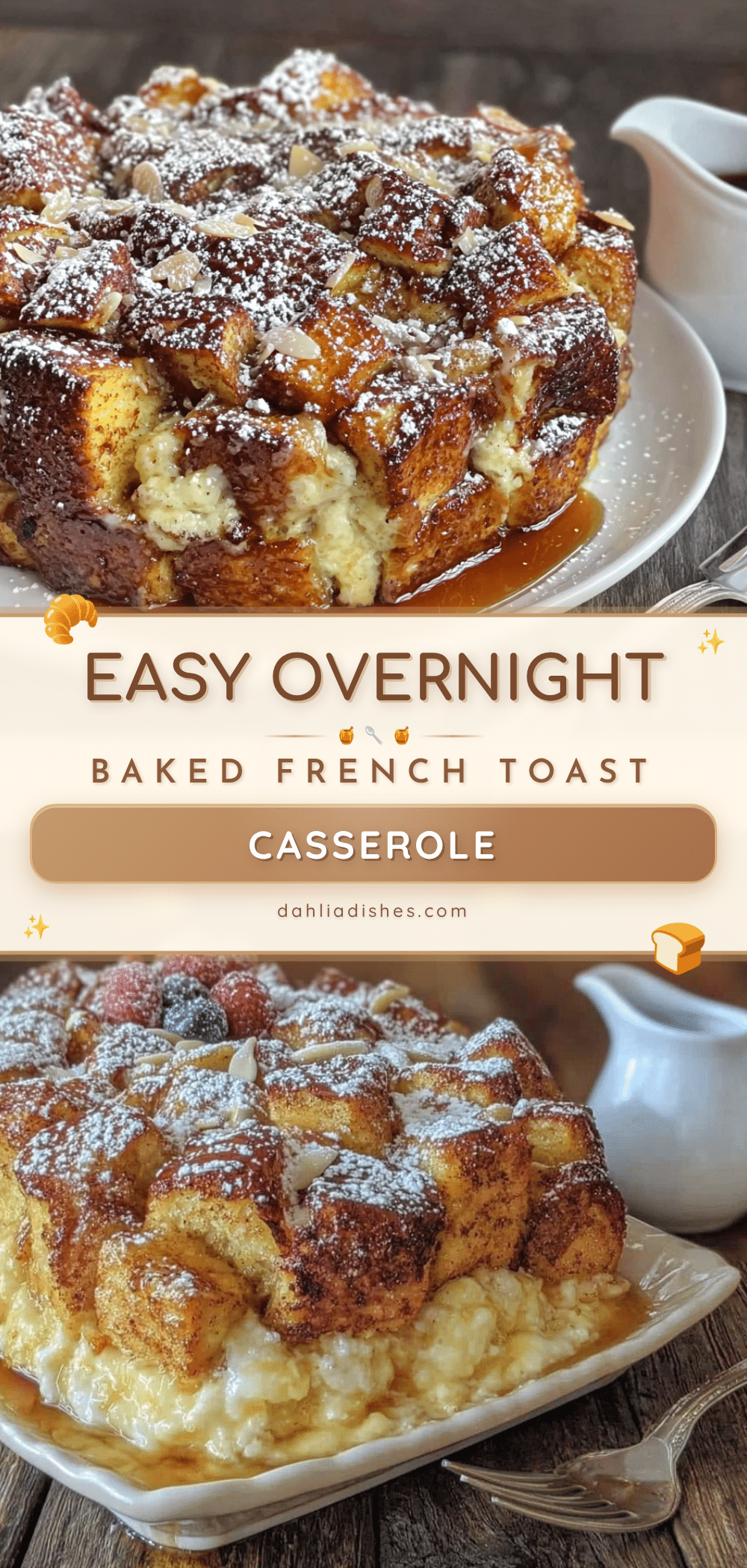
Easy Overnight Baked French Toast Casserole (Best Breakfast)
This overnight baked French toast casserole has a perfect custard-like center, caramelized edges that get just a little crispy, and a cinnamon-vanilla aroma that makes everyone wander into the kitchen in their pajamas. It’s the ultimate make-ahead breakfast for holidays, lazy Saturdays, or any time you want to feel like you’re on vacation without leaving your kitchen.
- Prep Time: 15 minutes
- Cook Time: 45 minutes
- Total Time: 8 hours 60 minutes (includes overnight soaking)
- Yield: 12 servings 1x
- Category: Breakfast
- Cuisine: American
Ingredients
- 1 large loaf (about 16 ounces) day-old brioche, challah, or French bread, cut into 1-inch cubes
- 8 large eggs, at room temperature
- 2 cups whole milk
- 1 cup heavy cream
- 1/2 cup granulated sugar
- 1/2 cup packed light brown sugar
- 2 teaspoons pure vanilla extract
- 2 teaspoons ground cinnamon
- 1/4 teaspoon ground nutmeg
- 1/4 teaspoon salt
- 4 tablespoons unsalted butter, melted, plus more for greasing the dish
- Optional toppings: maple syrup, fresh berries, powdered sugar, or whipped cream
Instructions
- Prepare the Bread: Cut day-old bread into 1-inch cubes. If using fresh bread, spread cubes on a baking sheet and let sit out for 1 hour to dry slightly.
- Grease the Baking Dish: Butter a 9×13-inch baking dish generously, covering the bottom and up the sides.
- Make the Custard: In a large mixing bowl, whisk eggs until broken up and slightly frothy (about 30 seconds). Add whole milk, heavy cream, granulated sugar, vanilla extract, cinnamon, nutmeg, and salt. Whisk until fully combined and sugar starts to dissolve.
- Assemble the Casserole: Place half of the bread cubes in the greased dish, spreading evenly. Pour half of the custard over the bread. Add remaining bread cubes on top, then pour remaining custard over everything. Gently press down with a spatula to help bread absorb custard.
- Let It Soak: Cover dish tightly with plastic wrap or aluminum foil and refrigerate for at least 8 hours, or up to 24 hours.
- Prepare the Topping: In a small bowl, mix brown sugar and melted butter together until a thick, sandy paste forms. Set aside at room temperature.
- Bake the Casserole: Next morning, preheat oven to 350°F. Remove casserole from refrigerator and let sit on counter for 15 minutes. Remove plastic wrap or foil and sprinkle brown sugar-butter mixture evenly over top. Bake for 40-45 minutes until top is golden brown and center is set but slightly jiggly. A knife inserted in center should come out clean.
- Rest Before Serving: Let casserole rest for 5-10 minutes after coming out of the oven to allow custard to set fully.
- Serve and Enjoy: Cut into squares and serve warm. Drizzle with maple syrup, sprinkle with powdered sugar, and add fresh berries if desired.
Notes
Day-old bread is key for best texture. If using fresh bread, toast cubes at 300°F for 8-10 minutes first. Room temperature eggs blend more smoothly. For even soaking, press bread down with a spatula a few times during the first hour of refrigeration. If casserole browns too quickly, tent with foil for last 15 minutes. Let rest 5-10 minutes before serving to allow custard to set.
Nutrition
- Serving Size: 1 square (1/12 of ca
- Calories: 380
- Sugar: 22
- Sodium: 320
- Fat: 18
- Saturated Fat: 10
- Carbohydrates: 45
- Fiber: 2
- Protein: 12
Keywords: overnight French toast casserole, baked French toast, breakfast casserole, make-ahead breakfast, holiday breakfast, brunch recipe, French toast bake