Love this? Save it for later!
Share the inspiration with your friends
My sister asked why I couldn’t just stir the pumpkin puree directly into the sourdough discard instead of fussing with a separate bowl. I started to explain why that wouldn’t work—then stopped. Honestly, I had no good reason except that I’d never seen it done that way before. So I handed her the spatula and let her have at it.
That moment in my tiny kitchen last October changed how I think about this cozy maple pumpkin sourdough discard bread forever. She dumped the orange sludge right into the bubbly starter, gave it a few vigorous stirs, and looked at me like I was the crazy one for overcomplicating things. The loaf came out of the oven with this gorgeous domed top and a crumb that practically sang with moisture. I mean, I was genuinely annoyed at how well it worked.
This recipe has become my fall obsession. It’s the kind of bread that makes your whole house smell like a candle shop, but better—like someone’s been baking spiced muffins for hours. The maple syrup adds this subtle sweetness that plays perfectly against the tangy sourdough, and the pumpkin keeps everything impossibly soft for days. Maybe you’ve been there, staring at a jar of discard in your fridge wondering what to do with it besides pancakes. This is your answer.
The first time I made it, I forgot to set a timer and accidentally let it proof for almost three hours while I got sucked into a phone call. I was sure I’d ruined it. But that accidental extended proof gave it the most incredible open crumb I’ve ever gotten from a discard recipe. So let me tell you—this cozy maple pumpkin sourdough discard bread is forgiving, foolproof, and absolutely worth every bit of flour you toss at it.
Why You’ll Love This Recipe
I’ve tested this cozy maple pumpkin sourdough discard bread at least eight times across two different ovens and three different brands of pumpkin puree. It works every single time. Here’s why this one stands out from every other fall bread recipe you’ve seen:
- Quick & Easy: Comes together in about 15 minutes of active prep time. The oven does the rest of the work while you go about your day.
- Simple Ingredients: No fancy grocery trips needed. Flour, discard, pumpkin, maple syrup, and basic pantry spices are all you need.
- Perfect for Fall Baking: Great for Thanksgiving brunch, cozy Sunday mornings, or when you just want that autumn aroma filling your kitchen.
- Crowd-Pleaser: Even people who swear they don’t like sourdough ask for seconds. The tang is mellow, not overwhelming.
- Unbelievably Soft: The pumpkin keeps this bread moist for days, which is rare for sourdough discard recipes that tend to dry out quickly.
What makes this recipe different from the rest is the way the maple syrup caramelizes on the crust while the inside stays tender. I’ve tried versions with honey, brown sugar, and even agave—nothing gives you that crackly top and deep, almost buttery flavor quite like real maple syrup. It’s not just another pumpkin bread. It’s the one you’ll make every single fall until your family starts requesting it in July.
Honestly, this cozy maple pumpkin sourdough discard bread is the kind that makes you close your eyes after the first bite. It’s comfort food reimagined—healthier than traditional quick breads, faster than a full sourdough boule, but with the same soul-soothing satisfaction. Perfect for impressing guests without stress, or turning a simple Tuesday morning into something memorable.
What Ingredients You Will Need
This recipe uses simple, wholesome ingredients to deliver bold fall flavor without fuss. Most of these are pantry staples, especially if you keep a sourdough starter at home.
- All-purpose flour – 2 cups (250g). I use King Arthur Flour for consistent results, but any brand works. Spoon and level your flour for accuracy.
- Sourdough discard – 1 cup (240g), unfed and straight from the fridge. This is perfect for using up that jar that’s been accumulating all week.
- Pumpkin puree – 1 cup (245g). Not pumpkin pie filling—make sure it’s 100% pure pumpkin. Libby’s is my go-to for consistent moisture content.
- Maple syrup – ½ cup (160ml). Real maple syrup, not pancake syrup. Grade A dark amber gives the strongest flavor, but any grade works beautifully.
- Eggs – 2 large, room temperature. Cold eggs can seize the batter, so let them sit out for 20 minutes first.
- Coconut oil or unsalted butter – ⅓ cup (75g), melted and slightly cooled. Butter gives richer flavor, coconut oil keeps it dairy-free.
- Brown sugar – ¼ cup (50g), packed. Light or dark both work. Dark adds more molasses depth.
- Baking soda – 1 teaspoon. This reacts with the acidic discard and pumpkin to create lift.
- Baking powder – ½ teaspoon. Extra insurance for a good rise.
- Salt – ½ teaspoon. Fine sea salt, not coarse.
- Pumpkin pie spice – 2 teaspoons. Or make your own: 1 tsp cinnamon, ½ tsp ginger, ¼ tsp nutmeg, ¼ tsp cloves, ⅛ tsp allspice.
- Cinnamon – 1 teaspoon. I add extra because I’m obsessed with warm spice flavors.
- Vanilla extract – 1 teaspoon. Pure vanilla, not imitation, if you can swing it.
- Optional mix-ins – ½ cup chopped pecans or chocolate chips. I’ve done both, and honestly, the chocolate chip version disappears fastest.
For the best texture, make sure your pumpkin puree isn’t watery. If you see liquid pooling on top when you open the can, stir it back in or drain it off—either works, just be consistent. I’ve used both canned and homemade pumpkin puree, and both give excellent results. Just don’t substitute pumpkin pie filling, which has added sugar and spices that throw off the balance.
Equipment Needed
You don’t need a fancy bakery setup for this cozy maple pumpkin sourdough discard bread. Here’s what I use every time:
- 9×5 inch loaf pan – Standard size works perfectly. Glass, metal, or ceramic all work, but metal gives the best browning on the sides.
- Parchment paper – Line your pan for easy removal. I learned this the hard way after my first loaf stuck like cement.
- Large mixing bowl – Any bowl works, but a wide one makes mixing easier without slopping batter everywhere.
- Whisk and rubber spatula – Whisk the dry ingredients, fold with the spatula. Don’t use an electric mixer—it overworks the batter.
- Measuring cups and spoons – For accuracy. A kitchen scale is even better for the flour and discard.
- Cooling rack – Lets air circulate so the bottom doesn’t get soggy. If you don’t have one, use oven racks or chopsticks balanced across a baking sheet.
- Toothpick or cake tester – For checking doneness. A thin knife works too.
I picked up my favorite loaf pan at a thrift store for three dollars, and it bakes more evenly than my expensive one. Sometimes the budget option wins.
Preparation Method
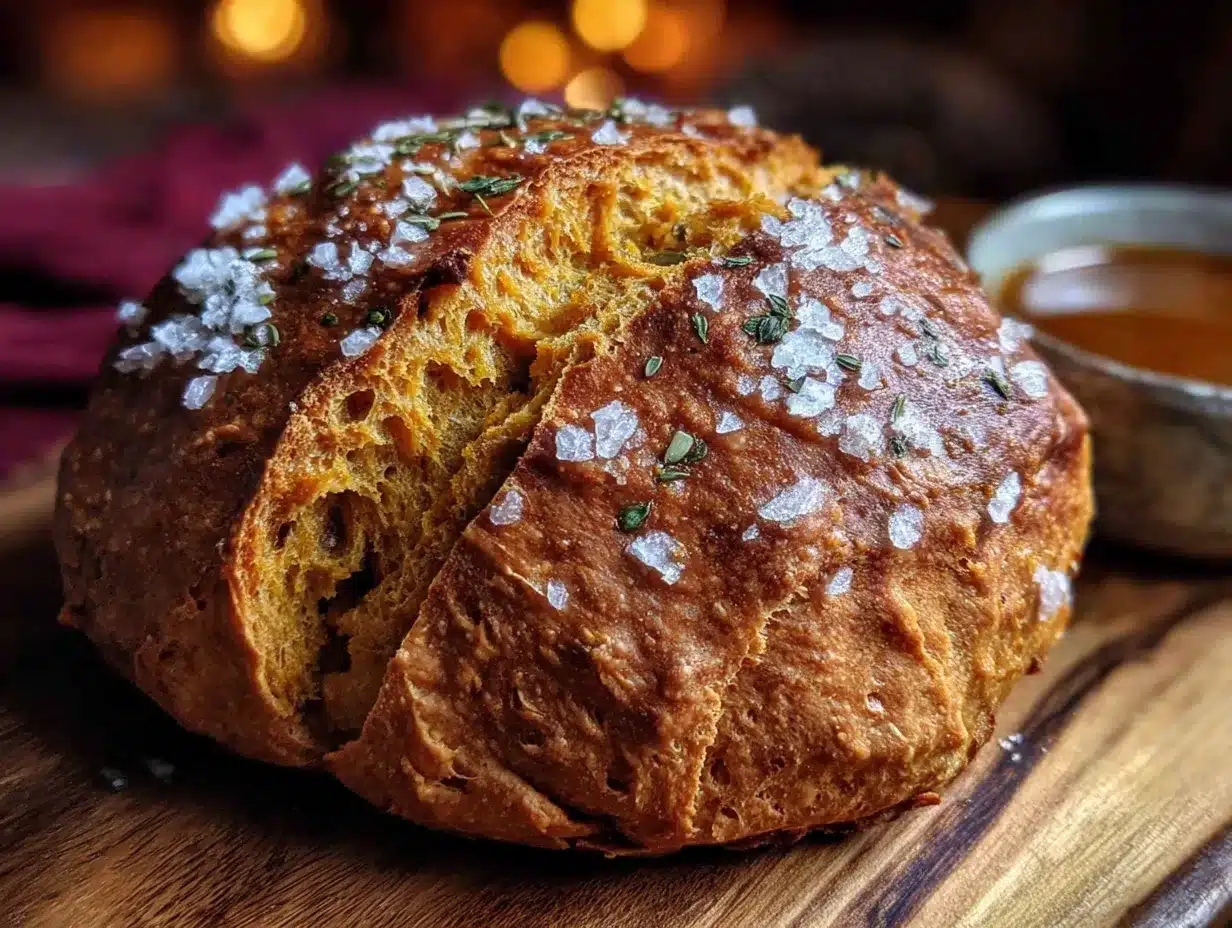
Preheat your oven to 350°F (175°C). Line your loaf pan with parchment paper, leaving some overhang on the long sides—this creates handles for lifting the bread out later. Set it aside while you mix the batter.
Step 1: Mix the wet ingredients
In a large bowl, combine 1 cup sourdough discard, 1 cup pumpkin puree, ½ cup maple syrup, ⅓ cup melted coconut oil or butter, 2 room-temperature eggs, 1 teaspoon vanilla extract, and ¼ cup packed brown sugar. Whisk until smooth and uniform. The mixture will look a bit separated at first—that’s normal. Keep whisking until it comes together into a glossy, rich orange batter. It should smell like fall in a bowl at this point.
Step 2: Combine the dry ingredients
In a separate medium bowl, whisk together 2 cups all-purpose flour, 1 teaspoon baking soda, ½ teaspoon baking powder, ½ teaspoon salt, 2 teaspoons pumpkin pie spice, and 1 teaspoon cinnamon. Whisk thoroughly to distribute the leavening agents and spices evenly. Lumps in the baking soda can create bitter pockets, so take an extra 30 seconds here.
Step 3: Fold wet and dry together
Pour the dry ingredients into the wet mixture. Use a rubber spatula to fold gently—cut through the center, scrape along the bottom, and turn the bowl. Do this about 12 to 15 strokes. A few streaks of flour are fine. Overmixing develops gluten and makes the bread tough. You want a tender crumb, not a rubber eraser.
Step 4: Add mix-ins (optional)
If using pecans or chocolate chips, gently fold them in at this point. About 6 more strokes should distribute them evenly. Don’t overdo it—nobody wants all the mix-ins sunk to the bottom.
Step 5: Transfer to pan
Scrape the batter into your prepared loaf pan. Use the spatula to spread it evenly into the corners. The batter will be thick but scoopable, similar to a muffin batter. Smooth the top gently—no need to obsess, the oven will sort it out.
Step 6: Bake
Place the pan in the preheated oven on the center rack. Bake for 50 to 60 minutes. At the 30-minute mark, check the top—if it’s browning too fast, tent loosely with aluminum foil. My oven runs hot, so I usually add foil at 35 minutes. The bread is done when a toothpick inserted into the center comes out clean or with a few moist crumbs. If it comes out wet with batter, give it another 5 minutes and check again.
Step 7: Cool completely
Let the bread cool in the pan for 10 minutes. Then lift it out using the parchment handles and transfer to a wire rack. Let it cool completely before slicing—this is the hardest part, I know. Slicing warm bread gives you gummy, misshapen pieces. Trust me, I’ve done it. Wait at least 1 hour. The texture improves dramatically as it cools.
Cooking Tips & Techniques
After making this cozy maple pumpkin sourdough discard bread more times than I care to admit, I’ve collected some hard-won wisdom. Here’s what I wish someone had told me:
Don’t skip the parchment paper. I thought I could get away with just greasing the pan. I was wrong. The sugar from the maple syrup caramelizes and creates a sticky situation. Parchment saves your loaf and your sanity.
Room temperature ingredients matter. Cold eggs and cold discard seize the coconut oil or butter, creating little solid flecks throughout the batter. Let everything sit out for 20 to 30 minutes before starting. Your bread will rise higher and have a more even crumb.
Check your baking soda freshness. Baking soda loses potency after about 6 months. If your bread doesn’t rise well, stale baking soda is usually the culprit. Drop a pinch into vinegar—if it fizzes vigorously, you’re good.
The toothpick test can lie. Sometimes the center looks done on the outside but is still gummy inside. If your toothpick comes out with moist crumbs but no wet batter, it’s done. If it’s completely clean, you might have overbaked it slightly. Aim for moist crumbs.
One mistake I made: I once substituted whole wheat flour for half the all-purpose flour. The bread turned out dense and heavy—edible, but not the light, tender loaf I wanted. Stick with all-purpose for best results, or use a white whole wheat flour if you must go whole grain.
Multitasking tip: While the bread bakes, clean your dishes. The batter dries like cement on bowls if you let it sit. Plus, a clean kitchen makes the wait for cooling bread much more pleasant.
Variations & Adaptations
This cozy maple pumpkin sourdough discard bread is endlessly adaptable. Here are my favorite variations:
Vegan version: Replace the eggs with two flax eggs (2 tablespoons ground flaxseed mixed with 6 tablespoons water, let sit 5 minutes). Use coconut oil instead of butter. The texture is slightly denser but still delicious—my vegan friend requests this every Thanksgiving.
Gluten-free option: Swap the all-purpose flour with a 1:1 gluten-free baking blend that contains xanthan gum. I’ve tested this with Bob’s Red Mill 1:1, and it works well. Add 1 extra tablespoon of liquid (water or maple syrup) since gluten-free flours absorb more moisture.
Chocolate chip pumpkin: Fold in ½ cup dark chocolate chips. The bitterness of dark chocolate balances the sweet maple and pumpkin beautifully. This version disappears fastest at my house.
Spiced pecan crunch: Add ½ cup chopped pecans to the batter, then sprinkle another ¼ cup on top before baking. The nuts toast on the crust and add amazing texture. I did this for a brunch party and got three recipe requests.
Streusel topping: Mix ¼ cup flour, ¼ cup brown sugar, 2 tablespoons cold butter, and ½ teaspoon cinnamon until crumbly. Sprinkle over the batter before baking. It adds a bakery-style crust that’s absolutely worth the extra 3 minutes of effort.
Savory twist: Reduce the maple syrup to ¼ cup, omit the brown sugar, add 1 teaspoon black pepper, ½ teaspoon cayenne, and ½ cup shredded sharp cheddar. This sounds weird but trust me—it makes an incredible breakfast bread for egg sandwiches.
Serving & Storage Suggestions
This cozy maple pumpkin sourdough discard bread is best served at room temperature or lightly toasted. The flavors actually deepen after a day or two, so don’t be disappointed if it tastes even better on day two.
Serving ideas: Slice and toast until golden, then slather with salted butter or cream cheese. For a decadent breakfast, top with a drizzle of maple syrup and a sprinkle of flaky sea salt. It’s also fantastic alongside a bowl of chili or soup—the sweetness balances savory dishes perfectly.
Storage: Wrap the cooled loaf tightly in plastic wrap or beeswax wrap, then store in an airtight container at room temperature for up to 4 days. The pumpkin keeps it moist longer than regular quick breads. Do not refrigerate—the fridge dries out baked goods faster than room temperature storage.
Freezer instructions: Slice the cooled loaf, wrap individual slices in plastic wrap, then place in a freezer bag. Freeze for up to 3 months. To enjoy, toast directly from frozen—no thawing needed. This is my secret weapon for having fresh-tasting bread on busy mornings.
Reheating: Toast slices in a toaster or toaster oven at 350°F for 5 to 7 minutes. For a whole loaf, wrap in foil and warm in a 300°F oven for 10 to 15 minutes. The crust crisps up beautifully while the inside stays soft.
One thing I love about this bread is how the maple flavor becomes more pronounced on the second day. If you can resist eating the whole loaf immediately, you’re in for a treat.
Nutritional Information & Benefits
Here are the approximate nutritional values per slice (based on 10 slices):
- Calories: 245
- Total Fat: 9g
- Saturated Fat: 6g
- Carbohydrates: 37g
- Fiber: 2g
- Sugar: 16g
- Protein: 5g
- Sodium: 220mg
This bread offers some surprising health benefits. Pumpkin is packed with vitamin A, which supports eye health and immune function. The sourdough fermentation process breaks down phytic acid, making minerals like iron and zinc more bioavailable. Maple syrup contains antioxidants and has a lower glycemic index than refined sugar. Using sourdough discard means you’re reducing food waste while getting the gut-health benefits of fermented grains.
For dietary considerations: This recipe contains gluten and eggs. It can be made dairy-free by using coconut oil. The vegan version removes eggs and uses flax. It’s not low-carb, but the fiber from pumpkin and flour helps slow sugar absorption. If you’re watching added sugars, you can reduce the maple syrup to ⅓ cup and omit the brown sugar—the bread will be less sweet but still delicious.
I love that this cozy maple pumpkin sourdough discard bread feels indulgent but actually has some nutritional redeeming qualities. It’s the kind of treat you can feel good about eating for breakfast.
Conclusion
This cozy maple pumpkin sourdough discard bread is everything I want in a fall recipe—warm spices, tender crumb, and that unmistakable tang of sourdough balanced by sweet maple. It’s forgiving enough for beginners but interesting enough for experienced bakers looking to use up their discard stash. Plus, it makes your kitchen smell absolutely incredible.
I hope you give this recipe a try and make it your own. Toss in chocolate chips, add a streusel topping, or keep it simple with just the basic ingredients. However you make it, I promise you’ll be happy you did. There’s something special about pulling a golden loaf out of the oven on a crisp autumn day, knowing you transformed simple ingredients into something truly comforting.
If you make this cozy maple pumpkin sourdough discard bread, I’d love to hear about it. Leave a comment below and let me know how it turned out—did you add any fun mix-ins? Did your family devour it in one sitting? Share your photos and tag me so I can see your beautiful loaves. Happy baking, friends!
Frequently Asked Questions
Can I use active sourdough starter instead of discard?
Yes, you can use active starter, but the texture will be slightly different. Active starter adds more air and can make the bread rise higher. If using active starter, reduce the baking soda to ½ teaspoon since there’s less acidity to react with. The flavor will be milder too.
Why did my bread sink in the middle?
A sunken center usually means the bread was underbaked or the oven temperature was too low. Make sure your oven is fully preheated to 350°F. Also, check your baking soda freshness—old baking soda won’t provide enough lift. Finally, don’t open the oven door during the first 30 minutes of baking.
Can I make this without a sourdough starter?
This recipe is designed specifically for sourdough discard, but you can substitute 1 cup of buttermilk or plain yogurt mixed with 1 tablespoon of lemon juice. Add 1 extra teaspoon of baking powder to compensate for the missing fermentation. The flavor won’t be the same, but it will still be a tasty pumpkin bread.
How do I know when the bread is fully baked?
Insert a toothpick into the center of the loaf. If it comes out clean or with a few moist crumbs, it’s done. If it comes out wet with batter, bake for another 5 to 10 minutes and check again. The internal temperature should reach about 200°F to 205°F when measured with an instant-read thermometer.
Can I double this recipe?
Absolutely! Double all ingredients and bake in two 9×5 inch loaf pans. You can also bake it as a 9×13 inch cake—just reduce the baking time to 35 to 40 minutes and check for doneness earlier. The recipe scales beautifully for holiday baking or gift giving.
Pin This Recipe!
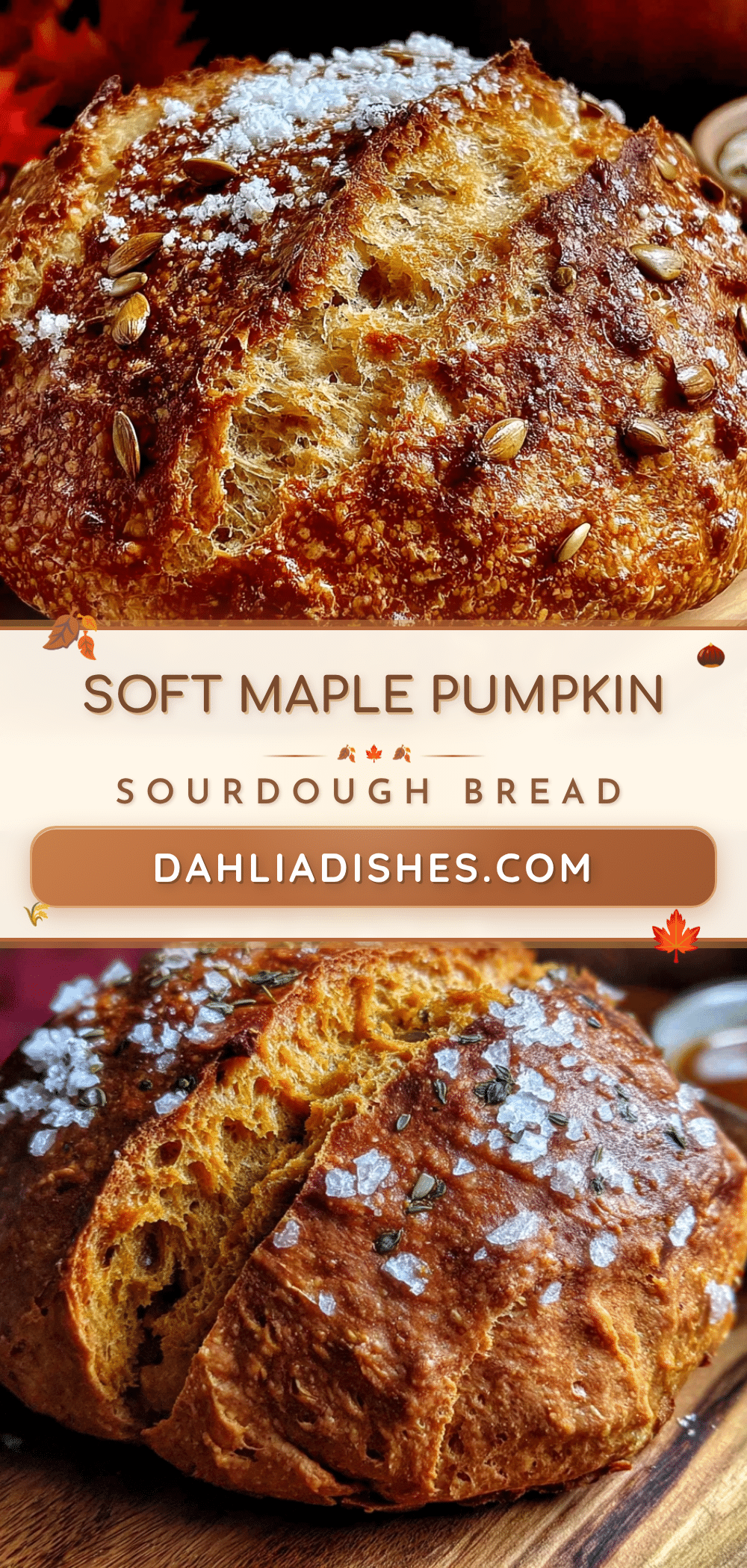
Cozy Maple Pumpkin Sourdough Discard Bread
A forgiving and foolproof fall bread that combines tangy sourdough discard with sweet maple syrup and pumpkin puree for an impossibly soft, moist loaf. Perfect for using up discard and filling your kitchen with warm autumn aromas.
- Prep Time: 15 minutes
- Cook Time: 55 minutes
- Total Time: 1 hour 10 minutes
- Yield: 10 servings 1x
- Category: Bread
- Cuisine: American
Ingredients
- 2 cups (250g) all-purpose flour
- 1 cup (240g) sourdough discard, unfed and straight from the fridge
- 1 cup (245g) pumpkin puree (100% pure, not pie filling)
- ½ cup (160ml) real maple syrup (Grade A dark amber preferred)
- 2 large eggs, room temperature
- ⅓ cup (75g) coconut oil or unsalted butter, melted and slightly cooled
- ¼ cup (50g) packed brown sugar (light or dark)
- 1 teaspoon baking soda
- ½ teaspoon baking powder
- ½ teaspoon fine sea salt
- 2 teaspoons pumpkin pie spice
- 1 teaspoon cinnamon
- 1 teaspoon pure vanilla extract
- ½ cup chopped pecans or chocolate chips (optional)
Instructions
- Preheat oven to 350°F (175°C). Line a 9×5 inch loaf pan with parchment paper, leaving overhang on the long sides.
- In a large bowl, whisk together sourdough discard, pumpkin puree, maple syrup, melted coconut oil or butter, eggs, vanilla extract, and brown sugar until smooth and glossy.
- In a separate medium bowl, whisk together flour, baking soda, baking powder, salt, pumpkin pie spice, and cinnamon until evenly distributed.
- Pour dry ingredients into wet mixture. Fold gently with a rubber spatula using 12 to 15 strokes, until just combined (a few streaks of flour are fine).
- If using optional mix-ins (pecans or chocolate chips), fold them in with about 6 more strokes.
- Scrape batter into prepared loaf pan and spread evenly. Smooth the top gently.
- Bake on center rack for 50 to 60 minutes. At 30 minutes, check top; if browning too fast, tent loosely with aluminum foil. Bread is done when a toothpick inserted into center comes out clean or with a few moist crumbs.
- Cool in pan for 10 minutes, then lift out using parchment handles and transfer to a wire rack. Cool completely (at least 1 hour) before slicing.
Notes
For best results, use room temperature ingredients. Check baking soda freshness by dropping a pinch into vinegar—it should fizz vigorously. Do not overmix batter to avoid tough bread. The bread tastes even better on day two. Store wrapped tightly at room temperature for up to 4 days, or freeze individual slices for up to 3 months.
Nutrition
- Serving Size: 1 slice
- Calories: 245
- Sugar: 16
- Sodium: 220
- Fat: 9
- Saturated Fat: 6
- Carbohydrates: 37
- Fiber: 2
- Protein: 5
Keywords: sourdough discard, pumpkin bread, maple syrup, fall baking, easy bread recipe, sourdough discard recipe, pumpkin sourdough