Love this? Save it for later!
Share the inspiration with your friends
My neighbor, an older Italian woman named Rosa, watched me one afternoon from her porch as I tried to salvage a bag of cherry tomatoes that were starting to wrinkle. She didn’t say anything at first. Then she shuffled over with a small cutting board and a head of garlic, motioned for me to follow her into her kitchen, and pointed at her oven. She showed me the slowest, most forgiving way to turn those sad little tomatoes into something you’d pay good money for at a fancy restaurant. Honestly, I was expecting some complicated technique passed down through generations. Instead, she just tossed them in olive oil, added some garlic, and let the oven do all the work. I nearly laughed—it felt too simple to be good. But the smell that filled her tiny kitchen an hour later? Let me tell you, I’ve never doubted her since.
This slow-roasted cherry tomato pasta sauce has become my secret weapon. It’s the kind of recipe you make when you want to feel like you spent hours in the kitchen but actually just let your oven be the hero. Maybe you’ve been there—staring at a pint of cherry tomatoes that are past their prime, wondering what to do. This is the answer. I make it on Sunday afternoons while I clean the house, or on busy weeknights when I need something that tastes like a hug. It’s forgiving, it’s flexible, and it turns the most ordinary pasta into a bowl of pure comfort. That first time I made it myself, I accidentally used too much garlic and burnt the edges of my roasting pan. Still turned out amazing. That’s when I knew this recipe was a keeper.
Why You’ll Love This Recipe
This isn’t just another pasta sauce recipe. After testing it dozens of times—and yes, burning a few batches along the way—I can tell you exactly why this one works and why you’ll come back to it again and again.
- Incredibly Easy : You literally toss everything in a pan and let the oven do the heavy lifting. No standing over a hot stove stirring for hours. It’s the kind of recipe that makes you look like a pro with minimal effort.
- Simple Ingredients : Cherry tomatoes, garlic, olive oil, and a few herbs. That’s it. No fancy grocery store trips, no obscure ingredients you’ll use once and forget about. You probably have most of this in your kitchen right now.
- Perfect for Meal Prep : Make a big batch on Sunday and use it all week. Toss it with pasta, spread it on crusty bread, spoon it over grilled chicken, or mix it into scrambled eggs. It’s the gift that keeps giving.
- Crowd-Pleaser : I’ve served this at casual weeknight dinners and fancier gatherings, and it gets the same reaction every time—people close their eyes after the first bite. Kids love it too, which is always a win.
- Unbelievably Delicious : The slow roasting concentrates the tomatoes’ natural sweetness and creates this deep, rich flavor that tastes like it simmered all day. The texture is silky and jammy, with little bursts of concentrated tomato goodness in every bite.
What makes this recipe different from the rest? It’s the technique. Slow roasting at a low temperature transforms ordinary cherry tomatoes into something extraordinary. The low heat gently caramelizes the natural sugars without burning them, creating a sauce that’s sweet, savory, and intensely tomato-y without any added sugar. Plus, it’s incredibly forgiving—you can’t really overcook it, and it actually gets better the longer it sits.
This isn’t just good pasta sauce. It’s the kind that makes you slow down and actually taste your food. The kind that turns a Tuesday night dinner into something you look forward to all day. It’s comfort food at its simplest and best.
What Ingredients You Will Need
This recipe uses simple, wholesome ingredients to deliver bold flavor and satisfying texture without any fuss. Most of these are pantry staples you probably already have on hand, and the ones that aren’t are easy to find at any grocery store.
For the Sauce
- 2 pounds cherry tomatoes (about 4 cups) – Look for firm, ripe cherry tomatoes. If they’re a little wrinkled or past their prime, even better—they’ll roast up beautifully. I prefer using a mix of red and yellow cherry tomatoes for a prettier sauce, but any color works fine.
- 6 cloves garlic, smashed – Smashing the garlic cloves rather than chopping them releases their flavor slowly during roasting without burning. I recommend using fresh garlic cloves, not the pre-minced stuff in a jar—the flavor difference is noticeable.
- 1/4 cup extra-virgin olive oil – Use a good quality olive oil here since it’s a star ingredient. I like California Olive Ranch for a reliable everyday option. Don’t skimp—the oil helps the tomatoes caramelize and carries all the flavors.
- 1 teaspoon kosher salt – Kosher salt dissolves evenly and enhances the tomatoes’ natural sweetness. If using table salt, reduce to 1/2 teaspoon.
- 1/2 teaspoon black pepper, freshly ground – Freshly ground pepper adds a subtle warmth that complements the sweetness of the roasted tomatoes.
- 2 sprigs fresh basil – Basil adds a fresh, aromatic note that brightens the sauce. If you don’t have fresh, use 1 teaspoon dried basil added during roasting.
- 1 sprig fresh oregano (or 1/2 teaspoon dried) – Oregano adds an earthy, slightly peppery flavor that pairs beautifully with tomatoes. Fresh is lovely, but dried works perfectly fine.
- 1 tablespoon balsamic vinegar (optional) – A splash of balsamic vinegar at the end adds a subtle acidity and depth that rounds out the sauce. I add it about half the time, depending on my mood.
- Pinch of red pepper flakes (optional) – For a little heat. Add more or less depending on your tolerance. I usually add a pinch because I like a tiny kick.
For Serving
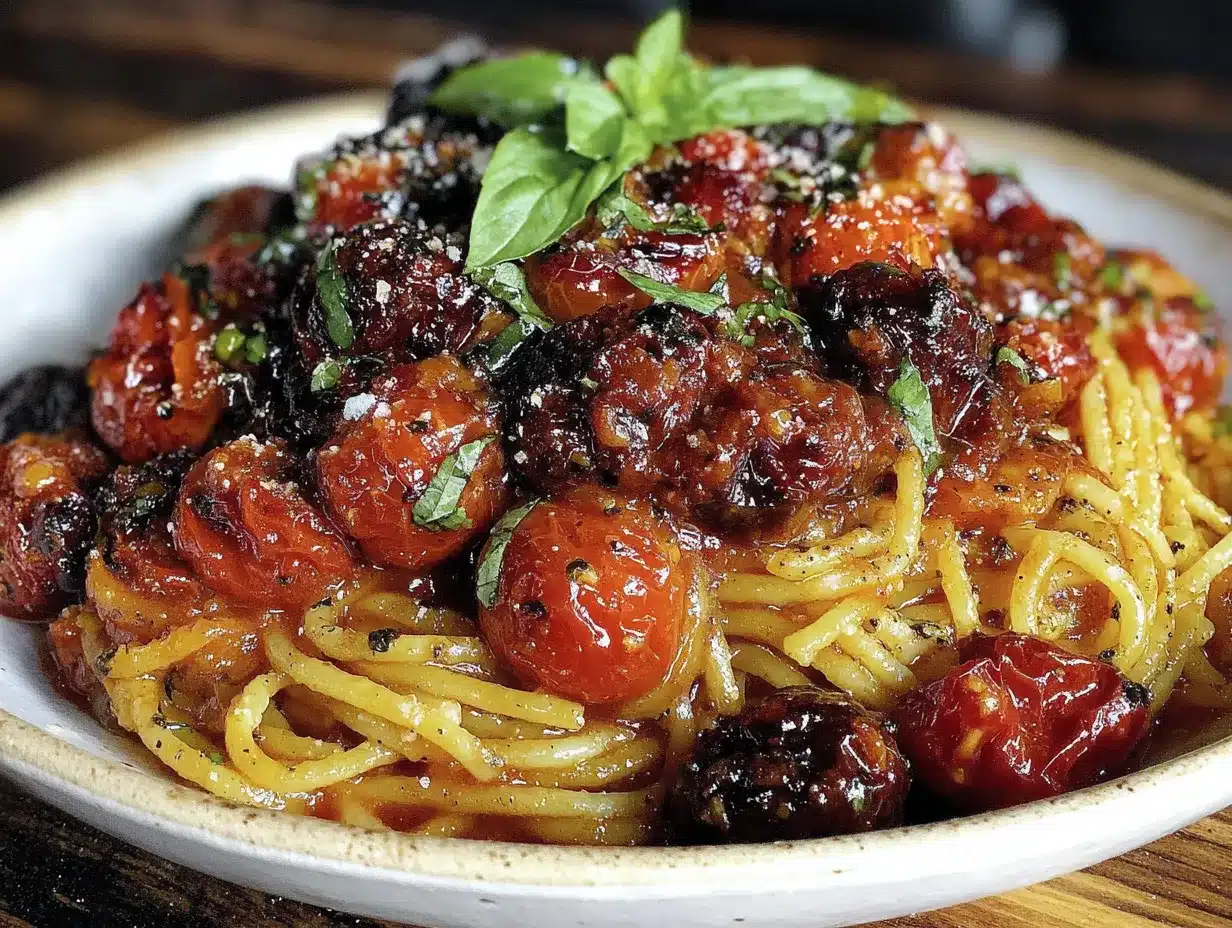
- 1 pound pasta – I recommend a shape that catches the sauce well, like pappardelle, rigatoni, or fettuccine. But honestly, any pasta works. Spaghetti is fine too.
- Freshly grated Parmesan cheese – For serving. Don’t use the stuff in the green can—grate it fresh for the best flavor.
- Fresh basil leaves for garnish – Because we eat with our eyes first.
Substitution Notes
If you’re out of cherry tomatoes, grape tomatoes work perfectly—they’re just slightly firmer, so they might need an extra 10 minutes in the oven. For a dairy-free version, simply skip the Parmesan or use a good quality vegan Parmesan. If you’re avoiding garlic, try roasting the tomatoes with a sliced shallot or two instead—it won’t be the same, but it’ll still be delicious. And if you don’t have fresh herbs, dried herbs work fine—just reduce the amount by half since dried herbs are more concentrated.
Equipment Needed
You don’t need much for this recipe, which is part of its beauty. Here’s what you’ll need:
- Baking sheet or roasting pan – A rimmed baking sheet works best because it catches any juices that run off the tomatoes. I use a half-sheet pan (about 18×13 inches) for even roasting. If you don’t have one, any oven-safe dish with sides will work.
- Parchment paper or silicone baking mat – Not strictly necessary, but it makes cleanup so much easier. The tomatoes will release sticky caramelized juices, and parchment paper prevents them from sticking to the pan. If you don’t have either, just grease your pan well.
- Large pot for pasta – You’ll need a pot big enough to boil pasta water. A 6-quart pot is perfect.
- Colander – For draining the pasta. Nothing fancy needed.
- Chef’s knife and cutting board – For smashing garlic and chopping herbs if you’re using fresh ones.
- Wooden spoon or spatula – For stirring the tomatoes halfway through roasting and for tossing the pasta with the sauce.
- Optional but helpful: immersion blender or food processor – If you prefer a smooth sauce rather than a chunky one. I usually leave my sauce chunky because I love the texture, but if you’re serving picky eaters or want a more refined sauce, blend it until smooth.
I’ve made this recipe in a cheap baking sheet I bought at a discount store, and it turned out just as good as when I use my fancy half-sheet pan. Don’t let equipment hold you back. If you have an oven and a pan, you’re good to go.
Preparation Method
Let me walk you through this step by step. It’s simple, but I’ll share the little tricks I’ve learned along the way to make sure yours turns out perfect every time.
- Preheat your oven to 300°F (150°C). Yes, 300°F—not 400°F. The low temperature is the secret here. It gently concentrates the tomatoes without burning them, creating that deep, sweet flavor. While the oven heats up, line your baking sheet with parchment paper for easy cleanup.
- Prepare the tomatoes. Rinse your cherry tomatoes and pat them dry. No need to halve them—they’ll burst and soften as they roast. If you have any really large cherry tomatoes, you can halve them, but honestly, I leave them whole and they work beautifully. Spread them in a single layer on your prepared baking sheet. Don’t crowd them too much—they need a little space to caramelize properly.
- Add the garlic and seasonings. Smash your garlic cloves with the flat side of your chef’s knife and scatter them among the tomatoes. Drizzle everything with the olive oil, then sprinkle with salt, pepper, and your dried oregano if using. Toss everything gently with your hands or a spatula to coat evenly. Make sure every tomato has a little oil on it—this helps them roast evenly and prevents burning.
- Roast the tomatoes. Place the baking sheet in the preheated oven and roast for 1 hour. After 30 minutes, give the tomatoes a gentle stir with a spatula. You’ll notice they’re starting to soften and release their juices. That’s exactly what you want. After the full hour, the tomatoes should be wrinkled, soft, and starting to caramelize around the edges. If they’re not quite there yet, give them another 10-15 minutes. Every oven is different, so trust your eyes more than the timer.
- Add fresh herbs (optional). If you’re using fresh basil and oregano, add the sprigs to the pan during the last 15 minutes of roasting. This infuses the oil with their flavor without burning the delicate leaves. If you add them too early, they’ll turn brown and bitter.
- Let the tomatoes cool slightly. Once the tomatoes are done, remove the pan from the oven and let it sit for about 5 minutes. This allows the juices to settle and the flavors to meld. Remove the herb sprigs at this point—they’ve given their flavor and are now spent.
- Cook your pasta. While the tomatoes are cooling, bring a large pot of generously salted water to a boil. Cook your pasta according to package directions until al dente. Reserve about 1 cup of pasta water before draining—this starchy water is liquid gold for thinning your sauce and helping it cling to the pasta.
- Combine the sauce and pasta. Transfer the roasted tomatoes and all their juices to a large skillet or directly into the pot you used for the pasta. If you want a smoother sauce, use an immersion blender to blend it to your desired consistency right in the pot. I usually leave mine chunky and just break up the tomatoes with a wooden spoon. Add about 1/4 cup of reserved pasta water and stir to combine.
- Toss and serve. Add the drained pasta to the sauce and toss well to coat every strand. If the sauce seems too thick, add more pasta water a tablespoon at a time until it reaches your desired consistency. Taste and adjust seasoning—you might want a pinch more salt or a splash of balsamic vinegar. Serve immediately, topped with freshly grated Parmesan and fresh basil leaves.
Cooking Tips & Techniques
I’ve made this sauce more times than I can count, and I’ve learned a few things the hard way. Here are my best tips to save you from my mistakes.
Don’t rush the roasting. I know it’s tempting to crank up the heat to speed things up, but trust me—it’s not worth it. At 400°F, the tomatoes will burn on the outside before they’re fully softened on the inside. At 300°F, they slowly release their juices, concentrate their sugars, and develop that incredible depth of flavor. Patience is the only hard part of this recipe.
Use a rimmed baking sheet. The tomatoes release a lot of liquid as they roast, and you don’t want that spilling onto the bottom of your oven. Trust me, I learned this one the hard way. A rimmed sheet catches all the goodness and makes cleanup much easier.
Don’t skip the pasta water. This is one of the most important tips I can give you. The starchy pasta water helps the sauce cling to the pasta and creates a silky, cohesive dish. It also helps thin the sauce without making it watery. Always reserve at least a cup before draining.
Smash the garlic, don’t chop it. Smashed garlic cloves release their flavor more slowly and evenly during the long roasting time. Chopped garlic can burn and turn bitter. Just give each clove a good whack with the flat side of your knife—it’s oddly satisfying too.
Make extra. This sauce freezes beautifully. I always double the recipe and freeze half in a zip-top bag or glass jar. It’s a lifesaver on nights when you need dinner in 20 minutes. Just thaw, reheat, and toss with pasta.
Variations & Adaptations
One of the best things about this recipe is how flexible it is. Here are some of my favorite ways to change it up.
Herb variations. Try swapping the basil and oregano for thyme and rosemary for a more earthy, savory sauce. Or use tarragon and parsley for a lighter, more delicate flavor. Fresh herbs are best, but dried work in a pinch—just adjust the quantities.
Spicy version. Add 1/2 teaspoon of red pepper flakes along with the salt and pepper before roasting. For even more heat, roast a small dried chili with the tomatoes. The heat mellows and deepens as it roasts, creating a warm, complex spiciness rather than a sharp one.
Roasted vegetable addition. Toss in a diced zucchini, a handful of mushrooms, or some sliced bell peppers along with the tomatoes. They’ll roast at the same rate and add extra texture and flavor to your sauce. I love adding a diced eggplant when I have one on hand—it soaks up all the tomato juices and becomes incredibly tender.
Dairy-free version. Simply skip the Parmesan or use a good quality vegan Parmesan. The sauce is naturally dairy-free and delicious on its own. For extra richness, stir in a tablespoon of nutritional yeast at the end—it adds a cheesy, umami flavor without any dairy.
Different cooking methods. No oven? No problem. You can make this on the stovetop by cooking the tomatoes in a heavy-bottomed skillet over low heat for about 45 minutes, stirring occasionally. Or try it in a slow cooker on low for 4-6 hours. The flavor won’t be exactly the same, but it’ll still be delicious.
Serving & Storage Suggestions
This sauce is incredibly versatile. Here’s how to serve and store it for the best results.
Serving suggestions. Serve the sauce hot over your favorite pasta—I love it with pappardelle or rigatoni because the sauce clings to the nooks and crannies. Top with freshly grated Parmesan and a few fresh basil leaves for a beautiful presentation. Pair it with a simple green salad and some crusty bread for a complete meal. It’s also amazing spooned over grilled chicken, fish, or roasted vegetables. For a quick appetizer, spread it on toasted crostini and top with a dollop of ricotta.
Storage instructions. Store leftover sauce in an airtight container in the refrigerator for up to 5 days. The flavors actually deepen and improve after a day or two. To freeze, let the sauce cool completely, then transfer it to a freezer-safe zip-top bag or glass jar. Leave a little space for expansion. It will keep in the freezer for up to 3 months. Thaw overnight in the refrigerator before reheating.
Reheating methods. Reheat the sauce gently on the stovetop over low heat, stirring occasionally. If it seems too thick, add a splash of water or pasta water to thin it out. You can also reheat it in the microwave in 30-second bursts, stirring between each. Avoid boiling the sauce—it can cause the flavors to become muted.
Nutritional Information & Benefits
This sauce is packed with nutrients and flavor. Here’s a quick look at what you’re getting in each serving.
Estimated Nutritional Values (per serving, sauce only):
- Calories: 120
- Fat: 9g
- Carbohydrates: 10g
- Fiber: 3g
- Protein: 2g
- Sodium: 300mg
Health Benefits: Cherry tomatoes are rich in lycopene, a powerful antioxidant that supports heart health and may reduce the risk of certain cancers. The olive oil provides healthy monounsaturated fats that help your body absorb the lycopene more effectively. Garlic is known for its immune-boosting properties and anti-inflammatory benefits. This sauce is naturally gluten-free, dairy-free (if you skip the Parmesan), and vegan-friendly.
Dietary Considerations: This recipe is naturally gluten-free, dairy-free, and vegan. It’s also low in calories and packed with vitamins A and C. If you’re watching your sodium intake, reduce the salt to 1/2 teaspoon or use a salt substitute.
FAQs
Can I use regular tomatoes instead of cherry tomatoes?
Yes, but the texture and flavor will be different. Cherry tomatoes have a higher sugar content and lower water content than larger tomatoes, which makes them ideal for roasting. If you use regular tomatoes, chop them into small pieces and expect a slightly longer roasting time to evaporate the extra moisture.
Can I make this sauce ahead of time?
Absolutely! In fact, it tastes even better the next day after the flavors have had time to meld. Make the sauce up to 5 days in advance and store it in the refrigerator. Reheat gently before serving with pasta.
Can I use dried herbs instead of fresh?
Yes, dried herbs work perfectly fine. Use about 1 teaspoon of dried basil and 1/2 teaspoon of dried oregano instead of the fresh sprigs. Add them to the tomatoes before roasting so they have time to rehydrate and release their flavor.
Why did my tomatoes burn?
If your tomatoes burned, your oven might run hot, or you might have roasted them at too high a temperature. Make sure your oven is set to 300°F and check the tomatoes at the 45-minute mark. Every oven is different, so adjust the time based on what you see rather than strictly following the recipe.
Can I add meat to this sauce?
Yes! This sauce is wonderful with crispy pancetta or bacon stirred in at the end. You can also add cooked Italian sausage or ground beef for a heartier meal. Just cook the meat separately and stir it into the sauce before tossing with pasta.
Conclusion
This simple slow-roasted cherry tomato pasta sauce has become a staple in my kitchen for good reason. It’s easy enough for a busy weeknight but impressive enough to serve to guests. The slow roasting transforms humble ingredients into something truly special—a sauce that’s sweet, savory, and packed with concentrated tomato flavor. It’s the kind of recipe that makes you feel like you’ve accomplished something wonderful, even though the oven did most of the work.
I love that this recipe is so forgiving. Forget to stir it halfway through? No problem. Use slightly different herbs? It’ll still be delicious. That’s the beauty of slow-roasting—it’s patient and forgiving, just like Rosa was with me that first afternoon. I hope you’ll give it a try and make it your own. Add your favorite herbs, adjust the heat, or toss in extra vegetables. The possibilities are endless, and the results are always rewarding.
If you make this recipe, I’d love to hear about it. Leave a comment below and let me know how it turned out, or share your own twist on it. And if you’re looking for more easy, delicious recipes, try my simple 3-ingredient marinara sauce or my creamy garlic basil pesto for more quick pasta sauces. Happy cooking, friends!
Pin This Recipe!
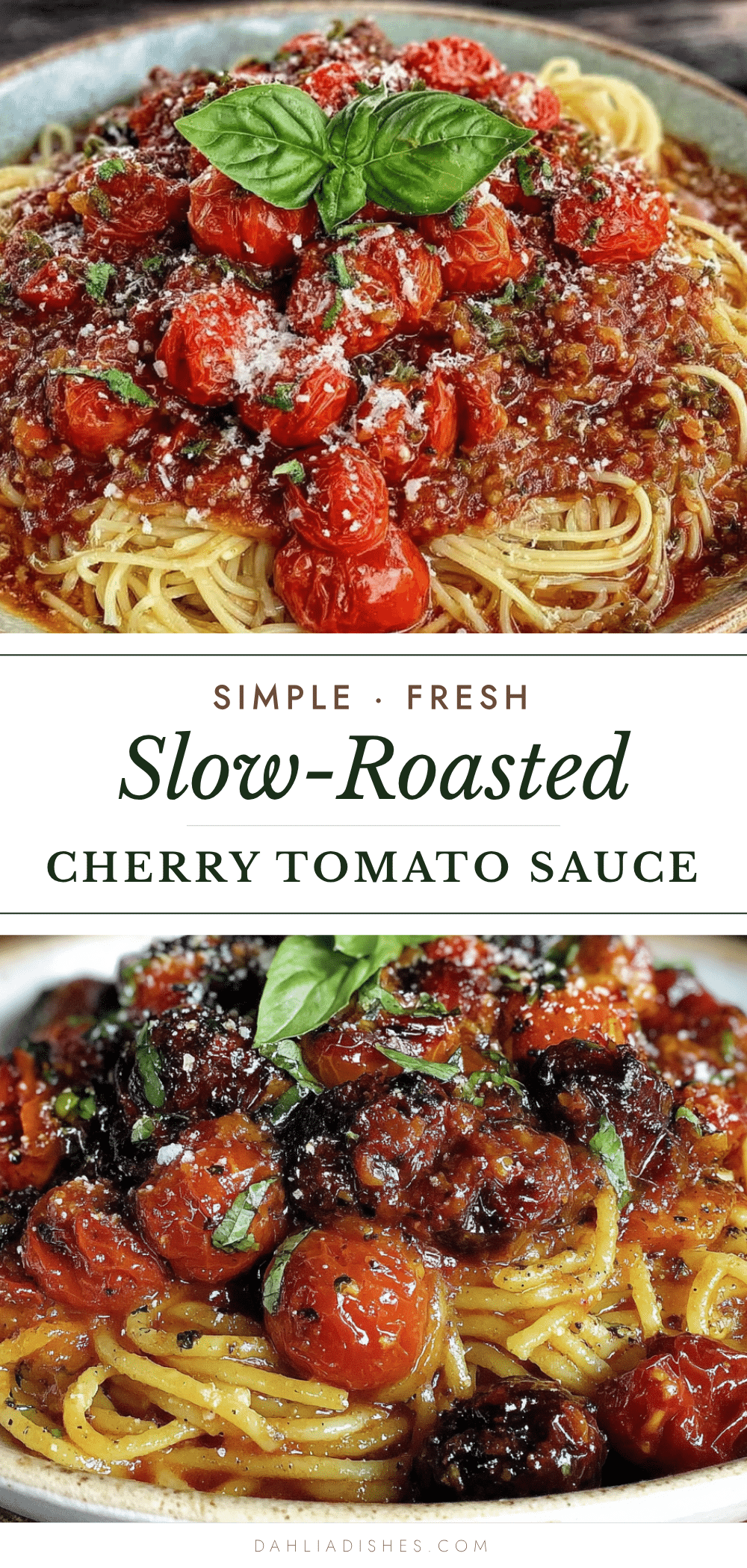
Simple Slow-Roasted Cherry Tomato Pasta Sauce Recipe
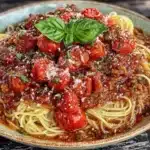
This slow-roasted cherry tomato pasta sauce is incredibly easy, using simple ingredients and letting the oven do all the work. It transforms humble cherry tomatoes into a sweet, savory, and intensely flavorful sauce that’s perfect for busy weeknights or meal prep.
- Prep Time: 10 minutes
- Cook Time: 1 hour 15 minutes
- Total Time: 1 hour 25 minutes
- Yield: 4 servings 1x
- Category: Main Course
- Cuisine: Italian
Ingredients
- 2 pounds cherry tomatoes (about 4 cups)
- 6 cloves garlic, smashed
- 1/4 cup extra-virgin olive oil
- 1 teaspoon kosher salt
- 1/2 teaspoon black pepper, freshly ground
- 2 sprigs fresh basil
- 1 sprig fresh oregano (or 1/2 teaspoon dried)
- 1 tablespoon balsamic vinegar (optional)
- Pinch of red pepper flakes (optional)
- 1 pound pasta (such as pappardelle, rigatoni, or fettuccine)
- Freshly grated Parmesan cheese, for serving
- Fresh basil leaves, for garnish
Instructions
- Preheat your oven to 300°F (150°C). Line a rimmed baking sheet with parchment paper.
- Rinse and pat dry the cherry tomatoes. Spread them in a single layer on the prepared baking sheet.
- Smash the garlic cloves and scatter them among the tomatoes. Drizzle with olive oil, then sprinkle with salt, pepper, and dried oregano (if using). Toss gently to coat evenly.
- Roast for 1 hour, stirring gently after 30 minutes. The tomatoes should be wrinkled, soft, and starting to caramelize. If not, roast for an additional 10-15 minutes.
- If using fresh basil and oregano, add the sprigs during the last 15 minutes of roasting.
- Remove the pan from the oven and let cool for about 5 minutes. Remove the herb sprigs.
- Cook the pasta in a large pot of generously salted water until al dente. Reserve about 1 cup of pasta water before draining.
- Transfer the roasted tomatoes and all their juices to a large skillet or the pasta pot. For a smoother sauce, use an immersion blender to blend to desired consistency. Add about 1/4 cup of reserved pasta water and stir to combine.
- Add the drained pasta to the sauce and toss well. If the sauce is too thick, add more pasta water a tablespoon at a time. Taste and adjust seasoning. Serve immediately, topped with freshly grated Parmesan and fresh basil leaves.
Notes
Don’t rush the roasting—low heat is key for deep flavor. Use a rimmed baking sheet to catch juices. Always reserve pasta water to help the sauce cling to the pasta. Smash garlic cloves instead of chopping to prevent burning. This sauce freezes well for up to 3 months.
Nutrition
- Serving Size: 1 serving (sauce onl
- Calories: 120
- Sugar: 6
- Sodium: 300
- Fat: 9
- Saturated Fat: 1.5
- Carbohydrates: 10
- Fiber: 3
- Protein: 2
Keywords: slow-roasted cherry tomato pasta sauce, easy pasta sauce, cherry tomato sauce, roasted tomato sauce, simple pasta sauce, vegetarian pasta sauce, gluten-free pasta sauce