Love this? Save it for later!
Share the inspiration with your friends
“You know that feeling when you’re out in the middle of nowhere, surrounded by the quiet of the woods, and suddenly the smell of something sizzling makes the whole trip feel like an adventure?” That’s exactly how my obsession with the perfect glamping-style cast iron ribeye with herb butter started. It wasn’t on some fancy grill or in a high-end kitchen, but right on a tiny camp stove during a weekend getaway. Honestly, I wasn’t expecting much—just trying to make dinner without a full kitchen—but the way that ribeye seared in the cast iron skillet, the butter melting over fresh herbs, and the rustic outdoor vibe combined made it unforgettable.
It was a chilly Friday evening when my friend Max and I decided to test out his new cast iron skillet on our first glamping trip together. We had a cooler full of basics and a craving for something hearty. I grabbed a thick ribeye steak, some butter, rosemary, and thyme from the camp supplies, and before I knew it, the kitchen-less kitchen was alive with the most mouthwatering aroma. Max joked that this was better than any steakhouse he’d been to. Little did I know, that night would become my go-to recipe for when I want a steak that’s both rustic and ridiculously flavorful—whether I’m camping or just craving that outdoorsy touch at home.
Maybe you’ve been there—outdoors, a bit roughing it, but still wanting something that feels like a treat. This recipe is exactly that. It’s straightforward, satisfying, and honestly, a little bit magical. Plus, it’s all done with one pan, which means less mess and more time enjoying your surroundings (or your dinner plate). Let me tell you why this cast iron ribeye with herb butter keeps me coming back for more.
Why You’ll Love This Recipe
- Quick & Easy: Ready in under 30 minutes, perfect for busy weeknights or when you want a no-fuss meal that still feels special.
- Simple Ingredients: You don’t need a long grocery list—just a quality ribeye, butter, fresh herbs, and a few pantry staples.
- Perfect for Glamping & Home Cooking: Whether you’re roughing it in the woods or just want that campfire vibe at home, this recipe nails it.
- Crowd-Pleaser: The butter-herb combo makes every bite juicy and flavorful, always a hit with meat lovers.
- Unbelievably Delicious: The cast iron sear creates a crusty, caramelized exterior while keeping the inside tender and juicy. That herb butter? It’s the soul of the dish.
This isn’t just any steak recipe. The trick lies in the way you finish it with herb butter—melting it just right so it seeps into every crevice. I’ve tested different herb combos, but the classic rosemary and thyme keep it balanced and fresh. It’s the kind of dish that makes you close your eyes after the first bite and think, “Yep, this is exactly what I needed.”
And honestly, I love it because it’s a reminder that sometimes, the best meals come from the simplest moments—like cooking over a camp stove or bringing a little wilderness magic into your kitchen. Ready to make your own perfect glamping-style cast iron ribeye with herb butter? Let’s get started.
What Ingredients You Will Need
This recipe uses straightforward, wholesome ingredients to deliver bold flavor and a satisfying texture without any fuss. Most are pantry staples, and the fresh herbs add that signature touch. If you’re camping, these are easy to pack. At home, you probably have everything already.
- Ribeye steak (1 thick cut, about 12-16 oz / 340-450 g; look for well-marbled, preferably grass-fed for the best flavor)
- Unsalted butter (3 tbsp / 45 g, softened; I like Plugrá for its creaminess)
- Fresh rosemary (2 sprigs, finely chopped)
- Fresh thyme (2 sprigs, leaves stripped)
- Garlic cloves (2, smashed; adds lovely aroma without overpowering)
- Coarse sea salt (to taste; I recommend Maldon for that flaky crunch)
- Freshly ground black pepper (to taste)
- Olive oil (1 tbsp / 15 ml; use extra virgin for richer flavor)
- Optional: A squeeze of fresh lemon juice (adds brightness if you like a little zing)
Substitution tips: If you don’t have fresh herbs, 1 tsp dried rosemary and thyme will work—just crush them slightly to release oils. For a dairy-free version, swap butter with vegan margarine or ghee (if you tolerate it). You can also try smoked sea salt for a subtle campfire taste.
Equipment Needed
- Cast iron skillet: The star of the show. I’ve tried different sizes, but a 10-12 inch skillet works perfectly for a ribeye. If you don’t own one, a heavy stainless steel pan can substitute, but it won’t get quite as crusty.
- Tongs: For flipping the steak without piercing it (keeps juices in).
- Knife and cutting board: For prepping herbs and slicing steak.
- Small bowl: To mix herb butter.
- Optional: Meat thermometer (handy to check doneness, especially if you’re new to cooking steaks).
Pro tip: Cast iron needs good care—season it regularly by rubbing a thin layer of oil and heating it until it smokes lightly. That helps prevent sticking and keeps that perfect crust forming every time.
Preparation Method
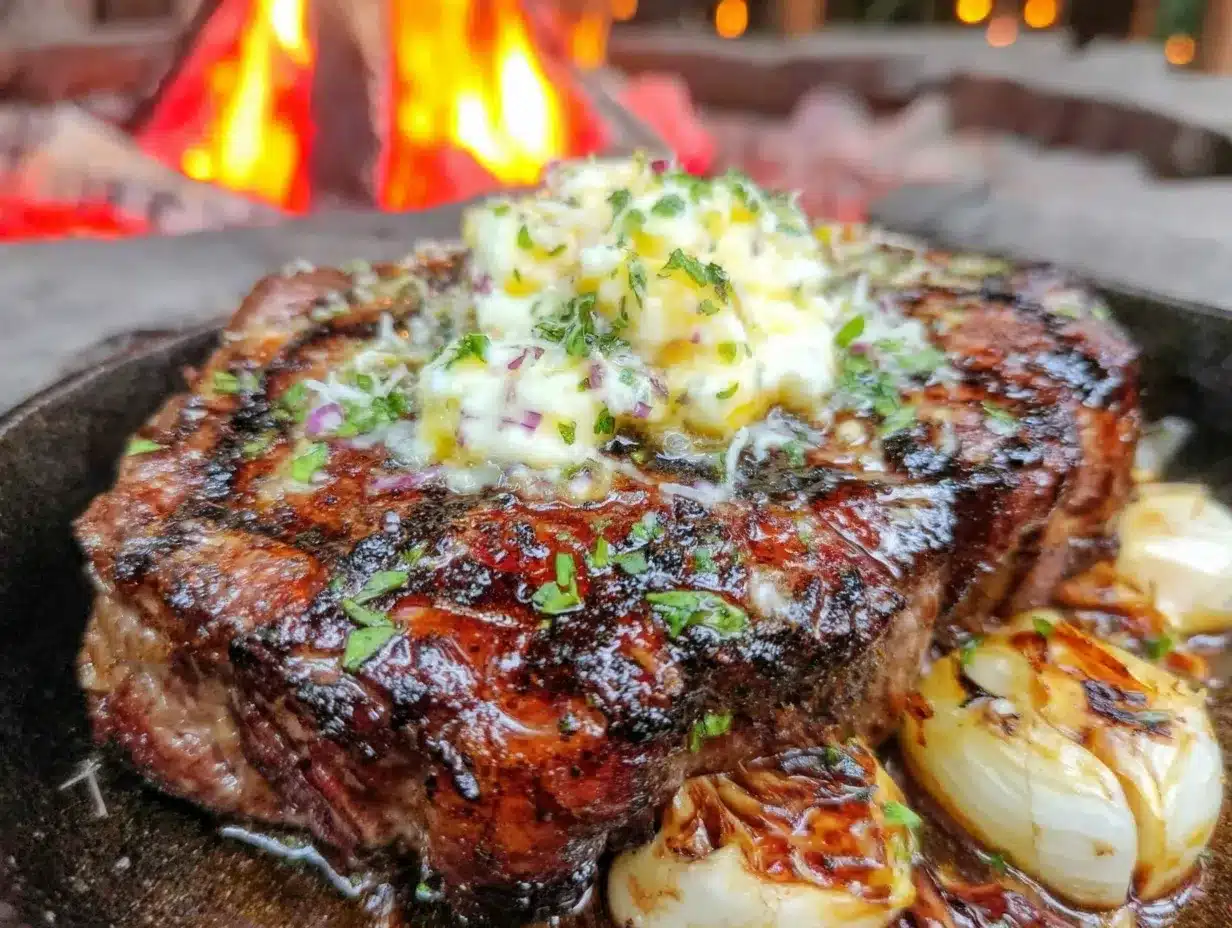
- Bring the ribeye to room temperature: Take your steak out of the fridge about 30 minutes before cooking. This helps it cook more evenly. I once got impatient and threw it straight in the pan—resulted in uneven doneness, so trust me on this.
- Prepare the herb butter: In a small bowl, combine softened butter, finely chopped rosemary, thyme leaves, and smashed garlic. Mix well and set aside to let flavors meld. If you have time, cover and refrigerate for 10 minutes.
- Season the steak: Pat the ribeye dry with paper towels—this is key for a good sear. Generously season both sides with coarse sea salt and freshly ground black pepper. Don’t be shy; the seasoning forms that delicious crust.
- Heat the cast iron skillet: Place it over medium-high heat and add olive oil. Wait until it’s shimmering and just about to smoke (about 2-3 minutes). This ensures a perfect sear. If it’s not hot enough, the steak will stick and won’t brown properly.
- Sear the steak: Carefully place the ribeye in the skillet. You should hear a satisfying sizzle. Cook without moving for 4 minutes (for medium-rare on a 1-inch thick steak). Flip and cook the other side for 3-4 minutes. Adjust time if your steak is thicker or thinner.
- Add herb butter and baste: Reduce heat to medium-low. Drop dollops of the herb butter onto the steak. Using a spoon, continuously baste the melted butter over the top of the steak for 1-2 minutes. This adds flavor and keeps it juicy. The butter should foam gently—watch out for burning.
- Check doneness: Use a meat thermometer if you have one: 130°F (54°C) for medium-rare; 140°F (60°C) for medium. Remember, the steak will continue to cook slightly after resting.
- Rest the steak: Remove the ribeye from the skillet and place it on a plate. Tent loosely with foil and rest for 5-7 minutes. This step is crucial—it lets the juices redistribute so every bite is tender and juicy.
- Serve: Slice against the grain and spoon over any remaining herb butter from the pan. Optionally, add a squeeze of fresh lemon juice for brightness.
Quick heads-up: If your skillet smokes a lot, lower the heat slightly next time or add the butter later in the basting step. Also, don’t overcrowd the pan if you’re cooking multiple steaks—cook in batches for the best sear.
Cooking Tips & Techniques
One of the biggest secrets to a perfect ribeye is that cast iron skillet. It holds heat incredibly well, creating that beautiful crust while keeping the inside tender. I learned the hard way that skipping the rest period makes the steak dry—don’t rush this step!
Basting with herb butter is a game changer. The fat from the butter carries the herb flavors directly onto the meat, and spooning it repeatedly is like giving your steak a flavor bath. If you’re worried about butter burning, add it after the initial sear and turn heat down.
Another tip: Always pat your steak dry before seasoning. Moisture is the enemy of a crusty sear. I once tried cooking a wet steak and ended up steaming it instead—trust me, it’s a different experience.
Timing is key. For a 1-inch ribeye, 4 minutes per side usually hits medium-rare perfectly. But every stove and pan behaves differently. Use a thermometer or the finger test method if you want to get fancy. And remember, residual heat will cook it a bit more after you take it off the heat.
Multitasking tip: While the steak rests, you can quickly sauté some greens or toast a crusty bread to soak up the herb butter—makes the whole meal feel like a treat without extra fuss.
Variations & Adaptations
- Dietary: For a dairy-free option, swap the herb butter with olive oil infused with herbs and garlic. It won’t be quite as rich but still packs flavor.
- Seasonal twist: In warmer months, add fresh chopped basil or tarragon to the herb butter for a slightly different aroma. In fall, a pinch of smoked paprika in the butter pairs beautifully with the steak.
- Flavor twist: Try adding a splash of balsamic vinegar or Worcestershire sauce to the butter while basting for a tangy depth. I like to experiment with this when I want something a little different.
- Cooking method: If you don’t have cast iron, you can broil the steak after searing it in a stainless pan to replicate the crust and finish cooking evenly.
- Personal variation: Once, I added a bit of blue cheese crumble to the herb butter and melted it over the steak at the end—totally decadent and a crowd favorite at a casual dinner party.
Serving & Storage Suggestions
Serve this steak warm, fresh from the pan, with any leftover herb butter drizzled on top. It pairs beautifully with simple sides like roasted potatoes, grilled asparagus, or a fresh green salad dressed lightly with lemon and olive oil.
If you want to keep the outdoor vibe going, serve with a rustic bread to soak up the juices. A bold red wine or a smoky bourbon works well as a beverage counterpart.
To store leftovers, wrap the steak tightly in foil or an airtight container and refrigerate for up to 3 days. Reheat gently in a low oven (around 250°F/120°C) to keep it tender, or warm in a skillet with a little butter, spooning the herb butter over as it heats.
Flavors actually deepen overnight as the herb butter melds more into the meat, so leftovers can be even tastier the next day—if they last that long!
Nutritional Information & Benefits
This ribeye recipe provides a hearty dose of protein and essential nutrients like iron, zinc, and B vitamins, all crucial for energy and muscle function. The butter adds satisfying fats that help with vitamin absorption and keep you full.
By using fresh herbs, you get added antioxidants and subtle anti-inflammatory benefits. Opting for grass-fed ribeye can increase omega-3 fatty acids, which are great for heart health.
This recipe fits well into low-carb and ketogenic diets. Just be mindful of portion size if you’re watching saturated fat intake. For gluten-free eaters, it’s naturally compliant since there are no added grains.
Conclusion
If you’re looking for a way to bring that glamping charm to your kitchen or campfire, this perfect glamping-style cast iron ribeye with herb butter is your answer. It’s straightforward, flavorful, and feels like a treat without the fuss. I love it because it reminds me of those simple moments when good food makes everything feel better—whether that’s outside under the stars or cozy at home.
Feel free to tweak the herbs or cooking times to match your taste, but don’t skip the basting—that’s where the magic happens. I’d love to hear how you make it your own, so please drop a comment or share your variations. Here’s to good food, good company, and a little bit of outdoor spirit on your plate!
Frequently Asked Questions
How do I know when my ribeye is cooked perfectly?
The best way is to use a meat thermometer: 130°F (54°C) for medium-rare, 140°F (60°C) for medium. Alternatively, use the finger test to gauge firmness or cut a small slit to check color.
Can I prepare this recipe without fresh herbs?
Yes! Dried rosemary and thyme work fine—just crush them slightly to release flavor. The dish will still be delicious but fresher with fresh herbs.
What if I don’t have a cast iron skillet?
A heavy stainless steel pan is a good substitute. You can also sear the steak in a pan and finish it under the broiler to get a similar crust.
How do I store leftovers and reheat without drying the steak?
Wrap leftovers tightly and refrigerate up to 3 days. Reheat gently in a low oven or skillet with some herb butter to keep it moist and flavorful.
Can I use other cuts of steak for this recipe?
Absolutely! Ribeye is ideal for marbling and flavor, but strip steak or filet mignon can work well. Just adjust cooking times based on thickness and cut.
Pin This Recipe!
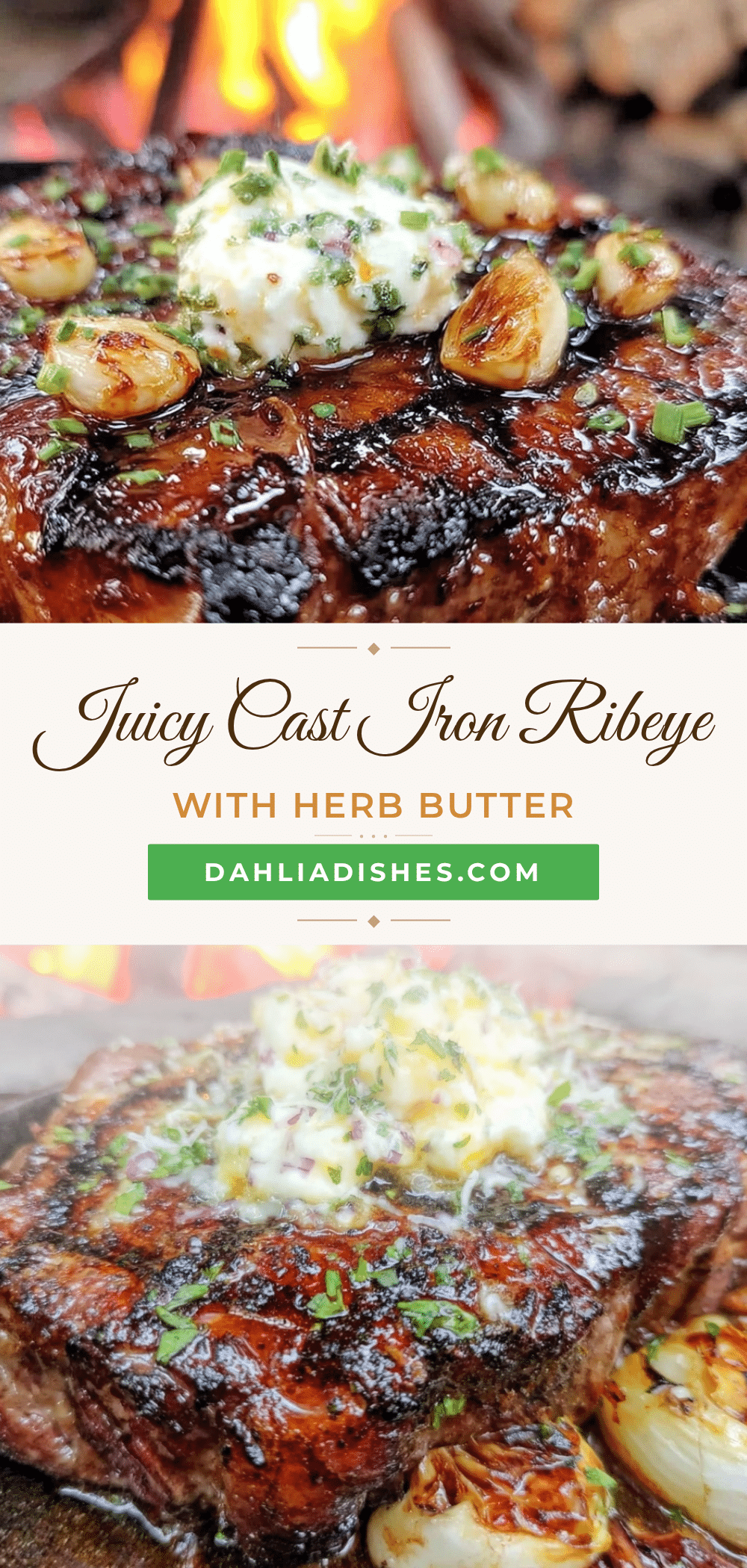
Perfect Glamping-Style Cast Iron Ribeye with Herb Butter
A rustic and flavorful ribeye steak seared in a cast iron skillet and finished with a rich herb butter, perfect for glamping or home cooking.
- Prep Time: 10 minutes
- Cook Time: 10 minutes
- Total Time: 20 minutes
- Yield: 1 serving 1x
- Category: Main Course
- Cuisine: American
Ingredients
- 1 thick ribeye steak (12–16 oz / 340–450 g), well-marbled, preferably grass-fed
- 3 tbsp (45 g) unsalted butter, softened
- 2 sprigs fresh rosemary, finely chopped
- 2 sprigs fresh thyme, leaves stripped
- 2 garlic cloves, smashed
- Coarse sea salt, to taste
- Freshly ground black pepper, to taste
- 1 tbsp (15 ml) extra virgin olive oil
- Optional: squeeze of fresh lemon juice
Instructions
- Bring the ribeye to room temperature by taking it out of the fridge about 30 minutes before cooking.
- In a small bowl, combine softened butter, finely chopped rosemary, thyme leaves, and smashed garlic. Mix well and set aside to let flavors meld. Cover and refrigerate for 10 minutes if time allows.
- Pat the ribeye dry with paper towels. Generously season both sides with coarse sea salt and freshly ground black pepper.
- Heat the cast iron skillet over medium-high heat and add olive oil. Wait until shimmering and just about to smoke (about 2-3 minutes).
- Place the ribeye in the skillet and cook without moving for 4 minutes (for medium-rare on a 1-inch thick steak). Flip and cook the other side for 3-4 minutes. Adjust time for thickness.
- Reduce heat to medium-low. Add dollops of herb butter onto the steak and baste continuously with a spoon for 1-2 minutes, ensuring the butter foams gently without burning.
- Check doneness with a meat thermometer: 130°F (54°C) for medium-rare, 140°F (60°C) for medium.
- Remove steak from skillet and tent loosely with foil. Rest for 5-7 minutes to allow juices to redistribute.
- Slice against the grain and spoon any remaining herb butter from the pan over the steak. Optionally, add a squeeze of fresh lemon juice.
Notes
Bring steak to room temperature before cooking for even doneness. Pat dry to ensure a good sear. Baste with herb butter after searing to add flavor and juiciness. Rest steak after cooking to redistribute juices. Use a meat thermometer for perfect doneness. If skillet smokes excessively, lower heat or add butter later. For dairy-free, substitute butter with herb-infused olive oil.
Nutrition
- Serving Size: 1 thick ribeye steak
- Calories: 700
- Sodium: 400
- Fat: 55
- Saturated Fat: 25
- Carbohydrates: 1
- Protein: 50
Keywords: ribeye steak, cast iron skillet, herb butter, glamping recipe, easy steak recipe, outdoor cooking, camp stove steak