Love this? Save it for later!
Share the inspiration with your friends
“I never thought a chance conversation with my local butcher would lead to the best competition pitmaster-style 12-hour smoked brisket with burnt ends recipe,” I confessed to my friend last summer, wiping smoke off my hands after a weekend cookout. It was one of those afternoons when the sun was just right for smoking meat, and the air was thick with anticipation. I’d been fumbling through brisket recipes for years, unsure why my attempts never quite hit that legendary smoky, tender note you crave. Then, out of the blue, Joseph—the butcher with a quiet passion for BBQ—shared his secret approach while wrapping up my order of prime brisket flat and point cuts.
He talked about patience, the right wood, and how the magic really happens low and slow over 12 hours. Honestly, I was skeptical at first. I mean, who has that kind of time? But let me tell you, the resulting brisket and burnt ends changed everything. The bark was just the right mix of crusty and caramelized, the smoke ring deep and ruby-red, and the interior melt-in-your-mouth tender without being mushy. It’s the kind of brisket that makes you close your eyes with the first bite and whisper, “Yep, this is it.”
Maybe you’ve been there, chasing that perfect brisket with burnt ends that balance smoky, savory, and sweet in one bite. This recipe isn’t just a throw-together; it’s the result of trial, error, and a few moments of smoke-filled inspiration on a Saturday afternoon. Plus, there’s a little story about how I forgot to bring the rub to the pit one time (classic!), but that hiccup ended up teaching me a valuable lesson about seasoning balance. That’s why this recipe sticks with me—and why I keep coming back to it, whether for backyard feasts or friendly competitions.
Why You’ll Love This Recipe
Having tested this competition pitmaster-style 12-hour smoked brisket recipe countless times, I can honestly say it’s a winner. Whether you’re a backyard griller or aspiring pitmaster, this brisket delivers every time with rich flavor and tender texture.
- Slow and Steady: The 12-hour smoke allows for deep flavor penetration and perfect tenderness, making it a serious crowd-pleaser.
- Burnt Ends Magic: Those crispy, caramelized burnt ends aren’t just a bonus—they’re a highlight that elevates this recipe beyond ordinary smoked brisket.
- Simple Ingredients: No complicated sauces or secret additives here. Just quality beef, a killer rub, and good wood smoke.
- Perfect for Any Occasion: Whether it’s a competition, weekend barbecue, or a special family dinner, this brisket hits all the right notes.
- Expert Tips Included: From trimming the fat cap to managing your smoker temperature, this recipe comes with tried-and-true advice to help you nail it.
This isn’t just another brisket recipe floating around the internet. It’s a carefully refined process that embraces patience and respect for the meat, delivering that deep, smoky flavor and tender bite you’re after. If you love the idea of crafting a brisket that tastes like it came from a championship pit, this recipe is definitely for you.
What Ingredients You Will Need
This competition pitmaster-style 12-hour smoked brisket recipe leans on quality, simple ingredients that work together to create that unbeatable flavor and texture. Most of these you probably already have in your pantry or can easily find at your local butcher and grocery store.
- Brisket: 10-12 pounds whole packer brisket (includes both flat and point cuts). Look for USDA Choice or Prime grade for best marbling and tenderness.
- Rub Ingredients:
- 1/4 cup kosher salt (balances seasoning and draws moisture)
- 1/4 cup coarse black pepper (freshly cracked is best for that signature bark)
- 2 tablespoons smoked paprika (adds subtle smoky sweetness)
- 1 tablespoon garlic powder (for depth of flavor)
- 1 tablespoon onion powder (rounds out the seasoning)
- 1 teaspoon cayenne pepper (optional, for a mild kick)
- Wood for Smoking: Post oak or hickory chunks/chips (post oak is traditional for Texas-style brisket, imparting a clean smoke flavor)
- Spritz: A mix of apple cider vinegar and water (50/50) for spritzing during the cook to keep the meat moist and develop the bark
- Optional Glaze for Burnt Ends:
- 1/4 cup barbecue sauce (your favorite brand or homemade)
- 2 tablespoons honey or brown sugar (for a sticky, caramelized finish)
For rubs, I often recommend Morton’s kosher salt and freshly cracked pepper from a grinder for that authentic crust. If you’re going gluten-free, all these ingredients work perfectly as is. For a slight twist, you can swap smoked paprika with regular paprika and add a pinch of cumin if you want earthier notes.
Equipment Needed
- Smoker: Offset smoker, pellet smoker, or a charcoal kettle grill with a smoking setup. I personally use a Weber kettle with a snake method for charcoal.
- Meat Thermometer: Instant-read digital thermometer (like ThermoWorks Thermapen) to track internal temps precisely.
- Butcher’s Twine: For tying the brisket point and flat if you want even cooking.
- Sharp Boning Knife: Essential for trimming the fat cap and silver skin from the brisket.
- Spray Bottle: For spritzing the brisket throughout the cook.
- Aluminum Foil or Butcher Paper: For wrapping the brisket during the stall phase (Texas crutch).
- Cutting Board: Large enough to slice the brisket comfortably.
If you don’t have a dedicated smoker, a charcoal grill with a water pan and wood chunks can work well. Just keep an eye on temperature. For tight budgets, an affordable digital thermometer is a game-changer and worth investing in to avoid guesswork.
Preparation Method
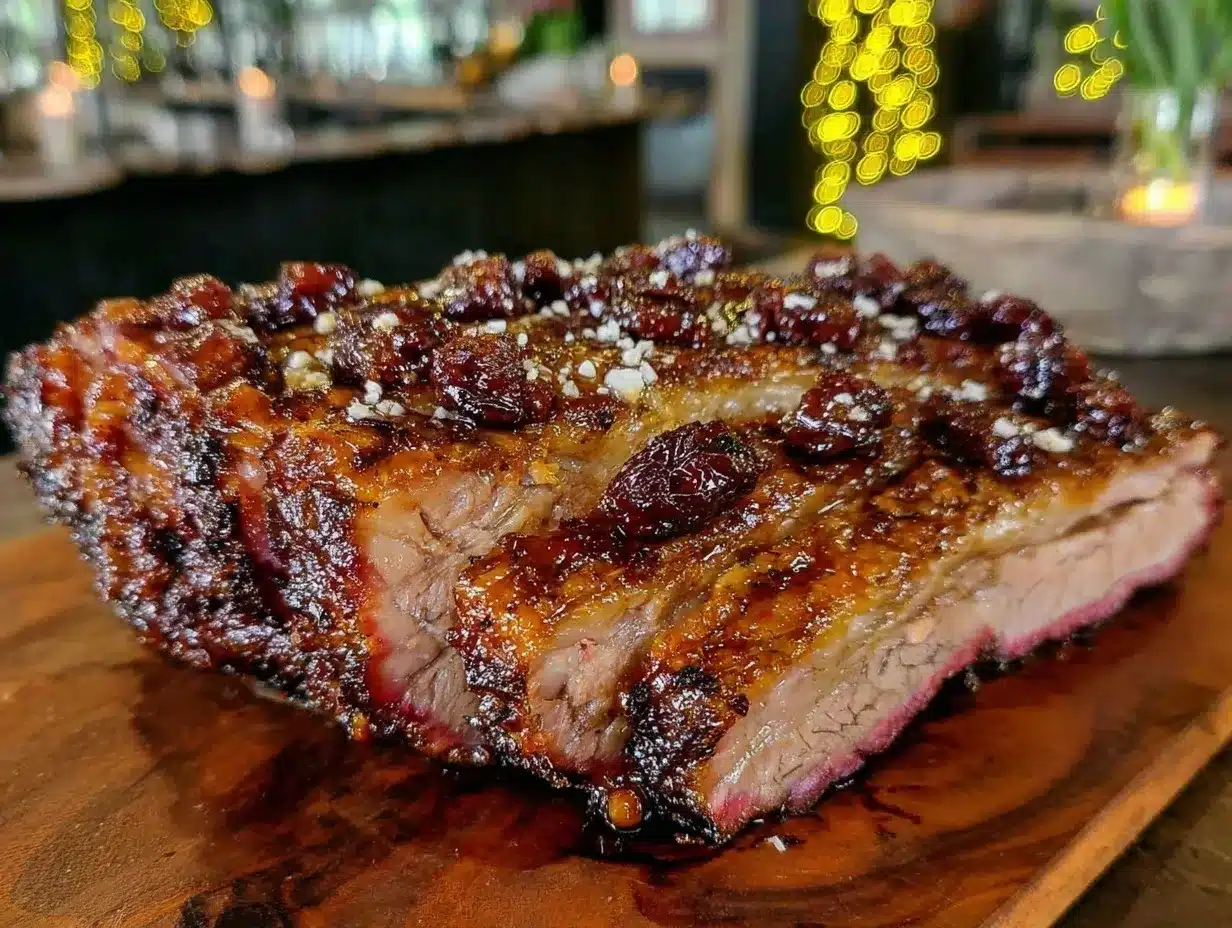
- Trim the Brisket (30 minutes): Begin by trimming the fat cap to about 1/4-inch thickness. Use a sharp boning knife to remove silver skin and any hard fat pockets. This helps your rub penetrate better and prevents greasy bites.
- Apply the Rub (15 minutes): Mix all rub ingredients in a bowl. Generously coat the entire brisket, massaging the rub into every nook and cranny. Let it rest at room temperature for 30 minutes to absorb flavors.
- Prepare the Smoker (30 minutes): Preheat your smoker to stabilize around 225°F (107°C). Add post oak or hickory chunks for smoke. Set up a water pan inside to maintain humidity and keep the brisket moist.
- Start Smoking (6 hours): Place the brisket fat side up on the grate, away from direct heat. Maintain steady temperature, spritzing with apple cider vinegar and water every hour to develop a moist bark.
- Wrap the Brisket (Texas Crutch) (2-3 hours): When the internal temp hits about 165°F (74°C) and the bark looks set, wrap tightly in butcher paper or foil. This helps push through the stall and retain moisture.
- Finish Smoking (2-3 hours): Return the wrapped brisket to the smoker until it reaches 203°F (95°C) internal temp. This is the sweet spot for tender brisket.
- Rest the Brisket (1 hour): Remove from smoker and let it rest wrapped in a cooler or warm towel. This allows juices to redistribute and makes slicing easier.
- Make Burnt Ends: Cut the point end into 1-inch cubes. Toss with barbecue sauce and honey or brown sugar glaze. Return to smoker or oven at 275°F (135°C) for 45-60 minutes until caramelized and crispy.
- Slice and Serve: Slice the flat against the grain into 1/4-inch thick slices. Serve alongside the sticky, smoky burnt ends.
Quick tip: If your brisket seems to stall for more than an hour, don’t panic. That’s normal! Keep the smoker steady and wrapped brisket resting helps push through that phase. Also, I sometimes forget to spritz on the hour, and the bark still turns out great—just less moist.
Cooking Tips & Techniques
Getting that pitmaster-style 12-hour smoked brisket just right can be intimidating, but a few tricks make all the difference.
- Temperature Control is Key: Keeping your smoker steady at 225°F (107°C) prevents drying out and ensures even cooking.
- Don’t Skip Trimming: Removing excess fat and silver skin helps the rub stick and prevents waxy bites.
- Use Butcher Paper for Wrapping: Compared to foil, butcher paper lets the brisket breathe a little, preserving bark texture while pushing through the stall.
- Spritz, But Don’t Overdo It: A light spritz every hour keeps the surface moist without washing off rub or bark.
- Resting is Crucial: Resist the urge to slice immediately. Resting locks in juices and improves texture.
- Burnt Ends Are Not Just Leftovers: The point cut is perfect for burnt ends due to higher fat content. Glaze and crisp them up for addictive bites.
I once rushed through the resting phase and ended up with dry slices—lesson learned! Also, starting the smoker too hot cooks the brisket unevenly, so patience pays off.
Variations & Adaptations
- Spice It Up: Swap cayenne pepper in the rub for chipotle powder or add a coffee-based rub for a smoky depth.
- Gluten-Free Option: This recipe is naturally gluten-free with no added sauces containing gluten. Just double-check your barbecue sauce for hidden ingredients.
- Alternate Woods: If post oak isn’t available, pecan or cherry wood add a sweeter smoke profile ideal for brisket.
- Oven-Smoked Version: No smoker? Use a charcoal grill with a smoking box or a home oven low-roasting at 225°F (107°C) with liquid smoke brushed on before wrapping.
- Personal Twist: I sometimes add a splash of bourbon to the spritz for a subtle boozy caramel note. It’s unexpected but really tasty!
Serving & Storage Suggestions
Serve your brisket slices warm, ideally right off the cutting board, accompanied by those irresistible burnt ends. A side of tangy coleslaw or classic potato salad pairs beautifully, as does a hoppy beer or bold red wine.
Leftovers keep well in the fridge for up to 4 days, tightly wrapped to retain moisture. For longer storage, freeze sliced brisket and burnt ends in airtight containers for up to 3 months.
Reheat gently in a low oven (around 275°F/135°C) wrapped in foil with a splash of beef broth or water to keep things moist. Flavors often deepen after a day or two in the fridge, so sometimes I prefer to slice leftovers cold for sandwiches.
Nutritional Information & Benefits
One serving (about 4 oz/113g) of this smoked brisket offers approximately 350 calories, 28g protein, 25g fat, and minimal carbohydrates depending on your glaze choices.
Brisket is a great source of iron and B vitamins, supporting energy and muscle function. Using a simple rub keeps sodium levels manageable, compared to pre-made BBQ sauces loaded with sugar and preservatives.
This recipe fits well within low-carb or keto diets if you skip sweet glazes, and it’s naturally gluten-free with no fillers. Just be mindful of portion sizes, as brisket is rich and satisfying.
Conclusion
So, why should you try this best competition pitmaster-style 12-hour smoked brisket with burnt ends? It captures the heart and soul of traditional Texas barbecue with a method anyone willing to invest time and care can replicate. The balance of smoky bark, tender meat, and sweet, crispy burnt ends is what keeps me coming back for more.
Feel free to tweak the rub, experiment with different woods, or add your own glaze twist to make it yours. I’d love to hear your stories and any adaptations you come up with—cooking brisket is as much about personal touch as it is about technique.
Give it a shot this weekend, and drop a comment below sharing your results or questions. Trust me, once you experience that first perfect bite, you’ll be hooked, just like I was the day Joseph shared his secret.
Happy smoking!
FAQs
How do I know when my brisket is done?
The brisket is done when the internal temperature reaches about 203°F (95°C) and the meat feels tender when you gently probe it with a thermometer or skewer.
Can I use a different cut of beef for burnt ends?
Burnt ends are best made from the point cut of the brisket due to its higher fat content, which caramelizes well. Using the flat cut won’t give the same rich texture.
How long should I rest the brisket before slicing?
Rest your brisket for at least 1 hour, wrapped in butcher paper or foil, to allow juices to redistribute and make slicing easier.
What’s the best wood for smoking brisket?
Post oak is traditional for Texas-style brisket, but hickory, pecan, or cherry wood are excellent alternatives depending on the flavor profile you want.
Can I prepare this brisket without a smoker?
Yes! You can use a charcoal grill with a smoking box or even your oven at low temperature with liquid smoke added. Just be sure to maintain steady heat and moisture.
Pin This Recipe!
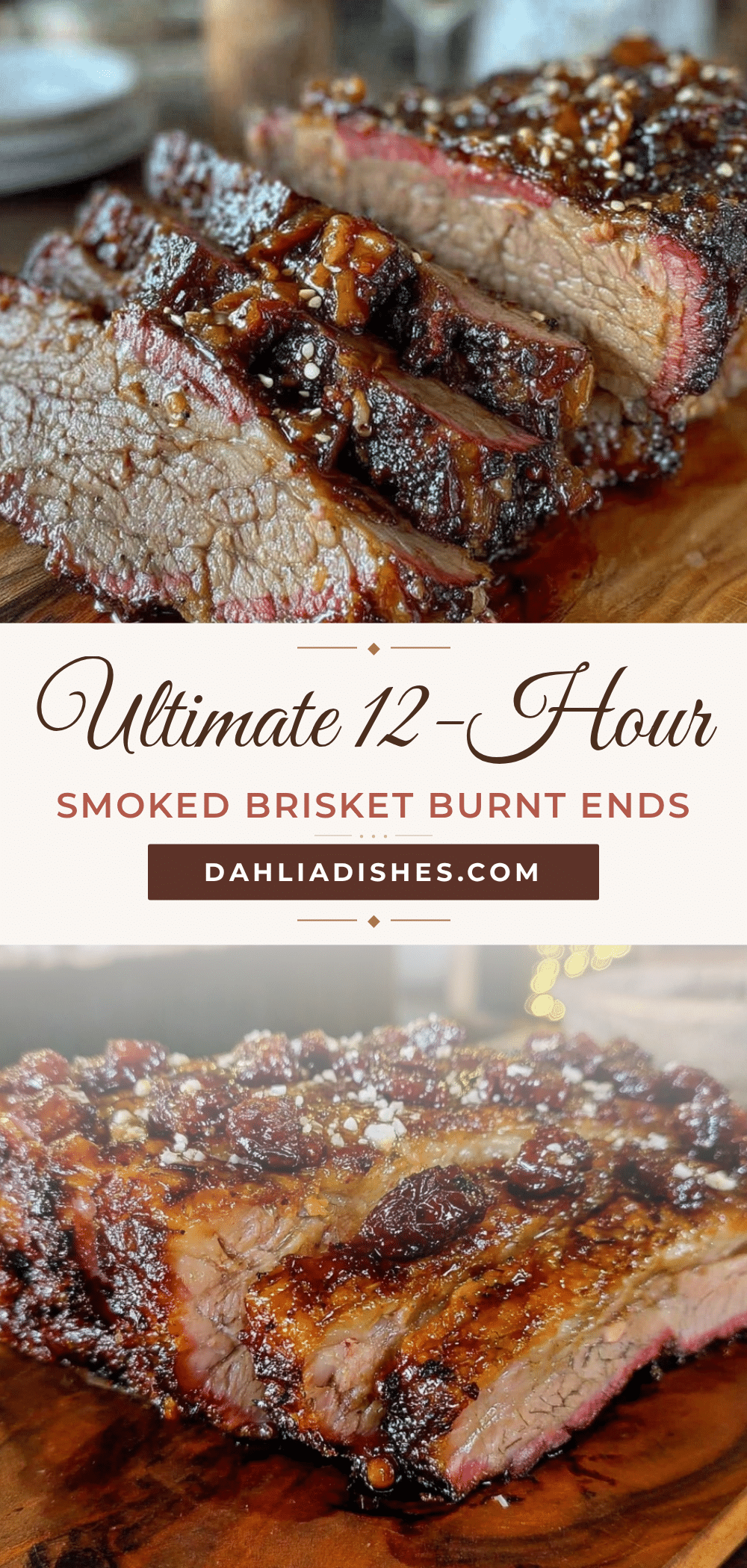
Best Competition Pitmaster-Style 12-Hour Smoked Brisket Recipe with Perfect Burnt Ends
A carefully refined 12-hour smoked brisket recipe that delivers tender, smoky meat with crispy, caramelized burnt ends, perfect for competitions or backyard barbecues.
- Prep Time: 45 minutes
- Cook Time: 12 hours
- Total Time: 12 hours 45 minutes
- Yield: 10-12 servings 1x
- Category: Main Course
- Cuisine: Texas Barbecue
Ingredients
- 10–12 pounds whole packer brisket (includes both flat and point cuts), USDA Choice or Prime grade
- 1/4 cup kosher salt
- 1/4 cup coarse black pepper, freshly cracked
- 2 tablespoons smoked paprika
- 1 tablespoon garlic powder
- 1 tablespoon onion powder
- 1 teaspoon cayenne pepper (optional)
- Post oak or hickory wood chunks/chips
- Spritz: 50/50 mix of apple cider vinegar and water
- Optional glaze for burnt ends: 1/4 cup barbecue sauce
- Optional glaze for burnt ends: 2 tablespoons honey or brown sugar
Instructions
- Trim the fat cap to about 1/4-inch thickness, removing silver skin and hard fat pockets using a sharp boning knife (30 minutes).
- Mix all rub ingredients in a bowl. Generously coat the entire brisket, massaging the rub into every nook and cranny. Let rest at room temperature for 30 minutes.
- Preheat smoker to stabilize around 225°F (107°C). Add post oak or hickory chunks for smoke and set up a water pan inside to maintain humidity.
- Place brisket fat side up on the grate, away from direct heat. Maintain steady temperature, spritzing with apple cider vinegar and water every hour (6 hours).
- When internal temperature hits about 165°F (74°C) and bark looks set, wrap brisket tightly in butcher paper or foil (Texas crutch) for 2-3 hours.
- Return wrapped brisket to smoker until it reaches 203°F (95°C) internal temperature (2-3 hours).
- Remove brisket from smoker and let rest wrapped in a cooler or warm towel for 1 hour.
- Cut the point end into 1-inch cubes. Toss with barbecue sauce and honey or brown sugar glaze. Return to smoker or oven at 275°F (135°C) for 45-60 minutes until caramelized and crispy.
- Slice the flat against the grain into 1/4-inch thick slices. Serve alongside the burnt ends.
Notes
Maintain smoker temperature steadily at 225°F to prevent drying. Use butcher paper for wrapping to preserve bark texture. Spritz lightly every hour to keep meat moist but avoid washing off rub. Rest brisket for at least 1 hour before slicing to lock in juices. Burnt ends are best made from the point cut due to higher fat content. If smoker is unavailable, use charcoal grill with smoking box or oven with liquid smoke.
Nutrition
- Serving Size: 4 oz (113 g)
- Calories: 350
- Fat: 25
- Protein: 28
Keywords: smoked brisket, burnt ends, pitmaster, barbecue, Texas brisket, smoked meat, slow cooked brisket, competition brisket