Love this? Save it for later!
Share the inspiration with your friends
“You won’t believe what I found growing wild along the sidewalk,” my neighbor said last Saturday morning, holding up a handful of vibrant green leaves. Honestly, I was skeptical at first—dandelions? Those pesky yellow flowers I spent years trying to weed out of my garden? But she insisted, “Try making pesto with these dandelion greens. It’s a game-changer.”
That afternoon, I gathered my courage (and a sharp pair of scissors) and ventured out to harvest some dandelions from a nearby park where I knew no chemicals had been sprayed. The greens were bright, tender, and surprisingly fresh. As I chopped and blended them with garlic, nuts, lemon zest, and Parmesan, the kitchen filled with a lively aroma—earthy, citrusy, and just a little wild. I tossed the pesto with al dente pasta, eager but a bit nervous about how this foraged feast would turn out.
The first bite was unexpectedly delightful. The dandelion pesto had this subtle bitterness that balanced beautifully with the tangy lemon zest and the salty Parmesan. It reminded me of those early spring days when the world feels new again—fresh, green, and full of promise. Maybe you’ve been there, too: craving something bright and homemade but wanting to skip the usual basil pesto routine.
Since that day, this Fresh Dandelion Green Pesto Pasta with Lemon Zest and Parmesan has become a staple in my kitchen. It’s honest, simple, and somehow feels like a secret shared between me and the early blooms of spring. I mean, who knew that such a humble weed could be the star of a dish that’s both comforting and exciting? Let me tell you, once you try this, you’ll keep coming back for more.
Why You’ll Love This Recipe
After testing this recipe multiple times (and tweaking it until it felt just right), I can confidently say this dandelion green pesto pasta is one of my favorite springtime meals. Here’s why it might quickly become yours, too:
- Quick & Easy: Ready in under 30 minutes, perfect when you want a fresh, homemade meal without the fuss.
- Simple Ingredients: Uses common pantry staples plus wild greens you can forage or find at farmers’ markets.
- Perfect for Spring: Celebrates seasonal flavors with bright lemon zest and peppery dandelion greens.
- Crowd-Pleaser: The subtle bitterness of the greens combined with creamy Parmesan surprises even picky eaters.
- Unbelievably Delicious: The texture is creamy yet light, with a zesty kick that wakes up your taste buds.
What sets this recipe apart is the balance it strikes between rustic wildness and refined flavor. The lemon zest isn’t just a garnish—it’s an essential brightness that cuts through the pesto’s earthiness. Plus, blending the dandelion greens with toasted pine nuts and a touch of olive oil creates an ultra-smooth texture that feels indulgent but fresh. Honestly, this isn’t just pesto with a twist; it’s a fresh take that feels both adventurous and approachable.
Whether you’re looking to impress friends at a casual dinner or want to treat yourself to a seasonal delight, this recipe fits the bill. It’s one of those dishes that makes you pause and savor the simple joys of spring. Trust me, once you taste it, you’ll understand why I keep making it again and again.
What Ingredients You Will Need
This recipe uses simple, wholesome ingredients to deliver bold flavor and satisfying texture without the fuss. Most items are pantry staples, and you can easily find fresh dandelion greens at your local farmer’s market or even in your backyard if you’re up for a little gathering adventure.
- Dandelion greens, about 3 cups packed (washed and tough stems removed) – look for young, tender leaves for the best flavor
- Garlic cloves, 2 medium, peeled (adds a gentle bite)
- Pine nuts, 1/4 cup, toasted (or walnuts for a budget-friendly alternative)
- Freshly grated Parmesan cheese, 1/2 cup (I recommend Parmigiano-Reggiano for depth)
- Lemon zest from 1 medium lemon (the star of brightness in this dish)
- Extra virgin olive oil, 1/3 to 1/2 cup (use a good quality brand like Colavita for smoothness)
- Salt, to taste (preferably sea salt or kosher salt)
- Freshly ground black pepper, to taste
- Pasta, 12 oz (340 g) – spaghetti, linguine, or your favorite long pasta works great
Optional: A splash of pasta cooking water to loosen the pesto if needed.
For those who want to customize, almond flour or nutritional yeast can be used instead of pine nuts or Parmesan for allergies or vegan preferences. Also, if you can’t find fresh dandelion greens, baby kale or arugula make reasonable substitutes, though the flavor won’t be quite the same.
Equipment Needed
- Food processor or blender: Essential for turning the dandelion greens and nuts into a smooth pesto. A trusty Cuisinart or Ninja works perfectly here.
- Large pot: For boiling pasta. A 6-quart pot is ideal to avoid overcrowding.
- Colander: To drain the pasta safely and efficiently.
- Microplane or fine grater: For zesting the lemon and grating Parmesan finely.
- Wooden spoon or silicone spatula: To combine the pasta and pesto without breaking the noodles.
- Measuring cups and spoons: For precision, especially when balancing flavors.
If you don’t have a food processor, a sturdy blender can work, though you may need to stop and scrape the sides a few times. For toasting pine nuts, a dry skillet on medium heat does the trick—just watch carefully to prevent burning!
Preparation Method
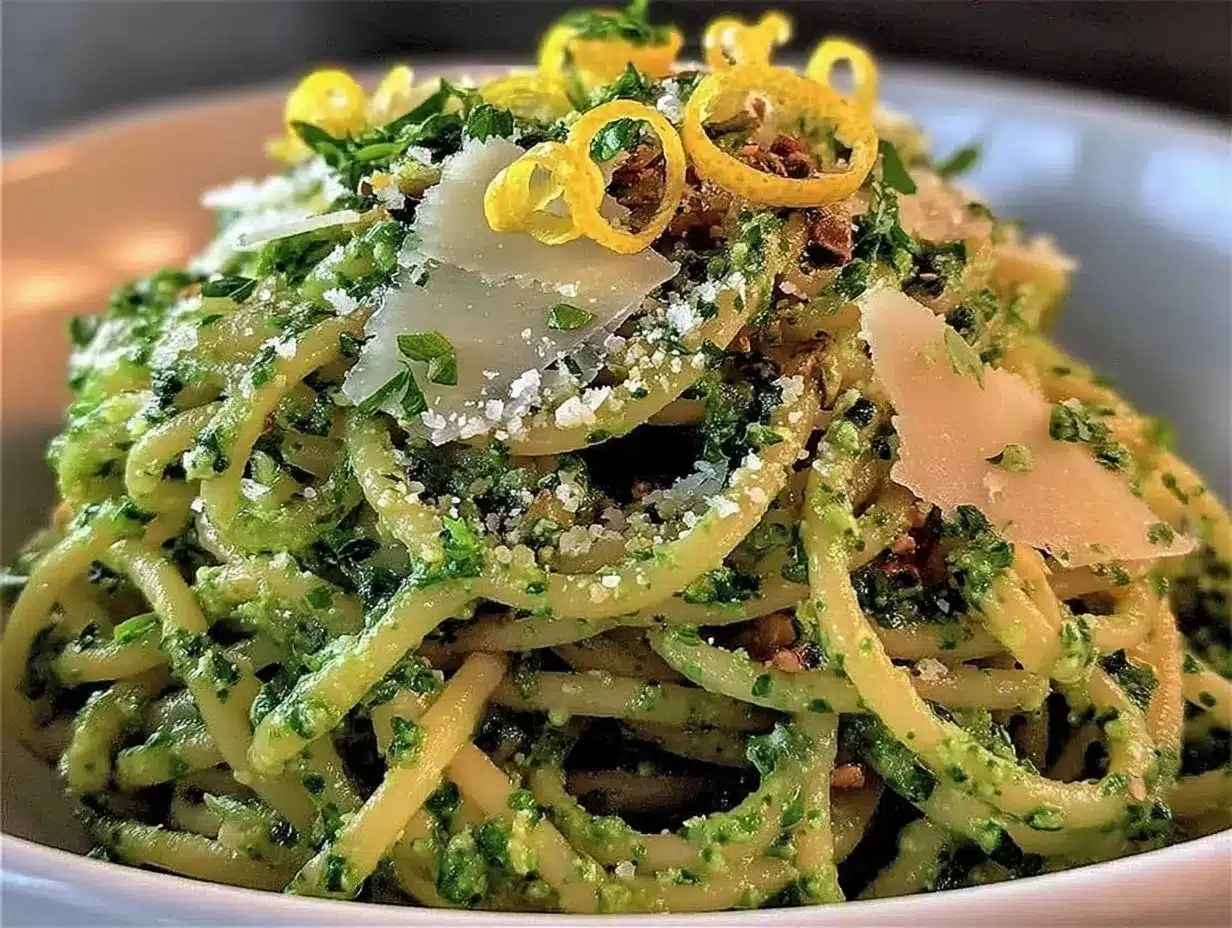
- Prepare the dandelion greens: Rinse about 3 cups of dandelion greens thoroughly to remove any grit. Trim off the tough stems and pat the leaves dry. This step takes about 5 minutes.
- Toast the pine nuts: Place 1/4 cup pine nuts in a dry skillet over medium heat. Stir frequently for 3-5 minutes until golden and fragrant. Remove immediately to prevent burning and let cool.
- Make the pesto: In a food processor, combine the dandelion greens, toasted pine nuts, 2 cloves garlic, 1/2 cup freshly grated Parmesan, and the zest of one lemon. Pulse until coarsely chopped.
- Add olive oil: With the processor running, slowly drizzle in 1/3 cup extra virgin olive oil until the mixture is smooth but still has some texture. Stop and scrape down the sides as needed. Season with salt and pepper to taste. If the pesto seems too thick, add a tablespoon or two of cold water or pasta cooking water.
- Cook the pasta: Bring a large pot of salted water to a boil. Add 12 oz (340 g) pasta and cook according to package instructions until al dente (usually about 8-10 minutes). Reserve 1/2 cup of pasta water before draining.
- Toss pasta with pesto: Return the drained pasta to the pot or a large bowl. Add the pesto and toss well to coat, adding reserved pasta water gradually to loosen the sauce and help it cling.
- Serve immediately: Plate the pasta and finish with an extra sprinkle of Parmesan and a little more lemon zest if you like. Fresh cracked pepper over the top adds a nice touch.
Pro tip: If you want to prep ahead, make the pesto up to 2 days in advance and store it in an airtight container with a thin layer of olive oil on top to prevent browning. Just stir it before tossing with pasta.
Cooking Tips & Techniques
Making pesto from dandelion greens takes a little finesse, but here are some tips I’ve learned so you can nail it every time.
- Choose young greens: Older dandelion leaves tend to be bitter and tough. The younger, the better—and if you want to soften the bitterness, blanch the leaves briefly in boiling water before blending.
- Toast nuts carefully: Pine nuts burn quickly, so keep an eye on them and stir constantly. Burnt nuts will ruin the pesto’s flavor.
- Balance bitterness with acidity: Lemon zest is your friend here. It brightens the pesto and balances the dandelion’s natural bite. Don’t skip it!
- Use good-quality olive oil: It makes a big difference in flavor and mouthfeel. Avoid overly peppery or bitter oils that might clash.
- Reserve pasta water: The starch in the water helps the pesto stick to the pasta and smooths the texture. Start with a little and add more as needed.
I once tried making this pesto without lemon zest—big mistake! It tasted dull and heavy. After adding zest, it came alive. Also, blending too long can make the pesto too watery, so pulse in short bursts for best results.
Variations & Adaptations
This recipe is flexible, so feel free to play around with it based on what you have or your dietary needs.
- Nut-free version: Swap pine nuts for toasted pumpkin seeds or sunflower seeds for a different but still delicious texture.
- Vegan option: Replace Parmesan with nutritional yeast and check your pasta is egg-free for a plant-based meal.
- Seasonal twist: In spring, mix in fresh peas or sautéed asparagus for extra color and sweetness.
- Different greens: If you can’t find dandelion, try baby kale or arugula, but reduce lemon zest slightly as these greens are less bitter.
- Spicy kick: Add a pinch of red pepper flakes to the pesto for a subtle heat that contrasts nicely with the lemon.
Personally, I love adding a handful of fresh basil leaves alongside dandelion greens to mellow the flavor and make it more familiar for guests hesitant about foraged greens.
Serving & Storage Suggestions
This dandelion green pesto pasta shines best served warm or at room temperature. The lemon and cheese flavors are at their peak when fresh, but leftovers can be quite tasty, too.
- Serving: Pair with a crisp white wine or sparkling water with lemon for a refreshing balance.
- Complementary sides: A simple green salad or roasted vegetables work well to round out the meal.
- Storage: Store leftover pesto in an airtight container with a thin layer of olive oil on top in the fridge for up to 3 days. Pasta can be stored separately for up to 2 days.
- Reheating: Warm pasta gently in a skillet with a splash of water to loosen the sauce. Avoid microwave reheating if possible to preserve texture.
- Flavor development: The pesto’s flavors actually mellow and deepen after a day in the fridge, so consider making it ahead for a more harmonious taste.
Nutritional Information & Benefits
This recipe is not only tasty but packs a nutritious punch. Dandelion greens are rich in vitamins A, C, and K, along with antioxidants and fiber. Parmesan adds a boost of calcium and protein, while olive oil provides heart-healthy fats.
Estimated per serving (based on 4 servings):
| Calories | 380 |
|---|---|
| Protein | 12 g |
| Fat | 22 g |
| Carbohydrates | 30 g |
| Fiber | 4 g |
Gluten-free pasta options make this recipe suitable for gluten-sensitive diets. Those with nut allergies can omit or swap the nuts as mentioned earlier. Overall, this pasta is a great way to enjoy greens in a comforting, easy-to-digest form.
Conclusion
If you’re looking for a fresh, flavorful pasta dish that breaks away from the usual basil pesto routine, Fresh Dandelion Green Pesto Pasta with Lemon Zest and Parmesan is definitely worth a try. The wild, slightly bitter greens paired with the bright lemon and salty cheese create a balance that’s surprisingly satisfying and comforting.
Feel free to tweak the nuts, cheese, or greens to your liking—this recipe welcomes your personal touch. For me, it’s become a celebration of spring’s bounty and an easy way to bring a little adventure to the dinner table.
Give it a go, share your thoughts or any tweaks you make—I love hearing how others make this recipe their own. Here’s to fresh flavors and happy cooking!
Frequently Asked Questions
Can I use dried dandelion greens for this pesto?
Fresh dandelion greens are best for flavor and texture, but if you only have dried, rehydrate them first and use less as dried greens are more concentrated.
What can I substitute for pine nuts?
Try walnuts, almonds, pumpkin seeds, or sunflower seeds as budget-friendly or allergy-friendly alternatives.
Is this recipe vegan-friendly?
You can make it vegan by substituting Parmesan with nutritional yeast and ensuring your pasta contains no eggs.
How do I reduce the bitterness of dandelion greens?
Blanch the greens in boiling water for 30 seconds, then shock in ice water before blending to mellow the bitterness.
Can I freeze the pesto?
Yes! Freeze pesto in ice cube trays, then transfer cubes to a freezer bag. Use within 3 months for best flavor.
For a different twist on homemade sauces, you might enjoy trying my creamy avocado pasta sauce or the vibrant roasted red pepper pesto for more dinner inspiration.
Pin This Recipe!
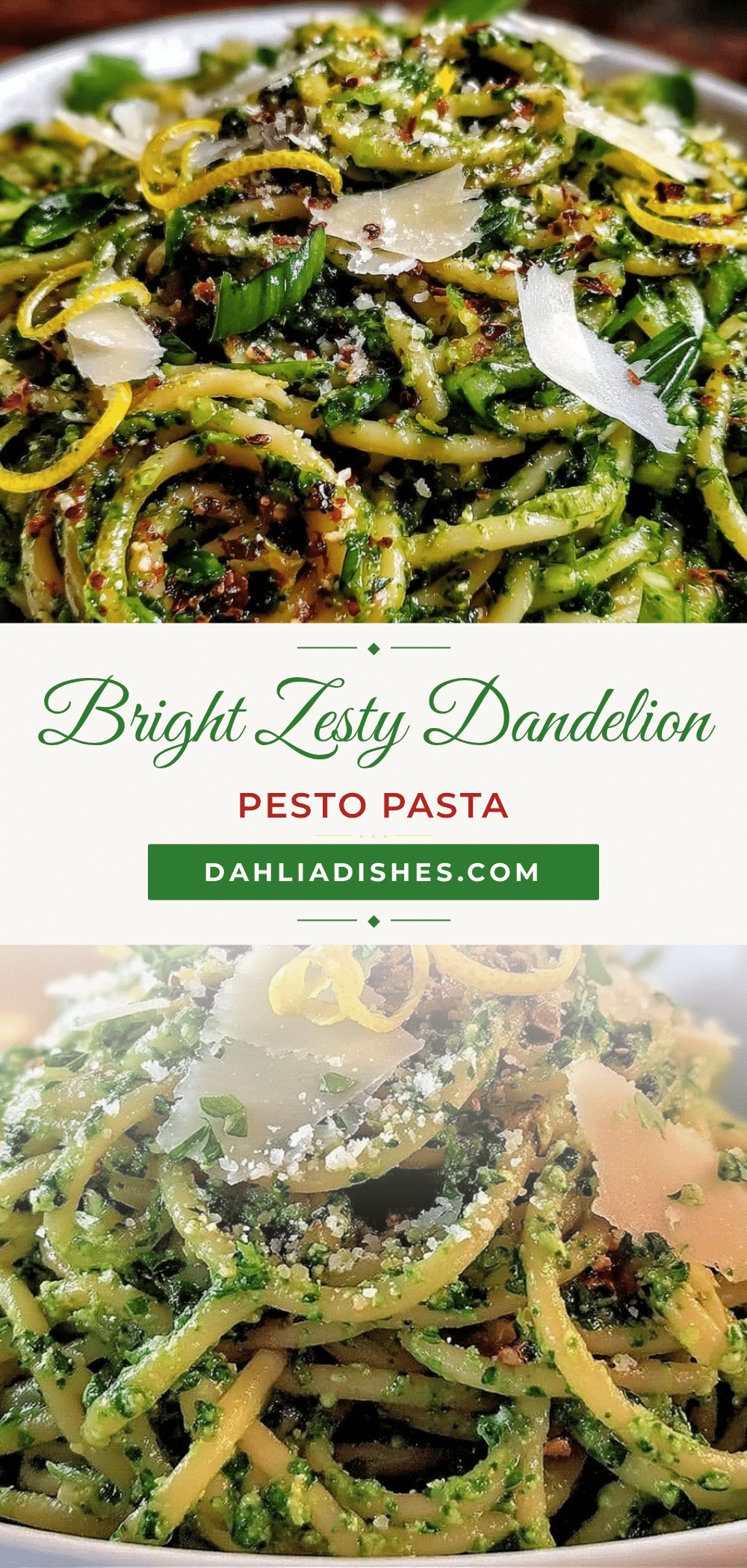
Fresh Dandelion Green Pesto Pasta Recipe Easy Homemade with Lemon Zest and Parmesan
A fresh and vibrant pasta dish featuring homemade pesto made from foraged dandelion greens, lemon zest, and Parmesan cheese. This recipe offers a bright, earthy flavor perfect for springtime meals.
- Prep Time: 10 minutes
- Cook Time: 15 minutes
- Total Time: 25 minutes
- Yield: 4 servings 1x
- Category: Main Course
- Cuisine: Italian-inspired
Ingredients
- 3 cups packed dandelion greens (washed and tough stems removed)
- 2 medium garlic cloves, peeled
- 1/4 cup toasted pine nuts (or walnuts as an alternative)
- 1/2 cup freshly grated Parmesan cheese (Parmigiano-Reggiano recommended)
- Zest of 1 medium lemon
- 1/3 to 1/2 cup extra virgin olive oil
- Salt, to taste
- Freshly ground black pepper, to taste
- 12 oz (340 g) pasta (spaghetti, linguine, or preferred long pasta)
- Optional: splash of pasta cooking water to loosen pesto
Instructions
- Rinse about 3 cups of dandelion greens thoroughly to remove any grit. Trim off the tough stems and pat the leaves dry (about 5 minutes).
- Toast 1/4 cup pine nuts in a dry skillet over medium heat, stirring frequently for 3-5 minutes until golden and fragrant. Remove immediately and let cool.
- In a food processor, combine the dandelion greens, toasted pine nuts, 2 cloves garlic, 1/2 cup freshly grated Parmesan, and lemon zest. Pulse until coarsely chopped.
- With the processor running, slowly drizzle in 1/3 cup extra virgin olive oil until the mixture is smooth but still has some texture. Stop and scrape down the sides as needed. Season with salt and pepper to taste. Add a tablespoon or two of cold water or pasta cooking water if pesto is too thick.
- Bring a large pot of salted water to a boil. Add 12 oz pasta and cook according to package instructions until al dente (usually 8-10 minutes). Reserve 1/2 cup pasta water before draining.
- Return drained pasta to the pot or a large bowl. Add pesto and toss well to coat, adding reserved pasta water gradually to loosen sauce and help it cling.
- Serve immediately, finishing with extra Parmesan, lemon zest, and freshly cracked pepper if desired.
Notes
Use young dandelion greens for best flavor; blanch older leaves to reduce bitterness. Toast nuts carefully to avoid burning. Lemon zest is essential to balance bitterness. Reserve pasta water to adjust pesto consistency. Pesto can be made up to 2 days ahead and stored with a thin olive oil layer to prevent browning. For vegan version, substitute Parmesan with nutritional yeast and use egg-free pasta. Nut-free options include pumpkin or sunflower seeds.
Nutrition
- Serving Size: 1 cup pasta with pes
- Calories: 380
- Fat: 22
- Carbohydrates: 30
- Fiber: 4
- Protein: 12
Keywords: dandelion greens, pesto, pasta, lemon zest, Parmesan, spring recipe, homemade pesto, wild greens, easy pasta