Love this? Save it for later!
Share the inspiration with your friends
“I wasn’t expecting to find a treasured recipe scribbled on the back of a worn grocery receipt, but there it was,” I remember thinking as I unfolded the crinkled paper. It was tucked inside an old cookbook I’d picked up at a little thrift store in Galway, Ireland. That recipe was for Homemade Irish Brown Bread with Rolled Oats and Buttermilk, and honestly, it changed how I see simple bread forever.
The smell of baking bread always pulls me into a cozy state, but this one—oh, this one—reminded me of childhood mornings spent in a small kitchen where the windows fogged up and the warmth of the oven mixed with the damp Irish air. I tried it that same afternoon, though I’d forgotten to buy fresh buttermilk and ended up improvising with a splash of lemon juice in milk (don’t laugh—it worked!).
You know that feeling when a recipe just sticks with you? This bread, with its hearty oats and tangy buttermilk, has that exact magic. It’s not fancy, but it’s honest, filling, and somehow comforting like a hug from an old friend. Whether you’re a seasoned baker or just starting out, this bread is ridiculously forgiving and satisfying. I keep making it, honestly, because it’s the kind of recipe that makes even a rushed weekday morning feel special.
Why You’ll Love This Recipe
Having baked this Homemade Irish Brown Bread with Rolled Oats and Buttermilk countless times, I can say it fits right into busy lifestyles without losing any heart. It’s been tested in my kitchen and approved by neighbors who don’t usually like “dense bread.” Here’s why you’ll adore it:
- Quick & Easy: From mixing to slicing, it takes about 45 minutes total—perfect for those days when you want fresh bread without waiting all day.
- Simple Ingredients: No need for specialty flours or hard-to-find stuff. If you have rolled oats, whole wheat flour, and buttermilk (or a quick homemade substitute), you’re set.
- Perfect for Breakfast or Brunch: It pairs beautifully with butter and jam, or alongside hearty soups and stews on chillier days.
- Crowd-Pleaser: Whether it’s a casual family meal or a small gathering, this bread always gets a nod of approval—even from picky eaters.
- Unbelievably Delicious: The combination of nutty oats and the subtle tang from buttermilk creates a moist, tender crumb that’s different from your typical brown bread.
What sets this recipe apart is how it balances rustic charm with ease. I mean, the trick of adding rolled oats right into the dough—not just as a topping—gives it a wonderful texture. Plus, the buttermilk adds a slight tang that keeps the bread from feeling heavy or dull. This bread isn’t just another loaf; it’s your new go-to when you want something wholesome but fuss-free.
What Ingredients You Will Need
This recipe uses simple, wholesome ingredients to deliver bold flavor and satisfying texture without the fuss. Most are pantry staples, and where possible, I’ve included easy substitutions to make it work for you anytime.
- Whole wheat flour (3 cups / 360 g) – The base of the bread, giving it a hearty, nutty flavor.
- Rolled oats (1 cup / 90 g) – Adds texture and a lovely chew; I recommend Bob’s Red Mill for the best consistency.
- All-purpose flour (1 cup / 120 g) – Helps lighten the bread, balancing the whole wheat’s density.
- Baking soda (1 tsp) – The leavening agent that reacts with the buttermilk for rise.
- Salt (1 tsp) – Enhances all the flavors.
- Buttermilk (2 cups / 475 ml) – Adds moisture and a tangy note; if you don’t have buttermilk, mix 2 cups milk with 2 tbsp lemon juice or white vinegar and let it sit for 5 minutes.
- Brown sugar (1 tbsp) – Optional but adds a subtle sweetness that rounds out the flavors.
- Melted butter (2 tbsp) – For richness; you can swap with coconut oil for a dairy-free version.
For topping (optional):
- Rolled oats (2 tbsp) – For a rustic, inviting crust.
Look for organic or unbleached flours when possible—they give the best flavor. If you’re making this in spring or summer, you might consider adding fresh herbs like rosemary or thyme for a seasonal twist, but honestly, the bread shines on its own.
Equipment Needed
- Large mixing bowl: Essential for combining the dry and wet ingredients comfortably.
- Wooden spoon or sturdy spatula: For mixing the dough — this bread dough is quite sticky, so a good sturdy spoon helps.
- 9-inch round cake pan or cast iron skillet: You can bake this bread in either. I prefer cast iron because it gives a lovely crust, but the cake pan works well too.
- Measuring cups and spoons: For precise ingredient quantities.
- Cooling rack: To let your bread breathe after baking and avoid sogginess.
If you don’t have a cast iron skillet, a heavy-duty oven-safe pan or even a loaf pan can work, though shape and crust will vary. I learned the hard way that using a non-stick pan can sometimes lead to a less crusty bottom, so if you want that authentic feel, go for cast iron or ceramic.
Preparation Method
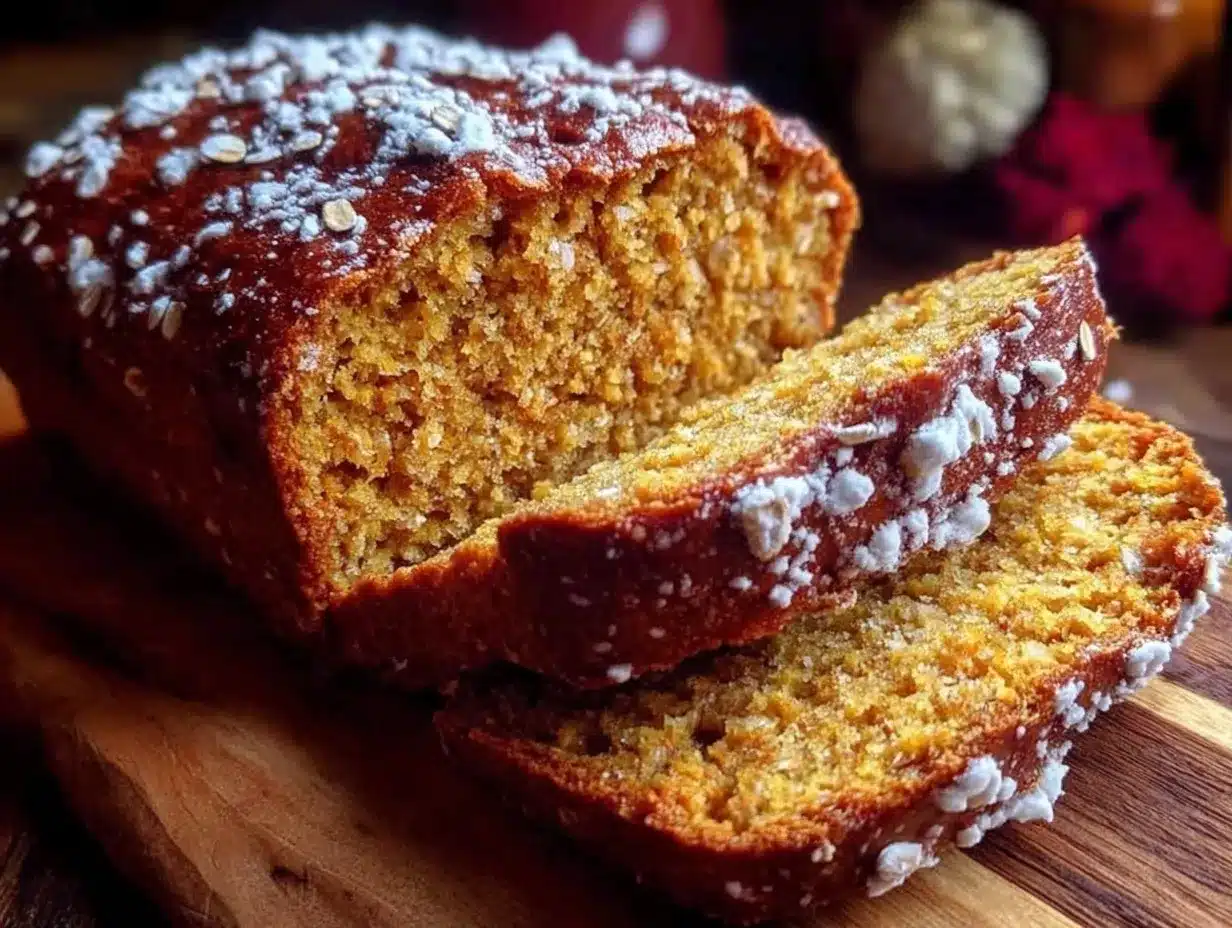
- Preheat your oven to 375°F (190°C). Lightly grease your 9-inch round cake pan or cast iron skillet with butter or oil. This step is key for an easy release later.
- Mix the dry ingredients: In a large bowl, combine 3 cups (360 g) whole wheat flour, 1 cup (120 g) all-purpose flour, 1 cup (90 g) rolled oats, 1 tsp baking soda, 1 tsp salt, and 1 tbsp brown sugar (if using). Stir thoroughly so everything is evenly distributed.
- Add the wet ingredients: Pour in 2 cups (475 ml) buttermilk and 2 tbsp melted butter. Use a wooden spoon or spatula to gently stir until just combined—don’t overmix. The dough will be sticky and thick.
- Shape the dough: Transfer the dough into your prepared pan. Wet your hands slightly (this helps with stickiness), then smooth the top and pat it evenly. Sprinkle 2 tbsp rolled oats on top for a rustic finish.
- Score the top: Using a sharp knife, cut a deep cross (about 1/2 inch / 1.3 cm) into the dough’s surface. This allows the bread to expand properly during baking.
- Bake: Place in the oven and bake for 35-40 minutes. The bread should be golden brown on top and sound hollow when tapped on the bottom. A kitchen timer helps, but keep an eye on it starting at 30 minutes to avoid over-baking.
- Cool: Remove the bread from the oven and let it cool in the pan for 10 minutes before transferring to a cooling rack. This helps keep the crust crisp and prevents sogginess underneath.
- Slice and enjoy: Once cooled (or slightly warm, if you prefer), slice with a serrated knife. Serve with butter, honey, or your favorite spread.
If you find your dough too dry, add a splash more buttermilk, a tablespoon at a time. Too wet? Add a little more flour. Baking bread is part science, part feel—you’ll get the hang of it fast!
Cooking Tips & Techniques
Baking Homemade Irish Brown Bread with Rolled Oats and Buttermilk can feel intimidating, but here are some tips I picked up after a few messy attempts (and a few burnt loaves):
- Don’t overwork the dough. Mixing until just combined keeps the bread tender. Overmixing can make it tough—trust me, I learned the hard way.
- Use room temperature buttermilk. Cold buttermilk slows the reaction with baking soda, which can affect the rise. Let it sit out for 15 minutes before mixing.
- Keep your oven temperature steady. Avoid opening the oven door too often. That hot air rush can make your bread sink in the middle.
- Cast iron pans give the best crust. If you have one, use it! It distributes heat evenly, helping the bread develop a nice golden crust without burning.
- Score the bread deeply. This helps the bread expand and prevents cracking in random spots.
- Let the bread cool fully before slicing. I know, it’s tough—but slicing too early can make it gummy inside.
When I first started, I timed everything perfectly but forgot to grease the pan—caught that one just in time! Little things like that remind you that baking is as much about patience as precision.
Variations & Adaptations
This Irish brown bread recipe is versatile and welcomes a few tweaks to suit your taste or dietary needs:
- Gluten-Free Option: Replace whole wheat and all-purpose flour with a gluten-free flour blend and add 1 tsp xanthan gum for structure. Use gluten-free oats to keep it safe.
- Sweet Variation: Add 1/4 cup raisins or dried cranberries and a pinch of cinnamon to the dough for a touch of sweetness that pairs beautifully with morning tea.
- Herb-Infused: Mix in 1 tbsp fresh chopped rosemary or thyme to add a fragrant, savory note—perfect alongside soups or stews.
- Vegan Version: Swap buttermilk for unsweetened plant-based milk plus 1 tbsp apple cider vinegar, and use coconut oil instead of butter.
When I tried adding sunflower seeds once, it gave a lovely crunch but made the dough a bit trickier to shape. Still delicious, though! Feel free to experiment, but remember that the oats and buttermilk combo is what really makes this bread special.
Serving & Storage Suggestions
This bread is best served slightly warm, fresh from the oven or toasted the next day. The crust stays satisfyingly crisp, while the inside remains soft and moist. Serve it slathered with salted butter, a drizzle of honey, or alongside a bowl of creamy Irish stew for a true comfort meal.
For storage, wrap the completely cooled bread tightly in plastic wrap or place in an airtight container. It will keep at room temperature for up to 3 days. To extend, slice and freeze it in a zip-top bag for up to 2 months.
Reheat slices in a toaster or oven at 350°F (175°C) for 5-7 minutes to revive the crust’s crunch. Over time, the flavors mellow and deepen—the tang from the buttermilk becomes more pronounced, making leftovers surprisingly delightful.
Nutritional Information & Benefits
Each slice of this homemade Irish brown bread provides wholesome nourishment with the goodness of whole grains and oats. Here’s an estimate per slice (based on 12 slices per loaf):
- Calories: Approximately 140 kcal
- Carbohydrates: 28 g
- Protein: 4 g
- Fat: 2.5 g
- Fiber: 4 g
The rolled oats contribute beta-glucan fiber, which supports heart health and digestion. Whole wheat flour adds additional fiber and essential nutrients like iron and B vitamins. Buttermilk offers probiotics and calcium, aiding gut health and bone strength.
For those watching gluten intake, swapping to gluten-free flour and oats makes this bread accessible to many diets. Plus, it’s naturally low in sugar and free from artificial additives—perfect for anyone wanting a real-food, homemade loaf.
Conclusion
If you’ve been searching for a reliable, simple, and comforting bread recipe, this Homemade Irish Brown Bread with Rolled Oats and Buttermilk is it. It’s the kind of bread that feels like a small celebration each time you slice into it—warm, hearty, and full of character.
Feel free to customize it with add-ins or substitutions to suit your taste or pantry. I love how forgiving it is, which makes it perfect for home bakers of all levels. Honestly, I keep coming back to this recipe because it’s not just bread—it’s a little piece of tradition that fits beautifully into modern life.
Give it a try, share your tweaks, and let me know how it turns out. Baking bread creates a special kind of joy, and I’m excited for you to experience that with this recipe.
Frequently Asked Questions
Can I use regular milk instead of buttermilk?
You can substitute buttermilk by adding 1 tbsp lemon juice or white vinegar to 2 cups of milk and letting it sit for 5 minutes before using. This mimics the acidity needed for the baking soda to work properly.
Why is the bread dense sometimes?
Dense bread usually means the dough was overmixed or the baking soda didn’t react fully. Make sure to mix just until combined and use fresh baking soda for the best rise.
Can I bake this bread in a loaf pan?
Yes! You can bake it in a greased 9×5-inch loaf pan. Baking time might increase slightly to 40-45 minutes—check doneness by tapping the bottom for a hollow sound.
How do I store leftover bread?
Wrap cooled bread tightly in plastic wrap or store in an airtight container at room temperature for up to 3 days. For longer storage, slice and freeze it for up to 2 months.
Is this bread suitable for vegans?
Not as written, but you can make it vegan by substituting buttermilk with plant-based milk plus vinegar and using coconut oil or vegan butter instead of regular butter.
For a delightful meal pairing, consider serving this bread alongside a hearty creamy Irish stew recipe or as a base for a savory cheddar oat scones brunch spread. It’s amazing how these whole grain flavors complement each other!
Pin This Recipe!
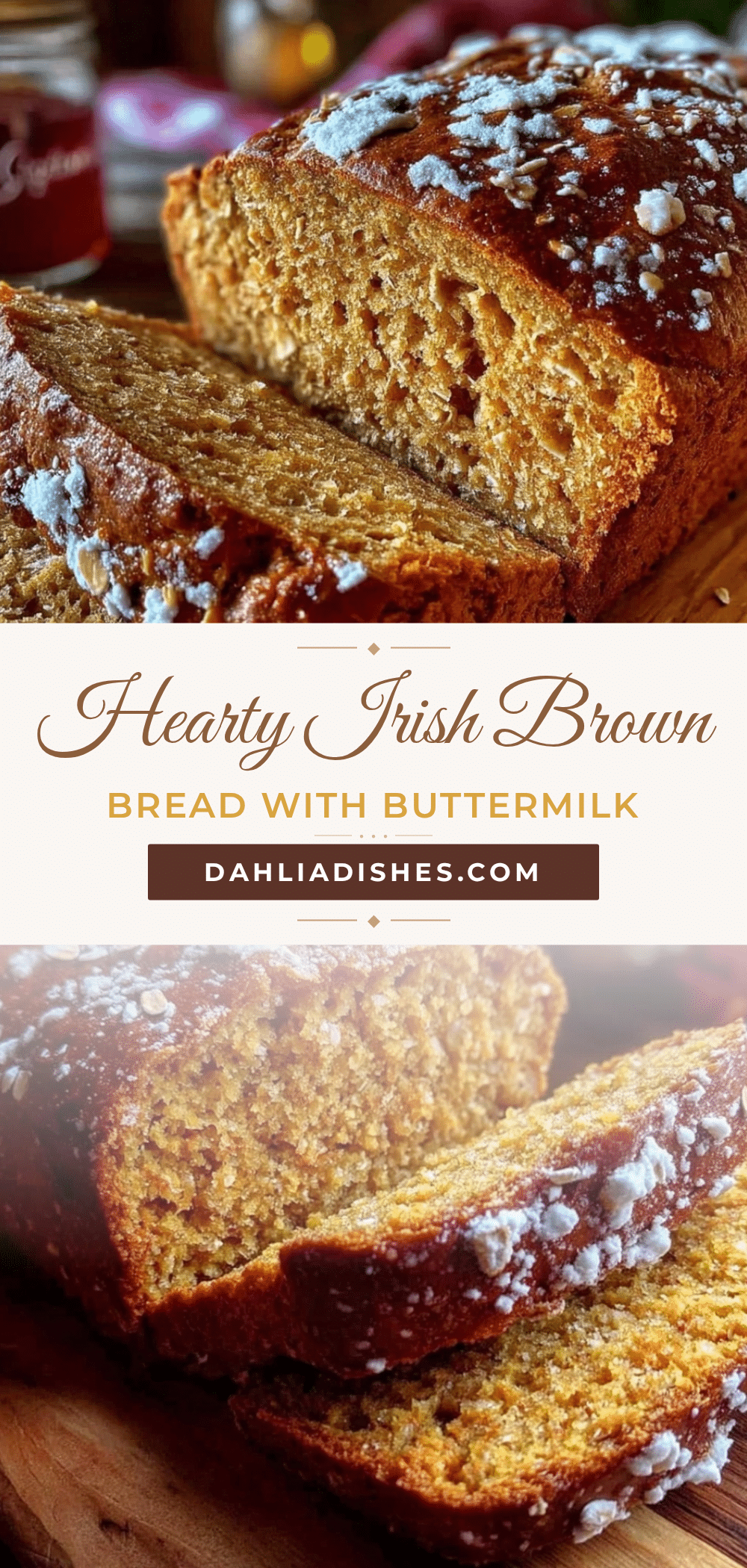
Homemade Irish Brown Bread with Rolled Oats and Buttermilk
A quick and easy Irish brown bread recipe featuring hearty rolled oats and tangy buttermilk, perfect for breakfast or brunch with a moist, tender crumb and rustic crust.
- Prep Time: 10 minutes
- Cook Time: 35-40 minutes
- Total Time: 45 minutes
- Yield: 12 slices 1x
- Category: Bread
- Cuisine: Irish
Ingredients
- 3 cups whole wheat flour (360 g)
- 1 cup all-purpose flour (120 g)
- 1 cup rolled oats (90 g)
- 1 tsp baking soda
- 1 tsp salt
- 1 tbsp brown sugar (optional)
- 2 cups buttermilk (475 ml) or substitute with 2 cups milk + 2 tbsp lemon juice or white vinegar, let sit 5 minutes
- 2 tbsp melted butter or coconut oil for dairy-free
- 2 tbsp rolled oats for topping (optional)
Instructions
- Preheat your oven to 375°F (190°C). Lightly grease a 9-inch round cake pan or cast iron skillet with butter or oil.
- In a large bowl, combine whole wheat flour, all-purpose flour, rolled oats, baking soda, salt, and brown sugar if using. Stir thoroughly to distribute evenly.
- Pour in buttermilk and melted butter. Stir gently with a wooden spoon or spatula until just combined; dough will be sticky and thick.
- Transfer dough to prepared pan. Wet hands slightly, smooth and pat dough evenly. Sprinkle rolled oats on top for a rustic finish.
- Score a deep cross about 1/2 inch (1.3 cm) into the dough surface with a sharp knife.
- Bake for 35-40 minutes until golden brown and hollow sounding when tapped on the bottom. Start checking at 30 minutes to avoid over-baking.
- Cool bread in the pan for 10 minutes, then transfer to a cooling rack to cool completely.
- Slice with a serrated knife and serve warm or at room temperature.
Notes
Do not overmix the dough to keep bread tender. Use room temperature buttermilk for best rise. Cast iron pans produce the best crust. Score the bread deeply to allow expansion. Let bread cool fully before slicing to avoid gummy texture. Adjust dough moisture by adding more buttermilk or flour as needed.
Nutrition
- Serving Size: 1 slice
- Calories: 140
- Fat: 2.5
- Carbohydrates: 28
- Fiber: 4
- Protein: 4
Keywords: Irish brown bread, homemade bread, rolled oats bread, buttermilk bread, quick bread, whole wheat bread, easy bread recipe