Love this? Save it for later!
Share the inspiration with your friends
I wasn’t expecting baking advice from our plumber, but there I was, standing in my messy kitchen with a wrench in one hand and a flour-dusted notebook in the other. Frank had come to fix a leaky pipe, and somehow, between complaining about hard-water deposits, he started talking about his mother’s Irish soda bread. “No yeast,” he said, wiping his hands on a rag. “You don’t need it. It’s faster, and honestly, it tastes better.” I was skeptical—I mean, bread without yeast? But he scribbled the recipe on a napkin, and I shoved it in my cookbook, forgetting about it for months.
Then came a Tuesday night when I had nothing for breakfast the next morning, no time for a trip to the store, and a serious craving for something warm and buttery. I remembered that napkin. The recipe called for buttermilk, flour, a little sugar, and those golden raisins I’d bought on a whim. Oh, and caraway seeds—which, let’s be honest, I only had because they came in a spice blend I never used. But I was desperate, so I mixed it all together, shaped it into a rough round, and threw it in the oven. Thirty-five minutes later, my kitchen smelled like a bakery, and I was eating a slice slathered in salted butter, wondering why I’d ever bothered with yeast.
That’s the thing about this quick no-yeast Irish soda bread with caraway and golden raisins. It’s not fancy. It’s not fussy. But it’s the kind of bread that makes you feel like you’ve got your life together, even when you’re just barely holding on. Maybe you’ve been there—staring at an empty bread basket, wishing you had something homemade but having zero energy to knead or proof. This bread is your answer. It’s been my go-to ever since Frank fixed that pipe, and I keep making it because it’s honest, fast, and genuinely delicious.
Why You’ll Love This Recipe
Let’s face it—most bread recipes are a commitment. You’ve got to plan ahead, wait for dough to rise, and hope your yeast isn’t dead. This Irish soda bread skips all that drama. It’s the weeknight hero you didn’t know you needed.
- Quick & Easy: From mixing bowl to oven in under 10 minutes. No kneading, no rising, no stress. Perfect for those evenings when you realize you forgot to buy bread for tomorrow’s lunch.
- Simple Ingredients: You probably have flour, salt, and baking soda in your pantry right now. Buttermilk is the only special item, and you can make a quick substitute with milk and lemon juice if needed.
- Perfect for Breakfast or Snacking: This bread is sturdy enough for morning toast but tender enough to eat plain with a cup of tea in the afternoon.
- Crowd-Pleaser: My kids—who claim to hate raisins—devour this bread. Something about the golden raisins and caraway combo just works. Even picky eaters go back for seconds.
- Unbelievably Delicious: The crust is crisp and golden, while the inside is soft and slightly tender. The caraway adds this subtle, almost savory note that balances the sweetness of the raisins perfectly. It’s comfort food at its simplest.
What makes this recipe different from the rest? It’s the balance. I’ve tried dozens of soda bread recipes, and most are either too dry or too dense. This one uses just the right amount of buttermilk and a quick, gentle mixing technique that keeps the bread light. Plus, the golden raisins add little bursts of sweetness without making the bread soggy. It’s not just another version—it’s the one that actually works on a busy Tuesday night.
This bread isn’t just good—it’s the kind that makes you close your eyes after the first bite. It’s simple food done right, and that’s exactly what a tired weeknight needs.
What Ingredients You Will Need
This recipe uses humble, pantry-friendly ingredients to create something surprisingly special. No fancy flours or hard-to-find add-ins here. Just honest staples that come together in a flash.
- All-Purpose Flour: 3 cups (375 grams). This is your base. I prefer unbleached all-purpose flour for a slightly better texture, but regular works fine. Don’t use bread flour—it’ll make the bread too tough.
- Granulated Sugar: 3 tablespoons (36 grams). Just enough to take the edge off the tangy buttermilk and complement the raisins. You can reduce it to 2 tablespoons if you prefer a less sweet bread.
- Baking Soda: 1 teaspoon (5 grams). This is your leavening agent—no yeast needed. Make sure it’s fresh! Old baking soda won’t give you that nice rise.
- Salt: 1 teaspoon (6 grams). Use fine sea salt or table salt. It balances the sweetness and enhances the flavor of the caraway.
- Caraway Seeds: 1 tablespoon (8 grams). These are optional but highly recommended. They add a subtle, earthy, slightly anise-like flavor that’s classic in Irish soda bread. If you’re not a fan, you can leave them out or swap for fennel seeds.
- Golden Raisins: 1 cup (150 grams). I prefer golden raisins over dark ones here—they’re plumper and milder, which lets the caraway shine. If you only have dark raisins, soak them in hot water for 10 minutes and drain before using to plump them up.
- Buttermilk: 1 ½ cups (360 ml). This is key. The acid in buttermilk reacts with the baking soda to create lift and gives the bread its signature tang. If you don’t have buttermilk, you can make a quick substitute by adding 1 ½ tablespoons of lemon juice or white vinegar to 1 ½ cups of milk. Let it sit for 5 minutes before using.
- Unsalted Butter: 2 tablespoons (28 grams), melted, for brushing on top after baking. This gives the crust a beautiful golden sheen and a soft, buttery finish. You can skip it if you’re watching calories, but honestly, it’s worth it.
I recommend using Bob’s Red Mill flour for consistent results, and if you can find Kerrygold butter, it adds a lovely richness to the crust. For the raisins, look for ones that are soft and plump—if they’re hard and dry, soak them briefly. This is one of those recipes where ingredient quality really matters, even though the list is short.
Equipment Needed
You don’t need a stand mixer or a bread proofer for this recipe. A few basic tools will do the job beautifully.
- Large Mixing Bowl: A standard 4-quart bowl works well. You need enough room to toss the ingredients without making a mess.
- Wooden Spoon or Rubber Spatula: For mixing the dough. I prefer a wooden spoon because it feels sturdy, but a spatula works too.
- Bench Scraper or Sharp Knife: For scoring the top of the dough before baking. A sharp knife works fine if you don’t have a bench scraper.
- Baking Sheet: A rimmed baking sheet lined with parchment paper. You can also use a cast-iron skillet if you want a thicker, crunchier crust.
- Pastry Brush: For brushing the melted butter on the finished bread. A silicone brush is easiest to clean.
- Cooling Rack: Essential for letting the bread cool properly. If you leave it on the baking sheet, the bottom will get soggy.
- Optional – Kitchen Scale: For measuring flour by weight. It’s more accurate than cups and ensures consistent results every time.
I’ve made this bread in a cheap baking sheet from the grocery store and in my fancy cast-iron skillet. Honestly, both work great. The skillet gives a slightly thicker, crunchier crust, but the baking sheet is easier to clean. If you’re on a budget, just use what you have—this recipe is forgiving.
Preparation Method
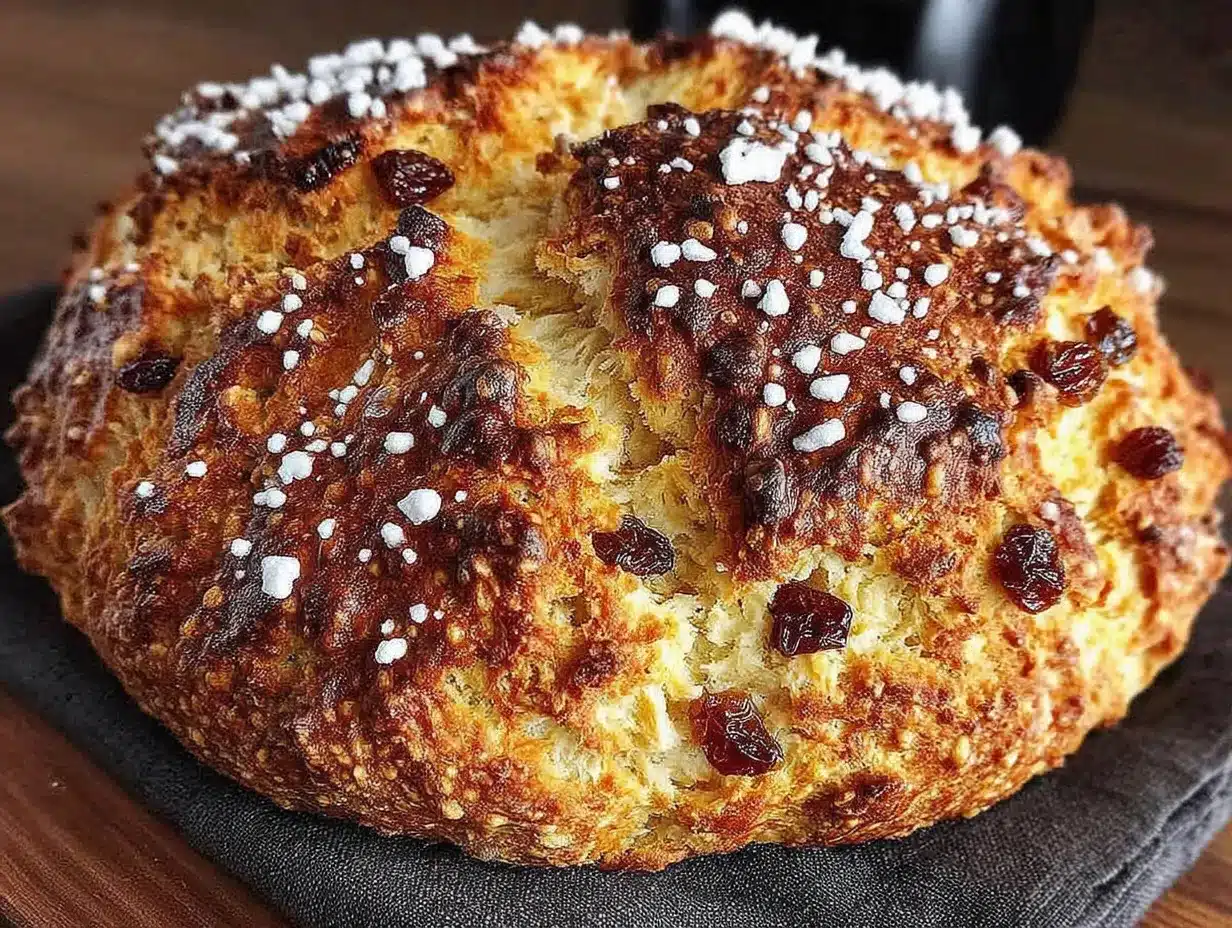
This is where the magic happens. Follow these steps, and you’ll have a beautiful loaf of bread in under an hour.
- Preheat Your Oven: Set your oven to 400°F (200°C). Line a baking sheet with parchment paper. Get this done first so the oven is nice and hot when your dough is ready.
- Mix the Dry Ingredients: In your large mixing bowl, whisk together the 3 cups (375g) all-purpose flour, 3 tablespoons (36g) sugar, 1 teaspoon (5g) baking soda, and 1 teaspoon (6g) salt. Make sure the baking soda is evenly distributed—you don’t want a bitter pocket in your bread.
- Add the Caraway and Raisins: Toss in the 1 tablespoon (8g) caraway seeds and 1 cup (150g) golden raisins. Stir them into the flour mixture until every raisin is coated. This helps prevent them from sinking to the bottom of the bread.
- Create a Well: Make a well in the center of the flour mixture. Pour in the 1 ½ cups (360ml) buttermilk all at once. Don’t add it slowly—the reaction between the buttermilk and baking soda starts immediately, so you want everything to combine at once.
- Mix Gently: Use your wooden spoon or spatula to stir the mixture together. Stir just until the dough comes together—about 10 to 15 strokes. It will look shaggy and a bit messy. That’s perfect. Overmixing will make the bread tough.
- Shape the Dough: Lightly flour your hands and the work surface. Turn the dough out onto the floured surface. Gently bring it together into a rough ball. Don’t knead it—just shape it. The dough should be slightly sticky but manageable. If it’s too wet, sprinkle a little extra flour on top.
- Place on Baking Sheet: Transfer the dough ball to your prepared baking sheet. Pat it into a round about 6 to 7 inches wide and 2 inches tall. Don’t flatten it too much—you want some height for a nice rise.
- Score the Top: Using a sharp knife or bench scraper, cut a deep “X” across the top of the dough. Cut about ½ inch deep. This isn’t just for looks—it helps the bread expand evenly while baking and allows the heat to reach the center.
- Bake: Place the baking sheet in the preheated oven. Bake for 35 to 40 minutes, until the bread is golden brown and sounds hollow when you tap the bottom. If the top is browning too quickly after 25 minutes, tent it loosely with foil.
- Brush with Butter: As soon as the bread comes out of the oven, brush the top with the 2 tablespoons (28g) melted butter. This gives it a beautiful, glossy crust and adds a rich flavor.
- Cool: Transfer the bread to a cooling rack. Let it cool for at least 20 minutes before slicing. I know it’s tempting to cut into it right away, but the steam needs to settle. Cutting too early will make the bread gummy.
Pro Tip: The bread should feel firm and sound hollow when tapped. If you’re unsure, insert a skewer into the center—it should come out clean or with just a few crumbs. No raw dough!
Cooking Tips & Techniques
I’ve made this bread at least twenty times, and I’ve learned a few things the hard way. Here’s what I wish someone had told me.
Don’t Overmix the Dough. This is the number one mistake. Soda bread relies on a quick chemical reaction, not gluten development. Overmixing creates gluten, which makes the bread tough and dense. Mix just until the flour is incorporated—lumps are fine.
Use Cold Buttermilk. Cold buttermilk slows down the reaction just enough to give you time to shape the dough. If your buttermilk is room temperature, the reaction happens too fast, and the bread won’t rise as well in the oven.
Check Your Baking Soda’s Freshness. Baking soda loses its potency over time. To test it, drop a teaspoon of baking soda into a small bowl of vinegar. If it fizzes vigorously, it’s good. If it barely bubbles, buy a new box.
Score Deeply Enough. I once made a shallow score, and the bread cracked in random places instead of along the cross. Score at least ½ inch deep. The “X” isn’t just traditional—it helps the bread bake evenly and gives it that classic Irish loaf look.
Let It Cool Completely for Best Texture. I know, I know—hot bread is irresistible. But if you cut into it while it’s still warm, the interior will be gummy and dense. Give it at least 20 minutes. The texture improves dramatically as it cools.
Plan Your Timing. This bread is so fast that you can start it after dinner and have it ready for breakfast the next day. I often make it while I’m cleaning up the kitchen—just 10 minutes of active time, then 35 minutes of baking while I do dishes.
Variations & Adaptations
This recipe is a great base for experimentation. Here are a few ways to make it your own.
- Savory Soda Bread: Omit the sugar and raisins. Add 1 cup of shredded sharp cheddar cheese, 2 tablespoons of chopped fresh rosemary, and ½ teaspoon of black pepper. The cheese melts into the dough, creating pockets of savory goodness. Perfect with soup.
- Whole Wheat Version: Swap 1 cup of all-purpose flour for whole wheat flour. Add an extra 2 tablespoons of buttermilk, as whole wheat absorbs more liquid. The bread will be denser and nuttier, with a lovely earthy flavor.
- Dried Fruit Swap: Don’t have golden raisins? Use dried cranberries, chopped dried apricots, or even chopped dates. Each brings a different sweetness. Cranberries add a tart pop that pairs beautifully with the caraway.
- Gluten-Free Adaptation: Use a 1:1 gluten-free flour blend that contains xanthan gum. Add an extra ¼ cup of buttermilk, as gluten-free flours need more moisture. The texture will be slightly more crumbly, but still delicious.
- Spiced Version: Add 1 teaspoon of cinnamon and ½ teaspoon of nutmeg along with the dry ingredients. This gives the bread a cozy, holiday-like flavor. I made this version last fall, and it was incredible with apple butter.
I once tried a version with chopped dark chocolate and orange zest instead of raisins and caraway. It was surprisingly good—like a cross between bread and a scone. Don’t be afraid to play around. This recipe is forgiving.
Serving & Storage Suggestions
This bread is versatile and keeps well, which is great for busy weeks.
Serving: Serve the bread warm or at room temperature. It’s fantastic sliced and toasted with a generous pat of salted butter. For a more indulgent breakfast, spread it with honey butter or your favorite jam. It also pairs beautifully with a bowl of hearty soup—try it alongside a creamy tomato soup for a classic combo.
Storage: Store the bread in an airtight container or wrapped tightly in plastic wrap at room temperature for up to 3 days. Do not refrigerate—it will dry out faster. If your kitchen is humid, the bread may soften; just toast it to revive the crust.
Freezing: This bread freezes beautifully. Wrap the cooled loaf tightly in plastic wrap, then in a layer of aluminum foil. Freeze for up to 3 months. To thaw, leave it at room temperature for a few hours, then warm it in a 300°F oven for 10 minutes to restore the crust.
Reheating: For the best texture, reheat slices in a toaster or under the broiler for a minute or two. If you’re reheating the whole loaf, wrap it in foil and warm it in a 350°F oven for 10 to 15 minutes. The crust will crisp up nicely.
Flavor Development: Honestly, this bread is even better the next day. The flavors meld together, and the caraway becomes more pronounced. I often make it a day ahead for brunch—it saves time and tastes better.
Nutritional Information & Benefits
This bread is a wholesome treat, especially compared to store-bought options loaded with preservatives.
Per Slice (1/12 of loaf):
- Calories: 210
- Total Fat: 3g
- Saturated Fat: 1.5g
- Cholesterol: 5mg
- Sodium: 310mg
- Total Carbohydrates: 42g
- Dietary Fiber: 2g
- Sugars: 12g
- Protein: 5g
Health Benefits: Golden raisins are a good source of iron and potassium, which support energy levels and heart health. Caraway seeds have been used in traditional medicine to aid digestion—they’re known to help with bloating and gas. Buttermilk provides calcium and probiotics, which are great for gut health. And because this bread is made without yeast or preservatives, it’s a cleaner option than many commercial breads.
Dietary Considerations: This recipe is vegetarian. To make it dairy-free, use a plant-based buttermilk (unsweetened almond milk with 1 tablespoon of lemon juice) and skip the butter topping. It’s not gluten-free as written, but the adaptation above works well.
Allergens: Contains wheat (gluten) and dairy. If you have allergies, use the substitutions mentioned above.
Conclusion
This quick no-yeast Irish soda bread with caraway and golden raisins is proof that you don’t need complicated techniques or fancy ingredients to make something truly satisfying. It’s fast, forgiving, and full of flavor—everything a weeknight recipe should be. Whether you’re making it for breakfast, as a side for dinner, or just because you want your kitchen to smell amazing, this bread delivers.
I love this recipe because it reminds me that good food doesn’t have to be hard. It’s the kind of bread that makes you slow down for a minute, even on a hectic day. So go ahead—give it a try. Customize it with your favorite add-ins, toast it with butter, and enjoy every bite. And when you do, come back and let me know how it turned out. Did you add cheese? Swap the raisins for cranberries? I’d love to hear your version.
Happy baking, friends. You’ve got this.
Frequently Asked Questions
Can I use regular raisins instead of golden raisins?
Absolutely. Golden raisins are milder and plumper, but dark raisins work fine. If your dark raisins are dry, soak them in hot water for 10 minutes and drain before adding them to the dough.
Why did my soda bread turn out dense and heavy?
This usually happens from overmixing the dough or using old baking soda. Mix just until the ingredients come together, and always check that your baking soda is fresh. Also, make sure your buttermilk is cold—it helps the reaction happen at the right pace.
Can I make this bread without buttermilk?
Yes. You can make a quick buttermilk substitute by adding 1 ½ tablespoons of lemon juice or white vinegar to 1 ½ cups of milk. Let it sit for 5 minutes until it curdles slightly. It works perfectly.
How do I know when the bread is fully baked?
The bread should be deep golden brown and sound hollow when you tap the bottom. You can also insert a skewer into the center—it should come out clean or with just a few crumbs. If it’s still doughy, bake for another 5 minutes.
Can I add other mix-ins to this recipe?
Definitely. Try adding ½ cup of chopped walnuts, dried cranberries, or even shredded cheese for a savory version. Just keep the total add-ins to about 1 ½ cups so the dough structure stays intact.
Pin This Recipe!
Best Easy No-Yeast Irish Soda Bread with Caraway & Raisins

This quick no-yeast Irish soda bread with caraway and golden raisins is proof that you don’t need complicated techniques or fancy ingredients to make something truly satisfying. It’s fast, forgiving, and full of flavor—everything a weeknight recipe should be.
- Prep Time: 10 minutes
- Cook Time: 35 minutes
- Total Time: 45 minutes
- Yield: 12 servings 1x
- Category: Bread
- Cuisine: Irish
Ingredients
- 3 cups (375 grams) all-purpose flour
- 3 tablespoons (36 grams) granulated sugar
- 1 teaspoon (5 grams) baking soda
- 1 teaspoon (6 grams) salt
- 1 tablespoon (8 grams) caraway seeds
- 1 cup (150 grams) golden raisins
- 1 ½ cups (360 ml) buttermilk
- 2 tablespoons (28 grams) unsalted butter, melted (for brushing)
Instructions
- Preheat your oven to 400°F (200°C). Line a baking sheet with parchment paper.
- In a large mixing bowl, whisk together the flour, sugar, baking soda, and salt.
- Add the caraway seeds and golden raisins, stirring until the raisins are coated.
- Make a well in the center of the flour mixture and pour in the buttermilk all at once.
- Mix gently with a wooden spoon or spatula just until the dough comes together (about 10 to 15 strokes). Do not overmix.
- Lightly flour your hands and a work surface. Turn the dough out and gently shape it into a rough ball. Do not knead.
- Transfer the dough to the prepared baking sheet and pat it into a round about 6 to 7 inches wide and 2 inches tall.
- Using a sharp knife or bench scraper, cut a deep ‘X’ across the top of the dough, about ½ inch deep.
- Bake for 35 to 40 minutes, until golden brown and hollow-sounding when tapped on the bottom. If browning too quickly, tent with foil after 25 minutes.
- As soon as the bread comes out of the oven, brush the top with melted butter.
- Transfer to a cooling rack and let cool for at least 20 minutes before slicing.
Notes
Don’t overmix the dough; use cold buttermilk; check baking soda freshness; score deeply; let cool completely for best texture.
Nutrition
- Serving Size: 1 slice (1/12 of loa
- Calories: 210
- Sugar: 12
- Sodium: 310
- Fat: 3
- Saturated Fat: 1.5
- Carbohydrates: 42
- Fiber: 2
- Protein: 5
Keywords: Irish soda bread, no yeast bread, quick bread, caraway seeds, golden raisins, easy bread recipe