Love this? Save it for later!
Share the inspiration with your friends
My brother-in-law, Mark, claimed to hate tamales for thirty-seven years. Thirty-seven years. He’d say it with this smug little smirk at every family gathering, like he was somehow above the rest of us plebeians fighting over the last one on the platter. “Too dry,” he’d declare. “Too much work for what you get.” I just rolled my eyes and kept eating. Then, last Christmas, I made a massive batch of these pork tamales with red chile sauce for our annual get-together. I didn’t say a word about it being tamales. I just put the steaming basket on the table, walked away to grab more napkins, and when I came back, there he was. Caught red-handed, or rather, red-chile-handed, pulling the husk off his third one. “These are… okay,” he mumbled with a full mouth. I didn’t say a word. I just smiled. Honestly, that moment was better than any compliment. This recipe isn’t just good—it’s the kind that makes a grown man eat his words, one perfect, tender bite at a time.
Why You’ll Love This Recipe
Let me tell you, making tamales for a crowd can feel like a project, but this recipe is designed to take the stress out of it. I’ve tested this method over a dozen holiday seasons, tweaking the lard-to-masa ratio and the simmer time for the pork until it was absolutely foolproof. This isn’t just another recipe I found online; it’s the one my family now demands every year.
- Perfect for a Crowd: This recipe scales beautifully, making dozens of tamales without losing any quality. You can prep the filling and sauce a day ahead, making the assembly a fun, social activity.
- Unbelievably Tender Filling: The pork shoulder is simmered low and slow until it shreds like a dream. The red chile sauce isn’t just a topping; it’s the soul of the dish, infusing every shred of meat with deep, smoky flavor.
- Stress-Free Hosting: You can assemble these completely the day before your party. Just steam them right before guests arrive. The smell alone will have everyone hovering in the kitchen, and you get to enjoy your own party.
- Crowd-Pleaser: I’ve served these at potlucks, dinner parties, and casual get-togethers. They disappear fast. Even the pickiest eaters (you know the ones) come back for seconds.
- Authentic Flavor, No Shortcuts: We’re using real dried chiles for the sauce, not powder from a jar. It makes a world of difference, and I promise it’s easier than you think.
What Ingredients You Will Need
This recipe uses a handful of simple, honest ingredients to create something truly special. Most of these are pantry staples or easy to find at any grocery store, but a few key items make all the difference. I always recommend using the best quality you can find, especially for the pork and the chiles.
For the Pork Filling
- 4 lbs (1.8 kg) boneless pork shoulder, cut into 2-inch chunks: Pork shoulder, also called pork butt, has the perfect amount of fat for tender, flavorful meat. Don’t use a lean cut like loin; it will dry out.
- 1 large white onion, quartered (adds sweetness to the broth)
- 4 cloves garlic, smashed
- 2 teaspoons kosher salt
- 1 teaspoon black peppercorns
- 2 bay leaves
- Water, to cover
For the Red Chile Sauce
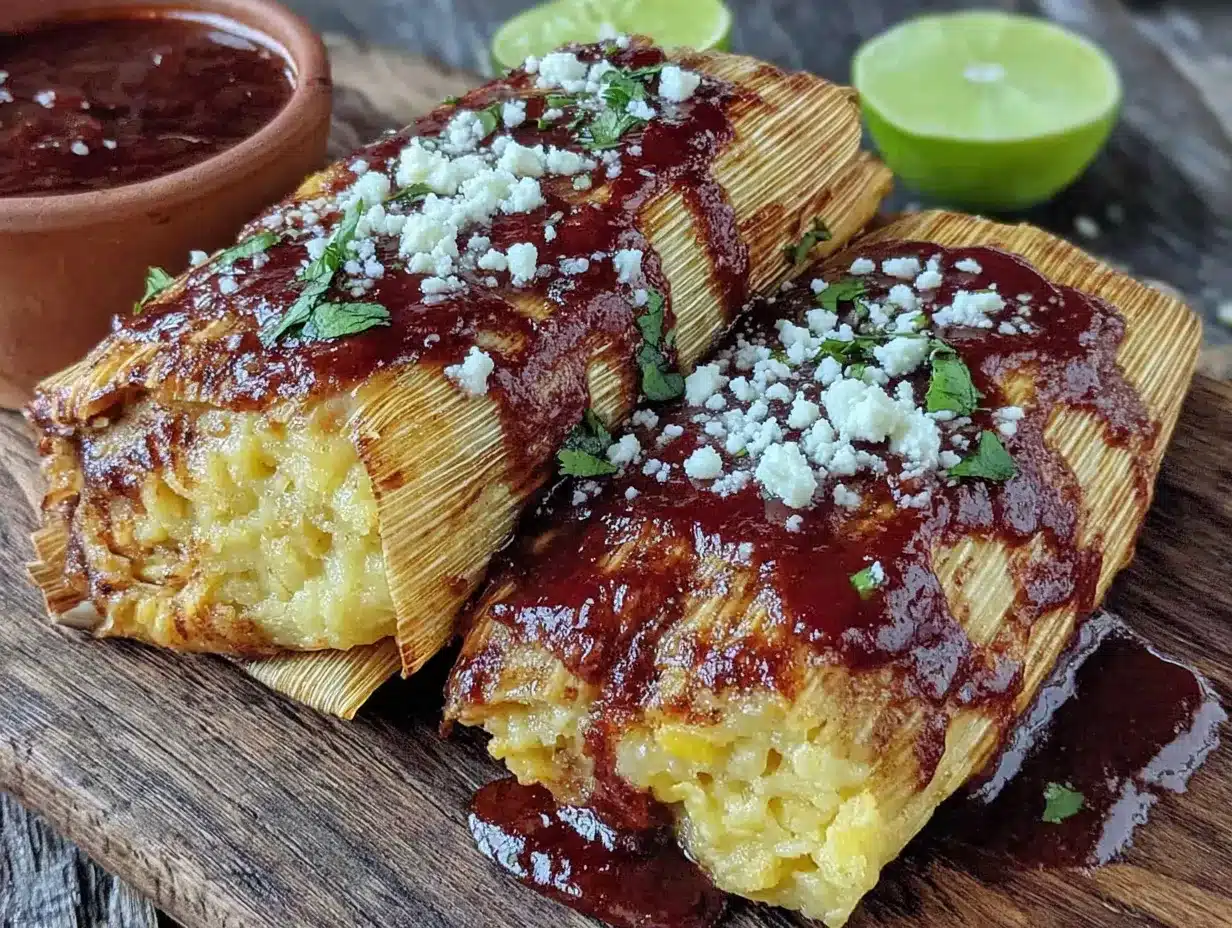
- 8 oz (225 g) dried guajillo chiles, stems and seeds removed: These are the backbone of the sauce. They have a mild, fruity heat. I get mine at the local Mexican market, but they’re widely available online.
- 4 oz (115 g) dried ancho chiles, stems and seeds removed: These add a deeper, almost raisin-like sweetness and a beautiful dark red color.
- 2-3 chiles de árbol, stems removed (optional, for heat): Add these if you want a spicier sauce. I usually throw in two for a nice kick.
- 4 cloves garlic, peeled
- 1 teaspoon dried oregano (preferably Mexican oregano)
- 1 teaspoon ground cumin
- 1 tablespoon kosher salt, or to taste
- 2 tablespoons vegetable oil or lard
- 2 cups (480 ml) reserved pork cooking broth
For the Masa Dough
- 4 cups (500 g) masa harina (I prefer Maseca brand for consistent results): This is corn flour specially treated for making masa. Do not substitute with regular cornmeal.
- 2 teaspoons baking powder
- 2 teaspoons kosher salt
- 1 ½ cups (340 g) lard or vegetable shortening, at room temperature: Lard gives the best flavor and texture, but high-quality vegetable shortening works in a pinch.
- 3-4 cups (720-960 ml) warm reserved pork cooking broth
For Assembly
- 1 package (8 oz / 225 g) dried corn husks: You’ll need about 40-50 husks. Look for a bag that says “hojas para tamales.”
Equipment Needed
You don’t need a ton of fancy equipment, but a few key tools will make the process much smoother. I’ve learned the hard way that a good steamer setup is non-negotiable.
- Large stockpot or Dutch oven (8-10 quart / 8-10 L): For simmering the pork.
- Large skillet or frying pan: For toasting the chiles.
- Blender or food processor: For pureeing the smooth red chile sauce.
- Fine-mesh strainer: To ensure your sauce is silky smooth.
- Large mixing bowls: At least two, for the masa and the filling.
- Stand mixer or hand mixer: For whipping the masa dough. You can do it by hand, but your arm will get a serious workout. I speak from experience.
- Large steamer pot or tamale steamer: A tamale steamer with a removable basket is ideal, but you can use a large stockpot with a steamer basket and a tight-fitting lid.
- Parchment paper or clean kitchen towel: For lining the steamer basket.
Preparation Method
Okay, let’s get into the good stuff. The key to making tamales for a crowd is to break the process into manageable steps. I usually do the pork and sauce one day, then the assembly and steaming the next. It makes the whole thing feel like a fun project instead of a chore.
Step 1: Cook the Pork
- Place the pork chunks, quartered onion, smashed garlic, salt, peppercorns, and bay leaves in your large stockpot.
- Add enough cold water to cover the meat by about 2 inches (5 cm).
- Bring to a boil over high heat, then reduce to a gentle simmer. Skim off any foam that rises to the surface with a spoon. This takes just a minute but makes the broth much cleaner.
- Cover and simmer for 2 to 2 ½ hours, until the pork is fork-tender and shreds easily. You should be able to pull it apart with almost no resistance.
- Using a slotted spoon, transfer the cooked pork to a large bowl. Reserve at least 4 cups (960 ml) of the cooking broth, discarding the solids. Let the pork cool slightly, then shred it with two forks. Set aside.
Step 2: Make the Red Chile Sauce
- While the pork is cooking, prepare your chiles. Toast the cleaned guajillo and ancho chiles in a dry skillet over medium heat for about 30-60 seconds per side. You’ll know they’re ready when they become fragrant and pliable. Watch them carefully; burnt chiles taste bitter.
- Place the toasted chiles in a bowl and cover them with hot water. Let them soak for about 20 minutes, until they are completely softened.
- Drain the chiles and transfer them to a blender. Add the garlic, oregano, cumin, and 2 cups (480 ml) of the reserved pork broth.
- Blend on high until the sauce is completely smooth. This might take a minute or two. For safety, hold the blender lid down with a towel.
- Pour the sauce through a fine-mesh strainer into a bowl, pressing on the solids to extract all the liquid. Discard the skins and seeds left in the strainer.
- Heat the vegetable oil in a large skillet over medium heat. Carefully pour in the strained chile sauce. It will sputter. Stir in the salt. Cook for 5-7 minutes, stirring occasionally, until the sauce thickens slightly and darkens in color.
- Add the shredded pork to the sauce and stir to coat every strand of meat. Taste and adjust the salt. Let this filling cool completely before using. You can make this a day ahead and refrigerate it.
Step 3: Prepare the Corn Husks
- Place the dried corn husks in a large bowl or your sink and cover them with hot water.
- Place a heavy plate or bowl on top to keep them submerged. Soak for at least 30 minutes, or until they are pliable and soft. You can do this while you make the filling.
- Drain the husks and pat them dry. Tear a few of the thinner, smaller husks into long, thin strips to use for tying the tamales.
Step 4: Make the Masa Dough
- In a large bowl of a stand mixer (or a regular bowl if using a hand mixer), beat the lard or shortening on medium speed for about 2 minutes, until it’s light and fluffy. This step is crucial for tender tamales.
- In a separate bowl, whisk together the masa harina, baking powder, and salt.
- Alternate adding the dry ingredients and the warm broth to the whipped lard, starting and ending with the dry ingredients. Mix on low speed until just combined. The dough should be the consistency of a very soft, spreadable peanut butter. You should be able to take a small piece and drop it into a glass of cold water; if it floats, the masa is ready. If it sinks, add a little more broth and whip for another minute.
- Cover the bowl with a damp towel to keep the masa from drying out while you assemble.
Step 5: Assemble the Tamales
- Take a soaked corn husk and lay it flat on your work surface with the wide end at the top and the narrow point facing you.
- Using a spatula or the back of a spoon, spread about 2-3 tablespoons of masa dough onto the upper half of the husk. You want a rectangle about 4 inches (10 cm) wide and ¼-inch (6 mm) thick, leaving a border of about 1 inch (2.5 cm) on the sides and 2 inches (5 cm) at the top and bottom.
- Spoon about 1 ½ tablespoons of the pork filling down the center of the masa rectangle.
- Fold the right side of the husk over the filling, then the left side. Fold the pointed bottom end up over the tamale. You can leave the top open or fold it down.
- If desired, tie the tamale loosely with a strip of corn husk. This isn’t strictly necessary, but it helps keep them from unrolling during steaming.
- Repeat with the remaining husks, masa, and filling. This is the part where you can recruit a friend or family member. It makes the work go twice as fast!
Step 6: Steam the Tamales
- Place a steamer basket or a layer of extra corn husks in the bottom of your large steamer pot. This prevents the tamales from sitting directly in the water.
- Stand the tamales upright in the steamer, with the open ends facing up. Pack them in fairly tightly, but don’t crush them. They need a little room to expand.
- Add water to the pot, making sure it doesn’t touch the tamales. Cover the pot with a tight-fitting lid.
- Bring the water to a boil, then reduce the heat to a gentle simmer. Steam for 60-75 minutes. The tamales are done when the masa pulls away cleanly from the husk. Check the water level every 20-30 minutes and add more boiling water if needed.
- Let the tamales rest in the steamer, off the heat, for 10 minutes before serving. This helps them firm up.
Cooking Tips & Techniques
After making hundreds of these things, I’ve picked up a few tricks that separate good tamales from great ones. I’ve also made plenty of mistakes, so you don’t have to.
- Don’t Overwork the Masa: Whip the lard well, but once you add the dry ingredients and broth, mix just until combined. Over-mixing develops the gluten in the masa harina and makes the tamales tough. I learned this the hard way during a particularly ambitious New Year’s Eve tamale-making session.
- The Water Float Test is Your Friend: Seriously, do it. A tiny ball of masa that floats means your dough is perfectly hydrated. If it sinks, add a little more warm broth and beat it for another 30 seconds. It’s a simple trick that guarantees soft, fluffy tamales every time.
- Spread the Masa Thinly: A thick layer of masa makes for a heavy, doughy tamale. You want it to be a tender wrapper, not the main event. Aim for about a ¼-inch (6 mm) thickness. You should be able to see the husk through the masa.
- Don’t Skimp on the Steaming Time: Undercooked tamales are a tragedy. The 60-75 minute mark is a guideline, but the true test is the husk test. If the masa sticks to the husk, they need more time. Patience is a virtue here.
- Multitask Like a Pro: While the pork is simmering, you can toast the chiles and soak the husks. While the sauce is cooking, you can shred the pork. This is how you get everything done without feeling overwhelmed.
Variations & Adaptations
This base recipe is fantastic, but don’t be afraid to make it your own. I love experimenting with different fillings, and my family is always happy to be the taste testers.
- Chicken Tamales: Substitute the pork with 3 lbs (1.4 kg) of boneless, skinless chicken thighs. Simmer them with the same aromatics, then shred and mix with the red chile sauce. The cooking time for the chicken will be shorter, about 45 minutes.
- Spicy Black Bean and Cheese: For a vegetarian option, skip the meat and use a mixture of refried black beans, crumbled queso fresco, and roasted poblano peppers. The red chile sauce is still fantastic with this combination.
- Green Chile & Cheese: Swap the red chile sauce for a green chile sauce made with roasted tomatillos and green chiles. Mix the shredded pork with the green sauce and add a cube of Monterey Jack cheese to the center of each tamale before rolling.
- Sweet Tamales: For a dessert version, add ½ cup of sugar and 1 teaspoon of cinnamon to the masa dough. Fill them with a spoonful of pineapple jam or strawberry preserves. Steam as directed. These are a huge hit with kids.
Serving & Storage Suggestions
These tamales are the star of the show, but a few simple sides can turn them into a full feast. I love setting up a little “tamale bar” for guests to customize their plates.
- Serving: Serve the tamales hot, right out of the steamer. Unwrap them from the husks at the table—it’s part of the fun! Offer bowls of additional red chile sauce, crema or sour cream, crumbled cotija cheese, and pickled jalapeños on the side.
- What to Serve Alongside: A simple pot of frijoles charros and a crisp Mexican street corn salad are my go-to accompaniments. For drinks, a cold Mexican Coke or a pitcher of horchata is perfect.
- Storage: Cooked tamales freeze like a dream. Let them cool completely, then place them in a single layer on a baking sheet and freeze until solid. Transfer the frozen tamales to a freezer-safe zip-top bag. They will keep for up to 3 months.
- Reheating: The best way to reheat tamales is by steaming them again for 15-20 minutes, or until heated through. You can also microwave them wrapped in a damp paper towel for 1-2 minutes, but the texture won’t be as good. I promise the extra few minutes of steaming are worth it.
- Flavor Development: Here’s a secret: leftover tamales are often even better the next day. The flavors have a chance to meld together. If you can resist eating them all, save a few for the next morning’s breakfast!
Nutritional Information & Benefits
Let’s be honest, tamales are a comfort food, not health food. But knowing what’s in them helps you enjoy them mindfully. This recipe is made with real, whole ingredients, which is always a win.
- Estimated Per Tamale: Calories: 280-320 | Fat: 18g | Protein: 14g | Carbohydrates: 20g | Fiber: 3g. These are estimates and will vary based on exact ingredients and portion sizes.
- Protein Power: The pork shoulder provides a solid dose of protein, which helps keep you feeling full and satisfied.
- Fiber from Corn: The masa harina is a whole-grain corn product, offering a good amount of dietary fiber.
- Vitamins from Chiles: Guajillo and ancho chiles are rich in vitamins A and C, as well as antioxidants. They add flavor and a nutritional boost.
- Dietary Considerations: This recipe is naturally gluten-free, making it a great option for guests with celiac disease or gluten sensitivity. To make it dairy-free, use vegetable shortening instead of lard.
Conclusion
I know making tamales from scratch can seem like a big undertaking, especially when you’re cooking for a crowd. But honestly, the process is half the fun. The smell of the chiles toasting, the warmth of the kitchen, the laughter when everyone gathers around the table to help assemble them—that’s what it’s all about. This recipe isn’t just about the food; it’s about creating a moment. It’s about showing the people you love that they are worth the effort. And when you pull that steamer basket out and see those perfect, plump tamales, you’ll know it was all worth it. I’d love to hear how your tamale-making adventure goes! Drop a comment below and tell me about your filling, or tag me in your photos on social media. Happy cooking, friends!
Frequently Asked Questions
Can I use pre-made red chile sauce instead of making my own?
You can, but I really encourage you to try making your own. The flavor from dried chiles is so much deeper and more complex than anything from a can. It’s the heart of this recipe, and it only takes about 15 minutes of active work.
My masa dough seems too dry. What should I do?
Don’t panic! This is a common issue. Simply add more warm broth, one tablespoon at a time, and mix it in until the dough reaches that soft, peanut butter-like consistency. The water float test is your best friend here.
How do I know when the tamales are done steaming?
The most reliable test is to carefully unwrap a tamale from the center of the pot. If the masa peels away cleanly from the husk without sticking, they are done. If it sticks, they need another 10-15 minutes of steaming.
Can I prepare these tamales completely ahead of time?
Absolutely! You can assemble the tamales, place them upright in the steamer pot, cover, and refrigerate them overnight. The next day, simply add water to the pot and steam as directed, adding about 15-20 minutes to the cooking time since they are starting cold.
My tamales came out mushy. What went wrong?
Mushy tamales are usually a sign of too much water in the steamer pot or undercooking. Make sure the water level is below the steamer basket and that your lid fits tightly. Also, ensure you steamed them for the full 60-75 minutes. The resting time after steaming also helps them firm up.
Pin This Recipe!
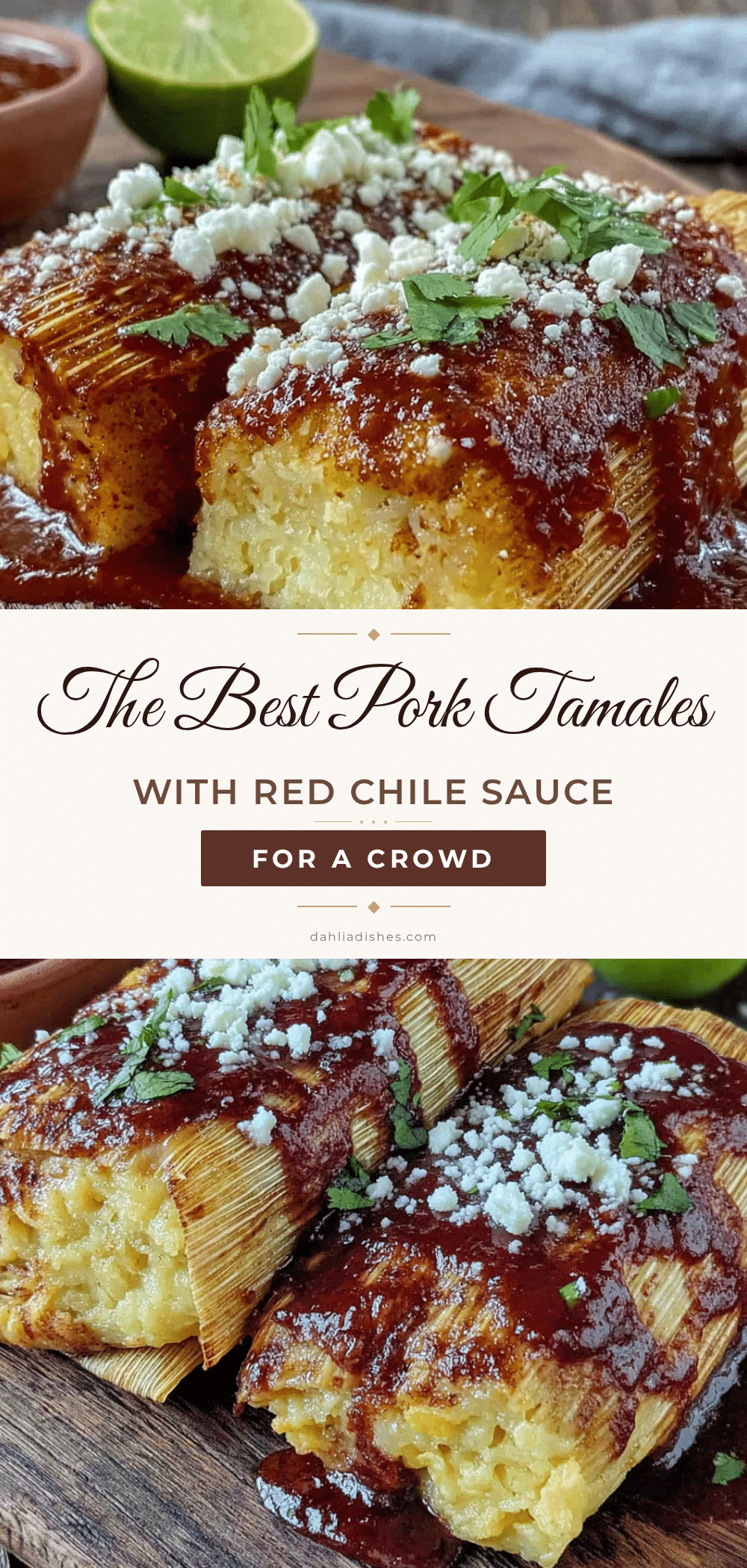
The Best Pork Tamales with Red Chile Sauce for a Crowd

These pork tamales with red chile sauce are incredibly tender and flavorful, perfect for feeding a crowd. The recipe is designed to be stress-free, with make-ahead options and a foolproof method that will convert even the biggest tamale skeptics.
- Prep Time: 1 hour
- Cook Time: 2 hours 30 minutes
- Total Time: 3 hours 30 minutes
- Yield: 40-50 tamales 1x
- Category: Main Course
- Cuisine: Mexican
Ingredients
- 4 lbs (1.8 kg) boneless pork shoulder, cut into 2-inch chunks
- 1 large white onion, quartered
- 4 cloves garlic, smashed
- 2 teaspoons kosher salt
- 1 teaspoon black peppercorns
- 2 bay leaves
- Water, to cover
- 8 oz (225 g) dried guajillo chiles, stems and seeds removed
- 4 oz (115 g) dried ancho chiles, stems and seeds removed
- 2–3 chiles de árbol, stems removed (optional, for heat)
- 4 cloves garlic, peeled
- 1 teaspoon dried oregano (preferably Mexican oregano)
- 1 teaspoon ground cumin
- 1 tablespoon kosher salt, or to taste
- 2 tablespoons vegetable oil or lard
- 2 cups (480 ml) reserved pork cooking broth
- 4 cups (500 g) masa harina (I prefer Maseca brand for consistent results)
- 2 teaspoons baking powder
- 2 teaspoons kosher salt
- 1 ½ cups (340 g) lard or vegetable shortening, at room temperature
- 3–4 cups (720–960 ml) warm reserved pork cooking broth
- 1 package (8 oz / 225 g) dried corn husks
Instructions
- Cook the Pork: Place the pork chunks, quartered onion, smashed garlic, salt, peppercorns, and bay leaves in a large stockpot. Add enough cold water to cover the meat by about 2 inches (5 cm). Bring to a boil over high heat, then reduce to a gentle simmer. Skim off any foam that rises to the surface. Cover and simmer for 2 to 2 ½ hours, until the pork is fork-tender and shreds easily. Using a slotted spoon, transfer the cooked pork to a large bowl. Reserve at least 4 cups (960 ml) of the cooking …
- Make the Red Chile Sauce: While the pork is cooking, toast the cleaned guajillo and ancho chiles in a dry skillet over medium heat for about 30-60 seconds per side until fragrant and pliable. Place the toasted chiles in a bowl and cover them with hot water. Let them soak for about 20 minutes, until completely softened. Drain the chiles and transfer them to a blender. Add the garlic, oregano, cumin, and 2 cups (480 ml) of the reserved pork broth. Blend on high until the sauce is completely smooth…
- Prepare the Corn Husks: Place the dried corn husks in a large bowl or your sink and cover them with hot water. Place a heavy plate or bowl on top to keep them submerged. Soak for at least 30 minutes, or until they are pliable and soft. Drain the husks and pat them dry. Tear a few of the thinner, smaller husks into long, thin strips to use for tying the tamales.
- Make the Masa Dough: In a large bowl of a stand mixer (or a regular bowl if using a hand mixer), beat the lard or shortening on medium speed for about 2 minutes, until it’s light and fluffy. In a separate bowl, whisk together the masa harina, baking powder, and salt. Alternate adding the dry ingredients and the warm broth to the whipped lard, starting and ending with the dry ingredients. Mix on low speed until just combined. The dough should be the consistency of a very soft, spreadable peanut b…
- Assemble the Tamales: Take a soaked corn husk and lay it flat on your work surface with the wide end at the top and the narrow point facing you. Using a spatula or the back of a spoon, spread about 2-3 tablespoons of masa dough onto the upper half of the husk. You want a rectangle about 4 inches (10 cm) wide and ¼-inch (6 mm) thick, leaving a border of about 1 inch (2.5 cm) on the sides and 2 inches (5 cm) at the top and bottom. Spoon about 1 ½ tablespoons of the pork filling down the center of …
- Steam the Tamales: Place a steamer basket or a layer of extra corn husks in the bottom of your large steamer pot. Stand the tamales upright in the steamer, with the open ends facing up. Pack them in fairly tightly, but don’t crush them. Add water to the pot, making sure it doesn’t touch the tamales. Cover the pot with a tight-fitting lid. Bring the water to a boil, then reduce the heat to a gentle simmer. Steam for 60-75 minutes. The tamales are done when the masa pulls away cleanly from the hus…
Notes
You can prep the filling and sauce a day ahead. The water float test is key for perfect masa. Don’t overwork the masa. Spread the masa thinly (about ¼-inch thick). Steam for the full 60-75 minutes. Leftover tamales are even better the next day. To reheat, steam for 15-20 minutes or microwave wrapped in a damp paper towel for 1-2 minutes.
Nutrition
- Serving Size: 1 tamale
- Calories: 300
- Sugar: 2
- Sodium: 450
- Fat: 18
- Saturated Fat: 6
- Carbohydrates: 20
- Fiber: 3
- Protein: 14
Keywords: pork tamales, red chile sauce, tamales for a crowd, Mexican recipe, homemade tamales, Christmas tamales