Love this? Save it for later!
Share the inspiration with your friends
This was supposed to be a honey-glazed situation. I had the honey out on the counter, the carrots were scrubbed clean, and I was feeling pretty good about myself for once. But somewhere between answering a text from my sister about her cat’s weird new habit and realizing I was out of olive oil, I grabbed the Dijon mustard instead of the honey jar. I mean, they’re both in the fridge door, right? It’s an easy mistake. By the time I noticed, the mustard was already mixed into the maple syrup, and I just stood there staring at this weird, creamy-looking concoction wondering if I should just order takeout instead.
But here’s the thing—I hate wasting food. So I poured it over the carrots and parsnips anyway, tossed them around with a little bit of melted butter I found hiding in the back of the fridge, and shoved the whole tray into the oven. I fully expected to be eating cereal for dinner. Honestly, I was already planning which bowl I’d use. But then the smell started drifting through the house, and it wasn’t a disaster smell. It was warm and a little bit tangy and sweet in a way that made me stop scrolling through my phone and just stand there breathing it in. Maybe you’ve been there—the moment when a mistake turns into something you didn’t know you needed.
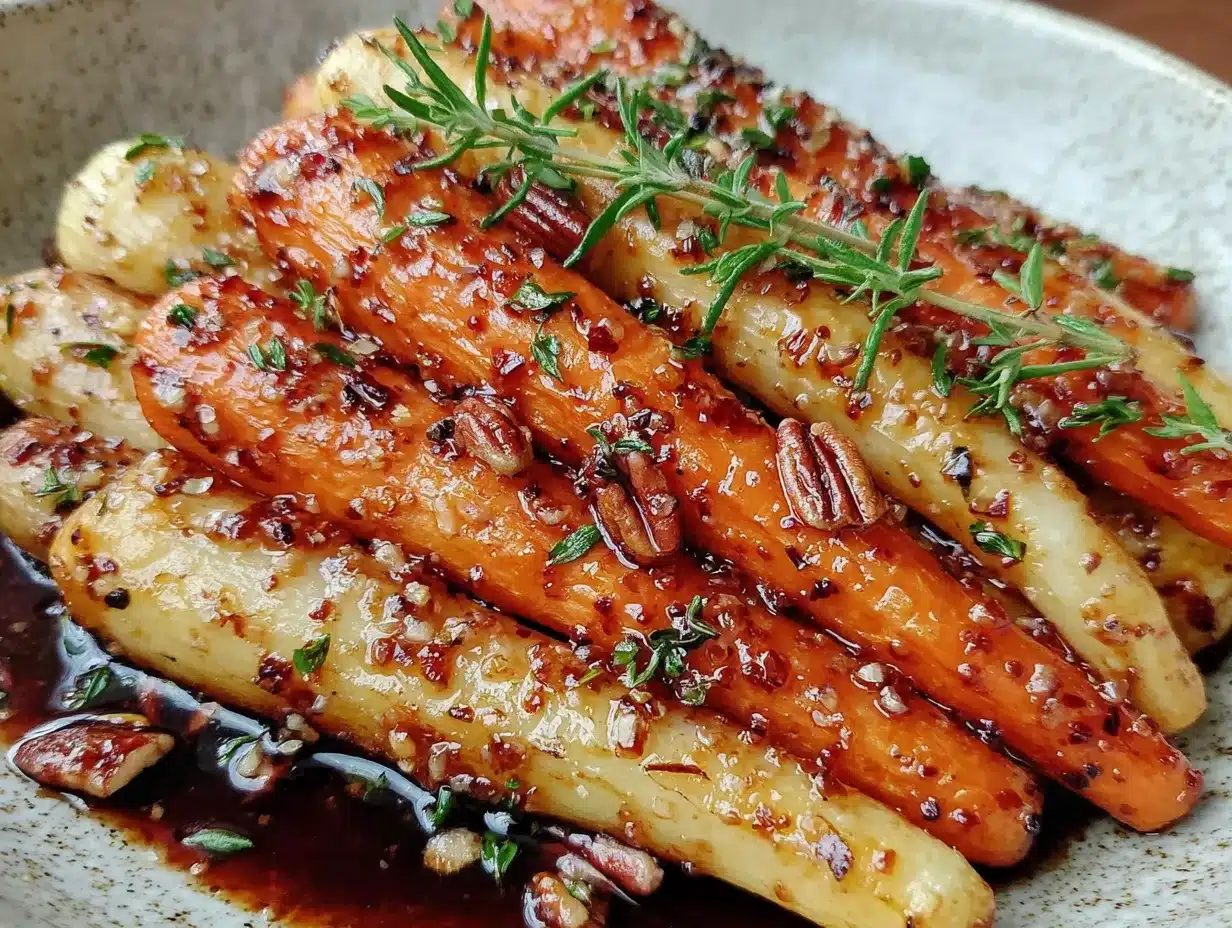
When I pulled those roasted carrots and parsnips out of the oven, they were caramelized at the edges and glistening in a way that felt almost unfair. The first bite was this perfect little punch of sweet and tangy and earthy all at once. I sat there at my kitchen counter, eating straight off the baking sheet, and I knew this wasn’t a one-time fluke. This was a recipe I’d be making for years. It’s the kind of cozy side dish that feels fancy enough for company but simple enough for a Tuesday night when you just need something warm and good.
Why You’ll Love This Recipe
Let me tell you why these roasted carrots and parsnips have become my go-to side dish for pretty much everything. I’ve tested this recipe at least a dozen times now—tweaking the temperature, playing with the maple-to-mustard ratio, even trying different cutting techniques. And every single time, it delivers.
- Quick & Easy : From fridge to table in about 40 minutes, with just 10 minutes of active prep. Perfect for those evenings when you need something on the table fast.
- Simple Ingredients : You probably have maple syrup and Dijon mustard in your fridge right now. Carrots and parsnips are cheap and available year-round at any grocery store.
- Perfect for Cozy Nights : This dish was practically made for cold weather, quiet evenings, and those days when you need a little comfort on your plate.
- Crowd-Pleaser : I’ve served this at Thanksgiving, at casual weeknight dinners, and even to my picky niece who “doesn’t like vegetables.” She asked for seconds.
- Unbelievably Delicious : The magic is in the glaze. Maple syrup brings sweetness, Dijon adds a tangy kick, and roasting concentrates all those flavors into something absolutely addictive.
What makes this recipe different from all the other roasted carrot recipes out there? It’s the balance. Most versions go too sweet or too tangy. This one hits that perfect middle note where every bite makes you pause. The parsnips add an earthy, almost nutty flavor that carrots alone just can’t deliver. And that glaze? It caramelizes into this sticky, glossy coating that makes these vegetables taste almost like candy—but in a grown-up, sophisticated way.
This isn’t just a side dish. It’s the kind of recipe that makes you close your eyes after the first bite. It’s comfort food reimagined—simpler, faster, but with the same soul-soothing satisfaction. Perfect for impressing guests without stress, or turning a simple Tuesday dinner into something memorable.
What Ingredients You Will Need
This recipe uses simple, wholesome ingredients that come together to create something truly special. Most of these are pantry staples, and the ones that aren’t are easy to find at any grocery store.
- Carrots (1 pound, about 4-5 medium): Look for firm, bright orange carrots with smooth skin. I prefer regular carrots over baby carrots here—they roast better and have more flavor. Peel them, then cut them into sticks about 3 inches long and ½ inch thick. Uniform size matters for even cooking.
- Parsnips (1 pound, about 4-5 medium): These pale, carrot-shaped root vegetables are the secret star here. They have a slightly sweet, earthy, almost nutty flavor that pairs perfectly with the maple-Dijon glaze. Look for firm parsnips that aren’t too thick—thicker ones can have woody cores. Peel them and cut them the same size as the carrots.
- Pure Maple Syrup (3 tablespoons): Not pancake syrup—real maple syrup. Grade A dark amber works beautifully here. The maple flavor needs to be authentic because it’s doing a lot of heavy lifting in this glaze. I’ve tried this with honey, and it’s good, but maple syrup is better.
- Dijon Mustard (2 tablespoons): Use a good-quality Dijon, not yellow mustard. Grey Poupon is my go-to, but any smooth Dijon will work. The tanginess cuts through the sweetness and keeps this dish from being cloying.
- Unsalted Butter (2 tablespoons, melted): Butter adds richness and helps the glaze coat the vegetables evenly. If you’re dairy-free, you can substitute with olive oil or vegan butter—both work well.
- Olive Oil (1 tablespoon): A little olive oil helps everything roast up crispy and caramelized. It also raises the smoke point so the butter doesn’t burn.
- Salt (½ teaspoon, or to taste): I use kosher salt for its clean flavor and easy pinch-ability.
- Black Pepper (¼ teaspoon, freshly ground): Freshly ground pepper makes a difference here—it adds a subtle warmth that complements the maple.
- Fresh Thyme (4-5 sprigs, optional but recommended): Thyme adds an herby, slightly floral note that ties everything together. If you don’t have fresh, use ½ teaspoon dried thyme.
Equipment Needed
You don’t need a fancy kitchen to make these roasted carrots and parsnips. Here’s what you’ll need:
- Baking Sheet (half-sheet pan, 13×18 inches): A rimmed baking sheet is essential—it catches any glaze drips and prevents a sticky mess in your oven. I use a heavy-duty aluminum sheet pan for even heat distribution.
- Parchment Paper (or silicone baking mat): Lining your pan makes cleanup a breeze and prevents the maple glaze from burning onto the metal. Trust me on this one—I learned the hard way.
- Chef’s Knife: A sharp knife makes cutting carrots and parsnips into uniform sticks much easier and safer.
- Cutting Board: Any sturdy cutting board works. I prefer a large wooden board for the stability.
- Vegetable Peeler: A good Y-peeler or swivel peeler will make quick work of peeling both carrots and parsnips.
- Mixing Bowl: Medium-sized bowl for whisking the glaze together.
- Whisk: For combining the maple syrup, Dijon, melted butter, and olive oil into a smooth emulsion.
- Measuring Spoons: For accurate measurements of maple syrup and Dijon mustard.
If you don’t have parchment paper, you can use aluminum foil lightly greased with cooking spray. And if you don’t have a whisk, a fork works perfectly fine for mixing the glaze.
Preparation Method
- Preheat your oven to 400°F (200°C). This temperature is the sweet spot for roasting root vegetables—hot enough to caramelize the natural sugars, but not so hot that the glaze burns before the vegetables are tender. Position your oven rack in the middle position.
- Prepare the vegetables. Peel the carrots and parsnips using a vegetable peeler. Cut off the tops and the thin tail ends. Then cut each carrot and parsnip in half crosswise, then cut each half lengthwise into sticks about ½ inch thick. Try to make them roughly the same size so they cook evenly. If some are much thicker than others, they’ll end up either undercooked or burnt. I speak from experience here—I’ve definitely had a tray of half-raw, half-charred vegetables before.
- Make the maple-Dijon glaze. In a medium mixing bowl, whisk together 3 tablespoons pure maple syrup, 2 tablespoons Dijon mustard, 2 tablespoons melted unsalted butter, and 1 tablespoon olive oil. Whisk until the mixture is smooth and well-combined. It should look like a creamy, pale golden dressing. Add ½ teaspoon kosher salt and ¼ teaspoon freshly ground black pepper, and whisk again. Taste it—it should be sweet with a tangy kick. Adjust the salt if needed.
- Combine the vegetables and glaze. Add the carrot and parsnip sticks to the bowl with the glaze. Use your hands or a spatula to toss everything together until every piece is evenly coated. Don’t be shy here—really get in there and make sure every surface has some glaze on it. This is where the flavor happens.
- Arrange on the baking sheet. Line a rimmed baking sheet with parchment paper. Spread the glazed carrot and parsnip sticks in a single layer on the sheet. Make sure they’re not crowded—if they’re stacked on top of each other, they’ll steam instead of roast, and you won’t get that beautiful caramelization. If your baking sheet is too small, use two sheets or work in batches.
- Add the thyme sprigs. Tuck 4-5 sprigs of fresh thyme in among the vegetables. The thyme will infuse the vegetables with its fragrance as they roast. If you’re using dried thyme, sprinkle it evenly over the vegetables now.
- Roast for 25-30 minutes. Place the baking sheet in the preheated oven and roast for 15 minutes. Then remove the sheet from the oven and use a spatula to flip the vegetables. This ensures even browning. Return to the oven and roast for another 10-15 minutes. The vegetables are done when they’re tender enough to be pierced easily with a fork, and the edges are caramelized and slightly browned. The glaze should be sticky and glossy.
- Check for doneness. Start checking at the 25-minute mark. Ovens vary, and the size of your vegetable pieces will affect cooking time. You’re looking for fork-tender carrots and parsnips with golden-brown edges. If they need more time, give them 5 more minutes and check again.
- Remove and rest. Take the baking sheet out of the oven and let the vegetables rest for 2-3 minutes. This allows the glaze to set slightly. Remove the thyme sprigs if you used fresh thyme—they’ve done their job.
- Serve immediately. Transfer the roasted carrots and parsnips to a serving platter or bowl. Spoon any extra glaze from the baking sheet over the top. Garnish with a few fresh thyme leaves if you want to get fancy, or just serve them as is. They’re best enjoyed warm, right out of the oven.
Cooking Tips & Techniques
After making these roasted carrots and parsnips more times than I care to count, I’ve picked up a few tricks that make a real difference. Here’s what I’ve learned the hard way so you don’t have to.
Don’t skip the parsnip peeling. Parsnips have a tougher skin than carrots, and leaving it on results in a chewy, unpleasant texture. Always peel them thoroughly. And if you find a parsnip with a thick core, cut that woody center out—it won’t soften no matter how long you roast it.
Cut vegetables to the same size. This is the single most important tip for even cooking. If your carrot sticks are twice as thick as your parsnip sticks, you’ll end up with burnt parsnips and undercooked carrots. Take the extra minute to make them uniform.
Don’t overcrowd the pan. I know it’s tempting to cram everything onto one sheet to save dishes, but overcrowding leads to steaming, not roasting. The vegetables need space between them for hot air to circulate and create that caramelized exterior. If they’re touching too much, they’ll release water and get mushy.
Flip halfway through. Set a timer for 15 minutes and flip the vegetables when it goes off. This ensures both sides get browned and glazed. I’ve forgotten this step before, and the bottom sides ended up pale and unappealing while the tops were perfectly caramelized.
Watch the glaze. Maple syrup has a tendency to burn if left too long at high heat. If you notice the glaze starting to darken too quickly around the 20-minute mark, you can tent the pan loosely with foil for the remaining cooking time.
Use room temperature ingredients. If your butter and maple syrup are cold from the fridge, they won’t emulsify well with the Dijon. Let them sit out for 15 minutes before mixing, or warm the maple syrup slightly in the microwave.
Variations & Adaptations
One of the best things about this recipe is how flexible it is. Here are some variations I’ve tried and loved:
Herb Swaps: Not a fan of thyme? Try fresh rosemary instead—it adds a piney, aromatic note that pairs beautifully with maple. Or use fresh sage for a more earthy, almost buttery flavor. Dried herbs work too, just use half the amount.
Add Some Heat: For a spicy kick, add ¼ teaspoon of red pepper flakes to the glaze. The heat cuts through the sweetness and adds a whole new dimension. I made this version for a friend who loves spicy food, and she said it was “dangerously good.”
Make It Vegan: Simply substitute the butter with additional olive oil or a high-quality vegan butter. The recipe works beautifully without dairy—the olive oil adds its own fruity notes that complement the maple.
Add Other Root Vegetables: This glaze works on pretty much any root vegetable. Try adding sweet potatoes, turnips, or even celery root. Just adjust the cooking time based on the density of the vegetables. Sweet potatoes might need a few extra minutes.
Citrus Twist: Add 1 tablespoon of fresh orange juice and 1 teaspoon of orange zest to the glaze. The citrus brightens everything up and adds a fresh, sunny note that’s perfect for spring or summer meals.
Garlic Lover’s Version: Add 2-3 minced garlic cloves to the glaze. Roast the garlic along with the vegetables—it mellows out and becomes sweet and nutty. Just keep an eye on it so it doesn’t burn.
Serving & Storage Suggestions
These roasted carrots and parsnips are incredibly versatile when it comes to serving. Here’s how to make the most of them:
Serving Temperature: Serve them warm, right out of the oven. That’s when the glaze is at its stickiest and the vegetables are at their most tender. They’re also delicious at room temperature, which makes them perfect for potlucks or holiday buffets.
Presentation Ideas: Arrange the vegetables on a white platter to make their golden-brown color pop. Sprinkle with fresh thyme leaves, a pinch of flaky sea salt, and maybe a drizzle of extra maple syrup for a gorgeous finish. For holidays, I like to pile them in the center of the table in a warm, rustic bowl.
What to Serve With Them: These pair beautifully with roasted chicken, grilled salmon, pork chops, or a hearty grain bowl. They’re also fantastic alongside a simple green salad with a tangy vinaigrette. For a cozy winter meal, serve them with mashed potatoes and a rich gravy.
Storage Instructions: Store leftovers in an airtight container in the refrigerator for up to 4 days. The vegetables will soften slightly, but the flavor actually gets better as they sit and the glaze soaks in.
Reheating Methods: The best way to reheat these is in a 350°F oven for 5-7 minutes, which restores some of their caramelized edges. You can also reheat them in a skillet over medium heat for 3-4 minutes. Avoid the microwave—it makes them mushy and dulls the flavor.
Freezer Notes: I don’t recommend freezing these, as the texture of both carrots and parsnips becomes watery and unappealing after thawing. These are best enjoyed fresh or within a few days of making.
Flavor Development: Interestingly, these roasted vegetables taste even better the next day. The maple-Dijon glaze continues to penetrate the vegetables, and the flavors meld together beautifully. So don’t be sad if you have leftovers—you’re in for a treat.
Nutritional Information & Benefits
Here’s the estimated nutritional breakdown for one serving (about ⅙ of the recipe):
| Nutrient | Amount |
|---|---|
| Calories | 185 |
| Total Fat | 8g |
| Saturated Fat | 3.5g |
| Cholesterol | 10mg |
| Sodium | 320mg |
| Total Carbohydrates | 28g |
| Dietary Fiber | 5g |
| Sugars | 16g |
| Protein | 2g |
| Vitamin A | 380% DV |
| Vitamin C | 25% DV |
| Potassium | 15% DV |
Carrots are packed with beta-carotene, which your body converts into vitamin A for healthy vision and immune function. Parsnips are an excellent source of fiber, vitamin C, and folate. The maple syrup provides natural sweetness with a lower glycemic impact than refined sugar. This dish is naturally gluten-free and can easily be made vegan with a simple butter swap. It’s also relatively low in calories for how satisfying it is—a win for anyone watching their intake while still wanting something delicious.
Conclusion
These cozy maple Dijon roasted carrots and parsnips started as a happy accident, but they’ve earned a permanent spot in my recipe rotation. There’s something deeply satisfying about a dish that transforms humble vegetables into something you’d happily serve at a holiday dinner. The sweet-tangy glaze, the caramelized edges, the tender interiors—it all comes together in a way that feels both simple and special.
I hope you give this recipe a try, whether you’re looking for an easy weeknight side dish or something impressive for your next gathering. Don’t be afraid to make it your own—swap the herbs, add some heat, or throw in extra vegetables. That’s the beauty of a recipe like this. It’s forgiving, flexible, and always delicious.
If you make these roasted carrots and parsnips, I’d love to hear about it. Drop a comment below and let me know how they turned out, what variations you tried, or just say hi. And if you’re looking for more cozy side dish ideas, check out my honey garlic roasted Brussels sprouts or these balsamic rosemary roasted potatoes—they’d make a perfect trio for your next dinner party.
Until next time, happy cooking—and don’t be afraid to make a mess. Some of the best recipes come from the mistakes we almost threw away.
Frequently Asked Questions
Can I use baby carrots instead of whole carrots?
Yes, you can use baby carrots, but keep in mind they’re already small and uniform, so they’ll cook faster—check them at the 20-minute mark. The texture won’t be quite as robust as using whole carrots cut into sticks, but it’s a convenient shortcut when you’re short on time.
Do I have to peel the parsnips?
Yes, I strongly recommend peeling parsnips. Their skin is tougher and more fibrous than carrot skin, and leaving it on results in a chewy texture that doesn’t soften during roasting. A vegetable peeler makes quick work of it.
Can I make this recipe ahead of time?
You can prep the vegetables and make the glaze up to a day in advance. Store the cut vegetables in a bowl of cold water in the refrigerator to keep them from drying out, and keep the glaze in a separate airtight container. When you’re ready to cook, just toss everything together and roast as directed.
What if I don’t have maple syrup? Can I use honey?
Absolutely! Honey works beautifully as a substitute for maple syrup. The flavor will be slightly different—honey is floral and sweet, while maple has that distinctive woodsy note—but both create a delicious glaze. Use the same amount (3 tablespoons) and proceed with the recipe as written.
How do I prevent the glaze from burning?
The key is to not overcrowd the pan and to flip the vegetables halfway through. If you notice the glaze darkening too quickly, you can tent the pan with foil for the last 10 minutes of cooking. Also, make sure your oven temperature is accurate—an oven that runs hot can cause the maple syrup to burn before the vegetables are tender.
Pin This Recipe!
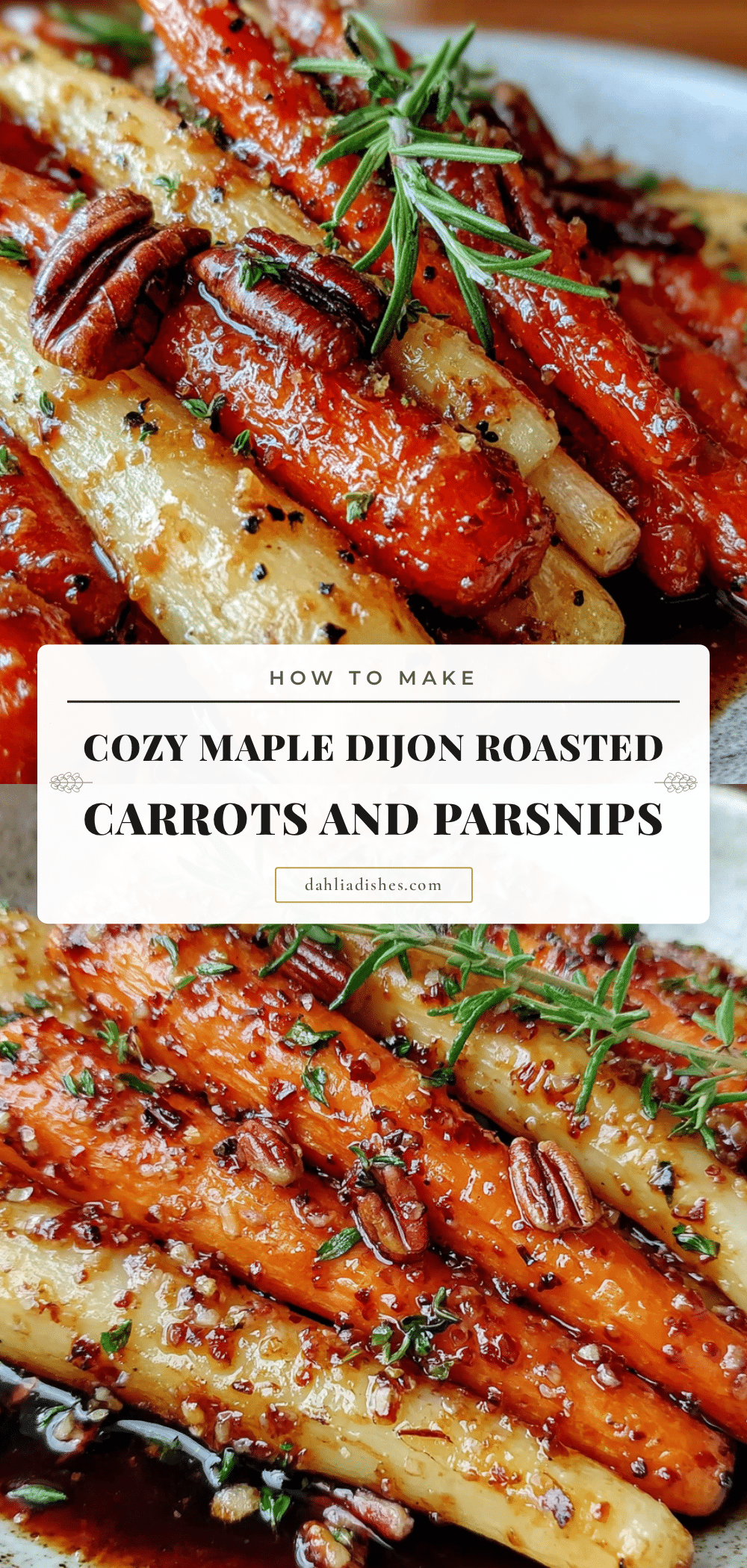
Cozy Maple Dijon Roasted Carrots and Parsnips: Easy Side Dish
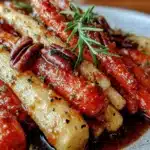
These roasted carrots and parsnips are coated in a sweet-tangy maple Dijon glaze and roasted until caramelized and tender. A cozy, easy side dish perfect for weeknights or holiday gatherings.
- Prep Time: 10 minutes
- Cook Time: 30 minutes
- Total Time: 40 minutes
- Yield: 6 servings 1x
- Category: Side Dish
- Cuisine: American
Ingredients
- 1 pound carrots (about 4–5 medium), peeled and cut into 3-inch sticks, ½ inch thick
- 1 pound parsnips (about 4–5 medium), peeled and cut into 3-inch sticks, ½ inch thick
- 3 tablespoons pure maple syrup
- 2 tablespoons Dijon mustard
- 2 tablespoons unsalted butter, melted
- 1 tablespoon olive oil
- ½ teaspoon kosher salt
- ¼ teaspoon freshly ground black pepper
- 4–5 sprigs fresh thyme (or ½ teaspoon dried thyme)
Instructions
- Preheat your oven to 400°F (200°C). Position the oven rack in the middle.
- Peel the carrots and parsnips. Cut off the tops and thin tail ends. Cut each in half crosswise, then cut each half lengthwise into sticks about ½ inch thick, making them roughly the same size.
- In a medium mixing bowl, whisk together maple syrup, Dijon mustard, melted butter, olive oil, salt, and pepper until smooth and well-combined.
- Add the carrot and parsnip sticks to the bowl with the glaze. Toss with your hands or a spatula until every piece is evenly coated.
- Line a rimmed baking sheet with parchment paper. Spread the glazed vegetables in a single layer, ensuring they are not crowded.
- Tuck the fresh thyme sprigs among the vegetables (or sprinkle dried thyme evenly over them).
- Roast for 15 minutes. Remove the sheet from the oven and flip the vegetables. Return to the oven and roast for another 10-15 minutes, until fork-tender and caramelized at the edges.
- Check for doneness at the 25-minute mark. If needed, roast for 5 more minutes and check again.
- Remove from the oven and let rest for 2-3 minutes. Remove the thyme sprigs if used.
- Serve immediately, spooning any extra glaze from the baking sheet over the top. Garnish with fresh thyme leaves if desired.
Notes
Don’t skip peeling the parsnips—their skin is tough. Cut vegetables to uniform size for even cooking. Avoid overcrowding the pan to ensure caramelization. Flip halfway through for even browning. If the glaze darkens too quickly, tent with foil. Use room temperature ingredients for better emulsification. Leftovers keep in the fridge for up to 4 days; reheat in a 350°F oven or skillet. Not recommended for freezing.
Nutrition
- Serving Size: 1 serving (about ⅙ o
- Calories: 185
- Sugar: 16
- Sodium: 320
- Fat: 8
- Saturated Fat: 3.5
- Carbohydrates: 28
- Fiber: 5
- Protein: 2
Keywords: roasted carrots, roasted parsnips, maple Dijon, easy side dish, holiday side, gluten-free, vegetarian