Love this? Save it for later!
Share the inspiration with your friends
My neighbor Mrs. Gable watched me fumbling with a mandoline slicer on my back porch last December, the blade guard already lost somewhere in the grass. She didn’t say anything at first—just stood there in her garden clogs, holding a basket of Yukon Gold potatoes. Then she walked over, set the basket down, and said, “You’re overthinking it. The secret isn’t the slice. It’s the cream.” She had this way of making everything sound simple, even Christmas dinner. I’d been stressing about the main course, the table settings, the whole production. But she just smiled and told me about her mother’s scalloped potatoes, the ones that showed up at every family gathering from Thanksgiving through New Year’s. She never called it a recipe. She called it “the dish that keeps people at the table.”
Honestly, I almost said no. I had my menu planned, my timings mapped out, my Pinterest board curated to perfection. But there’s something about a neighbor who brings you potatoes and a story that you can’t refuse. I mean, let’s be real—Christmas dinner is stressful enough without adding another side dish to the mix. But Mrs. Gable’s potatoes? They changed everything. They’re not just scalloped potatoes. They’re the kind of rich, cheesy, golden-brown dish that makes everyone at the table stop talking for a second. You know that feeling when a dish quiets a room full of family? That’s what these do.
The thing about this recipe is that it came with a conversation, not a lecture. Mrs. Gable didn’t hand me a card or tell me measurements. She told me about the first time she made them for her husband’s family, how she burned the top and served it anyway, and how her mother-in-law asked for the recipe the next day. That tiny imperfect moment—the burnt top, the panic, the happy ending—stayed with me more than any precise instruction ever could. So when I adapted it for my own Christmas table, I kept the spirit of her story alive. A little chaos, a lot of cream, and potatoes sliced thin enough to let the cheese do the talking.
Why You’ll Love This Recipe
Let me tell you why this dish earns its spot on your Christmas table year after year. I’ve tested this recipe through three holiday seasons, two different ovens, and one memorable disaster where I forgot to thaw the frozen cheese. (Don’t ask. It was a learning experience.) What I’ve learned is that scalloped potatoes au gratin aren’t just a side dish—they’re the side dish that makes people ask for seconds before the turkey is even carved.
- Make-Ahead Magic : Assemble this dish the day before Christmas, pop it in the fridge, and bake it while you’re opening presents. It’s a host’s best friend when timing gets tight.
- Simple Ingredients : No fancy grocery store runs. Potatoes, cream, cheese, garlic, and a few pantry staples are all you need. I bet you’ve got most of it already.
- Perfect for a Crowd : This recipe scales beautifully. Feeding twelve? Double it. Feeding twenty? Triple it. The ratios hold up like a champ.
- Crowd-Pleaser Guaranteed : I’ve served these to picky eaters, dairy skeptics, and even my uncle who “doesn’t do sides.” Every single person went back for more.
- Unbelievably Rich : The combination of heavy cream, sharp cheddar, and Gruyère creates this velvety, decadent texture that feels like comfort food on steroids. It’s the kind of dish that makes you close your eyes after the first bite.
What makes this version different from every other scalloped potato recipe out there? It’s the technique. Most recipes rely on a flour-thickened sauce that can turn grainy or separate. This one uses a reduction method—simmering the cream with aromatics before layering—so the sauce clings to every slice without getting gluey. Plus, the two-cheese combo gives you both meltability and sharpness. It’s not just another version. It’s the version you’ll come back to every Christmas.
And honestly? This recipe connects on an emotional level. It’s comfort food reimagined—richer, faster to prep than you’d think, but with the same soul-soothing satisfaction that makes holiday meals memorable. Perfect for impressing guests without breaking a sweat, or turning a simple Christmas dinner into something people talk about until next year.
What Ingredients You Will Need
This recipe uses simple, wholesome ingredients to deliver bold flavor and satisfying texture without the fuss. Most of these are pantry staples or easy to find at any grocery store, which is exactly what you want when you’re already juggling a million holiday tasks.
- Yukon Gold Potatoes (3 pounds, about 6-7 medium) — These are my go-to for scalloped potatoes. They hold their shape during baking but get creamy on the inside. Russets work too, but they can get a bit mealy. Look for potatoes that are firm and free of green spots. I prefer organic when I can find them.
- Heavy Cream (2 cups, 480 ml) — Don’t skimp here. Half-and-half or milk will make the sauce thinner and less luxurious. Heavy cream gives you that velvety texture that makes this dish feel indulgent. I recommend Organic Valley or Horizon for consistent quality.
- Whole Milk (1 cup, 240 ml) — This balances out the richness of the cream without making it too heavy. If you’re dairy-free, you can substitute unsweetened oat milk, but the texture will be slightly different.
- Sharp Cheddar Cheese (2 cups, shredded, about 8 ounces) — Sharp cheddar brings the tangy, bold flavor that cuts through the cream. Shred it yourself from a block—pre-shredded cheese has anti-caking agents that prevent smooth melting. I like Tillamook or Cabot for consistent quality.
- Gruyère Cheese (1 cup, shredded, about 4 ounces) — This is the secret weapon. Gruyère melts like a dream and adds a nutty, slightly sweet flavor that cheddar alone can’t match. If you can’t find it, Swiss cheese or Emmental work well.
- Garlic (4 cloves, minced) — Fresh garlic is non-negotiable here. The jarred stuff has a metallic taste that throws off the whole dish. Mince it fine so it distributes evenly.
- Unsalted Butter (3 tablespoons, 42 grams) — Salted butter will make the dish too salty, especially with the cheese. Stick with unsalted so you control the seasoning.
- All-Purpose Flour (3 tablespoons, 24 grams) — This thickens the cream sauce just enough to coat the potatoes without making it pasty. For a gluten-free version, use a 1:1 gluten-free flour blend.
- Fresh Thyme (1 teaspoon, leaves only) — Thyme adds an earthy, slightly floral note that pairs beautifully with the creamy potatoes. Dried thyme works in a pinch—use half a teaspoon.
- Salt (1 ½ teaspoons, 9 grams) — I use fine sea salt for even seasoning. Kosher salt works too, but you might need a bit more.
- Black Pepper (½ teaspoon, freshly ground) — Freshly ground pepper makes a difference here. The pre-ground stuff just doesn’t have the same punch.
- Nutmeg (¼ teaspoon, freshly grated if possible) — This is optional but highly recommended. Nutmeg has a magical way of enhancing creamy dishes without screaming “I’m here!” It’s subtle but noticeable.
Ingredient Selection Tips : When choosing potatoes for this dish, look for ones that are similar in size so they cook evenly. For the cheese, I always recommend buying blocks and shredding them yourself. Yes, it takes an extra five minutes. Yes, it’s worth it. The anti-caking agents in pre-shredded cheese can make your sauce gritty, and nobody wants gritty scalloped potatoes on Christmas.
Substitution Guidance : If you’re feeding someone who’s lactose intolerant, use a high-quality dairy-free cream alternative and vegan cheddar shreds. The texture won’t be identical, but it’ll still be delicious. For a lighter version, swap half the heavy cream with whole milk and reduce the cheese by a third. It won’t be as decadent, but it’ll still hit the spot.
Equipment Needed
You don’t need a professional kitchen to pull off this recipe, but a few tools make the process smoother. Here’s what I use and what you can substitute if you’re in a pinch.
- Mandoline Slicer (or a sharp chef’s knife) — A mandoline gives you uniformly thin slices, which means even cooking. I use a Benriner Japanese mandoline—it’s affordable and lasts forever. If you’re using a knife, aim for ⅛-inch thick slices. Consistency matters more than perfection.
- 9×13-inch Baking Dish (or a 3-quart casserole dish) — This size works perfectly for a single batch. If you’re doubling, use two dishes or a larger roasting pan. Glass or ceramic works best—metal can react with the cream and give a slightly metallic taste.
- Medium Saucepan (2-quart) — For making the cream sauce. A heavy-bottomed pan prevents scorching.
- Box Grater (or food processor with shredding disc) — For shredding your cheese. I use a Microplane for the nutmeg too.
- Whisk — For smoothing out the flour in the cream sauce. A silicone whisk won’t scratch your pan.
- Aluminum Foil — For covering the dish during the first part of baking. This traps steam and ensures the potatoes cook through before the top browns.
- Chef’s Knife — For mincing garlic and stripping thyme leaves. A good knife makes prep feel less like a chore.
- Cutting Board — Preferably a large one so you have room to work.
Budget-Friendly Options : If you don’t have a mandoline, a sharp knife and a steady hand work just fine. It’ll take a little longer, but the results are the same. I’ve also used a food processor with a slicing attachment in a pinch—just be careful not to turn your potatoes into mush. And if you don’t have a 9×13 dish, a 10-inch cast iron skillet works beautifully. Just keep an eye on the cooking time since cast iron retains heat differently.
Personal Experience : I learned the hard way that a dull knife is more dangerous than a sharp one. My first attempt at scalloped potatoes involved a sad, blunt chef’s knife that kept slipping. I ended up with uneven slices and a cut on my thumb. Invest in a good knife or a decent mandoline—your fingers will thank you.
Preparation Method
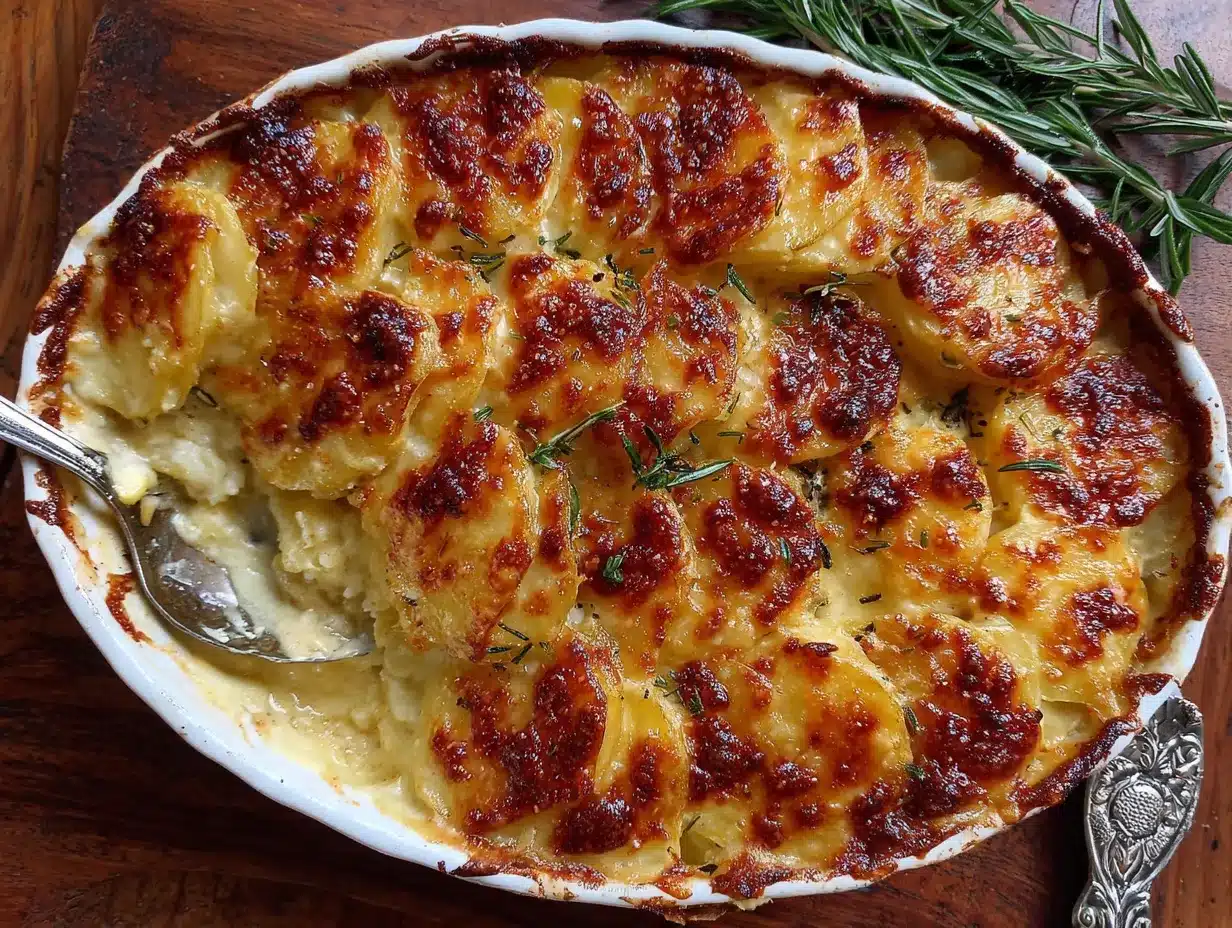
Let’s walk through this step by step. I’ve included time estimates and sensory cues so you know exactly what to look for at each stage. Trust me—your kitchen will smell like a cozy Christmas dream by the time this is done.
Step 1: Prep Your Potatoes (10 minutes)
Preheat your oven to 375°F (190°C). While it’s heating, wash and peel your Yukon Gold potatoes. I know some people leave the skins on, but for a smooth, elegant dish, peeling is the way to go. Slice them into ⅛-inch thick rounds using your mandoline or knife. You want them thin enough to bend slightly but thick enough to hold their shape. As you slice, place the potatoes in a large bowl of cold water to prevent browning. This also rinses off excess starch, which helps the cream sauce cling better. Drain and pat dry with a clean kitchen towel before using.
Step 2: Make the Cream Sauce (15 minutes)
In a medium saucepan over medium heat, melt 3 tablespoons of unsalted butter. Once it’s bubbling but not browning—you’ll see small bubbles across the surface—add the minced garlic. Cook for about 30 seconds until fragrant. Don’t let it burn, or your sauce will taste bitter. Whisk in 3 tablespoons of all-purpose flour and cook for 1 minute, stirring constantly. This is your roux, and it should look like a pale golden paste. Gradually pour in 2 cups of heavy cream and 1 cup of whole milk, whisking continuously to prevent lumps. Bring the mixture to a gentle simmer—you’ll see small bubbles around the edges—and cook for 3-4 minutes until it thickens enough to coat the back of a spoon. Remove from heat and stir in 1 ½ teaspoons of salt, ½ teaspoon of black pepper, 1 teaspoon of fresh thyme leaves, and ¼ teaspoon of freshly grated nutmeg. Taste it. Adjust the seasoning if needed. The sauce should be well-seasoned because the potatoes will absorb some of the salt.
Step 3: Layer the Dish (10 minutes)
Butter your 9×13-inch baking dish generously. Spread a thin layer of the cream sauce on the bottom—just enough to coat it. Arrange a single layer of potato slices in overlapping rows, like shingles on a roof. Pour about a third of the remaining sauce over the potatoes, spreading it evenly. Sprinkle a third of the shredded cheddar and Gruyère on top. Repeat this process two more times: potatoes, sauce, cheese. You should end with a final layer of cheese on top. Don’t press the layers down—you want the sauce to flow between the slices naturally.
Step 4: Bake Covered (40 minutes)
Cover the dish tightly with aluminum foil and place it on a baking sheet to catch any drips. Bake for 40 minutes. During this time, the potatoes will steam and soften, absorbing all that creamy goodness. You’ll know it’s working when you see steam rising from the edges of the foil and your kitchen starts smelling like heaven. After 40 minutes, remove the foil carefully—watch out for the steam, it’s hot—and check the potatoes. A knife should slide through the center with little resistance. If they’re still firm, cover and bake for another 10 minutes.
Step 5: Brown the Top (15-20 minutes)
Once the potatoes are tender, increase the oven temperature to 425°F (220°C). Return the uncovered dish to the oven and bake for 15-20 minutes, until the top is golden brown and bubbling. You’ll see the cheese forming a crispy, caramelized crust. The edges should be dark brown and slightly crispy—that’s the best part. If the top is browning too quickly but the center isn’t bubbly yet, tent loosely with foil and continue baking.
Step 6: Rest and Serve (10 minutes)
Remove the dish from the oven and let it rest for at least 10 minutes before serving. This is crucial—the sauce needs time to set, or you’ll end up with a soupy mess. I know it’s tempting to dig in right away, but trust the process. The rest time allows the starches to firm up and the flavors to meld. Garnish with a few fresh thyme sprigs or a sprinkle of fresh parsley for color.
Troubleshooting Tip : If your sauce seems too thin after baking, it’s usually because the potatoes released too much water. Next time, pat your sliced potatoes dry more thoroughly before layering. You can also let the dish rest longer—up to 20 minutes—to help the sauce thicken naturally.
Cooking Tips & Techniques
I’ve made this recipe more times than I can count, and I’ve learned a few things the hard way. Here are my best tips to ensure your scalloped potatoes au gratin turn out perfect every time.
Slice Evenly for Even Cooking — This is the most important tip. If your slices are uneven, some potatoes will be mushy while others are still crunchy. A mandoline is your best friend here. If you’re using a knife, take your time. Consistency matters more than speed.
Don’t Overcrowd the Layers — Each layer should be a single, overlapping row of potatoes. If you pile them too thick, the center won’t cook through properly. I learned this lesson when I tried to speed things up by doubling the layers. The top was burnt and the middle was raw. Not my finest moment.
Season Every Layer — I see people seasoning only the sauce and wondering why the dish tastes flat. Potatoes need salt, and they need it throughout. Sprinkle a tiny pinch of salt over each layer of potatoes as you build the dish. It makes a huge difference.
Let It Rest — I cannot stress this enough. Letting the dish rest for 10-15 minutes after baking is what transforms it from a soupy casserole into a sliceable, elegant side dish. The sauce needs time to thicken and set. If you’re serving a crowd, this is also a great time to finish up other dishes.
Use Room Temperature Ingredients — Cold cream and cold cheese can cause the sauce to seize or separate. Let your dairy sit out for 15-20 minutes before you start cooking. It’s a small step that makes a big difference in texture.
Watch the Oven Temperature — Every oven runs a little differently. If yours runs hot, check the dish 5 minutes early during the uncovered baking phase. If it runs cool, you might need an extra 5-10 minutes. Use visual cues—golden brown, bubbling edges, and a knife that slides through easily—rather than strictly following the clock.
Multitasking Strategy — While the potatoes are baking covered, use that time to prep your main dish or set the table. The 40-minute covered bake is hands-off, so you can focus on other things. I usually make a salad or set out the appetizers during this window.
Variations & Adaptations
One of the best things about this recipe is how adaptable it is. Whether you’re feeding a dietary restriction or just want to switch things up, here are some variations I’ve tried and loved.
Make It Gluten-Free — Substitute the all-purpose flour with a 1:1 gluten-free flour blend or cornstarch. If using cornstarch, use 1 ½ tablespoons instead of 3. Whisk it into cold milk before adding to the butter mixture to prevent lumps. I’ve tested this with Bob’s Red Mill 1:1 Baking Flour, and the texture was nearly identical.
Add Some Crunch — For a crispy topping, mix ½ cup of panko breadcrumbs with 2 tablespoons of melted butter and sprinkle over the cheese layer before the final bake. It adds a lovely golden crust that contrasts with the creamy potatoes. I did this for a Friendsgiving last year, and it was the first dish to disappear.
Spice It Up — Add a pinch of cayenne pepper or red pepper flakes to the cream sauce for a subtle heat. It doesn’t make the dish spicy—just adds a warmth that complements the cheese. Start with ¼ teaspoon and adjust from there.
Vegetable Add-Ins — Layer in some sautéed leeks, caramelized onions, or thinly sliced fennel between the potato layers. These add sweetness and depth without overwhelming the dish. I’ve also added a layer of fresh spinach (wilted first) for a pop of color.
Dairy-Free Version — Use full-fat canned coconut cream instead of heavy cream, and unsweetened oat milk instead of whole milk. For the cheese, there are some excellent vegan cheddar shreds on the market now—I like Violife or Miyoko’s. The texture won’t be as rich, but it’s still delicious and creamy.
Herb Swap — Not a fan of thyme? Try rosemary (finely chopped) or sage. Both pair beautifully with the creamy, cheesy base. Just use half the amount since they’re stronger in flavor.
Personal Variation — My favorite twist is adding a layer of thinly sliced ham between the potatoes. It turns this side dish into a full meal. I did this for a post-Christmas brunch once, and it was a hit. The salty ham cuts through the richness of the cream perfectly.
Serving & Storage Suggestions
This dish is designed to impress, so let’s talk about how to serve it like a pro and store any leftovers (if there are any).
Serving Temperature and Presentation — Serve scalloped potatoes au gratin warm, not piping hot. The ideal temperature is around 140°F (60°C), which allows the cheese to stay melted without being runny. For presentation, use a large spoon to scoop out portions, showing off those beautiful layers. Garnish with fresh thyme sprigs or chopped parsley for a pop of green. I like to serve it in the same baking dish—it feels rustic and homey, perfect for a Christmas table.
What to Serve Alongside — This dish is a natural partner for roasted meats. Think glazed ham, roast turkey, prime rib, or even a simple roasted chicken. For a vegetarian Christmas, pair it with a hearty mushroom Wellington or a lentil loaf. On the side, a bright, acidic salad—like a simple arugula salad with lemon vinaigrette—cuts through the richness beautifully. I also love serving it with roasted Brussels sprouts or green beans almondine for color and crunch.
Beverage Pairings — A crisp white wine like Chardonnay or Sauvignon Blanc complements the creamy, cheesy flavors. For red wine drinkers, a light Pinot Noir works well. Non-alcoholic options include sparkling apple cider or a tart cranberry spritzer.
Storage Instructions — Store leftovers in an airtight container in the refrigerator for up to 4 days. The flavors actually deepen overnight, so it’s even better the next day. To reheat, place individual portions in a 350°F (175°C) oven for 10-15 minutes, or until warmed through. You can also microwave individual servings, but the top won’t stay crispy.
Freezing Instructions — This dish freezes beautifully. Assemble the entire dish (without the final uncovered bake), cover tightly with foil, and freeze for up to 3 months. To bake from frozen, add an extra 20-30 minutes to the covered baking time. If you’ve already baked it, let it cool completely, then wrap tightly and freeze. Thaw overnight in the refrigerator before reheating.
How Flavors Develop — Like many creamy, cheesy dishes, scalloped potatoes taste even better the next day. The flavors meld together, and the texture becomes even creamier. I’ve been known to make a double batch just so I can have leftovers for a few days after Christmas. It’s the gift that keeps on giving.
Nutritional Information & Benefits
Let’s be honest—this is an indulgent dish. But that doesn’t mean it can’t fit into a balanced holiday meal. Here’s what you need to know.
Estimated Nutritional Values (per serving, based on 8 servings) :
- Calories: 420
- Total Fat: 28g
- Saturated Fat: 17g
- Cholesterol: 95mg
- Sodium: 580mg
- Total Carbohydrates: 32g
- Dietary Fiber: 3g
- Sugars: 3g
- Protein: 14g
Health Benefits of Key Ingredients : Potatoes often get a bad rap, but they’re actually a good source of vitamin C, potassium, and fiber (especially if you leave the skins on). The dairy provides calcium and protein, which are essential for bone health. Garlic and thyme offer anti-inflammatory properties and antioxidants. So while this dish is definitely a treat, it’s not entirely without nutritional merit.
Dietary Considerations : This recipe is vegetarian. For a gluten-free version, use the substitution mentioned above. It’s not suitable for a low-carb or keto diet due to the potatoes, but you can reduce the portion size if you’re watching your carbs. The dish contains dairy and gluten, so it’s not suitable for those with allergies to those ingredients.
Personal Wellness Perspective : I believe in balance. Christmas dinner is one day of the year, and this dish is worth every single calorie. I serve it alongside lighter options like a green salad or roasted vegetables, so everyone can fill their plates according to their own preferences. Food is about joy, connection, and celebration—and this dish delivers on all three.
Conclusion
These cheesy scalloped potatoes au gratin are more than just a side dish. They’re the kind of recipe that brings people together, that makes a holiday table feel complete, that sparks conversations about family traditions and favorite meals. Mrs. Gable’s story is now part of my Christmas, and I hope this recipe becomes part of yours.
I encourage you to make this dish your own. Swap the cheeses, add some herbs, throw in a layer of ham—whatever feels right for your table. The beauty of a recipe like this is that it’s forgiving. It welcomes adaptation. It rewards experimentation. And it always, always delivers comfort.
If you make these scalloped potatoes for your Christmas dinner, I’d love to hear about it. Leave a comment below and tell me how they turned out, or share your own twist on the recipe. Tag me in your photos—I can’t wait to see your beautiful tables and happy faces. From my kitchen to yours, Merry Christmas and happy cooking!
Frequently Asked Questions
Can I make scalloped potatoes au gratin ahead of time?
Absolutely! Assemble the dish completely (up to the final bake), cover tightly, and refrigerate for up to 24 hours. When you’re ready to bake, add an extra 10-15 minutes to the covered baking time. This is a lifesaver for Christmas dinner when oven space is at a premium.
Why are my scalloped potatoes watery?
This usually happens when the potatoes release too much moisture during baking. To prevent this, pat your sliced potatoes dry with a clean kitchen towel before layering. Also, make sure your cream sauce is thick enough—it should coat the back of a spoon before you pour it over the potatoes. Letting the dish rest after baking also helps the sauce set properly.
Can I use different types of cheese?
Yes! While I love the combination of sharp cheddar and Gruyère, you can experiment with other cheeses. Fontina, Gouda, or Monterey Jack all melt beautifully. Avoid hard cheeses like Parmesan for the main layers—they don’t melt as smoothly—but you can sprinkle some on top for extra flavor.
How do I reheat leftover scalloped potatoes without drying them out?
The best method is to reheat them in the oven. Place individual portions in a 350°F (175°C) oven for 10-15 minutes, covered with foil to prevent drying. If you’re in a hurry, the microwave works, but the texture won’t be as good. Add a splash of milk or cream before reheating to restore some moisture.
Can I freeze scalloped potatoes au gratin?
Yes, this dish freezes very well. Assemble the dish without the final uncovered bake, wrap tightly in foil, and freeze for up to 3 months. To bake from frozen, add 20-30 minutes to the covered baking time. If you’ve already baked it, let it cool completely before freezing. Thaw overnight in the refrigerator before reheating.
Pin This Recipe!
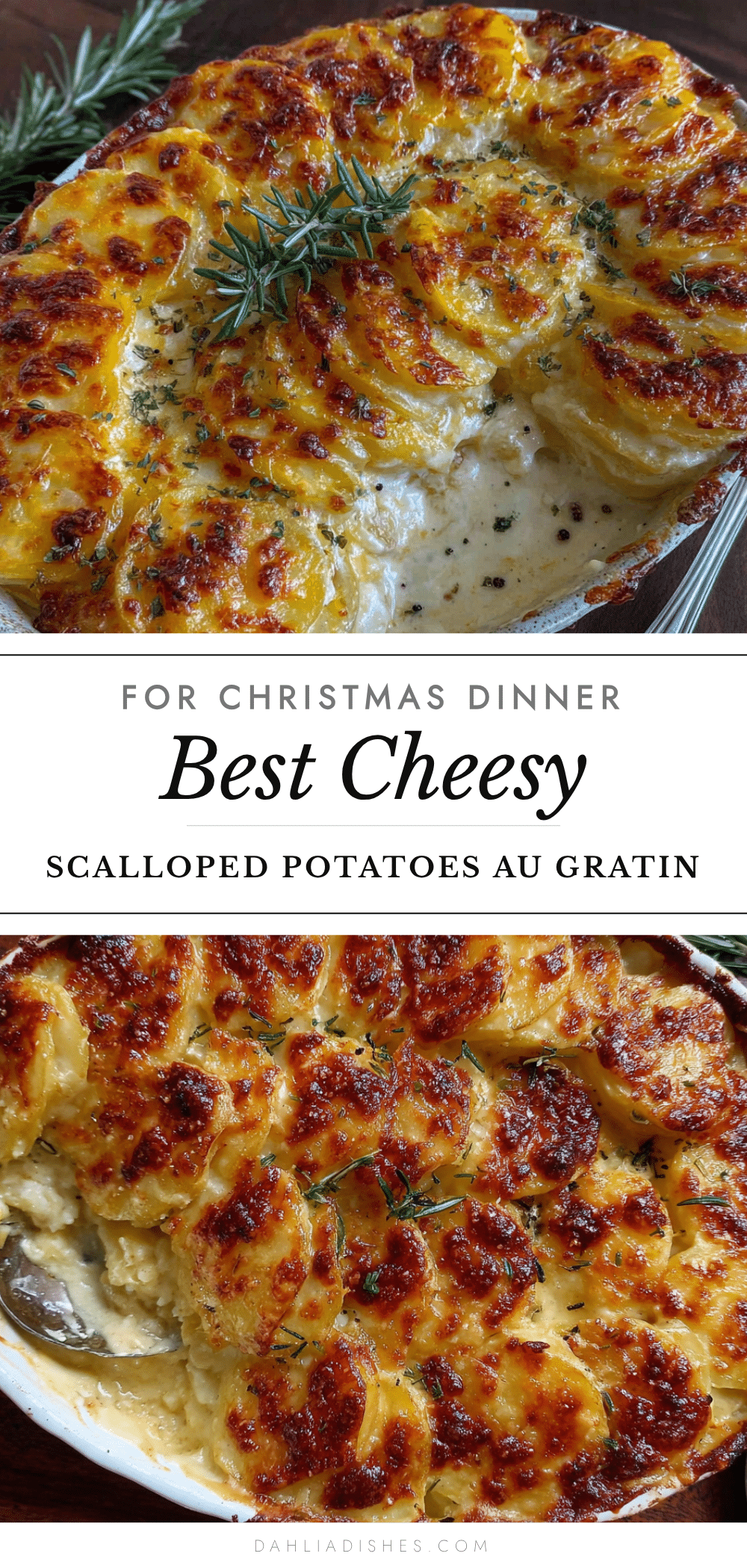
Best Cheesy Scalloped Potatoes au Gratin Recipe

These rich, cheesy scalloped potatoes au gratin are the ultimate Christmas side dish. Made with Yukon Gold potatoes, a creamy reduction sauce, and a blend of sharp cheddar and Gruyère, this recipe delivers a golden-brown, decadent dish that will keep everyone at the table.
- Prep Time: 20 minutes
- Cook Time: 60 minutes
- Total Time: 1 hour 20 minutes
- Yield: 8 servings 1x
- Category: Side Dish
- Cuisine: American
Ingredients
- 3 pounds Yukon Gold potatoes (about 6–7 medium)
- 2 cups heavy cream (480 ml)
- 1 cup whole milk (240 ml)
- 2 cups sharp cheddar cheese, shredded (about 8 ounces)
- 1 cup Gruyère cheese, shredded (about 4 ounces)
- 4 cloves garlic, minced
- 3 tablespoons unsalted butter (42 grams)
- 3 tablespoons all-purpose flour (24 grams)
- 1 teaspoon fresh thyme leaves
- 1 ½ teaspoons fine sea salt (9 grams)
- ½ teaspoon freshly ground black pepper
- ¼ teaspoon freshly grated nutmeg (optional)
Instructions
- Preheat oven to 375°F (190°C). Wash, peel, and slice potatoes into ⅛-inch thick rounds. Place in a bowl of cold water to prevent browning, then drain and pat dry.
- In a medium saucepan over medium heat, melt butter until bubbling. Add minced garlic and cook for 30 seconds until fragrant. Whisk in flour and cook for 1 minute, stirring constantly.
- Gradually whisk in heavy cream and whole milk. Bring to a gentle simmer and cook for 3-4 minutes until thickened enough to coat the back of a spoon. Remove from heat and stir in salt, pepper, thyme, and nutmeg. Taste and adjust seasoning.
- Butter a 9×13-inch baking dish. Spread a thin layer of cream sauce on the bottom. Arrange a single layer of potato slices in overlapping rows. Pour about a third of the remaining sauce over the potatoes, then sprinkle a third of the cheddar and Gruyère. Repeat layers two more times, ending with cheese on top.
- Cover tightly with aluminum foil and place on a baking sheet. Bake for 40 minutes until potatoes are tender when pierced with a knife.
- Remove foil, increase oven temperature to 425°F (220°C), and bake uncovered for 15-20 minutes until top is golden brown and bubbling.
- Let rest for at least 10 minutes before serving. Garnish with fresh thyme sprigs or parsley if desired.
Notes
For best results, shred cheese from a block to avoid anti-caking agents. Let the dish rest after baking to allow the sauce to set. Potatoes can be assembled a day ahead and refrigerated; add 10-15 minutes to covered baking time. To freeze, assemble without final uncovered bake, wrap tightly, and freeze for up to 3 months.
Nutrition
- Serving Size: 1 serving
- Calories: 420
- Sugar: 3
- Sodium: 580
- Fat: 28
- Saturated Fat: 17
- Carbohydrates: 32
- Fiber: 3
- Protein: 14
Keywords: scalloped potatoes, au gratin, cheesy potatoes, Christmas side dish, holiday recipe, creamy potatoes, Yukon Gold, cheddar, Gruyère