Love this? Save it for later!
Share the inspiration with your friends
I was halfway through organizing a dusty shelf of antique linens at a small shop in the Hudson Valley when the owner, a quiet woman named Margaret who I’d only ever seen watering her petunias, started talking about Thanksgiving. Not the turkey, not the pie, but the cranberry sauce. She told me she’d been making the same batch for thirty-two years, and she’d never used a recipe from a can. “The secret,” she said, holding up a sprig of rosemary she’d just snipped from a pot by the register, “is to not treat it like a afterthought.” I laughed, honestly, because here I was, elbow-deep in doilies, getting a masterclass in cranberry sauce from the lady who never said more than “good morning.” But she was right. And now, every time I make this Fresh Cranberry Orange Sauce with Rosemary, I think of that dusty shop and the unexpected gift of a perfect recipe. Maybe you’ve had that moment too—the one where you learn something amazing from the most unlikely source. This is that recipe. It’s tangy, sweet, and has this woodsy, aromatic kick that makes it feel special without being fussy. I’ve been making it for years now, and it’s the one thing my family asks for by name.
Why You’ll Love This Recipe
This isn’t your average cranberry sauce. It’s the kind of recipe that makes you look forward to the sides more than the main event. I’ve tested it more times than I can count, and honestly, it’s foolproof. Here’s why it’s become my go-to:
- Quick & Easy: It comes together in under 20 minutes. You don’t need to be a chef to nail this one.
- Simple Ingredients: No weird additives or hard-to-find items. Fresh cranberries, an orange, rosemary, and sugar—that’s it.
- Perfect for the Holidays: It’s a showstopper on any Thanksgiving, Christmas, or even a cozy Sunday roast table.
- Crowd-Pleaser: Even the canned sauce fans in my house ask for seconds of this version.
- Unbelievably Delicious: The combo of tart cranberries, bright orange, and earthy rosemary is pure magic.
What sets this apart from the rest? It’s the balance. Most recipes are either too sweet or too tart. This one uses fresh orange juice and zest to brighten the berries, while the rosemary adds a savory depth that stops it from being one-note. It’s not just another version—it’s the best version. I mean, the first time I made it, I stood over the pot with a spoon, eating it straight from the stove. No regrets.
What Ingredients You Will Need
This recipe uses simple, wholesome ingredients to deliver bold flavor and satisfying texture without the fuss. Most of these are pantry staples during the holiday season, and the fresh ones are easy to find at any grocery store.
- Fresh cranberries (12 oz / 340 g): The star of the show. Look for firm, bright red berries without any soft spots. Frozen cranberries work in a pinch, but fresh gives the best texture.
- Granulated sugar (3/4 cup / 150 g): Balances the tartness of the cranberries. You can adjust this up or down depending on your sweet tooth. I’ve used coconut sugar before, and it works great too.
- Fresh orange juice (1/2 cup / 120 ml): Use juice from about 1 large orange. Bottled juice is okay, but fresh really makes a difference in brightness. I recommend a juicy navel or Valencia orange.
- Orange zest (1 tablespoon / from 1 orange): This is where the intense citrus flavor lives. Don’t skip it—zest the orange before you juice it.
- Fresh rosemary (1 sprig, plus more for garnish): Adds an earthy, piney note that pairs beautifully with the fruit. I prefer using a whole sprig and removing it later, so the flavor is subtle, not overpowering.
- Water (1/4 cup / 60 ml): Helps the cranberries soften and release their natural pectin.
- Pinch of salt: Just a tiny bit to balance the sweetness and enhance all the flavors.
If you want to get fancy, you can add a cinnamon stick or a splash of bourbon. But honestly, the recipe is perfect as is. I’ve tried it with maple syrup instead of sugar, and it’s delicious—just a little darker in color and richer in taste.
Equipment Needed
You don’t need a lot of fancy gear for this one. Here’s what you’ll need:
- Medium saucepan: A 2-quart saucepan works perfectly. I use my trusty stainless steel one—it heats evenly and doesn’t react with the acidic cranberries.
- Wooden spoon or silicone spatula: For stirring. A metal spoon can scratch your pan, so stick with wood or silicone.
- Microplane or zester: For getting that fine orange zest without the bitter white pith. If you don’t have one, a box grater’s smallest holes work too.
- Citrus juicer: Makes squeezing oranges a breeze. I have a simple handheld one that cost me five bucks.
- Fine-mesh strainer: Optional, if you want to remove the rosemary sprig and any stray seeds. I usually just fish the sprig out with tongs.
- Measuring cups and spoons: For accuracy. I’ve eyeballed it before, and it’s fine, but measuring keeps it consistent.
- Airtight container: For storing leftovers. A glass jar or bowl with a lid works great.
That’s it. No special equipment needed. If you don’t have a zester, you can just peel the orange with a vegetable peeler and finely chop the peel. It’s a little more work, but it gets the job done.
Preparation Method
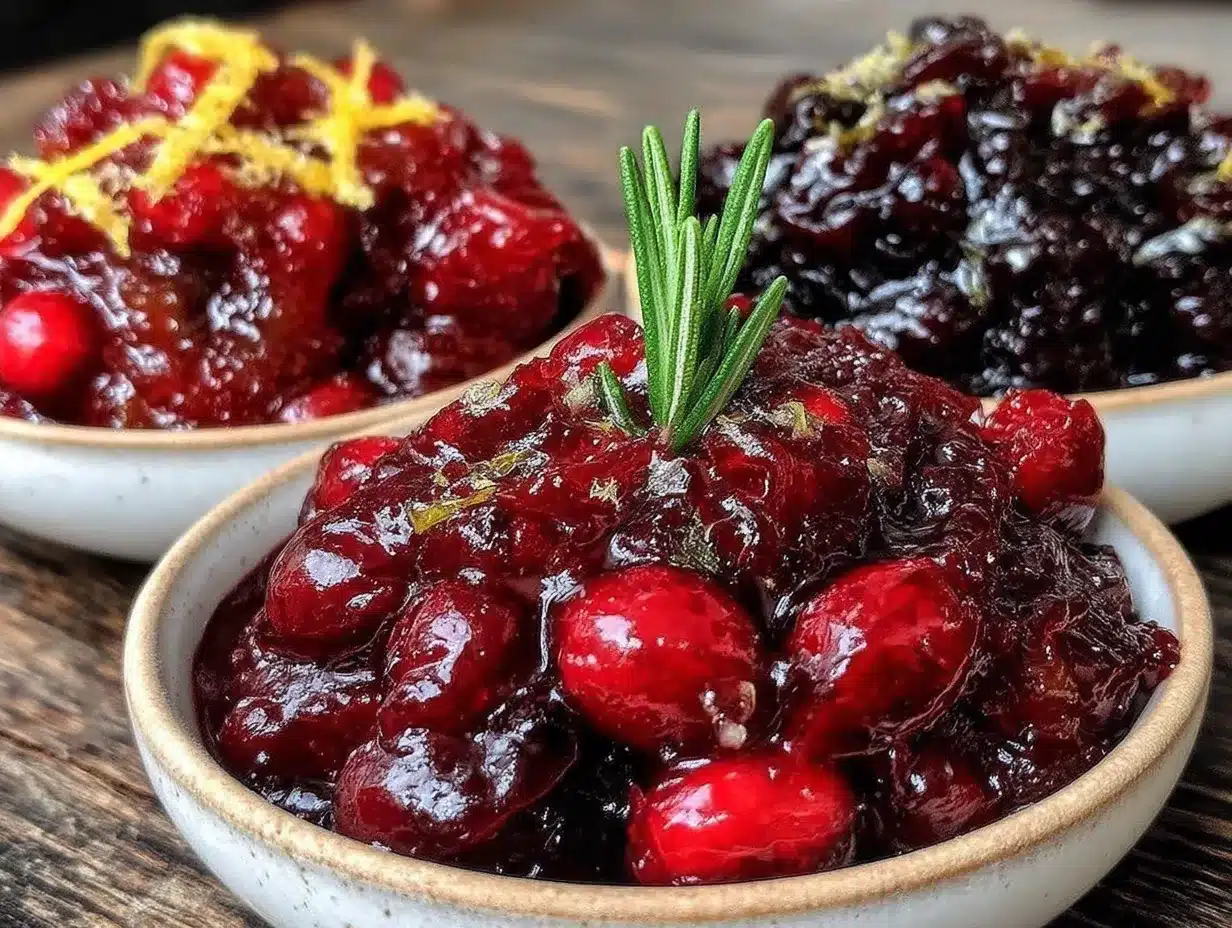
This is one of those recipes that feels almost too easy. But trust the process—the results are incredible. Here’s how to make it:
- Prep your ingredients: Rinse the cranberries under cold water and pick out any soft or bruised ones. Zest your orange before juicing it—trust me, it’s way easier. Measure out your sugar, water, and orange juice. Have your rosemary sprig ready.
- Combine everything in the saucepan: Add the cranberries, sugar, orange juice, orange zest, water, and the sprig of rosemary to your medium saucepan. Give it a good stir with your wooden spoon. Don’t worry if the sugar looks grainy—it’ll dissolve as it heats.
- Bring to a boil: Place the saucepan over medium-high heat. Stir occasionally as the mixture comes to a boil. You’ll hear the cranberries start to pop—that’s the sound of magic happening. This usually takes about 5 minutes.
- Reduce to a simmer: Once it’s boiling, reduce the heat to medium-low. Let it simmer gently for 10 to 12 minutes. Stir every now and then to prevent sticking. The cranberries will break down, and the sauce will thicken. You’ll know it’s ready when it coats the back of your spoon.
- Remove the rosemary: After simmering, take the saucepan off the heat. Fish out the rosemary sprig with tongs or a fork. If you want a smoother sauce, you can let it cool slightly and then blend it with an immersion blender. I prefer it chunky, so I leave it as is.
- Cool and thicken: Let the sauce cool in the pan for about 10 minutes. As it cools, it will continue to thicken. Don’t panic if it looks a little loose at first—that’s normal. It sets beautifully once it’s fully cooled.
- Transfer and chill: Spoon the sauce into your airtight container or a serving bowl. Cover and refrigerate for at least 2 hours before serving. The flavors meld together as it chills, and the texture becomes perfect.
One time, I forgot to remove the rosemary sprig before serving. Let me tell you, nobody complained, but I spent the whole meal apologizing. Learn from my mistake—get that sprig out!
Cooking Tips & Techniques
Over the years, I’ve learned a few things that make this recipe even better. Here are my best tips:
- Don’t overcook the cranberries: They release natural pectin as they cook, which helps thicken the sauce. But if you boil them too long, the pectin breaks down, and you’ll end up with a runny sauce. Stick to the 10 to 12 minute simmer.
- Use a light hand with the rosemary: Rosemary is strong. A little goes a long way. One sprig is perfect. If you use dried rosemary, use just 1/2 teaspoon, or it’ll taste like a pine forest.
- Zest before you juice: This is a small thing, but it makes a big difference. Trying to zest a squishy, juiced orange is a nightmare. Zest it while it’s firm and round.
- Let it cool completely: I know it’s tempting to serve it warm, but the sauce really shines when it’s cold. The texture firms up, and the flavors become more balanced.
- Make it ahead: This sauce actually tastes better the next day. I always make it a day or two before I need it. It saves time on the big day and tastes amazing.
I once tried to rush the cooling process by putting the hot sauce straight into the fridge. It created a weird watery layer on top. Not a disaster, but not ideal. Let it cool on the counter first for at least 30 minutes before refrigerating.
Variations & Adaptations
This recipe is super versatile. Here are some ways to switch it up:
- Spiced Version: Add a cinnamon stick and a star anise to the pot while simmering. Remove them along with the rosemary. It adds a warm, holiday-spice flavor that’s incredible.
- Boozy Kick: Stir in 2 tablespoons of bourbon, brandy, or Grand Marnier after removing the pot from the heat. The alcohol cooks off slightly, leaving behind a rich, complex flavor.
- Low-Sugar Option: Replace the granulated sugar with 1/4 cup of honey or maple syrup. The sauce will be a little darker and thinner, but just as delicious. You might need to simmer it an extra 2 minutes to thicken.
- Citrus Twist: Swap the orange for a blood orange or a tangerine. The color will be different, but the flavor is equally bright and lovely.
- Savory Addition: Add a finely chopped shallot to the pot with the cranberries. It sounds weird, but the savory onion balances the sweetness beautifully. I tried this once on a whim, and it was a hit.
My personal favorite variation is the spiced version. I made it for a Friendsgiving last year, and someone asked if I’d bought it from a fancy store. Nope—just a few extra spices and a little love.
Serving & Storage Suggestions
This sauce is best served cold or at room temperature. I like to spoon it into a beautiful glass bowl and garnish with a fresh sprig of rosemary and a few thin orange slices. It looks stunning on a holiday table.
It pairs perfectly with roasted turkey, chicken, or pork. I’ve also used it as a topping for pancakes, stirred into yogurt, or spread on a turkey sandwich the next day. Honestly, it’s good on almost anything.
For storage, keep it in an airtight container in the refrigerator for up to 10 days. The flavors actually deepen over time, so don’t be afraid to make it well in advance. You can also freeze it for up to 3 months. Just thaw it in the fridge overnight and give it a good stir before serving. The texture might be slightly softer after freezing, but the taste is still amazing.
To reheat, just microwave it in 30-second bursts or warm it gently on the stovetop. But honestly, I prefer it cold—it’s so refreshing that way.
Nutritional Information & Benefits
Here’s a rough estimate per serving (about 1/4 cup / 60 ml):
- Calories: ~120
- Carbohydrates: 30g
- Fiber: 2g
- Sugar: 26g
- Vitamin C: 15% of the Daily Value
Cranberries are packed with antioxidants and are known for their anti-inflammatory properties. Oranges provide a solid dose of vitamin C, which is great for your immune system. Rosemary contains compounds that may aid digestion and improve memory. So while this is a sweet treat, it’s got some real health benefits too. It’s also naturally gluten-free, dairy-free, and vegan, so it fits into a lot of different diets.
I love that I can serve this at a holiday meal and feel good about it. It’s indulgent without being overly heavy, and it adds a pop of color and nutrition to the plate.
Conclusion
This Fresh Cranberry Orange Sauce with Rosemary is the kind of recipe that turns a simple side dish into a memorable part of the meal. It’s easy, it’s beautiful, and it tastes like you spent way more effort than you actually did. I love that it came from an unexpected conversation with a quiet neighbor—it reminds me that good recipes can come from anywhere. I hope you give it a try and make it your own. Maybe you’ll add a little extra orange zest, or throw in a cinnamon stick. That’s the beauty of cooking—you get to play.
I’d love to hear how it turns out for you! Drop a comment below and let me know if you tried any variations. Did you add bourbon? Did you serve it on pancakes? Share your stories—I read every single one. And if you loved it, please share this recipe with a friend. Happy cooking, friend!
Frequently Asked Questions
Can I use frozen cranberries instead of fresh?
Absolutely! Frozen cranberries work perfectly. There’s no need to thaw them first—just add them straight to the pot. You might need to simmer them for an extra 2 to 3 minutes, since they’ll release more water as they cook.
How do I make this sauce less tart?
If you prefer a sweeter sauce, increase the sugar to 1 cup (200 g). You can also add an extra tablespoon of honey or maple syrup. Taste it as it simmers and adjust to your liking—just remember that it will taste less sweet once it cools.
Can I leave the rosemary out?
Sure! The rosemary adds a lovely savory note, but the sauce is still delicious without it. If you’re not a fan, just skip it. The cranberry and orange combo is strong enough to stand on its own.
Why did my sauce turn out runny?
This usually happens if the sauce wasn’t simmered long enough. Cranberries need time to release their natural pectin, which thickens the sauce. Next time, let it simmer for the full 12 minutes. Also, make sure you let it cool completely before serving—it thickens significantly as it cools.
Can I double this recipe?
Yes, it scales beautifully. Just double all the ingredients and use a larger pot. The cooking time might increase by a few minutes, so keep an eye on it. It’s perfect for a big holiday gathering or for giving as a homemade gift in cute jars.
Pin This Recipe!
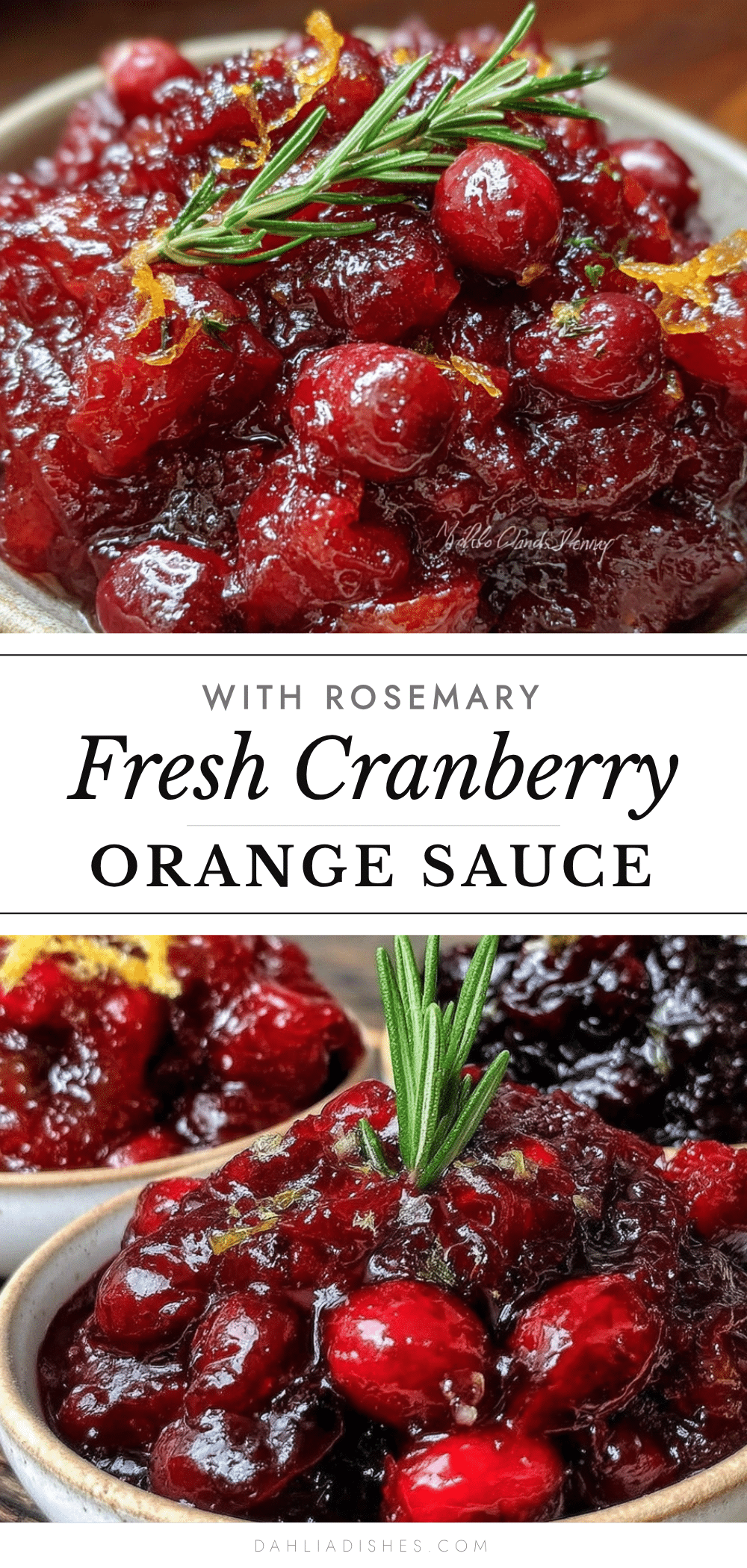
Easy Fresh Cranberry Orange Sauce with Rosemary Recipe
This tangy, sweet, and woodsy cranberry sauce is a showstopper on any holiday table. It comes together in under 20 minutes with simple ingredients and is the perfect balance of tart cranberries, bright orange, and earthy rosemary.
- Prep Time: 5 minutes
- Cook Time: 15 minutes
- Total Time: 20 minutes
- Yield: 8 servings 1x
- Category: Side Dish
- Cuisine: American
Ingredients
- 12 oz (340 g) fresh cranberries
- 3/4 cup (150 g) granulated sugar
- 1/2 cup (120 ml) fresh orange juice
- 1 tablespoon orange zest (from 1 orange)
- 1 sprig fresh rosemary, plus more for garnish
- 1/4 cup (60 ml) water
- Pinch of salt
Instructions
- Prep your ingredients: Rinse the cranberries under cold water and pick out any soft or bruised ones. Zest your orange before juicing it. Measure out your sugar, water, and orange juice. Have your rosemary sprig ready.
- Combine everything in the saucepan: Add the cranberries, sugar, orange juice, orange zest, water, and the sprig of rosemary to a medium saucepan. Stir with a wooden spoon.
- Bring to a boil: Place the saucepan over medium-high heat. Stir occasionally as the mixture comes to a boil. You’ll hear the cranberries start to pop. This usually takes about 5 minutes.
- Reduce to a simmer: Once boiling, reduce the heat to medium-low. Let it simmer gently for 10 to 12 minutes, stirring every now and then to prevent sticking. The cranberries will break down and the sauce will thicken. It’s ready when it coats the back of a spoon.
- Remove the rosemary: Take the saucepan off the heat. Fish out the rosemary sprig with tongs or a fork. If you want a smoother sauce, let it cool slightly and blend with an immersion blender. I prefer it chunky.
- Cool and thicken: Let the sauce cool in the pan for about 10 minutes. It will continue to thicken as it cools.
- Transfer and chill: Spoon the sauce into an airtight container or serving bowl. Cover and refrigerate for at least 2 hours before serving. The flavors meld together as it chills.
Notes
Don’t overcook the cranberries; stick to the 10-12 minute simmer. Use a light hand with rosemary—one sprig is perfect. Zest the orange before juicing. Let the sauce cool completely before refrigerating to avoid a watery layer. This sauce tastes even better the next day, so make it ahead.
Nutrition
- Serving Size: 1/4 cup (60 ml)
- Calories: 120
- Sugar: 26
- Carbohydrates: 30
- Fiber: 2
Keywords: cranberry sauce, fresh cranberry sauce, cranberry orange sauce, rosemary cranberry sauce, Thanksgiving side dish, holiday recipe, easy cranberry sauce