Love this? Save it for later!
Share the inspiration with your friends
Maya wasn’t trying to impress anyone. I’d stopped by her place to drop off a book I’d borrowed months ago—the kind of errand where you plan to stay five minutes, max. But the smell hit me before I even got through the door. Something savory, herbal, almost nutty, with a warmth that felt like a hug from the inside out. I stood there for a second, keys still in hand, just breathing it in. “What is that?” I asked, probably a little too eagerly. She just shrugged from the kitchen, spatula in hand, and said, “Oh, just the dressing I’m testing for Friendsgiving next week.” Just the dressing. Like it was nothing. Like she hadn’t just created a scent that could make a stranger walk off the street and beg for a plate.
I hovered by the stove, trying to look casual. Maya went back to stirring, completely nonchalant, while I watched her fold in some fresh sage and what looked like caramelized onions. She didn’t have a fancy recipe book out—just a crumpled piece of paper covered in scribbles. “I’ve been tweaking it for years,” she said, not looking up. “It’s the one thing my friends actually fight over.” And I believed her. Honestly, I could have eaten the whole pan right there, standing over her stovetop like a raccoon. Maybe you’ve been there—that moment when a dish grabs you by the collar and refuses to let go. That’s what this cornbread dressing did to me. I didn’t leave with just the book. I left with a mission: get that recipe, make it for my own crowd, and watch it disappear.
Why You’ll Love This Recipe
This isn’t just another dressing recipe you’ll find on Pinterest. This is the one that’ll have your friends texting you for weeks afterward, asking when you’re hosting again. I’ve tested it five times now—once for a small family dinner, once for a potluck, and three times for actual Friendsgiving gatherings. Each time, the pan came back empty. Not a crumb left. That’s the kind of power we’re talking about here.
- Crowd-Sized & Stress-Free: This recipe scales beautifully for 12 to 16 people without any complicated math. You can double it without losing the magic.
- Simple, Real Ingredients: No canned soup mixes or mystery boxes here. Everything you need is at a regular grocery store—and you probably already have half of it.
- Make-Ahead Friendly: Prep it the night before, pop it in the fridge, and bake it while your guests are arriving. You get to enjoy the party, too.
- Texture That Wins: Crispy, golden edges on top, soft and tender underneath. Every bite has that perfect contrast that keeps people going back for “just one more spoonful.”
- Unbelievably Savory: The combination of caramelized onions, fresh herbs, and rich chicken broth creates a depth of flavor that tastes like you spent hours—when really, it’s just smart ingredient choices.
What makes this dressing different from the rest? It’s the method. Most recipes just dump everything together and hope for the best. This one builds flavor layer by layer—sautéing the aromatics first, toasting the cornbread slightly, and letting the custard set just right. It’s the kind of dish that makes you close your eyes after the first bite. Trust me. I’ve seen it happen at three separate tables now.
What Ingredients You Will Need
This recipe uses simple, honest ingredients to create something that tastes far more complex than it is. Most of these are pantry staples or easy to find at any grocery store. Here’s what you’ll need and why each one matters.
For the Cornbread Base
- 2 batches of homemade cornbread (about 8 cups crumbled) – Day-old cornbread works best. It’s drier and absorbs the broth without turning to mush. I use a simple buttermilk cornbread recipe, but a good store-bought one works in a pinch.
- 1 tablespoon olive oil – For toasting the cornbread cubes. Adds a subtle richness.
For the Savory Mix

- 4 tablespoons unsalted butter – The real stuff. Don’t substitute margarine here—butter gives that deep, nutty flavor when browned.
- 2 large yellow onions, diced – Caramelizing these takes time but adds sweetness that balances the savory herbs.
- 3 celery stalks, finely chopped – The classic crunch and fresh flavor that dressing needs.
- 4 cloves garlic, minced – Fresh only. The jarred stuff won’t give you the same punch.
For the Liquid & Seasoning
- 3 cups low-sodium chicken broth – Low-sodium lets you control the salt. I use Swanson’s, but homemade is even better.
- 2 large eggs, lightly beaten – The binder that holds everything together without making it heavy.
- 1/4 cup fresh sage, chopped – Non-negotiable. Dried sage works if you’re in a pinch, but fresh is where the magic lives.
- 2 tablespoons fresh thyme leaves – Earthy and aromatic. Strip the leaves off the stems—don’t skip this step.
- 1 tablespoon fresh rosemary, finely chopped – A little goes a long way. Too much and it gets piney.
- 1 teaspoon salt – Adjust to taste, but start here.
- 1/2 teaspoon black pepper – Freshly ground, please.
- 1/4 teaspoon smoked paprika – Optional, but adds a subtle warmth that makes people ask, “What’s in this?”
For the Topping (Optional but Recommended)
- 2 tablespoons butter, melted – Brushed on top before baking for that golden, crispy crust.
- Extra fresh sage leaves – For garnish. Makes it look fancy with zero effort.
Ingredient Tips: For the cornbread, I recommend using a recipe that’s slightly sweet—the contrast with the savory herbs is what makes this dish sing. If you’re using store-bought cornbread, look for one without added sugar or with just a touch. And please, don’t use the boxed stuffing mix. This recipe deserves real cornbread.
Equipment Needed
You don’t need a professional kitchen to pull this off. Here’s what you’ll actually use:
- 9×13-inch baking dish – Standard size for feeding a crowd. Glass or ceramic works best for even heat distribution.
- Large skillet – For sautéing the aromatics. A 12-inch skillet gives you enough room to caramelize the onions properly.
- Large mixing bowl – Big enough to hold all the crumbled cornbread and mix everything without spilling over.
- Whisk – For beating the eggs and broth together smoothly.
- Sharp knife and cutting board – For dicing onions, celery, and herbs. A dull knife makes this step miserable.
- Wooden spoon or spatula – For stirring the cornbread mixture gently. Metal spoons can break up the cubes too much.
- Aluminum foil – For covering the dish if the top browns too quickly.
Budget-Friendly Tip: If you don’t have a 9×13 dish, use two 8×8 pans or even a cast-iron skillet. The cooking time might vary slightly, so check for doneness a few minutes early. I’ve used a disposable aluminum pan for potlucks before—works like a charm and means less cleanup.
Preparation Method
Let’s get to the good part. This method builds flavor step by step, so don’t rush it. Your patience will pay off in every single bite.
- Preheat your oven to 350°F (175°C). While it’s heating, crumble your day-old cornbread into a large bowl. You want a mix of coarse crumbs and small cubes—some texture is good. Aim for about 8 cups total.
- Toast the cornbread. Spread the crumbled cornbread on a baking sheet in a single layer. Bake for 10 minutes, stirring halfway through. This dries it out further and adds a subtle toasty flavor. Don’t skip this—it’s the secret to dressing that doesn’t turn into mush. Set it aside to cool slightly.
- Caramelize the onions. In your large skillet, melt the butter over medium heat. Add the diced onions and a pinch of salt. Cook, stirring occasionally, for 15 to 20 minutes until they’re soft, golden, and smell like heaven. The salt helps draw out the moisture. Don’t rush this step—undercooked onions will make the dressing taste raw.
- Add the celery and garlic. Toss in the chopped celery and cook for another 5 minutes until it softens. Then add the minced garlic and cook for just 1 minute more, until fragrant. Garlic burns fast, so keep an eye on it.
- Combine the herbs. Stir in the fresh sage, thyme, and rosemary. Cook for 1 minute, letting the herbs release their oils. The kitchen will smell incredible at this point—take a moment to enjoy it.
- Make the custard base. In a separate bowl, whisk together the chicken broth, beaten eggs, smoked paprika, salt, and pepper. Make sure the eggs are fully incorporated—you don’t want scrambled egg bits in your dressing.
- Mix everything together. Pour the sautéed onion mixture over the toasted cornbread in the large bowl. Toss gently with a wooden spoon until combined. Then pour the broth mixture over the top and stir again. The cornbread should be evenly moistened but not swimming in liquid. If it looks dry, add a splash more broth. If it’s too wet, add a handful more crumbled cornbread.
- Transfer to the baking dish. Grease your 9×13 dish with butter or nonstick spray. Spread the dressing evenly, pressing it down gently with the back of a spoon. Brush the top with the melted butter for that golden crust.
- Bake uncovered. Place the dish in the preheated oven and bake for 35 to 40 minutes. The top should be golden brown and the edges slightly crispy. A knife inserted in the center should come out clean. If the top is browning too fast, tent loosely with foil for the last 10 minutes.
- Rest before serving. Let the dressing sit for 5 to 10 minutes after it comes out of the oven. This helps it set so it doesn’t fall apart when you scoop it. Garnish with extra fresh sage leaves if you’re feeling fancy.
Sensory Cue: When it’s done, the top will be crackly and golden, and the kitchen will smell like Thanksgiving morning. The edges should be slightly caramelized, and the center should feel firm but tender when you press it gently with a spoon.
Cooking Tips & Techniques
I’ve made this dressing more times than I can count, and I’ve learned a few things the hard way. Here’s what I wish someone had told me the first time.
Dry cornbread is your friend. Fresh, moist cornbread will turn your dressing into a soggy mess. That’s why day-old cornbread is ideal. If you’re in a rush, spread fresh cornbread on a baking sheet and leave it out overnight, or pop it in a 300°F oven for 15 minutes to dry it out. I once made the mistake of using fresh cornbread straight from the pan—let’s just say it was more of a cornbread pudding situation. Not bad, but not what I was going for.
Don’t overmix. When you combine the cornbread with the liquid, stir just until everything is moistened. Overmixing breaks down the cornbread into a paste, and you lose that lovely texture. A few lumps are fine—they’ll bake into tender pockets.
Season as you go. Don’t wait until the end to add salt. Season the onions while they cook, season the broth mixture, and taste the cornbread before you bake it. I know you can’t taste raw egg, but you can taste the broth and the sautéed vegetables. Trust your palate.
Watch your oven temperature. Every oven runs a little differently. If your dressing is browning too quickly on top but still wet in the middle, cover it with foil and keep baking. If it’s not browning at all after 30 minutes, bump the temperature up to 375°F for the last 10 minutes. I learned this after my first attempt came out pale and sad—never again.
Multitask like a pro. While the cornbread is toasting, start caramelizing the onions. While the onions cook, chop your herbs and celery. This recipe comes together in about 20 minutes of active time if you stay organized. The rest is just oven time.
Variations & Adaptations
One of the best things about this dressing is how flexible it is. Here are a few ways to make it your own.
Add sausage for a heartier version. Brown 1 pound of breakfast sausage or Italian sausage in the skillet before cooking the onions. Remove the sausage, cook the veggies in the rendered fat, then add the sausage back in when you mix everything together. I tried this for a Friendsgiving where I knew everyone would want something meaty—it was gone in 15 minutes.
Make it vegetarian. Swap the chicken broth for a good-quality vegetable broth. Use extra butter or olive oil for richness. Add sautéed mushrooms for that umami depth that meat usually provides. My vegetarian friend actually requested this version for her own Thanksgiving dinner.
Go gluten-free. Use a gluten-free cornbread recipe (most cornbread is naturally gluten-free if you use cornmeal and a gluten-free flour blend). Just double-check your broth and any other packaged ingredients. This works beautifully—no one will notice the difference.
Add some heat. Stir in a finely diced jalapeño or a pinch of cayenne pepper with the onions. The warmth cuts through the richness and adds a surprising kick. I did this for a potluck once, and people kept asking, “What’s that little something?” It’s a fun twist.
Make it dairy-free. Use vegan butter or olive oil instead of regular butter. The texture will be slightly different, but the flavor will still be fantastic. I’ve tested this with Miyoko’s vegan butter, and it works like a charm.
Seasonal swap. In the fall, add 1/2 cup of dried cranberries or chopped apples to the mix. The sweetness plays beautifully with the savory herbs. In the spring, swap the rosemary for fresh parsley and chives for a lighter flavor.
Serving & Storage Suggestions
This dressing is the star of the table, but it plays well with others. Here’s how to serve it and keep it fresh.
Serving Temperature: Serve it hot, straight from the oven. Let it rest for 5 minutes so it holds its shape, then scoop it out with a large spoon. The contrast between the crispy top and the tender interior is best when it’s fresh.
What to Serve Alongside: This dressing pairs beautifully with roast turkey or chicken, but don’t stop there. It’s amazing with a simple green salad dressed with vinaigrette—the acidity cuts through the richness. Mashed potatoes, roasted vegetables, and cranberry sauce are all classic companions. For a Friendsgiving spread, I like to serve it alongside my roasted Brussels sprouts with balsamic glaze and a creamy garlic mashed potatoes for a complete meal.
Storage Instructions: Leftover dressing keeps well in the refrigerator for up to 4 days. Store it in an airtight container or cover the baking dish tightly with foil. The flavors actually deepen overnight—it might be even better the next day.
Freezing Instructions: You can freeze the unbaked dressing for up to 3 months. Assemble it in the baking dish, cover tightly with foil, and freeze. To bake, thaw in the refrigerator overnight, then bake as directed, adding 10 to 15 minutes to the cooking time. Baked dressing can also be frozen, but the texture will be slightly softer after thawing.
Reheating Tips: The best way to reheat is in the oven at 350°F for 15 to 20 minutes, covered with foil to prevent drying out. The microwave works in a pinch, but you’ll lose that crispy top. If you’re reheating just a portion, a toaster oven is perfect.
Flavor Development: I honestly think this dressing tastes better on day two. The herbs have time to meld, and the texture settles into something even more cohesive. If you’re making it for a gathering, consider baking it a day ahead and reheating before serving. Your future self will thank you.
Nutritional Information & Benefits
Let’s be real—this is comfort food, not health food. But that doesn’t mean it’s without its redeeming qualities. Here’s a rough estimate per serving (based on 12 servings):
- Calories: Approximately 320
- Fat: 14g
- Carbohydrates: 38g
- Protein: 8g
- Fiber: 3g
- Sugar: 6g
- Sodium: 580mg
Health Highlights: The fresh herbs—sage, thyme, and rosemary—are packed with antioxidants and anti-inflammatory compounds. Celery provides fiber and vitamin K, and onions offer prebiotics that support gut health. The eggs add protein and essential amino acids. Plus, using low-sodium broth lets you control the salt content, which is always a win.
Dietary Considerations: This recipe contains gluten (from the cornbread), dairy (butter), and eggs. See the variations section for gluten-free and dairy-free adaptations. It’s naturally nut-free and can be made vegetarian with a simple broth swap.
Personal Perspective: I don’t believe in guilt when it comes to holiday food. This dressing is meant to be enjoyed, shared, and savored. One serving won’t derail any health goals—it’ll just make your taste buds happy. And honestly, that’s a win in my book.
Conclusion
This Friendsgiving cornbread dressing is more than a recipe—it’s the dish that’ll have your friends circling the table, spoons at the ready, asking when you’re hosting next. It’s the one that started with a casual visit to Maya’s kitchen and turned into a staple at every gathering I’ve thrown since. The crispy edges, the tender center, the way the herbs hit you in all the right ways—it’s everything you want in a side dish that ends up stealing the show.
I hope you make this for your next Friendsgiving, or your next potluck, or just a random Tuesday when you need a little comfort. Customize it, tweak it, make it your own. That’s the beauty of a recipe like this—it’s a starting point, not a rulebook. And if you do make it, I’d love to hear how it turned out. Drop a comment below, tag me in your photos, or just tell me how fast the pan disappeared. Because honestly, that’s the best kind of feedback a recipe can get.
Happy cooking, and here’s to the dishes that bring people together.
Frequently Asked Questions
Can I make this cornbread dressing ahead of time?
Absolutely! You can assemble the entire dish up to 24 hours in advance. Just cover it tightly with foil and refrigerate. When you’re ready to bake, add about 10 minutes to the cooking time since you’re starting from cold. I actually prefer making it the night before—the flavors meld together beautifully.
Can I use store-bought cornbread for this recipe?
Yes, you can. Look for a good-quality cornbread from a bakery or even the grocery store bakery section. Avoid the pre-packaged cornbread that’s overly sweet or dry. If you’re using a box mix, bake it a day ahead and let it dry out slightly before using. The key is getting that slightly stale texture so it absorbs the broth without turning mushy.
How do I know when the dressing is fully cooked?
The top should be golden brown and slightly crispy to the touch. Insert a knife or toothpick into the center—it should come out clean, without any wet batter sticking to it. The edges will be slightly caramelized, and the whole dish will feel firm but springy when you gently press the center. If it jiggles, it needs more time.
Can I freeze leftover cornbread dressing?
Yes, you can freeze it both before and after baking. To freeze unbaked, assemble the dressing in the dish, cover tightly with foil, and freeze for up to 3 months. Thaw in the fridge overnight before baking. To freeze baked leftovers, let them cool completely, then transfer to an airtight container. Reheat in the oven at 350°F for best results.
What’s the best way to reheat leftover dressing without drying it out?
The oven is your best friend here. Preheat to 350°F, cover the dish with foil, and heat for 15 to 20 minutes. The foil traps steam and keeps the dressing moist. If you want to re-crisp the top, remove the foil for the last 5 minutes. The microwave works in a pinch, but the texture will be softer—still delicious, just not as crispy.
Pin This Recipe!
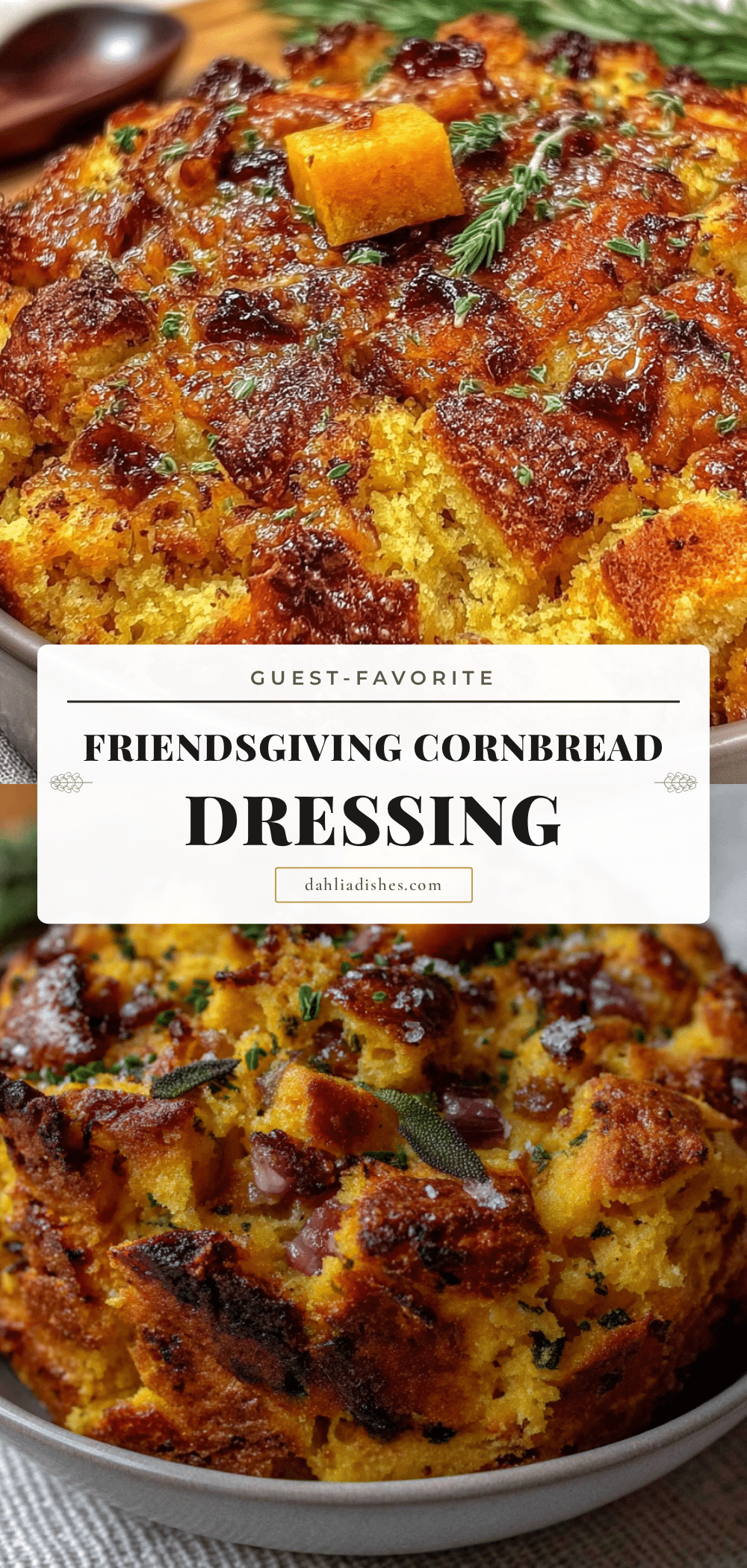
Best Friendsgiving Cornbread Dressing Recipe for a Crowd

This crowd-sized cornbread dressing features crispy golden edges, a tender center, and deep savory flavor from caramelized onions and fresh herbs. It’s the dish that’ll have your friends circling the table, spoons at the ready.
- Prep Time: 20 minutes
- Cook Time: 40 minutes
- Total Time: 1 hour
- Yield: 12 servings 1x
- Category: Side Dish
- Cuisine: American
Ingredients
- 2 batches homemade cornbread (about 8 cups crumbled)
- 1 tablespoon olive oil
- 4 tablespoons unsalted butter
- 2 large yellow onions, diced
- 3 celery stalks, finely chopped
- 4 cloves garlic, minced
- 3 cups low-sodium chicken broth
- 2 large eggs, lightly beaten
- 1/4 cup fresh sage, chopped
- 2 tablespoons fresh thyme leaves
- 1 tablespoon fresh rosemary, finely chopped
- 1 teaspoon salt
- 1/2 teaspoon black pepper, freshly ground
- 1/4 teaspoon smoked paprika (optional)
- 2 tablespoons butter, melted (for topping)
- Extra fresh sage leaves (for garnish)
Instructions
- Preheat your oven to 350°F (175°C). Crumble day-old cornbread into a large bowl to get about 8 cups of coarse crumbs and small cubes.
- Spread the crumbled cornbread on a baking sheet in a single layer. Bake for 10 minutes, stirring halfway through, to dry it out and add toasty flavor. Set aside to cool slightly.
- In a large skillet, melt 4 tablespoons butter over medium heat. Add diced onions and a pinch of salt. Cook, stirring occasionally, for 15 to 20 minutes until soft, golden, and caramelized.
- Add chopped celery and cook for 5 minutes until softened. Add minced garlic and cook for 1 minute more until fragrant.
- Stir in fresh sage, thyme, and rosemary. Cook for 1 minute to release the oils.
- In a separate bowl, whisk together chicken broth, beaten eggs, smoked paprika, salt, and pepper until fully combined.
- Pour the sautéed onion mixture over the toasted cornbread in the large bowl. Toss gently with a wooden spoon. Then pour the broth mixture over the top and stir until evenly moistened (not swimming).
- Grease a 9×13-inch baking dish with butter or nonstick spray. Spread the dressing evenly, pressing down gently. Brush the top with melted butter.
- Bake uncovered for 35 to 40 minutes until the top is golden brown and edges are slightly crispy. A knife inserted in the center should come out clean. If browning too fast, tent with foil for the last 10 minutes.
- Let the dressing rest for 5 to 10 minutes before serving. Garnish with extra fresh sage leaves if desired.
Notes
Day-old cornbread is essential to avoid a soggy dressing. If using fresh cornbread, dry it out in a 300°F oven for 15 minutes. Don’t overmix the cornbread with liquid to maintain texture. Season as you go for best flavor. The dressing can be assembled up to 24 hours ahead and refrigerated; add 10 minutes to baking time if starting cold.
Nutrition
- Serving Size: 1 serving (about 1/1
- Calories: 320
- Sugar: 6
- Sodium: 580
- Fat: 14
- Saturated Fat: 6
- Carbohydrates: 38
- Fiber: 3
- Protein: 8
Keywords: cornbread dressing, friendsgiving, thanksgiving side dish, holiday dressing, cornbread stuffing, crowd-friendly, make-ahead