Love this? Save it for later!
Share the inspiration with your friends
There used to be this tiny wine bar tucked behind a secondhand bookstore in the French Quarter—the kind of place you’d walk right past if you blinked. They served the most perfect little charcuterie board for two, and I swear that thing had a gravitational pull. When they closed during the pandemic, I actually stood outside the shuttered door like a fool, staring at the “For Lease” sign. After twelve tries—twelve, let me tell you, some of them were straight-up sad—I finally cracked the code. And honestly, this version is better than the original.
I remember the first time I took a bite of their board. It was a Tuesday night, and my husband and I had ducked in to escape a sudden downpour. The owner, a soft-spoken woman with silver hair, brought out this wooden slab loaded with things I couldn’t even name at the time. There was a creamy blue cheese that made my eyes roll back, paper-thin prosciutto that melted on my tongue, and these little cornichons that popped with vinegar brightness. I asked her what the secret was, and she just smiled and said, “Balance, dear. It’s all about balance.”
So I became obsessed. I mean, truly obsessed. I bought every cheese within a five-mile radius, arranged and rearranged meats until my fingers got sticky, and ate more crackers than I care to admit. Some boards were disasters—too salty, too sweet, or just plain boring. But that twelfth try? That was the one. The moment I set it down in front of my husband, he took one bite, looked at me, and said, “This is it. This is the bar.” I nearly cried. Maybe you’ve been there—chasing a flavor memory that feels impossible to recreate. Well, this is your win. Let me show you exactly how to build an easy charcuterie board for two that’ll make your next date night unforgettable.
Why You’ll Love This Recipe
Let me be straight with you—this isn’t one of those fussy charcuterie boards that requires a culinary degree and a second mortgage. This is the kind of board you can throw together in fifteen minutes flat, using ingredients you can grab at any regular grocery store. I’ve tested this exact combination on picky eaters, cheese snobs, and my own skeptical mother-in-law, and every single person has asked for the recipe. That’s not bragging—that’s just the power of getting the balance right.
- Quick & Easy : Seriously, from fridge to table in under twenty minutes. No cooking, no complicated techniques, just smart arranging.
- Simple Ingredients : You don’t need a specialty cheese shop or a fancy deli. I’ll tell you exactly what to buy at your local supermarket, and you probably already have some of it.
- Perfect for Date Night : Whether it’s a Friday night in with a movie or a special anniversary celebration, this board sets the mood without the stress of a multi-course meal.
- Crowd-Pleaser : I’ve never met anyone who didn’t love a well-built charcuterie board. It’s interactive, customizable, and somehow feels both fancy and relaxed at the same time.
- Unbelievably Delicious : The magic is in the pairing—salty prosciutto with sweet honey, creamy brie with tart berries, crunchy nuts with soft cheese. Every bite is a little adventure.
What makes this recipe different from the dozens of other charcuterie tutorials out there? It’s the method, honestly. Most people just throw ingredients on a board and hope for the best. I’ve spent hours figuring out the perfect ratios—how much cheese per person, which meats complement which cheeses, and the exact order to arrange everything so it looks like you spent way more time than you actually did. This isn’t just another version; it’s the version that’ll make your date night feel special without breaking your budget or your sanity.
There’s something about sharing a charcuterie board that feels intimate, you know? You’re not just eating—you’re building bites together, discovering new flavor combinations, and slowing down in a world that never stops. That first bite of perfectly paired cheese and meat? It’s the kind of moment that makes you close your eyes and just breathe. And honestly, isn’t that exactly what date night should be?
What Ingredients You Will Need
This recipe uses simple, high-quality ingredients that work together to create a symphony of flavors and textures. I’ve chosen each component carefully to ensure maximum impact with minimum effort—because date night should be about connection, not stressing over a complicated recipe.
For the Cheeses (About 6-8 ounces total)
- 4 ounces Brie or Camembert – Soft, creamy, and utterly luxurious. The rind is edible and adds a subtle earthy note. I prefer the double-cream variety for extra richness.
- 2 ounces Aged Cheddar – Sharp, crumbly, and bold. Look for one that’s been aged at least 12 months for that crystalline crunch. I recommend Tillamook or Cabot for reliable quality.
- 2 ounces Manchego or Gouda – A firm, nutty cheese that adds texture contrast. Manchego has a slight sheep’s milk tang, while Gouda is sweeter and creamier. Both work beautifully.
For the Meats (About 4-6 ounces total)
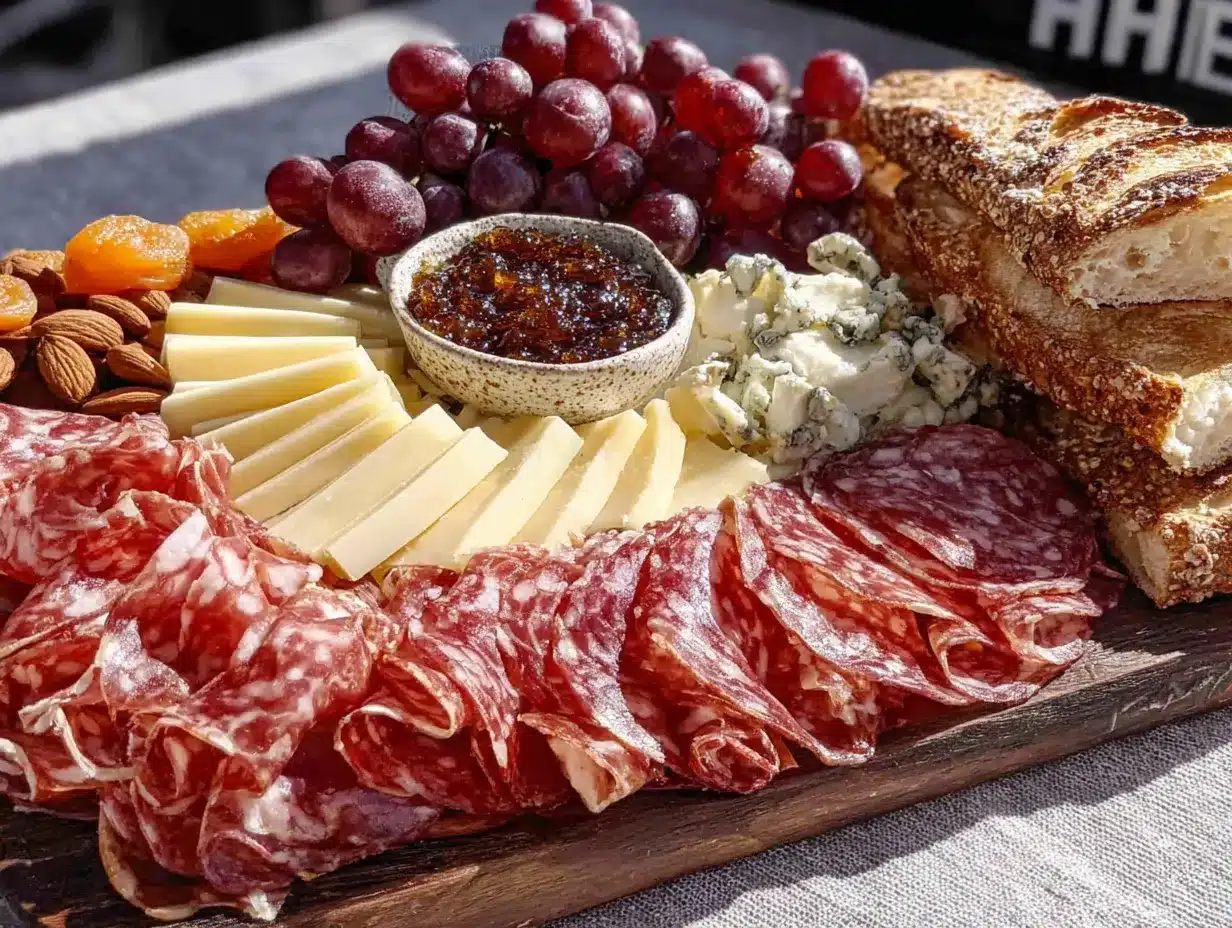
- 3 ounces Prosciutto – Paper-thin, salty, and silky. Ask your deli counter to slice it fresh—it makes a huge difference. (Pro tip: let it sit at room temperature for 10 minutes before serving for the best texture.)
- 2 ounces Salami – Choose a good-quality dry salami like Genoa or soppressata. I like the peppery kick of Calabrese salami for a little heat.
- 1 ounce Speck or Capicola (optional) – Smoked speck adds a lovely bacon-like depth. If you can’t find it, just add an extra ounce of prosciutto.
For the Accompaniments
- Small bunch of red or green grapes – About 1 cup. Their sweetness cuts through the saltiness of the meats and cheeses perfectly.
- 1/4 cup dried figs or apricots – Chewy, sweet, and slightly tart. They add a lovely textural contrast and pair beautifully with manchego.
- 1/4 cup marcona almonds or roasted salted almonds – Marcona almonds are softer and buttery, but regular roasted almonds work great too. The saltiness balances the sweetness.
- 2 tablespoons honey or fig jam – A drizzle of honey over brie is pure magic. Fig jam works beautifully with the manchego and prosciutto.
- Small handful of cornichons or gherkins – Those tiny pickles are essential for cutting through rich cheeses and meats. Their acidity refreshes your palate between bites.
- 1 small baguette or box of quality crackers – About 1/2 a baguette, sliced thin and lightly toasted if you have time. I love water crackers or rosemary crackers for their neutral flavor.
Optional Additions
- Fresh figs or strawberries – When in season, fresh fruit elevates the whole board. Slice them just before serving so they don’t get mushy.
- Olives – A small handful of kalamata or castelvetrano olives adds briny depth. I love the meaty texture of castelvetranos.
- Dark chocolate – A couple of squares of high-quality dark chocolate (70% or higher) for a sweet finish. It pairs surprisingly well with aged cheddar.
- Fresh herbs for garnish – A sprig of rosemary or thyme adds visual appeal and a subtle aromatic note. Totally optional but very pretty.
Equipment Needed
You don’t need much to build a stunning charcuterie board—that’s the beauty of it. Here’s what I use, along with some budget-friendly alternatives I’ve discovered through trial and error.
- A wooden board or large platter – This is the star of the show. I use a 12×16-inch acacia wood board that I found at a home goods store for under $20. A large ceramic platter, a slate board, or even a clean cutting board works perfectly. The key is having enough surface area to arrange everything without crowding.
- Small bowls or ramekins – For the honey, jam, and olives. I use 4-ounce ceramic ramekins that cost me about a dollar each at a kitchen supply store. Shot glasses or small teacups work in a pinch.
- Cheese knives – Ideally, you want separate knives for soft and hard cheeses to avoid cross-contamination. But honestly? I’ve used a butter knife in a pinch and it worked fine. A small paring knife will do the job.
- Tongs or small forks – For serving meats and pickles. I like using mini wooden tongs because they look cute, but regular kitchen tongs work just as well.
- A sharp knife – For slicing the baguette and cutting cheese. A serrated bread knife is best for the baguette to avoid crushing it.
One thing I learned the hard way: don’t use a board that’s too small. My first attempt was on a tiny cutting board, and everything ended up in a sad pile. Give your ingredients room to breathe—it makes the board look intentional and generous rather than cramped and chaotic.
Preparation Method
Alright, let’s build this board. I’m going to walk you through every step so you get that perfect balance every time. Take your time—this is supposed to be fun, not stressful.
- Take your cheeses out of the refrigerator 30 minutes before serving. This is non-negotiable. Cold cheese tastes like nothing—it needs to come to room temperature to release its full flavor and creaminess. I usually pull everything out while I’m setting up the rest of the board, so by the time I’m done arranging, the cheese is perfect.
- Prepare your board or platter. Give it a quick wipe with a damp cloth. If you’re using a wooden board, you can rub it with a tiny bit of olive oil to make it shine—just don’t overdo it or everything will slide around.
- Place your small bowls first. Position the honey, jam, and olives in different spots on the board. This creates natural “zones” and gives you anchor points for arranging everything else. I usually put the honey near the brie and the jam near the manchego, since those are classic pairings.
- Add the cheeses. Place them in different areas of the board, not all clustered together. Cut the brie into wedges (leave the rind on—it’s delicious) and fan them out slightly. Slice the aged cheddar into thin triangles or cubes. Cut the manchego into thin wedges or small rectangles. Leave some space around each cheese so people can cut their own portions.
- Arrange the meats. Fold the prosciutto slices into loose ribbons or waves—don’t just lay them flat. I like to fold each slice in half lengthwise, then twist it into a loose spiral. Arrange the salami slices in a slight overlap, like falling dominoes. If you’re using speck, fold it similarly to the prosciutto. Place the meats near the cheeses they pair best with—prosciutto near brie, salami near cheddar.
- Add the fruits and pickles. Scatter the grapes in small clusters around the board. Tuck the dried figs or apricots between the cheeses. Place the cornichons in a small pile or in one of the bowls if you prefer. This is where you start filling in the gaps—the board should look abundant but not crowded.
- Sprinkle the nuts. Scatter the almonds in small piles around the board, making sure they’re accessible but not taking over. Nuts are great for filling small empty spaces.
- Add the crackers or bread. Fan out the baguette slices or crackers in different spots around the board. I like to place some near each cheese zone so people can grab and go. If you’re using crackers, arrange them in a slight fan pattern—it looks intentional and pretty.
- Drizzle the honey. This is my favorite part. Take a spoon and drizzle honey over the brie wedge and a little bit over the manchego. Don’t go overboard—you want a gentle drizzle, not a flood. If you’re using fig jam, place a small dollop next to the manchego.
- Garnish and final touches. If you have fresh herbs, tuck a sprig of rosemary or thyme somewhere on the board. Step back and look at it—are there any empty spots? Fill them with extra grapes, nuts, or a few more crackers. The board should look full and inviting.
One thing I always do: taste a little bit of everything before serving. It’s not just for quality control—it’s my little ritual. I grab a cracker, top it with a sliver of brie, a fold of prosciutto, and a tiny cornichon, and take that first bite. If it makes me close my eyes, I know it’s ready.
Cooking Tips & Techniques
I’ve made more charcuterie boards than I can count, and I’ve learned some things the hard way. Here are my best tips to make your board look and taste like you spent hours on it—even though you didn’t.
Mind the temperature. This is the biggest mistake people make. Serving cheese straight from the fridge is a tragedy—it’s like listening to music with earplugs in. Give everything at least 30 minutes at room temperature. Meats benefit from this too; cold prosciutto gets stiff and loses its silky texture. I’ve forgotten this more times than I’d like to admit, and every time I kick myself.
Balance textures and flavors. A good board has a mix of soft and hard cheeses, mild and sharp flavors, sweet and salty elements. If you have three soft cheeses, it’s going to be one-note. I always aim for one soft (brie), one hard (aged cheddar), and one medium (manchego or gouda). Same with meats—one delicate (prosciutto) and one robust (salami).
Don’t overthink the arrangement. I used to stress about making everything perfect, and honestly? It showed. The boards that looked the most natural and inviting were the ones I just… built. Start with the bowls, then the cheeses, then the meats, and fill in the gaps. Trust your eye—if it looks good to you, it’ll look good to your date.
Prep ahead to save time. You can wash the grapes, slice the baguette, and portion out the nuts hours before. Store everything in separate containers in the fridge, then assemble just before serving. This is a lifesaver if you’re hosting a date night after work and don’t want to rush.
One thing I ruined once: I put the crackers directly on the board next to a wedge of brie, and by the time we got to them, they were soggy from the moisture. Now I keep crackers in a separate small bowl or on a dry corner of the board. Learn from my mistakes, friends.
Variations & Adaptations
The beauty of a charcuterie board is that it’s endlessly adaptable. Here are some of my favorite variations that keep things interesting.
For a vegetarian version: Skip the meats entirely and double up on the cheeses. Add roasted red peppers, marinated artichoke hearts, and some grilled halloumi for a meaty texture without the meat. I’ve made this for my vegetarian sister-in-law, and she said it was the best board she’d ever had.
For a budget-friendly option: Swap the manchego for a good-quality cheddar (which is usually cheaper), use regular roasted almonds instead of marcona, and replace prosciutto with a less expensive cured meat like capicola. The board will still be delicious—just different. I’ve done this many times when I’m trying to keep grocery costs down, and honestly, nobody has ever noticed.
For a seasonal twist: In summer, add fresh peaches or nectarines sliced thin—they pair beautifully with prosciutto and brie. In fall, swap the grapes for sliced apples and add a handful of candied pecans. In winter, use pears and a sprinkle of pomegranate seeds. The board changes with the seasons, which keeps it exciting year-round.
For a spicy version: Add a small bowl of hot honey (honey infused with chili flakes) for drizzling, use spicy salami like Calabrese, and add some pickled jalapeños for heat. This is my husband’s favorite variation—he loves the sweet-heat combo.
For a dairy-free version: Use vegan cheeses made from cashews or almonds (Miyoko’s makes excellent ones), and load up on marinated vegetables, olives, and nuts. The board will be just as satisfying, I promise.
Serving & Storage Suggestions
This board is best served at room temperature, so let everything sit out for about 20-30 minutes after you assemble it. I like to set it in the middle of the table with two small plates, two napkins, and two wine glasses—it feels intentional and romantic without being over-the-top.
What to serve alongside: A crisp white wine like Sauvignon Blanc or a light red like Pinot Noir pairs beautifully. If you’re not drinking wine, a sparkling water with a splash of cranberry juice and a sprig of rosemary feels fancy. I also love serving this with a simple arugula salad dressed with lemon and olive oil—it cuts through the richness perfectly.
Storage tips: If you have leftovers (which is rare in my house, but it happens), separate the components and store them in airtight containers. Cheeses should be wrapped in wax paper or cheese paper, not plastic wrap—it lets them breathe. Meats can go in a sealed container with a paper towel to absorb excess moisture. Crackers and bread should be stored separately so they don’t get soggy.
Reheating: You don’t really reheat a charcuterie board, but if you have leftover baguette slices, you can toast them in the oven at 350°F for about 5 minutes to crisp them back up. The brie can be warmed in the oven for a few minutes if you want it melty and gooey—just don’t overdo it or it’ll turn into a puddle.
How flavors develop: Honestly, this board is best the day you make it. The crackers stay crunchy, the cheese is at its prime texture, and the fruits are fresh. But if you have leftovers, the flavors actually meld together overnight in an interesting way—the cheese takes on a hint of honey, the meats absorb a little fruitiness. It’s different, but still good. Just don’t expect the crackers to be crunchy the next day.
Nutritional Information & Benefits
I’m not a nutritionist, but I’ve done enough research to know that charcuterie boards can be part of a balanced diet when enjoyed in moderation. Here’s a rough breakdown for one serving (half the board):
| Nutrient | Approximate Value |
|---|---|
| Calories | 450-550 |
| Protein | 20-25g |
| Fat | 30-35g |
| Carbohydrates | 25-30g |
| Fiber | 3-5g |
| Sugar | 15-20g (mostly natural from fruit) |
Health benefits: Cheese is a great source of calcium and protein, and fermented cheeses contain probiotics that support gut health. Nuts provide healthy fats and vitamin E. Grapes are packed with antioxidants. Even the prosciutto provides iron and B vitamins. The key is portion control—this board is meant to be shared and savored, not devoured in five minutes.
Dietary considerations: This recipe contains dairy (cheese), gluten (crackers/bread), and nuts (almonds). For a gluten-free version, use gluten-free crackers or vegetable slices like cucumber rounds or bell pepper strips. For a nut-free version, skip the almonds and add extra olives or dried fruit. The board is naturally low in added sugar if you use honey sparingly.
My personal take: I see this board as a treat, not an everyday meal. It’s perfect for a special date night or a weekend indulgence. The combination of protein, fat, and fiber keeps you satisfied without feeling heavy, and the variety of flavors means you’re eating a rainbow of nutrients without even trying.
Conclusion
Look, I know building a charcuterie board can feel intimidating. There are so many rules online about which cheese goes where and which meat pairs with what. But honestly? The best board is the one that makes you happy. This recipe is my love letter to that little wine bar in the French Quarter—a way to capture a memory and share it with someone special.
What I love most about this easy charcuterie board for two is how it forces you to slow down. You’re not just grabbing a plate and eating in front of the TV. You’re sitting across from someone, building bites together, discovering what works and what doesn’t. It’s interactive and intimate and just a little bit messy—kind of like the best date nights, don’t you think?
I’d love to hear how your board turns out. Did you try a different cheese? Add something unexpected? Drop a comment below and tell me about it—I read every single one and I love seeing your creations. And if you’re looking for more date night ideas, you might enjoy our cozy pasta dinner for two or this simple chocolate lava cake recipe for dessert. Now go build that board, pour yourself a glass of wine, and enjoy the evening. You’ve got this.
Frequently Asked Questions
How far in advance can I make a charcuterie board?
You can prep all the components up to 24 hours in advance—wash and dry the grapes, slice the baguette, portion out the nuts, and cut the hard cheeses. Store everything separately in airtight containers in the fridge. Assemble the board no more than 1-2 hours before serving so the crackers stay crunchy and the soft cheese doesn’t dry out.
What if I don’t have a wooden board?
No problem at all. A large ceramic platter, a slate tile from a home improvement store, a clean baking sheet, or even a large cutting board works perfectly. The key is having enough surface area to spread everything out. I’ve used a wooden cutting board more times than I can count, and it always looks great.
Can I make this board for more than two people?
Absolutely. Just scale up the ingredients—for four people, double everything. For six people, triple it. The ratios stay the same: about 3-4 ounces of cheese per person, 2-3 ounces of meat per person, and a generous handful of accompaniments per person. Just make sure your board is big enough to hold everything.
What’s the best way to arrange the board so it looks professional?
Start with the bowls (for honey, jam, olives), then add the cheeses in different spots, then the meats, then fill in the gaps with fruits, nuts, and crackers. Think in terms of color contrast—put red grapes next to yellow cheese, green herbs next to brown meats. And don’t be afraid to leave a little space between items. A crowded board looks messy, not abundant.
How do I handle leftovers?
Separate everything into individual containers. Wrap cheeses in wax paper or cheese paper (not plastic wrap—it suffocates them). Store meats in a sealed container with a paper towel. Keep crackers and bread in a separate airtight container at room temperature. Most components will keep for 3-5 days, though crackers will lose their crunch after a day or two.
Pin This Recipe!
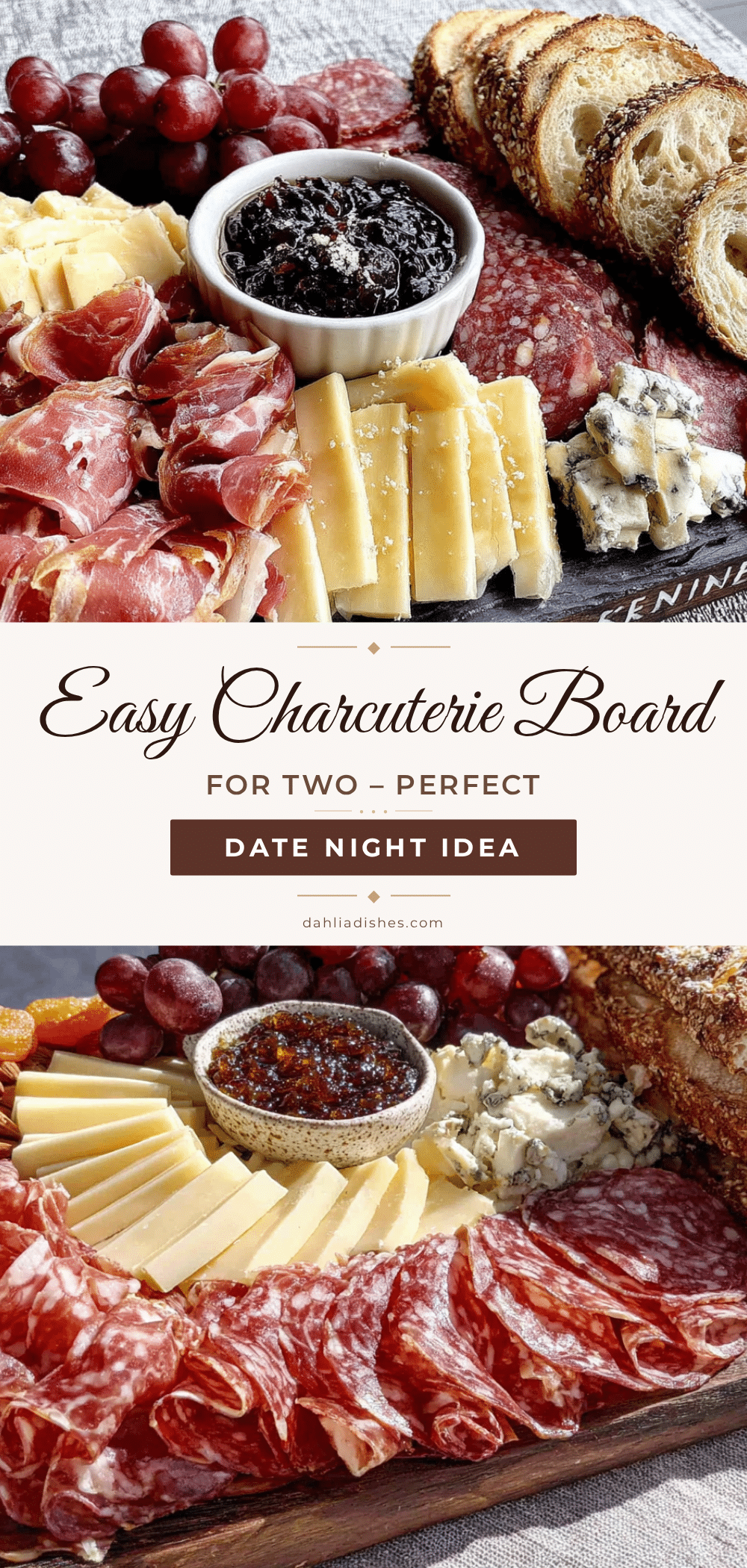
Easy Charcuterie Board for Two: Best Date Night Snack
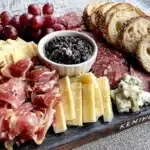
A perfectly balanced charcuterie board for two, featuring creamy brie, sharp aged cheddar, nutty manchego, silky prosciutto, and sweet accompaniments. This easy, no-cook recipe recreates the magic of a French Quarter wine bar in under 20 minutes.
- Prep Time: 15 minutes
- Cook Time: 0 minutes
- Total Time: 15 minutes
- Yield: 2 servings 1x
- Category: Appetizer
- Cuisine: French
Ingredients
- 4 ounces Brie or Camembert
- 2 ounces Aged Cheddar
- 2 ounces Manchego or Gouda
- 3 ounces Prosciutto
- 2 ounces Salami (Genoa or soppressata)
- 1 ounce Speck or Capicola (optional)
- 1 cup red or green grapes
- 1/4 cup dried figs or apricots
- 1/4 cup Marcona almonds or roasted salted almonds
- 2 tablespoons honey or fig jam
- 1/4 cup cornichons or gherkins
- 1/2 baguette or box of quality crackers
- Fresh figs or strawberries (optional)
- Olives (optional)
- Dark chocolate (optional)
- Fresh herbs for garnish (optional)
Instructions
- Take cheeses out of refrigerator 30 minutes before serving.
- Prepare board or platter by wiping clean.
- Place small bowls for honey, jam, and olives in different spots on the board.
- Add cheeses in different areas: cut brie into wedges, slice aged cheddar into thin triangles or cubes, cut manchego into thin wedges or small rectangles.
- Arrange meats: fold prosciutto into loose ribbons or spirals, arrange salami slices in overlapping pattern, fold speck similarly.
- Add fruits and pickles: scatter grapes in small clusters, tuck dried figs or apricots between cheeses, place cornichons in a pile or bowl.
- Sprinkle nuts in small piles around the board.
- Add crackers or bread: fan out baguette slices or crackers in different spots.
- Drizzle honey over brie and a little over manchego, or place fig jam dollop near manchego.
- Garnish with fresh herbs if desired. Fill any empty spots with extra grapes, nuts, or crackers.
Notes
Let cheese come to room temperature for best flavor. Keep crackers separate from moist ingredients to prevent sogginess. For best results, assemble board no more than 1-2 hours before serving.
Nutrition
- Serving Size: Half the board
- Calories: 450550
- Sugar: 1520
- Sodium: 8001000
- Fat: 3035
- Saturated Fat: 1518
- Carbohydrates: 2530
- Fiber: 35
- Protein: 2025
Keywords: charcuterie board, date night snack, easy appetizer, cheese board, prosciutto, brie, manchego, no-cook recipe