Love this? Save it for later!
Share the inspiration with your friends
I was standing in line at the hardware store last Tuesday—honestly, the last place I expected dinner inspiration to strike. The guy in front of me was buying a weirdly specific amount of PVC pipe, and we got to chatting while the cashier hunted down a price check. Turns out, he was a retired chef who now builds custom aquariums. Go figure. He started talking about how people overcomplicate salmon, and before I knew it, he was scribbling this honey garlic glaze on the back of his receipt. “Sheet pan,” he said, tapping the paper. “Twenty minutes. You’ll never go back.” I stuffed the receipt in my pocket, half-convinced I’d forget about it. But that night, tired and hungry after a long day, I remembered. I had an old bunch of asparagus in the crisper and a salmon fillet in the freezer. Twenty minutes later, I was scraping the last of that sticky, glossy sauce off the pan with my finger. Maybe you’ve been there—standing in your kitchen, staring into the fridge, and just needing something that works without a whole production. This Easy One-Pan Honey Garlic Salmon with Asparagus is that recipe. It’s the one that makes you wonder why you ever stressed about dinner in the first place.
Why You’ll Love This Recipe
Look, I’ve tested a lot of salmon recipes over the years. Some are fussy. Some require a dozen dishes. Some taste bland and leave you regretting the effort. This one is none of those things. After making it maybe a dozen times—tweaking the glaze, adjusting the cook time, figuring out the exact asparagus thickness that works best—I can tell you with confidence: this is the version you’ll actually make on a Tuesday night.
- Quick & Easy: From fridge to table in under 25 minutes. No marinating, no complicated steps, no standing over a hot stove.
- Simple Ingredients: You likely have honey, soy sauce, and garlic in your pantry right now. The salmon and asparagus are the only things you might need to grab.
- Perfect for Busy Weeknights: This is the definition of a low-effort, high-reward meal. It feels special enough for a Friday but easy enough for a Wednesday.
- Crowd-Pleaser: Even my friend who “doesn’t like fish” asked for seconds. The honey garlic glaze is that good—sweet, savory, with just a hint of caramelized edge.
- Unbelievably Delicious: The salmon comes out tender and flaky, the asparagus gets perfectly roasted with crispy tips, and the glaze reduces into this sticky coating that clings to everything. It’s comfort food that happens to be good for you.
What makes this recipe different? It’s the balance. The honey isn’t too sweet because the soy sauce and garlic cut through it. The asparagus roasts right alongside the salmon, soaking up the drippings without getting soggy. And the whole thing happens on one sheet pan—minimal cleanup, maximum flavor. I’ve had people tell me this is the recipe that finally made them feel confident cooking fish at home.
What Ingredients You Will Need
This recipe uses simple, wholesome ingredients that work together to create something genuinely greater than the sum of their parts. Most of these are pantry staples, which is exactly what you want on a busy weeknight.
- Salmon Fillets (4 fillets, about 6 oz / 170g each): Look for fillets that are roughly the same thickness so they cook evenly. I prefer center-cut fillets with the skin on—the skin gets crispy and acts as a barrier so the fish stays moist. If your fillets have pin bones, run your fingers along the surface and pull them out with tweezers. Wild-caught salmon has a firmer texture and more flavor, but farm-raised works beautifully here too.
- Honey (1/4 cup / 85g): The star of the glaze. Use a runny, liquid honey for easy mixing. If your honey has crystallized, warm the jar in a bowl of hot water for a few minutes. Local honey adds a nice floral note, but any good-quality honey will do. Maple syrup works as a substitute in a pinch, though the flavor will be slightly different.
- Soy Sauce (3 tablespoons / 45ml): This provides the salty, umami balance to the honey. I use low-sodium soy sauce so I can control the salt level—you can always add more, but you can’t take it out. If you’re gluten-free, swap in tamari or coconut aminos. The coconut aminos will be slightly sweeter, so you might want to reduce the honey by a teaspoon.
- Garlic (4 cloves, minced): Fresh garlic is non-negotiable here. The pre-minced stuff in a jar has a different, more muted flavor. Take the extra 30 seconds to mince fresh cloves—it makes a real difference. If you’re in a rush, you can press the garlic through a crusher instead.
- Olive Oil (2 tablespoons / 30ml, divided): You’ll use some for the salmon and some for the asparagus. A good extra virgin olive oil adds flavor, but a light olive oil or avocado oil works too. The oil helps everything roast without sticking and encourages browning.
- Asparagus (1 bunch, about 1 lb / 450g): Look for spears that are bright green with firm, closed tips. Thicker spears hold up better to roasting—they won’t get mushy as quickly. Snap off the woody ends by holding each spear near the bottom and bending until it breaks naturally. That’s where the tender part starts. I usually trim another inch off just to be safe.
- Salt and Black Pepper (to taste): Simple seasonings that let the glaze shine. I use kosher salt for its clean flavor and flaky texture. Freshly ground black pepper adds a subtle warmth.
- Sesame Seeds and Sliced Green Onions (for garnish, optional): These are purely for looks and a little extra texture, but they do make the finished dish feel restaurant-worthy. Toasted sesame seeds add a nutty pop, and green onions bring freshness.
Equipment Needed
One of the best things about this recipe is how little gear it requires. You probably already own everything you need.
- Sheet Pan (18×13 inch / 46×33 cm, or similar): A rimmed baking sheet is essential—the rim catches any glaze drippings and prevents spills. I use a heavy-duty aluminum pan that doesn’t warp in the oven. If you have a non-stick sheet pan, even better for easy cleanup. Avoid pans with dark, non-stick coatings if you can—they absorb heat and can cause the bottoms of your food to burn before the tops are done.
- Parchment Paper or Aluminum Foil: Lining the pan makes cleanup almost effortless. Parchment paper is non-stick and doesn’t react with the food. Foil works too, but the glaze might stick slightly more. I prefer parchment for this recipe.
- Small Mixing Bowl: For whisking together the honey garlic glaze. Any small bowl will do—I use a cereal bowl.
- Whisk or Fork: To combine the glaze ingredients until smooth. A fork works perfectly fine if you don’t have a whisk.
- Chef’s Knife and Cutting Board: For mincing the garlic and trimming the asparagus. A sharp knife makes these tasks quick and safe.
- Measuring Spoons and Cups: For accurate measurements, especially with the honey and soy sauce. Honey is sticky—spray your measuring cup with a little cooking oil first for easy release.
- Tongs: For flipping the salmon and arranging the asparagus on the pan. A spatula works too, but tongs give you more control.
- Instant-Read Thermometer (optional but helpful): Salmon is perfectly cooked at 125°F / 52°C for medium or 130°F / 54°C for medium-well. A thermometer takes the guesswork out, but you can also check by pressing gently—the fish should flake easily with a fork.
Preparation Method
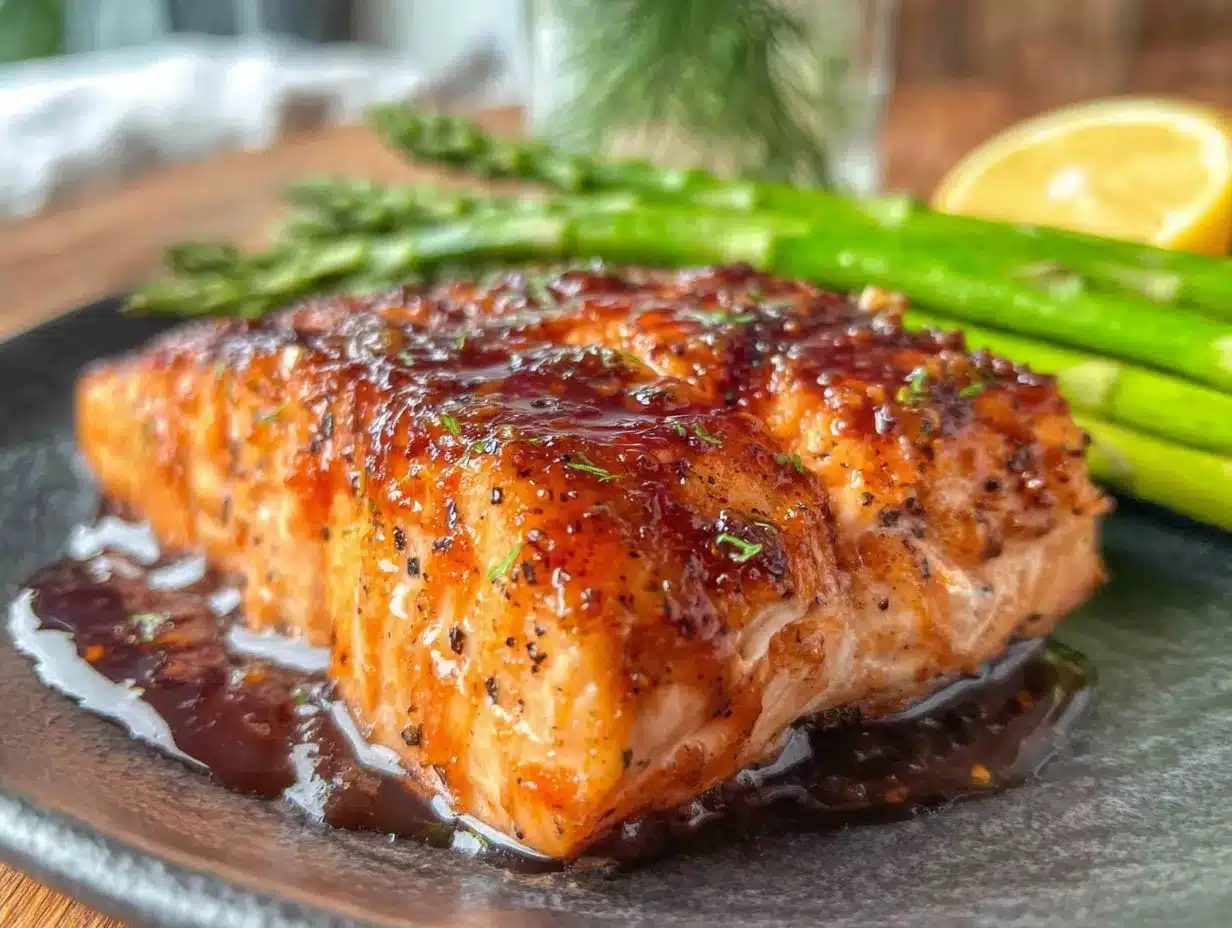
Let’s get cooking. This whole process takes about 25 minutes from start to finish, and most of that is hands-off oven time.
-
Preheat your oven to 400°F (200°C). Position the rack in the middle of the oven. While the oven heats, line your sheet pan with parchment paper or foil. This step saves you from scrubbing later—trust me, the caramelized honey glaze is delicious but sticky to clean off bare metal.
-
Make the honey garlic glaze. In your small mixing bowl, combine 1/4 cup (85g) honey, 3 tablespoons (45ml) soy sauce, and 4 minced garlic cloves. Whisk until everything is well combined. Taste it—you should get a balanced sweet and savory flavor. If it tastes overwhelmingly sweet, add a splash more soy sauce. If it’s too salty, a tiny drizzle of honey will balance it out. Set aside about 2 tablespoons of the glaze for brushing later. You’ll use the rest for the salmon and asparagus.
-
Prepare the asparagus. Rinse the asparagus and pat it dry. Snap off the woody ends—hold each spear near the bottom and bend until it breaks naturally. Discard the tough ends. Place the asparagus on your prepared sheet pan. Drizzle with 1 tablespoon of olive oil and a pinch of salt and pepper. Toss gently with your hands to coat evenly, then spread the spears in a single layer on one side of the pan, leaving room for the salmon.
-
Season the salmon. Pat the salmon fillets dry with paper towels. This helps the glaze stick and promotes browning. Place the fillets skin-side down on the other side of the sheet pan, nestled among the asparagus. Drizzle the remaining 1 tablespoon of olive oil over the salmon, then season lightly with salt and pepper. Don’t oversalt—the soy sauce in the glaze adds plenty of sodium.
-
Brush on the glaze. Using a pastry brush or the back of a spoon, generously brush the honey garlic glaze over the tops and sides of the salmon fillets. Don’t worry if some drips onto the asparagus—that’s a happy accident. The asparagus will soak up those flavors as they roast. Reserve the small amount of glaze you set aside for later.
-
Roast for 12-15 minutes. Place the sheet pan in the preheated oven. Roast for 12 minutes for medium doneness, or up to 15 minutes for well-done. The salmon should be opaque and flake easily with a fork when it’s done. The asparagus should be tender but still have a slight bite—it will continue to soften slightly after you pull it out. If you’re using an instant-read thermometer, insert it into the thickest part of a fillet; you’re looking for 125°F (52°C) for medium.
-
Optional broil for caramelization. If you want a slightly caramelized, sticky top on your salmon, switch the oven to broil for the last 1-2 minutes of cooking. Watch it carefully—honey burns quickly under the broiler. You’re looking for golden-brown bubbles on the surface, not blackened edges. I’ve definitely gotten distracted and ended up with slightly charred salmon before, so set a timer for 90 seconds.
-
Rest and serve. Remove the pan from the oven. Brush the reserved glaze over the hot salmon—it will warm up and become glossy. Let everything rest on the pan for 2-3 minutes. This allows the juices to redistribute through the salmon. Sprinkle with sesame seeds and sliced green onions if you’re using them. Serve immediately, spooning any extra glaze from the pan over the salmon and asparagus.
Cooking Tips & Techniques
I’ve made this recipe enough times to learn a few things the hard way. Here’s what I wish someone had told me.
Don’t overcrowd the pan. If your salmon fillets are touching or overlapping, they’ll steam instead of roast. You want that beautiful caramelized exterior, not pale, soggy fish. If you’re cooking for a crowd, use two sheet pans or cook in batches. The same goes for the asparagus—give each spear a little breathing room so it roasts rather than steams.
Pat the salmon dry. This is the single most important step for getting a nice sear. Wet salmon won’t brown properly—it’ll just release steam and turn out pale. Take an extra 30 seconds to blot those fillets with paper towels. Your future self will thank you when you bite into that crispy-edged piece of fish.
Watch the clock. Salmon goes from perfectly cooked to dry and overcooked very quickly. Set a timer for 12 minutes and check it. If it needs more time, add it in 1-minute increments. I once got distracted scrolling my phone and ended up with sad, dry salmon. Never again. The asparagus is more forgiving, but you still want it bright green and tender, not limp and olive-colored.
Use room-temperature ingredients if possible. Cold salmon straight from the fridge will cook unevenly—the outside will be done while the center is still raw. Let your fillets sit on the counter for 10-15 minutes before cooking. The same goes for the honey; if it’s cold and thick, it won’t spread as easily. A quick warm-up makes everything cooperate.
Line your pan. I cannot stress this enough. The honey glaze caramelizes and sticks to everything. Without parchment or foil, you’ll be scrubbing that pan for 20 minutes. With it, you just lift out the liner and toss it. That’s 20 minutes of your life saved. Use it wisely.
Variations & Adaptations
This recipe is a fantastic base, and it’s easy to adapt to different tastes, diets, and what you have on hand.
Low-Carb / Keto Version: Replace the honey with a sugar-free honey substitute or use 2 tablespoons of brown sugar substitute mixed with 1 tablespoon of water. The texture won’t be exactly the same, but the flavor will still be sweet and savory. Serve with extra roasted vegetables instead of any starchy sides.
Spicy Honey Garlic: Add 1/2 to 1 teaspoon of red pepper flakes or a squirt of sriracha to the glaze. The heat cuts through the sweetness beautifully. I made this version for a friend who loves spicy food, and she asked for the recipe before she finished eating. Start with less—you can always add more heat, but you can’t take it away.
Citrus Twist: Add the zest of one lemon or orange to the glaze, and squeeze a little juice over the salmon before serving. The acidity brightens everything up and balances the richness of the fish. This is my go-to version in the summer when I want something a little fresher.
Different Vegetables: No asparagus? No problem. Broccoli florets, green beans, sliced bell peppers, or zucchini rounds all work beautifully. Just adjust the roasting time based on the vegetable—broccoli might need an extra 5 minutes, while zucchini might need 2-3 minutes less. Cut everything into similar-sized pieces for even cooking.
Air Fryer Method: Cook the salmon in an air fryer at 375°F (190°C) for 8-10 minutes. Cook the asparagus separately at 400°F (200°C) for 6-8 minutes. The air fryer gives you an even crispier exterior on the salmon, but you’ll need to cook in batches if you’re making a full meal.
Serving & Storage Suggestions
This dish is best served fresh from the oven, when the salmon is flaky and the asparagus still has a bit of snap. But leftovers are still pretty great if you handle them right.
Serving: Plate the salmon and asparagus together, spooning any extra pan juices over the top. A sprinkle of sesame seeds and sliced green onions adds color and crunch. This dish pairs beautifully with a simple side of steamed rice or quinoa to soak up the extra glaze. For a low-carb option, serve it over a bed of fresh greens dressed with a light vinaigrette. A wedge of lemon on the side is never a bad idea—a squeeze of citrus just before eating brightens every bite.
Storage: Let any leftovers cool completely to room temperature, then transfer to an airtight container. Store in the refrigerator for up to 3 days. The asparagus will soften over time, but the flavor will still be good. I recommend storing the salmon and asparagus together so the flavors continue to meld.
Reheating: The best way to reheat is in a 300°F (150°C) oven for about 5-7 minutes, just until warmed through. This prevents the salmon from drying out. You can also use the microwave in 30-second bursts, but be careful—the salmon can go from warm to rubbery very quickly. I’ve found that flaking the cold salmon over a salad makes for an excellent lunch the next day, so sometimes I don’t even bother reheating.
Freezing: Cooked salmon freezes reasonably well for up to 2 months. Wrap individual fillets tightly in plastic wrap, then place in a freezer-safe bag. Thaw overnight in the refrigerator before reheating. The texture won’t be quite as perfect as fresh, but it’s still a solid option for meal prep.
Nutritional Information & Benefits
This isn’t just a delicious dinner—it’s also packed with nutrients that make you feel good about eating it.
Estimated per serving (1 salmon fillet + 1/4 of the asparagus):
- Calories: 380-420
- Protein: 35-40g
- Fat: 18-22g
- Carbohydrates: 20-25g (mostly from honey and asparagus)
- Fiber: 3-4g
- Sugar: 15-18g (natural from honey)
- Sodium: 600-800mg (varies with soy sauce)
Health Benefits: Salmon is one of the best sources of omega-3 fatty acids, which support heart and brain health. It’s also rich in high-quality protein and vitamin D. Asparagus is a nutritional powerhouse—it’s loaded with fiber, folate, and vitamins A, C, and K. The garlic in the glaze contains allicin, a compound linked to immune support. This meal is naturally gluten-free (if using tamari), low-carb friendly, and packed with nutrients that support overall wellness.
Dietary Considerations: This recipe is naturally dairy-free and nut-free. To make it gluten-free, swap the soy sauce for tamari or coconut aminos. It’s also suitable for pescatarian and Mediterranean diet meal plans. The honey content means it’s not keto-friendly in its standard form, but the low-carb variation above works well.
Conclusion
This Easy One-Pan Honey Garlic Salmon with Asparagus has genuinely become my weeknight dinner hero. It’s the recipe I make when I’m tired, when I’m short on time, and when I want something that feels like a treat without requiring a trip to the grocery store or an hour of cleanup. That retired chef from the hardware store was right—you really don’t need complicated techniques or fancy equipment to make a meal that tastes this good.
I love that this recipe is flexible enough to adapt to whatever vegetables I have in the fridge or whatever spice level I’m in the mood for. It’s forgiving, it’s fast, and it always delivers. If you try it, I’d love to hear how it goes. Did you add a little extra garlic? Swap in broccoli for the asparagus? Drizzle on some sriracha? Drop a comment below and let me know your version. And if you snap a photo, tag me—I genuinely love seeing these recipes come to life in other people’s kitchens.
Here’s to more meals that are easy, delicious, and leave you with more time for the things that actually matter. Happy cooking!
Frequently Asked Questions
Can I use frozen salmon for this recipe?
Yes, but you need to thaw it completely first. Place the frozen fillets in the refrigerator overnight, or submerge them in a bowl of cold water for about 30 minutes. Pat them very dry before glazing—frozen salmon releases more moisture, so extra drying is crucial for good browning. You may also need to add 2-3 minutes to the roasting time.
How do I know when the salmon is fully cooked?
The most reliable method is using an instant-read thermometer inserted into the thickest part of the fillet. For medium, you want 125°F (52°C); for medium-well, 130°F (54°C). Without a thermometer, look for the fish to turn opaque and flake easily when gently pressed with a fork. The flesh should separate into clean flakes, not look translucent or stringy.
Can I make the honey garlic glaze ahead of time?
Absolutely. You can whisk together the honey, soy sauce, and garlic up to 3 days in advance and store it in an airtight container in the refrigerator. The flavors will actually meld together nicely. Just give it a good stir before using, as the honey may settle at the bottom. Let it come to room temperature for easier spreading.
What if I don’t have a sheet pan?
You can use any large, rimmed baking dish or even a cast-iron skillet. Just make sure it’s large enough to hold the salmon and asparagus in a single layer without overcrowding. A 12-inch cast-iron skillet works beautifully—it holds heat well and gives the salmon a nice sear on the bottom. You might need to cook the vegetables separately if your pan is too small.
Can I double this recipe?
Yes, but use two sheet pans instead of cramming everything onto one. Overcrowding leads to steaming instead of roasting, which means less caramelization and soggier vegetables. Arrange the pans on separate oven racks and rotate them halfway through cooking for even results. You may need to add a few minutes to the cooking time if the pans are full.
Pin This Recipe!
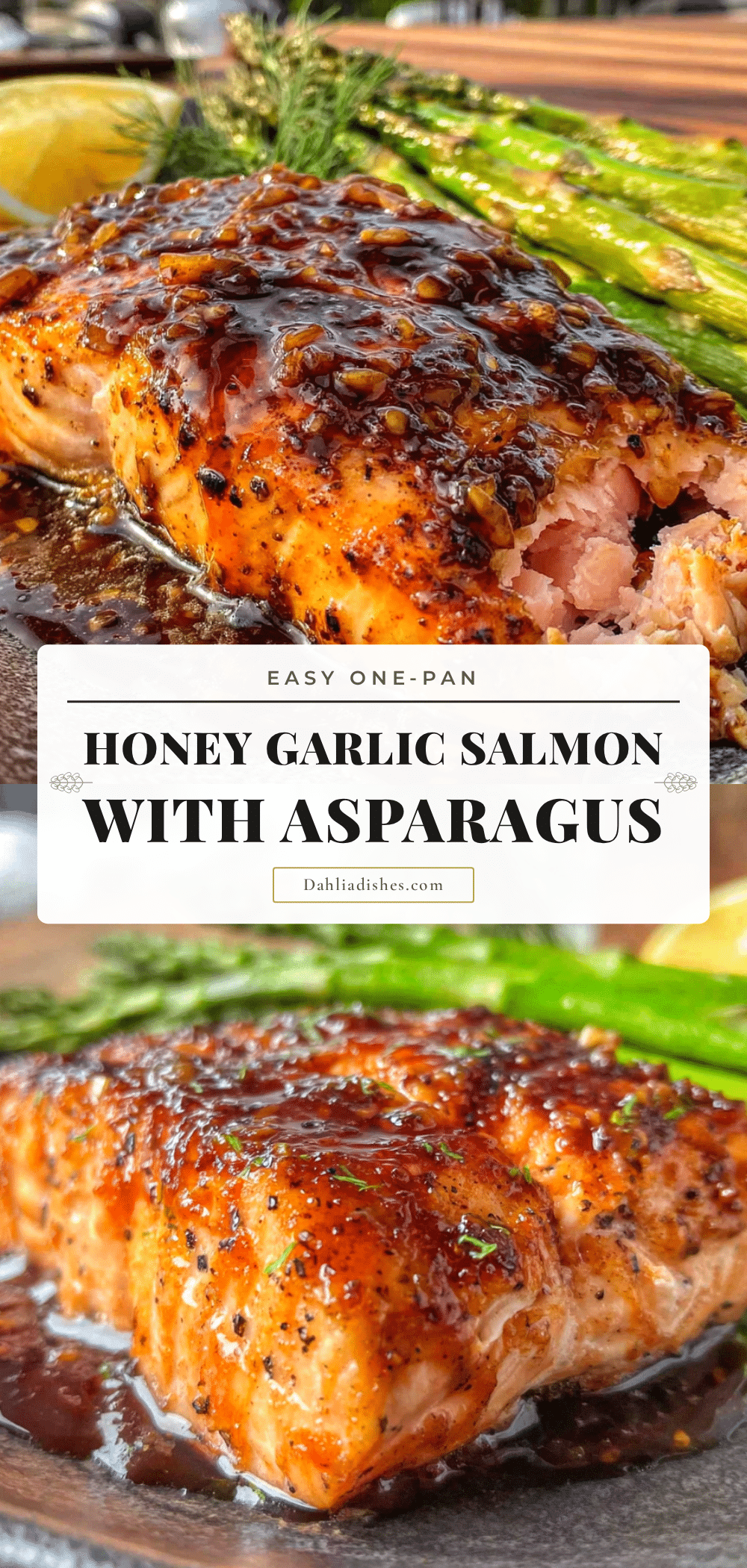
Easy One-Pan Honey Garlic Salmon with Asparagus
A quick and delicious weeknight dinner featuring tender salmon and roasted asparagus coated in a sweet and savory honey garlic glaze, all cooked on a single sheet pan for minimal cleanup.
- Prep Time: 10 minutes
- Cook Time: 15 minutes
- Total Time: 25 minutes
- Yield: 4 servings 1x
- Category: Main Course
- Cuisine: American
Ingredients
- 4 salmon fillets (about 6 oz / 170g each)
- 1/4 cup (85g) honey
- 3 tablespoons (45ml) low-sodium soy sauce
- 4 cloves garlic, minced
- 2 tablespoons (30ml) olive oil, divided
- 1 bunch asparagus (about 1 lb / 450g), woody ends snapped off
- Salt and black pepper to taste
- Sesame seeds for garnish (optional)
- Sliced green onions for garnish (optional)
Instructions
- Preheat your oven to 400°F (200°C). Line a sheet pan with parchment paper or aluminum foil.
- In a small bowl, whisk together honey, soy sauce, and minced garlic. Set aside about 2 tablespoons of the glaze for later.
- Place the asparagus on the prepared sheet pan. Drizzle with 1 tablespoon olive oil and a pinch of salt and pepper. Toss to coat and spread in a single layer on one side of the pan.
- Pat the salmon fillets dry with paper towels. Place them skin-side down on the other side of the pan. Drizzle with the remaining 1 tablespoon olive oil and season lightly with salt and pepper.
- Brush the honey garlic glaze generously over the tops and sides of the salmon fillets.
- Roast for 12-15 minutes, until the salmon is opaque and flakes easily with a fork (internal temperature of 125°F/52°C for medium). For extra caramelization, broil for the last 1-2 minutes, watching carefully.
- Remove from the oven and brush the reserved glaze over the hot salmon. Let rest for 2-3 minutes.
- Sprinkle with sesame seeds and sliced green onions if desired. Serve immediately.
Notes
Pat the salmon dry for better browning. Don’t overcrowd the pan. Watch the cooking time closely to avoid overcooking. Line the pan for easy cleanup. Let salmon rest before serving.
Nutrition
- Serving Size: 1 salmon fillet plus
- Calories: 400
- Sugar: 16
- Sodium: 700
- Fat: 20
- Saturated Fat: 4
- Carbohydrates: 22
- Fiber: 3
- Protein: 37
Keywords: honey garlic salmon, one-pan salmon, sheet pan salmon, salmon with asparagus, easy salmon recipe, weeknight dinner, healthy salmon