Love this? Save it for later!
Share the inspiration with your friends
I was elbow-deep in a pile of vintage Pyrex at a dusty antique shop in rural Pennsylvania when the taxidermist behind the counter started talking about soup. Not about the weather, not about the odd collection of ceramic roosters on the shelf, but soup. He was a quiet man with glasses held together by electrical tape, and he barely looked up from polishing a wooden duck decoy as he described the exact method for making the creamiest kabocha squash soup he’d ever eaten. “My wife’s recipe,” he muttered, almost to himself. “She uses coconut milk, and she says the secret is roasting the squash first. You’re a cook, right? You look like someone who knows their way around a kitchen.” Honestly, I was just there hoping to find a便宜 mixing bowl, but I found a soup recipe instead.
The man—his name was Earl, I learned later—scribbled the instructions on a torn piece of brown paper bag. I stuffed it in my pocket, paid for my Pyrex, and forgot about it for three weeks. When I finally found the scrap of paper while cleaning out my purse, I figured, why not? I had a kabocha squash sitting on my counter that I’d bought for $2.49 at the local market. Let me tell you, that first batch was a revelation. The soup was velvety, sweet, and savory all at once, with the coconut milk adding this lush, almost decadent richness that made me close my eyes after the first spoonful. I’ve tweaked Earl’s wife’s recipe a bit over the years—added ginger, a pinch of cayenne—but the heart of it is still that unexpected conversation in an antique shop.
Maybe you’ve been there, you know? You find a recipe in the oddest place, and it becomes a staple. This creamy coconut kabocha squash soup is now my go-to for chilly weeknights when I need something warm and satisfying without breaking the bank. It’s the kind of soup that makes you feel like you’re treating yourself, even when you’re just using a humble squash and a can of coconut milk. I keep making it because it’s proof that the best things in life—and the best recipes—often come from the most unexpected places.
Why You’ll Love This Recipe
This isn’t just another squash soup recipe. I’ve tested it a dozen times, tweaked the spice levels, and even had my picky-eating neighbor’s kids ask for seconds. It’s the kind of recipe that builds trust because it works every single time, with simple ingredients you can find anywhere.
- Budget-Friendly: Kabocha squash is often cheaper than butternut squash, especially in the fall and winter. A single squash costs around $2-$3 and makes a big pot of soup. Coconut milk is a pantry staple that adds richness without needing expensive cream.
- Quick & Easy: From start to finish, this soup comes together in about 45 minutes. The hands-on time is even less—maybe 15 minutes of chopping and blending. Perfect for a busy weeknight.
- Simple Ingredients: You likely already have onion, garlic, ginger, and vegetable broth in your kitchen. No fancy grocery trips required.
- Crowd-Pleaser: The natural sweetness of the kabocha squash, combined with the creamy coconut milk and a hint of warmth from ginger and cayenne, appeals to both kids and adults. It’s mild enough for sensitive palates but flavorful enough for spice lovers.
- Unbelievably Delicious: The texture is where this soup shines. Roasting the squash first caramelizes its natural sugars, giving the soup a deep, almost nutty flavor. Blended with coconut milk, it becomes silky-smooth and luxurious. You won’t believe something so simple can taste this good.
What makes this recipe different from the rest? It’s the technique. Roasting the squash instead of boiling it adds a layer of flavor you just can’t get any other way. And the balance of ginger, garlic, and a tiny pinch of cayenne keeps the soup from being one-note sweet. It’s comfort food reimagined—healthier, faster, and more affordable, but with the same soul-soothing satisfaction.
What Ingredients You Will Need
This recipe uses simple, wholesome ingredients to deliver bold flavor and satisfying texture without the fuss. Most are pantry staples or easy to find at any grocery store.
- 1 medium kabocha squash (about 2-3 pounds) – Look for a squash that feels heavy for its size with a dull, hard skin. You’ll be roasting it with the skin on, so give it a good scrub. The skin is edible after roasting and adds fiber, but you can peel it if you prefer a smoother texture.
- 1 tablespoon olive oil – For roasting the squash. You can use avocado oil or coconut oil instead.
- 1 medium yellow onion, chopped – Adds a savory base. A sweet onion works well too.
- 3 cloves garlic, minced – Fresh garlic is best, but 1 teaspoon of garlic powder works in a pinch.
- 1 tablespoon fresh ginger, grated – This is key for warmth and brightness. I recommend using a microplane for the best texture. Jarred ginger paste is a fine substitute.
- 1 can (13.5 oz) full-fat coconut milk – Don’t use light coconut milk here; the full-fat version is what makes the soup so creamy and satisfying. I prefer Thai Kitchen or Chaokoh brands for consistent quality.
- 2 cups vegetable broth – Use low-sodium so you can control the salt. Chicken broth works too if you’re not vegetarian.
- 1 tablespoon maple syrup or honey – Optional, but it enhances the squash’s natural sweetness. Omit if your squash is already very sweet.
- ½ teaspoon salt, plus more to taste – I use fine sea salt.
- ¼ teaspoon black pepper – Freshly ground is best.
- ⅛ teaspoon cayenne pepper (optional) – Just a pinch adds a subtle warmth without making the soup spicy. Leave it out for kids or sensitive palates.
- Optional toppings: Toasted pumpkin seeds, a drizzle of coconut milk, fresh cilantro, or a squeeze of lime juice.
Ingredient Selection Tips: When choosing a kabocha squash, look for one that is firm and free of soft spots. The skin should be a deep green with some orange patches—that’s a sign of ripeness. If you can’t find kabocha, you can substitute butternut squash or even a sugar pumpkin. The cooking time may vary slightly.
Equipment Needed
You don’t need a fancy kitchen to make this soup. Here’s what you’ll need:
- Baking sheet – A rimmed baking sheet works best for roasting the squash. Line it with parchment paper for easy cleanup.
- Chef’s knife – A sharp knife is essential for cutting the hard squash. A serrated knife can also work well.
- Large pot or Dutch oven – For sautéing the aromatics and simmering the soup. A 4-5 quart pot is ideal.
- Immersion blender or regular blender – An immersion blender is easier and less messy. If using a regular blender, work in batches and be careful with the hot liquid—don’t fill the blender more than halfway.
- Wooden spoon or spatula – For stirring.
- Measuring cups and spoons – For accuracy.
Budget-Friendly Options: If you don’t have an immersion blender, let the soup cool slightly before blending in a regular blender. A potato masher can also work for a chunkier texture, though it won’t be as smooth. I’ve used a hand mixer in a pinch, and it worked okay, just be careful of splatters.
Preparation Method
- Preheat your oven to 400°F (200°C). While the oven heats, carefully cut the kabocha squash in half. Use a sharp chef’s knife and be firm—the skin is tough. Scoop out the seeds and stringy pulp with a spoon. You can save the seeds to roast later if you like.
- Roast the squash. Brush the cut sides of the squash halves with 1 tablespoon of olive oil. Place them cut-side down on a parchment-lined baking sheet. Roast for 30-40 minutes, until the flesh is fork-tender and the skin is slightly wrinkled. The tip of a knife should slide in easily. Let the squash cool for 10 minutes. Once cool enough to handle, scoop the flesh from the skin. You should have about 3-4 cups of cooked squash.
- Sauté the aromatics. While the squash roasts, heat a large pot or Dutch oven over medium heat. Add a drizzle of olive oil, then add the chopped onion. Sauté for 5-7 minutes, until soft and translucent. Add the minced garlic and grated ginger, and cook for another minute until fragrant. Stir constantly so the garlic doesn’t burn.
- Combine and simmer. Add the roasted squash flesh to the pot, along with the vegetable broth, coconut milk, maple syrup (if using), salt, pepper, and cayenne. Stir everything together. Bring the soup to a gentle simmer over medium-high heat, then reduce the heat to low. Let it simmer for 10 minutes to allow the flavors to meld. The soup will look a bit chunky at this point—that’s fine.
- Blend until smooth. Remove the pot from the heat. Use an immersion blender to puree the soup directly in the pot until it’s completely smooth and velvety. If using a regular blender, let the soup cool for 5 minutes first, then blend in batches. Be sure to remove the center cap from the blender lid and cover it with a kitchen towel to let steam escape. Blend each batch for about 30-60 seconds.
- Adjust seasoning. Taste the soup and adjust the salt, pepper, or cayenne to your liking. If it’s too thick, add a splash more broth or coconut milk. If you want it sweeter, add a touch more maple syrup.
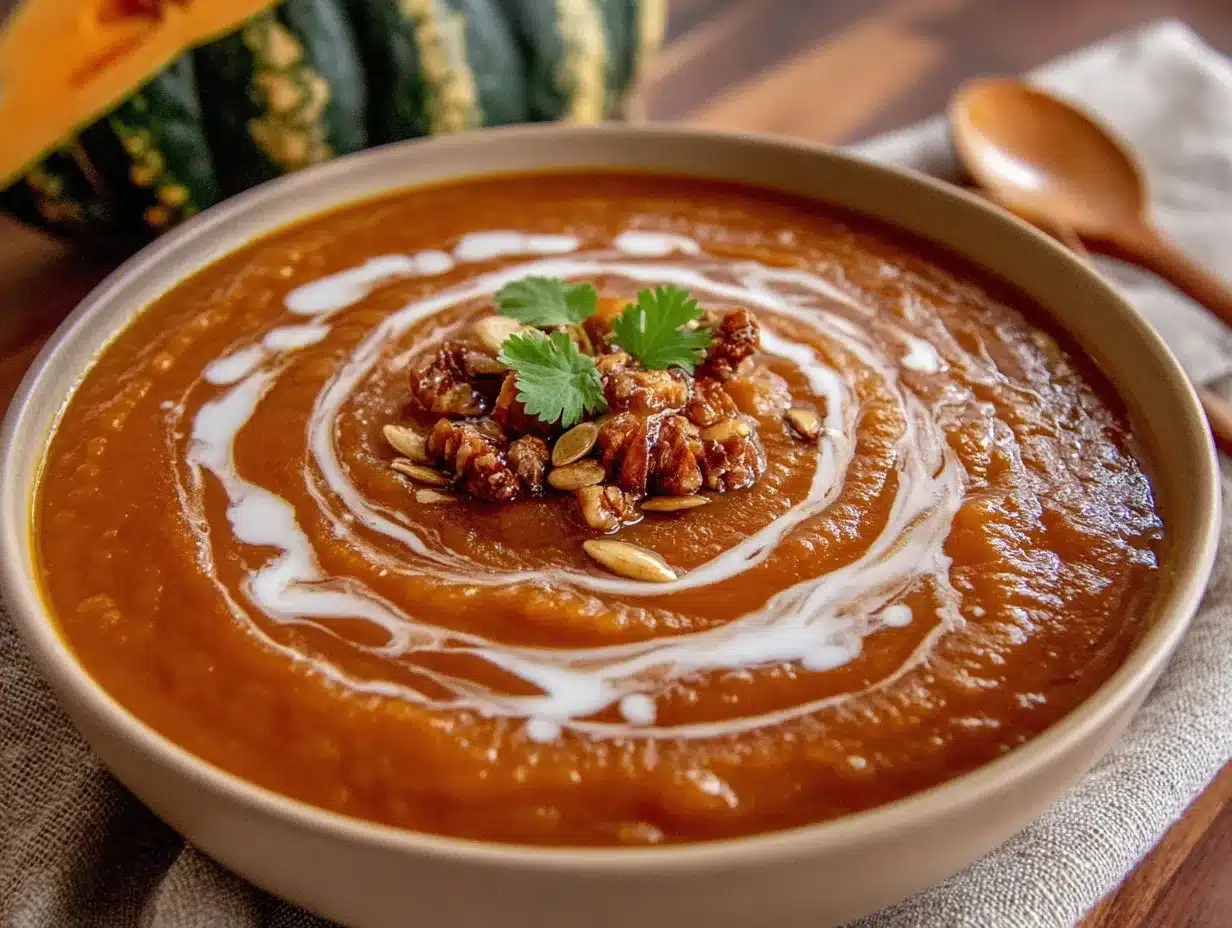
- Serve and garnish. Ladle the soup into bowls and top with your favorite garnishes. I love a swirl of extra coconut milk, a sprinkle of toasted pumpkin seeds, and a few fresh cilantro leaves. A squeeze of lime juice right before serving brightens everything up.
Sensory Cues: When roasting, the squash should smell sweet and nutty. The finished soup should look like liquid gold—thick, glossy, and smooth. It should coat the back of a spoon.
Cooking Tips & Techniques
Here are a few things I’ve learned from making this soup more times than I can count:
- Don’t skip roasting. I know it adds an extra step, but roasting the squash is non-negotiable. Boiling it would make the soup watery and bland. Roasting concentrates the flavor and gives the soup a deeper, caramelized taste. Trust me on this one.
- Be careful with the cayenne. A little goes a long way. I once added a whole ¼ teaspoon thinking I wanted more heat, and it was too much for my kids. Start with a pinch and taste before adding more. You can always add, but you can’t take away.
- Use full-fat coconut milk. I know it’s tempting to use the light version to save a few calories, but the soup won’t have the same luxurious texture. The fat in the coconut milk is what makes this soup so satisfying. If you’re really concerned, you can use half full-fat and half light, but I wouldn’t go all light.
- Blend in batches safely. Hot liquid expands in a blender, which can cause the lid to blow off. Always let the soup cool for a few minutes before blending, and never fill the blender more than halfway. Hold the lid down with a kitchen towel.
- Make it ahead. This soup tastes even better the next day after the flavors have melded. I often make a double batch on Sunday and enjoy it for lunches all week.
A Personal Failure: The first time I made this, I forgot to add salt. The soup was bland and flat, and I couldn’t figure out why. A pinch of salt transformed it completely. Don’t forget to season at the end!
Variations & Adaptations
This soup is a great base for experimentation. Here are a few ways to change it up:
- Vegan & Gluten-Free: This recipe is already both! Just make sure your vegetable broth is certified gluten-free if needed.
- Add Some Heat: For a spicier version, add a minced Thai chili or serrano pepper along with the garlic and ginger. You can also stir in a tablespoon of red curry paste for a Thai-inspired twist.
- Make It Heartier: Stir in a can of drained and rinsed chickpeas or some cooked lentils after blending for extra protein and fiber. Or top each bowl with crispy tofu croutons.
- Try Different Squash: Butternut squash, acorn squash, or even a sugar pumpkin work beautifully in this recipe. Adjust the roasting time as needed—smaller squashes may cook faster.
- Add a Tangy Finish: A tablespoon of apple cider vinegar or a squeeze of lime juice stirred in at the end brightens the flavors and balances the sweetness.
- Personal Variation: I once added a teaspoon of garam masala along with the ginger, and it was incredible. The warm spices complemented the coconut milk perfectly. My husband said it was the best batch yet.
Serving & Storage Suggestions
This soup is incredibly versatile when it comes to serving and storing.
- Serving Temperature: Serve it hot, but not boiling. Let it sit for a minute or two after ladling to let the flavors settle.
- Presentation: A simple swirl of coconut milk on top makes the soup look elegant. Add a sprinkle of toasted pumpkin seeds for crunch and a few cilantro leaves for color. A drizzle of chili oil adds both heat and visual appeal.
- Complementary Dishes: This soup pairs beautifully with a crusty loaf of bread for dipping. A simple green salad with a lemony vinaigrette is a great side. For a heartier meal, serve it alongside a grilled cheese sandwich or a simple roasted vegetable platter.
- Storage: Store leftover soup in an airtight container in the refrigerator for up to 5 days. The flavors will actually deepen and improve over time.
- Freezing: This soup freezes beautifully. Let it cool completely, then transfer to freezer-safe containers or zip-top bags. Leave a little room for expansion. It will keep for up to 3 months. Thaw overnight in the refrigerator before reheating.
- Reheating: Reheat the soup gently on the stovetop over medium-low heat, stirring occasionally. If it’s too thick after thawing, add a splash of broth or water to thin it out. You can also reheat individual portions in the microwave in 30-second bursts.
Nutritional Information & Benefits
This soup is as nourishing as it is delicious. Here’s a rough estimate per serving (based on 6 servings):
- Calories: ~220
- Fat: 14g (mostly from healthy coconut fat)
- Carbohydrates: 22g
- Fiber: 5g
- Protein: 4g
- Vitamin A: High (from kabocha squash)
- Vitamin C: Good source
- Iron: 15% DV
Health Benefits: Kabocha squash is packed with beta-carotene, which your body converts into vitamin A for healthy vision and immune function. It’s also a good source of fiber, which aids digestion. Coconut milk provides healthy medium-chain triglycerides (MCTs) that can support energy levels. Ginger has anti-inflammatory properties. This soup is naturally gluten-free, dairy-free, and vegan, making it suitable for a wide range of dietary needs.
Potential Allergens: Coconut is a tree nut. If you have a coconut allergy, you can substitute with full-fat oat milk or cashew cream, though the texture will be slightly different.
Conclusion
Honestly, I never expected to find my favorite fall soup recipe from a taxidermist in rural Pennsylvania, but here we are. This creamy coconut kabocha squash soup is proof that the best recipes often come from the most unlikely sources. It’s budget-friendly, incredibly easy to make, and tastes like something you’d order at a fancy restaurant. The combination of roasted squash and creamy coconut milk is just magic.
I hope you give this soup a try and make it your own. Maybe you’ll add a little more ginger, or skip the cayenne, or top it with something totally different. That’s the beauty of a simple recipe like this—it’s a canvas for your own creativity. Let me know in the comments how it turned out for you! Did you find a new favorite topping? Did your kids ask for seconds? I’d love to hear your stories. And if you’re looking for another cozy, budget-friendly meal, check out my creamy Tuscan white bean soup or this easy one-pot lentil stew.
Happy cooking, friends. And remember—sometimes the best recipes are hiding in plain sight, just waiting for you to find them.
Frequently Asked Questions
Can I use frozen kabocha squash instead of fresh?
Yes, you can use frozen kabocha squash to save time. Thaw it first, then pat it dry with paper towels before roasting. Roasting time may be slightly shorter since the squash is already partially cooked.
How can I make this soup thicker?
If your soup is too thin, let it simmer uncovered for an extra 10-15 minutes to reduce and thicken. You can also add a peeled and diced potato along with the squash—it will break down and add natural thickness.
Is this soup freezer-friendly?
Absolutely! This soup freezes wonderfully. Let it cool completely, then store in freezer-safe containers for up to 3 months. Thaw overnight in the fridge and reheat gently on the stove.
Can I use light coconut milk to reduce calories?
You can, but the soup won’t be as creamy or rich. If you’re watching calories, try using half full-fat and half light coconut milk. The texture will still be good, just a bit thinner.
What can I use instead of kabocha squash?
Butternut squash, acorn squash, or sugar pumpkin are all excellent substitutes. The cooking time and sweetness may vary slightly, so adjust the maple syrup to taste. Carrots or sweet potatoes also work in a pinch.
Pin This Recipe!

Creamy Coconut Kabocha Squash Soup

A velvety, budget-friendly soup made with roasted kabocha squash and creamy coconut milk, with a hint of ginger and cayenne for warmth. Perfect for chilly weeknights, this easy recipe comes together in about 45 minutes and is naturally vegan and gluten-free.
- Prep Time: 15 minutes
- Cook Time: 40 minutes
- Total Time: 55 minutes
- Yield: 6 servings 1x
- Category: Soup
- Cuisine: American
Ingredients
- 1 medium kabocha squash (about 2–3 pounds)
- 1 tablespoon olive oil
- 1 medium yellow onion, chopped
- 3 cloves garlic, minced
- 1 tablespoon fresh ginger, grated
- 1 can (13.5 oz) full-fat coconut milk
- 2 cups vegetable broth, low-sodium
- 1 tablespoon maple syrup or honey (optional)
- ½ teaspoon salt, plus more to taste
- ¼ teaspoon black pepper, freshly ground
- ⅛ teaspoon cayenne pepper (optional)
- Optional toppings: toasted pumpkin seeds, extra coconut milk, fresh cilantro, lime juice
Instructions
- Preheat your oven to 400°F (200°C). Carefully cut the kabocha squash in half, scoop out the seeds and stringy pulp.
- Brush the cut sides of the squash halves with 1 tablespoon of olive oil. Place them cut-side down on a parchment-lined baking sheet. Roast for 30-40 minutes, until fork-tender. Let cool for 10 minutes, then scoop the flesh from the skin (about 3-4 cups).
- While the squash roasts, heat a large pot or Dutch oven over medium heat. Add a drizzle of olive oil, then sauté the chopped onion for 5-7 minutes until soft and translucent. Add the minced garlic and grated ginger, cook for 1 minute until fragrant.
- Add the roasted squash flesh, vegetable broth, coconut milk, maple syrup (if using), salt, pepper, and cayenne. Stir to combine. Bring to a gentle simmer over medium-high heat, then reduce heat to low and simmer for 10 minutes.
- Remove from heat. Use an immersion blender to puree the soup until smooth and velvety. If using a regular blender, let cool for 5 minutes, then blend in batches, filling no more than halfway and covering the lid with a towel.
- Taste and adjust seasoning with salt, pepper, or cayenne. If too thick, add a splash more broth or coconut milk. If desired, add more maple syrup for sweetness.
- Ladle into bowls and garnish with a swirl of coconut milk, toasted pumpkin seeds, fresh cilantro, and a squeeze of lime juice if desired.
Notes
Roasting the squash is essential for deep flavor—do not skip it. Use full-fat coconut milk for the creamiest texture. Start with a pinch of cayenne and adjust to taste. The soup tastes even better the next day. For a thicker soup, simmer uncovered for an extra 10-15 minutes or add a diced potato with the squash.
Nutrition
- Serving Size: 1 bowl (about 1.5 cu
- Calories: 220
- Sugar: 8
- Sodium: 480
- Fat: 14
- Saturated Fat: 12
- Carbohydrates: 22
- Fiber: 5
- Protein: 4
Keywords: kabocha squash soup, creamy coconut soup, vegan soup, gluten-free soup, budget-friendly soup, fall soup, winter soup, easy soup recipe