Love this? Save it for later!
Share the inspiration with your friends
It was a Tuesday, actually. I was at the farmer’s market, staring at a mountain of butternut squash like it was a puzzle I couldn’t solve. I had already bought three that week, and my roommate was starting to give me side-eye. An older woman next to me, who had been quietly picking through the apples, just laughed. “You look like you’re trying to figure out how to get rid of those things,” she said. She was right. I was tired of soup. I was tired of roasting them plain. I wanted something that felt like an event.
She didn’t give me a recipe. She just said, “Roast it, toss it with pasta, and add something crunchy. That’s all it needs.” It was such a simple, offhand suggestion, but it stuck with me. I went home and started playing—roasting the squash until the edges were caramelized, toasting some nuts for that crunch she mentioned, and throwing in some sage because, honestly, it just felt right. The first time I made it, I burnt the garlic. The second time, I forgot the cheese. But by the third attempt, I had something that made me stop mid-chew. It was the kind of dish that feels like a hug on a plate.
This isn’t just another pasta recipe. This is the one I bring to every potluck, the one my friends text me about in October asking, “Are you making that squash pasta again?” It’s the dish that turns a simple Tuesday dinner into something you look forward to all day. Maybe you’ve been there—staring at a seasonal ingredient, wondering how to make it feel special. Well, this is how. Let’s get cooking.
Why You’ll Love This Recipe
This isn’t just a pasta dish; it’s a full-on autumn experience in a bowl. I’ve tested this version more times than I care to admit, tweaking the roast time on the squash, adjusting the salt level on the crispy sage, and even swapping out the pasta shape to see what holds the sauce best. The result? A recipe that’s been family-approved, potluck-vetted, and honestly, pretty hard to mess up.
- Quick & Easy: From start to finish, you’re looking at about 45 minutes. Most of that is hands-off oven time, so you can actually chat with your guests or prep a salad.
- Simple Ingredients: No fancy grocery store trips. Butternut squash, pasta, some cream, Parmesan, and a few pantry staples. You probably already have most of it.
- Perfect for Hosting: This is your secret weapon for fall gatherings. It’s impressive enough to be the main event but hearty enough to stand next to a roast chicken or a big green salad.
- Crowd-Pleaser: I’ve watched picky eaters go back for seconds. The creamy, slightly sweet sauce combined with the salty, crispy sage is a combo that just works for everyone.
- Unbelievably Delicious: The texture here is the real star. You’ve got the soft, velvety squash, the al dente pasta, and then that sudden crunch from the toasted walnuts. It’s comfort food, but it’s also… exciting.
What makes this recipe different from the rest? It’s the technique. Instead of just cubing the squash, we roast it until it’s deeply caramelized, which brings out a natural sweetness you just can’t get from boiling. Then, we mash half of it into the sauce, creating a creamy, velvety texture without needing a ton of heavy cream. It’s a little trick that makes the dish feel lighter but tastes incredibly indulgent.
What Ingredients You Will Need
This recipe uses simple, wholesome ingredients to deliver bold flavor and satisfying texture without the fuss. Most of these are fall pantry staples, but I’ve included some notes on substitutions so you can make it work with what you have.
- 1 medium butternut squash (about 2-3 lbs) — Look for one that feels heavy for its size and has a solid, tan skin. You’ll peel, seed, and cube it. (Pro tip: If you’re short on time, many stores sell pre-cut butternut squash cubes. Just make sure they’re roughly the same size for even roasting.)
- 12 oz (340g) pasta — I love using pappardelle or fettuccine for this, but a short pasta like rigatoni or orecchiette works beautifully too. The key is to choose something that can hold onto the creamy sauce.
- 3 tablespoons olive oil — A good quality extra virgin olive oil makes a difference here, especially for roasting the squash.
- 4 cloves garlic, minced — Fresh garlic is non-negotiable for that aromatic punch. Don’t use the jarred stuff; it just doesn’t have the same kick.
- 1/2 cup (120ml) heavy cream — This adds richness, but you can substitute with full-fat coconut milk for a dairy-free version. The flavor will be slightly different but still delicious.
- 1/2 cup (50g) grated Parmesan cheese — I recommend buying a block and grating it yourself. The pre-shredded stuff has anti-caking agents that prevent it from melting smoothly.
- 1/4 cup (30g) walnuts, roughly chopped — These get toasted and add that essential crunch. Pecans would also be lovely here.
- 10-12 fresh sage leaves — Fresh sage is a must. Dried sage won’t give you the same texture or vibrant flavor when fried.
- 1/2 teaspoon red pepper flakes (optional) — For a little kick of heat that cuts through the richness.
- Salt and black pepper to taste — I use kosher salt for roasting and finishing.
- 1/4 cup (60ml) reserved pasta water — This starchy water is liquid gold. It helps bind the sauce to the pasta and adjusts the consistency.
Equipment Needed
You don’t need a professional kitchen to pull this off. Here’s what you’ll need:
- Large baking sheet — A rimmed baking sheet is best to catch any juices from the squash. I’ve used a cheap one for years and it works fine.
- Large pot — For boiling the pasta. Make sure it’s big enough to give the pasta room to move around.
- Large skillet or sauté pan — This is where the magic happens. A 12-inch skillet is ideal for fitting all the ingredients comfortably.
- Chef’s knife and cutting board — A sharp knife makes peeling and cubing the squash so much easier. Trust me on this.
- Wooden spoon or spatula — For stirring the sauce and pasta together.
- Small pan — For toasting the walnuts and frying the sage. A small non-stick pan works perfectly.
If you don’t have a large skillet, you can use a Dutch oven. And if you’re missing a small pan for the nuts, just toast them in the oven on the same baking sheet as the squash for the last 5 minutes. No extra cleanup needed.
Preparation Method
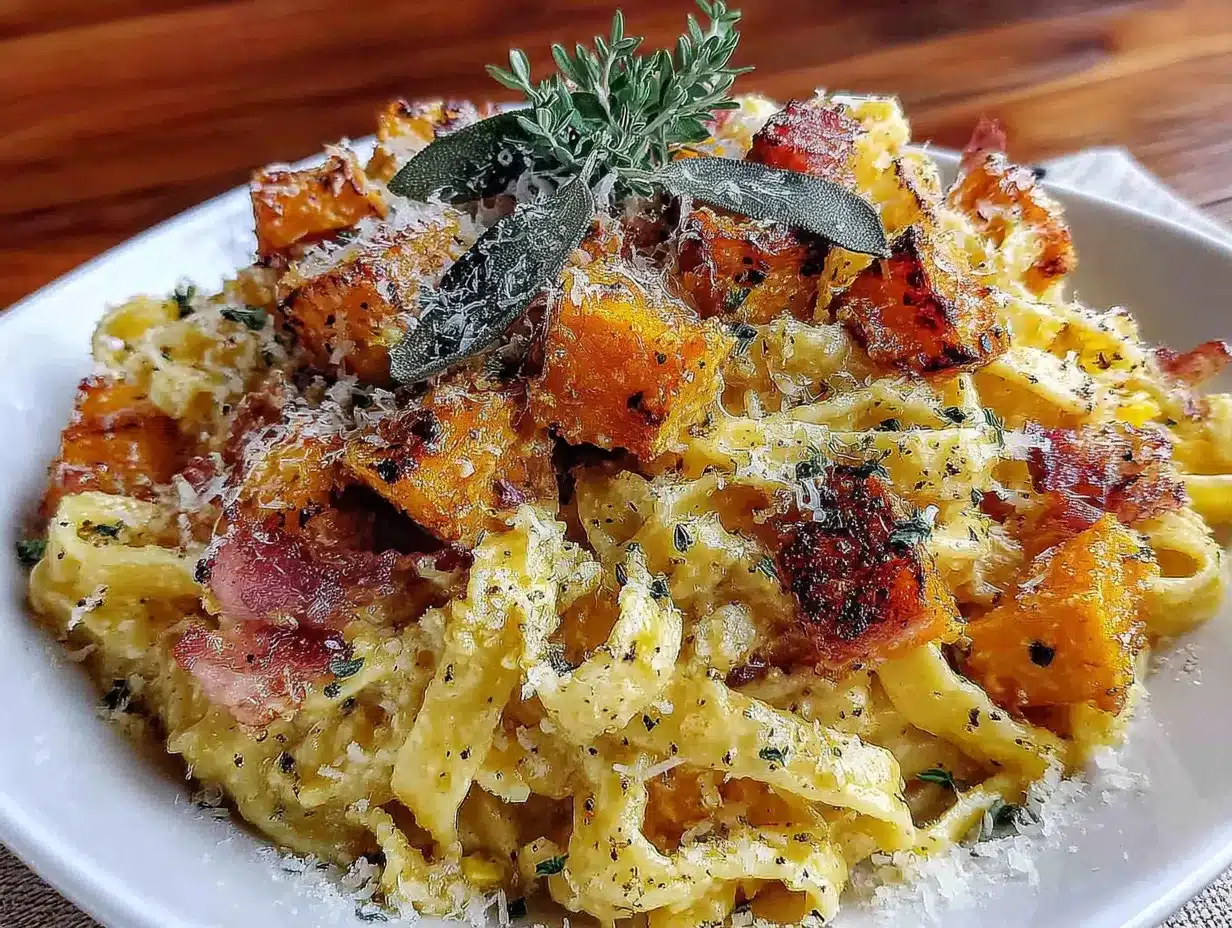
Let’s get into the nitty-gritty. I’ve broken this down into clear steps, and I’ve included some sensory cues so you know exactly what you’re looking for at each stage.
- Roast the squash. Preheat your oven to 400°F (200°C). Peel the butternut squash, cut it in half lengthwise, and scoop out the seeds. Cut the flesh into 1-inch cubes. Toss the cubes with 2 tablespoons of olive oil, a good pinch of salt, and a few cracks of black pepper. Spread them out in a single layer on your baking sheet. Roast for 25-30 minutes, flipping halfway through, until the squash is tender and the edges are golden brown and caramelized. You should be able to easily pierce a cube with a fork.
- Toast the walnuts and fry the sage. While the squash is roasting, heat a small pan over medium heat. Add the chopped walnuts and toast them for 2-3 minutes, shaking the pan frequently, until they smell fragrant and are lightly browned. Watch them carefully—they burn quickly. Remove them to a plate. In the same pan, add a drizzle of olive oil. Add the sage leaves and fry for about 30 seconds per side, until they are crisp and the oil is fragrant. Remove them to a paper towel-lined plate. They will crisp up further as they cool.
- Cook the pasta. Bring a large pot of generously salted water to a rolling boil. Add your pasta and cook according to package directions until al dente. Before you drain it, reserve 1 cup of the starchy pasta water. Drain the pasta and set it aside.
- Make the sauce. In your large skillet, heat the remaining 1 tablespoon of olive oil over medium heat. Add the minced garlic and cook for about 1 minute, until fragrant but not browned. Add the roasted butternut squash cubes to the skillet. Use a fork or potato masher to mash about half of the squash directly in the pan. This creates the creamy base of the sauce. Leave the other half in chunks for texture.
- Combine everything. Reduce the heat to low. Pour in the heavy cream and stir to combine. Add the grated Parmesan cheese and stir until it’s melted and the sauce is smooth. If the sauce seems too thick, add a splash of the reserved pasta water to loosen it up. Taste and adjust seasoning with salt and pepper.
- Finish the dish. Add the cooked pasta to the skillet with the sauce. Toss everything together using tongs or a wooden spoon until the pasta is well coated. If it looks dry, add more pasta water, a tablespoon at a time. Crumble the crispy sage leaves over the top and sprinkle with the toasted walnuts. Give it one final toss or just leave them on top for a beautiful presentation.
Cooking Tips & Techniques
I have made every mistake in the book with this recipe, so let me save you the trouble. First, don’t skip the step of mashing half the squash. I once tried to just toss whole cubes into the sauce, and it just didn’t come together. The mashed squash is what gives you that luxurious, creamy texture without needing a ton of cream.
Another thing I learned the hard way: don’t overcrowd the baking sheet when roasting the squash. If the cubes are too close together, they’ll steam instead of roast, and you won’t get those beautiful caramelized edges. Give them some space. If you have to, use two baking sheets.
Timing is everything when you’re hosting. Here’s my strategy: Roast the squash and toast the nuts earlier in the day. You can even cook the pasta an hour ahead of time—just toss it with a little olive oil to prevent sticking. Then, when your guests are about to arrive, all you have to do is reheat the sauce and toss everything together. It takes about 10 minutes. You look like a rockstar, and you actually get to enjoy your own party.
One final tip: taste your pasta water before you salt it. If it’s too salty, it will make the final dish overly salty. I aim for water that tastes like the sea. It makes a difference.
Variations & Adaptations
This recipe is incredibly forgiving, and I’ve tried a few different versions over the years. Here are some of my favorites:
- Make it vegetarian/vegan: Use full-fat coconut milk instead of heavy cream and a good quality nutritional yeast or vegan Parmesan in place of the dairy cheese. The coconut flavor is subtle and actually pairs beautifully with the squash.
- Add protein: This pasta is fantastic with some crispy pancetta or bacon bits thrown in. Cook the bacon first, use the rendered fat to fry the sage, and crumble the bacon over the top with the nuts. It adds a salty, smoky element that’s just divine.
- Seasonal swap: If butternut squash isn’t in season, try this with sweet potatoes or pumpkin. The cooking time will be similar, and the sweetness will still be there. In the summer, I’ve even used zucchini, though you’ll want to sauté it instead of roasting.
- Spice it up: For a warmer, more aromatic flavor, add a pinch of nutmeg or cinnamon to the sauce along with the cream. It sounds unusual, but it really highlights the natural sweetness of the squash.
- Gluten-free option: Simply use your favorite gluten-free pasta. I find that brown rice or chickpea pasta holds up well to this sauce.
Personally, I once tried adding a handful of dried cranberries at the end, and it was a huge hit. The tartness cut through the richness perfectly. It’s not in the official recipe, but it’s a fun twist for a holiday dinner.
Serving & Storage Suggestions
This dish is best served immediately, while the pasta is hot and the walnuts are still crunchy. I like to serve it in a large, shallow bowl so everyone can see the beautiful colors. A sprinkle of extra Parmesan and a few whole crispy sage leaves on top make for a stunning presentation.
For a complete fall meal, serve this alongside a simple arugula salad with a lemon vinaigrette. The peppery greens and bright acidity balance the richness of the pasta perfectly. A glass of crisp white wine, like a Sauvignon Blanc or a dry Riesling, is a wonderful pairing.
If you have leftovers (which is rare in my house), store the pasta in an airtight container in the refrigerator for up to 3 days. The flavors actually meld together overnight and become even more delicious. However, the walnuts will lose their crunch. To reheat, add a splash of milk or water to the pasta and warm it gently in a skillet over low heat, stirring occasionally. You can also microwave it, but the texture won’t be as good. I don’t recommend freezing this dish, as the creamy sauce can separate and become grainy.
Nutritional Information & Benefits
Here’s an approximate nutritional breakdown per serving (based on 6 servings):
- Calories: ~450
- Fat: 22g
- Carbohydrates: 55g
- Fiber: 8g
- Protein: 12g
This dish is packed with goodness. Butternut squash is a fantastic source of Vitamin A, which is great for your immune system and eye health. It’s also loaded with fiber, which keeps you feeling full and satisfied. The walnuts add healthy omega-3 fatty acids, and the sage has anti-inflammatory properties. It’s comfort food that actually does your body some good.
This recipe is naturally vegetarian and can easily be made vegan or gluten-free with the substitutions mentioned above. It’s also nut-free if you skip the walnuts or swap them for pumpkin seeds.
Conclusion
This fall harvest pasta is more than just a recipe—it’s the dish I turn to when I want to feed the people I love. It’s the one that gets requested year after year, the one that makes people close their eyes and say “mmm” after the first bite. It’s forgiving, it’s adaptable, and it always, always delivers.
I hope you make this your own. Maybe you’ll add a little more garlic, or skip the nuts, or throw in some leftover chicken. That’s the beauty of a good recipe—it’s a starting point, not a rulebook. Please come back and let me know how it turned out for you. Did you try a variation? Did your guests go silent while eating? I want to hear all about it. Share your photos, your tweaks, your happy hosting moments. Until next time, happy cooking!
Frequently Asked Questions
Can I make this pasta ahead of time?
Yes! You can roast the squash, toast the nuts, and fry the sage up to a day in advance. Store them separately in the fridge. When you’re ready to serve, just cook the pasta and make the sauce fresh. It takes less than 15 minutes to finish the dish.
Can I use frozen butternut squash?
You can, but I don’t recommend it for this recipe. Frozen squash releases a lot of water as it thaws, which will make your sauce watery and prevent the squash from caramelizing properly. Fresh squash is really worth the extra few minutes of prep.
What can I use instead of heavy cream?
Full-fat coconut milk is the best substitute for a dairy-free version. You can also use half-and-half, but the sauce will be thinner. If you want to keep it lighter, you can use the mashed squash itself as the sauce base and skip the cream entirely—just add a little extra pasta water to get the right consistency.
How do I prevent the sauce from being too thick or too thin?
The key is the reserved pasta water. Start by adding a small splash after you combine the pasta with the sauce. If it looks too thick, add more, a tablespoon at a time, until it reaches a silky consistency that coats the back of a spoon. Remember, the sauce will continue to thicken as it sits, so a slightly looser sauce is better.
Can I add other vegetables to this pasta?
Absolutely! This is a great clean-out-the-fridge recipe. Sautéed mushrooms, roasted Brussels sprouts (cut into quarters), or even some wilted spinach stirred in at the end would all be fantastic. Just keep the total amount of vegetables reasonable so the sauce doesn’t get overwhelmed.
Pin This Recipe!
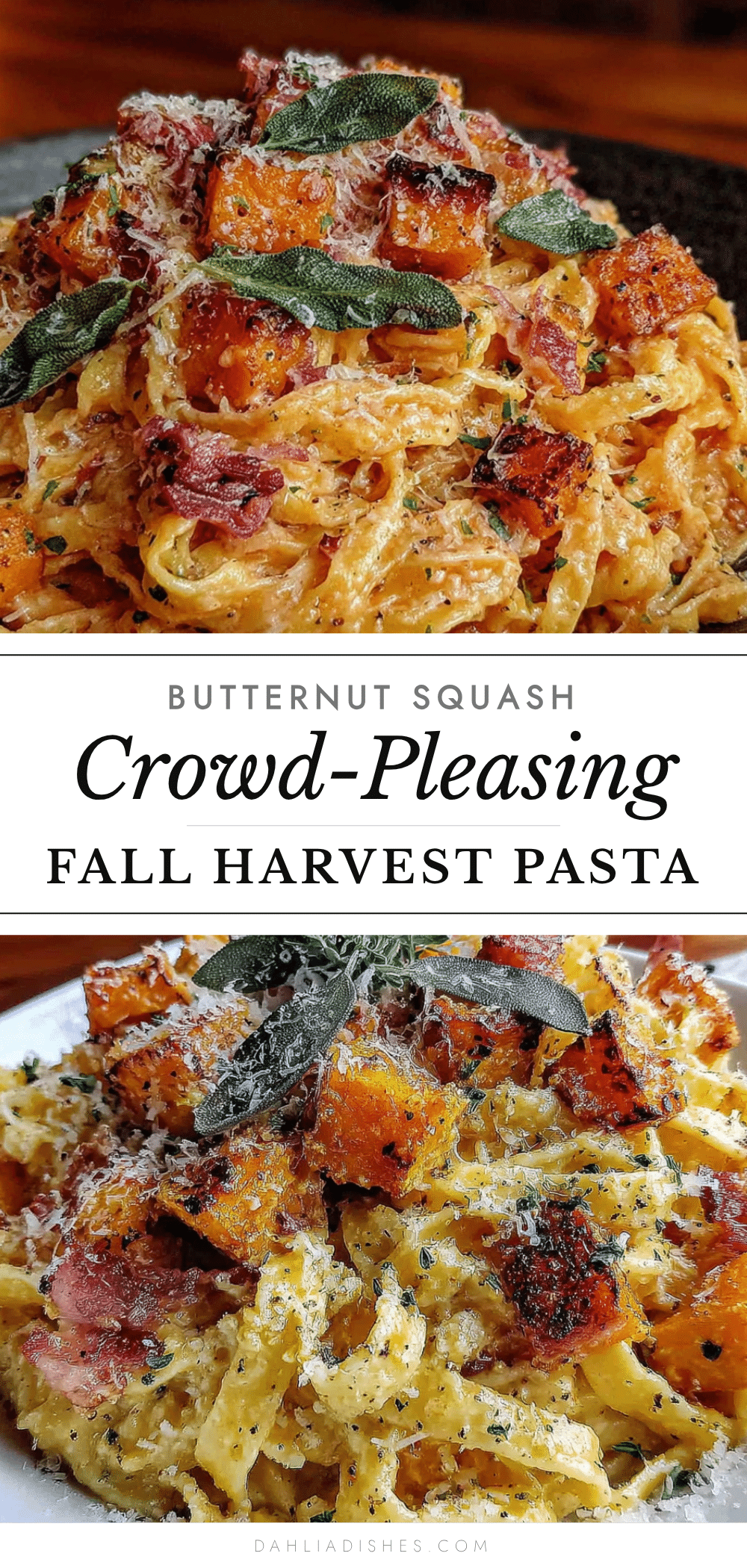
Easy Fall Harvest Pasta with Butternut Squash
A creamy, comforting pasta dish featuring roasted butternut squash, crispy sage, and toasted walnuts. Perfect for fall gatherings and weeknight dinners.
- Prep Time: 15 minutes
- Cook Time: 30 minutes
- Total Time: 45 minutes
- Yield: 6 servings 1x
- Category: Main Course
- Cuisine: American
Ingredients
- 1 medium butternut squash (about 2–3 lbs), peeled, seeded, and cubed
- 12 oz (340g) pasta (pappardelle, fettuccine, rigatoni, or orecchiette)
- 3 tablespoons olive oil
- 4 cloves garlic, minced
- 1/2 cup (120ml) heavy cream
- 1/2 cup (50g) grated Parmesan cheese
- 1/4 cup (30g) walnuts, roughly chopped
- 10–12 fresh sage leaves
- 1/2 teaspoon red pepper flakes (optional)
- Salt and black pepper to taste
- 1/4 cup (60ml) reserved pasta water
Instructions
- Preheat oven to 400°F (200°C). Peel butternut squash, cut in half lengthwise, scoop out seeds, and cut into 1-inch cubes. Toss with 2 tablespoons olive oil, salt, and pepper. Spread in a single layer on a baking sheet. Roast for 25-30 minutes, flipping halfway, until tender and caramelized.
- While squash roasts, heat a small pan over medium heat. Add walnuts and toast for 2-3 minutes until fragrant and lightly browned. Remove to a plate. In the same pan, add a drizzle of olive oil and fry sage leaves for about 30 seconds per side until crisp. Remove to a paper towel-lined plate.
- Bring a large pot of salted water to a boil. Cook pasta according to package directions until al dente. Reserve 1 cup of pasta water before draining. Drain pasta and set aside.
- In a large skillet, heat remaining 1 tablespoon olive oil over medium heat. Add minced garlic and cook for 1 minute until fragrant. Add roasted squash cubes. Mash about half of the squash with a fork or potato masher to create a creamy base, leaving the rest in chunks.
- Reduce heat to low. Stir in heavy cream and grated Parmesan until melted and smooth. Add a splash of reserved pasta water if sauce is too thick. Season with salt and pepper to taste.
- Add cooked pasta to the skillet and toss until well coated. Add more pasta water if needed. Crumble crispy sage leaves over the top and sprinkle with toasted walnuts. Serve immediately.
Notes
For best results, do not overcrowd the baking sheet when roasting squash. Reserve pasta water to adjust sauce consistency. Toasted walnuts and crispy sage can be prepared ahead of time. Leftovers can be stored in the refrigerator for up to 3 days; reheat gently with a splash of milk or water.
Nutrition
- Serving Size: 1 serving
- Calories: 450
- Sugar: 8
- Sodium: 400
- Fat: 22
- Saturated Fat: 8
- Carbohydrates: 55
- Fiber: 8
- Protein: 12
Keywords: fall harvest pasta, butternut squash pasta, creamy pasta, easy pasta recipe, autumn pasta, vegetarian pasta